

Kose
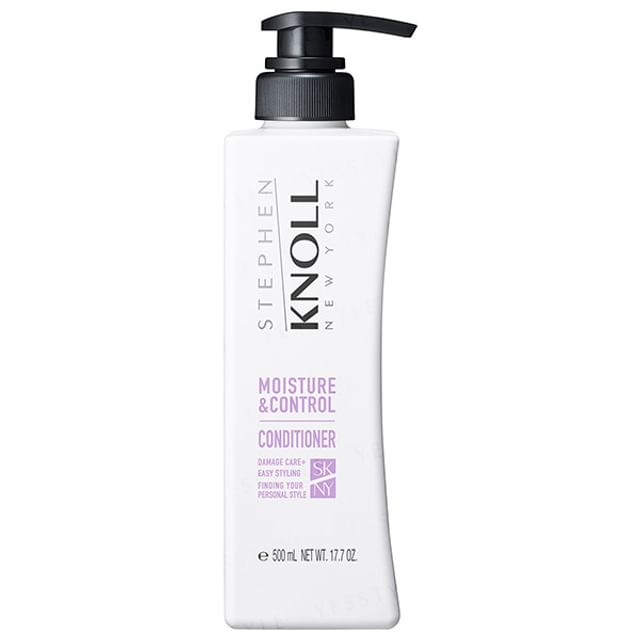
Kose Stephen Knoll Moisture & Control Conditioner W 500ml
A conditioner that transforms dry and frizzy hair into smooth, moisturized hair. Contains W high-penetration capsules to repair hair from the inside, leading to smooth hair that is easy to handle. Contains two types of external repair ingredients to protect your hair from the external environment.
Paraben-free
Color-safe
Dryness
Frizz
Breakage
Split Ends
Optimized for Your Environment & Lifestyle
Nykaa
In stock
Recommended

Kose Stephen Knoll Moisture & Control Conditioner W 500ml
Kose
kose-stephen-knoll-moisture-control-conditioner-w-500ml
Conditioner
10523326480677
Morning or Evening?
How often will you use this product?
Notes


Secure payment protection
Your Biodata Compatibility Analysis
Based on your 6 hair health indices and environmental factors
Poor Match
Significant incompatibilities
Growth Cycle Health Index
Hair Match
Hair Health Index Alignment
Optimal for OSI, SSI, DI, HSI
Ingredient Efficacy
Matching Ingredient Score
Environment Compatibility
Current UV, Air Quality & Humidity
Why This Works for Your Specific Profile
Damage Index:
Damage levels outside specified range may not benefit optimally from product formulation
Water Quality:
Fine hair becomes weighed down and greasy from heavy formulation
Hair:
Closed cuticles resist product penetration causing surface buildup without internal benefits
Active Lifestyle:
Activity levels outside optimal range affect product performance and maintenance requirements
Your Hair Profile Integration
Your Hair Archetype

Density Level

Washing Frequency

Shedding Level

Oil Level
Your Hair Health Indices
Oil Secretion (OSI)
Very low oil production
Scalp Sensitivity (SSI)
Very low sensitivity
Growth Rate (CMR)
Poor metabolism rate
Damage Index (DI)
Minimal damage
Hair Strength (HSI)
Very weak strength
Softness Index (SI)
Significant improvement needed
Water & Environmental Integration

Water:


Expected Results & Timeline
Key Highlights

What is it?
Conditioner with multiple active ingredients

Who Is It For
Adults

Budget
$35.50 - $71.00

Timeline
Immediate improvement in hair smoothness and manageability
Why You’ll Love It

What Does It Help With?
Dryness, Frizz, Breakage, Split Ends

Best for
Dryness

Features
Transforms dry and frizzy hair into smooth, moisturized hair; Repairs hair from the inside; Protects hair from external environment

Checks
Ingredients Overview
Ingredients List
amino-acids, ceramide-ng, ceramide-np, cholesterol, dicokoylethylhydroxyethylmonium-methosulfate, soybean-sterol, palmitic-acid, isostearoyl-hydrolyzed-collagen-ampd, diglucosyl-gallic-acid, white-fungus-extract, polyquaternium-51
Key Ingredients
amino-acids, ceramide-ng, ceramide-np, cholesterol, dicokoylethylhydroxyethylmonium-methosulfate, soybean-sterol, palmitic-acid, isostearoyl-hydrolyzed-collagen-ampd, diglucosyl-gallic-acid, white-fungus-extract, polyquaternium-51
Ingredients Details
Cholesterol
Common Name(s): 5-cholesten-3-ol,cholesterin
CAS Number: 57-88-5
DESCRIPTION
What It Does: Provides essential barrier sterol function as one of three critical stratum corneum lipid components.
Why It's Used: Essential component of complete barrier repair formulations – the stratum corneum barrier requires ceramides:cholesterol:fatty acids in approximately 1:1:1 molar ratio for complete barrier restoration.
How It Works: Integrates between ceramide headgroups in lamellar body structures, providing fluidity and flexibility to the otherwise rigid ceramide-dominated lipid matrix. controls lamellar body phase behavior for functional barrier.
Typically Found In: Barrier repair moisturizers,eczema treatments,dry skin formulations
TECHNICAL DETAILS
Primary Category: Active ingredient – barrier sterol
Secondary Functions: Lamellar body structure,barrier sterol
Application Areas:

Facial Skincare
Body Care

Hair Care
Beard Care
Color Cosmetics (Makeup)
Dietary/Oral Supplements
Typical Concentration Range: 0.01%–1%
SOURCING & ETHICS
Vegan Status: Conditional - feedstock declaration required
Halal Status: Unverified - feedstock declaration required (plant, animal and petrochemical routes all exist)
Source Notes: Traditionally from lanolin (wool grease). plant-derived cholesterol alternatives include phytosterols, though these show slightly different barrier integration. verify for vegan/halal. [audit 2026-07-29 rev2: origin-dependent: the same inci exists in plant, animal and petrochemical versions and the name does not discriminate. determination requires shariah-panel sign-off.]
SKIN COMPATIBILITY
Irritancy Rating: 1/5 – very low
Comedogenicity Rating: 0/5 – non-comedogenic
Sensitivity Concerns: Endogenous molecule; excellent tolerability.
Safe for Sensitive Skin: Yes
SAFETY & COMPATIBILITY
Safety Profile: Exceptional safety profile. natural skin component. ewg score: 1.
Works Well With: Other ceramides,cholesterol,free fatty acids,hyaluronic acid,niacinamide
Avoid Combining With: No significant incompatibilities
SCIENTIFIC NOTE
Elias demonstrated that barrier repair requires all three lipid classes (ceramides, cholesterol, fatty acids) in approximately equimolar ratios. formulations providing only ceramides without cholesterol and fatty acids show significantly inferior barrier restoration vs complete triple-lipid combinations.
Last Verified: 2026-03-12
Primary Sources: Cosing database,elias et al. barrier lipid ratio study,loden barrier repair review
Cholesterol
Common Name(s): 5-cholesten-3-ol,cholesterin
CAS Number: 57-88-5
DESCRIPTION
What It Does: Provides essential barrier sterol function as one of three critical stratum corneum lipid components.
Why It's Used: Essential component of complete barrier repair formulations – the stratum corneum barrier requires ceramides:cholesterol:fatty acids in approximately 1:1:1 molar ratio for complete barrier restoration.
How It Works: Integrates between ceramide headgroups in lamellar body structures, providing fluidity and flexibility to the otherwise rigid ceramide-dominated lipid matrix. controls lamellar body phase behavior for functional barrier.
Typically Found In: Barrier repair moisturizers,eczema treatments,dry skin formulations
TECHNICAL DETAILS
Primary Category: Active ingredient – barrier sterol
Secondary Functions: Lamellar body structure,barrier sterol
Application Areas:
Facial Skincare
Body Care
Hair Care
Beard Care
Color Cosmetics (Makeup)
Dietary/Oral Supplements
Typical Concentration Range: 0.01%–1%
SOURCING & ETHICS
Vegan Status: Conditional - feedstock declaration required
Halal Status: Unverified - feedstock declaration required (plant, animal and petrochemical routes all exist)
Source Notes: Traditionally from lanolin (wool grease). plant-derived cholesterol alternatives include phytosterols, though these show slightly different barrier integration. verify for vegan/halal. [audit 2026-07-29 rev2: origin-dependent: the same inci exists in plant, animal and petrochemical versions and the name does not discriminate. determination requires shariah-panel sign-off.]
SKIN COMPATIBILITY
Irritancy Rating: 1/5 – very low
Comedogenicity Rating: 0/5 – non-comedogenic
Sensitivity Concerns: Endogenous molecule; excellent tolerability.
Safe for Sensitive Skin: Yes
SAFETY & COMPATIBILITY
Safety Profile: Exceptional safety profile. natural skin component. ewg score: 1.
Works Well With: Other ceramides,cholesterol,free fatty acids,hyaluronic acid,niacinamide
Avoid Combining With: No significant incompatibilities
SCIENTIFIC NOTE
Elias demonstrated that barrier repair requires all three lipid classes (ceramides, cholesterol, fatty acids) in approximately equimolar ratios. formulations providing only ceramides without cholesterol and fatty acids show significantly inferior barrier restoration vs complete triple-lipid combinations.
Last Verified: 2026-03-12
Primary Sources: Cosing database,elias et al. barrier lipid ratio study,loden barrier repair review
Polyquaternium-51
Common Name(s): Polyquaternium-51,cationic conditioning polymer,substantive film-former
CAS Number: N/a
DESCRIPTION
What It Does: Deposits a conditioning film on hair and skin through electrostatic attraction to negative cuticle/corneocyte surfaces, reduces hair-on-hair friction for improved combability and detangling, eliminates static charge buildup, and provides anti-frizz humidity resistance.
Why It's Used: Cationic polymers are the primary hair conditioning technology — the permanent positive quaternary ammonium groups provide substantive deposition that resists rinsing, delivering persistent conditioning between washes unlike small-molecule cationic conditioners.
How It Works: At shampoo/conditioner ph 4.5–5.5, hair cuticle carries net negative charge (isoelectric point ph ~3.5). polyquaternium cations undergo electrostatic attraction depositing on the cuticle surface. during rinsing, the deposited polymer film persists from reduced surface-solution equilibrium at low bulk concentration — substantive deposition from favourable interfacial versus bulk partitioning.
Typically Found In: Shampoos,conditioners,leave-in products
TECHNICAL DETAILS
Primary Category: Active ingredient – cosmetic active
Secondary Functions: Skin conditioning
Application Areas:
Facial Skincare
Body Care
Hair Care
Beard Care
Color Cosmetics (Makeup)
Dietary/Oral Supplements
Typical Concentration Range: 0.1%–3%
SOURCING & ETHICS
Vegan Status: Conditional - supplier confirmation required
Halal Status: Unverified - supplier confirmation required
Source Notes: Commercially produced for cosmetic use. verify vegan/halal status with supplier. [audit 2026-07-29 rev2: the record's own source_notes does not assert a non-animal origin, or instructs the reader to verify with the supplier; "yes" asserts knowledge the record does not hold. determination requires shariah-panel sign-off.]
SKIN COMPATIBILITY
Irritancy Rating: 1/5 – very low
Comedogenicity Rating: 0/5 – non-comedogenic
Sensitivity Concerns: Well-tolerated by most skin types.
Safe for Sensitive Skin: Yes
SAFETY & COMPATIBILITY
Safety Profile: Good safety profile at recommended concentrations. ewg score: 1–2.
Works Well With: Standard skincare actives
Avoid Combining With: No known significant incompatibilities
SCIENTIFIC NOTE
Different polyquaternium numbers indicate different backbone chemistries: pq-7 (acrylamide/quaternary acrylate copolymer) for leave-on flexibility; pq-10 (hydroxyethylcellulose/quaternary ammonium) for substantive deposition; pq-11 (vp/dimethylaminoethyl methacrylate) for styling fixation.
Last Verified: 2026-03-12
Primary Sources: Cosing database,polyquaternium-51 cationic conditioning deposition review
Polyquaternium-51
Common Name(s): Polyquaternium-51,cationic conditioning polymer,substantive film-former
CAS Number: N/a
DESCRIPTION
What It Does: Deposits a conditioning film on hair and skin through electrostatic attraction to negative cuticle/corneocyte surfaces, reduces hair-on-hair friction for improved combability and detangling, eliminates static charge buildup, and provides anti-frizz humidity resistance.
Why It's Used: Cationic polymers are the primary hair conditioning technology — the permanent positive quaternary ammonium groups provide substantive deposition that resists rinsing, delivering persistent conditioning between washes unlike small-molecule cationic conditioners.
How It Works: At shampoo/conditioner ph 4.5–5.5, hair cuticle carries net negative charge (isoelectric point ph ~3.5). polyquaternium cations undergo electrostatic attraction depositing on the cuticle surface. during rinsing, the deposited polymer film persists from reduced surface-solution equilibrium at low bulk concentration — substantive deposition from favourable interfacial versus bulk partitioning.
Typically Found In: Shampoos,conditioners,leave-in products
TECHNICAL DETAILS
Primary Category: Active ingredient – cosmetic active
Secondary Functions: Skin conditioning
Application Areas:
Facial Skincare
Body Care
Hair Care
Beard Care
Color Cosmetics (Makeup)
Dietary/Oral Supplements
Typical Concentration Range: 0.1%–3%
SOURCING & ETHICS
Vegan Status: Conditional - supplier confirmation required
Halal Status: Unverified - supplier confirmation required
Source Notes: Commercially produced for cosmetic use. verify vegan/halal status with supplier. [audit 2026-07-29 rev2: the record's own source_notes does not assert a non-animal origin, or instructs the reader to verify with the supplier; "yes" asserts knowledge the record does not hold. determination requires shariah-panel sign-off.]
SKIN COMPATIBILITY
Irritancy Rating: 1/5 – very low
Comedogenicity Rating: 0/5 – non-comedogenic
Sensitivity Concerns: Well-tolerated by most skin types.
Safe for Sensitive Skin: Yes
SAFETY & COMPATIBILITY
Safety Profile: Good safety profile at recommended concentrations. ewg score: 1–2.
Works Well With: Standard skincare actives
Avoid Combining With: No known significant incompatibilities
SCIENTIFIC NOTE
Different polyquaternium numbers indicate different backbone chemistries: pq-7 (acrylamide/quaternary acrylate copolymer) for leave-on flexibility; pq-10 (hydroxyethylcellulose/quaternary ammonium) for substantive deposition; pq-11 (vp/dimethylaminoethyl methacrylate) for styling fixation.
Last Verified: 2026-03-12
Primary Sources: Cosing database,polyquaternium-51 cationic conditioning deposition review
Personalized Usage Instructions
How to Use
Step 1
Apply an appropriate amount to the entire length of hair and leave on for a few minutes before rinsing thoroughly
Medical Chemicals

Protein/Moisture
- Moisture
pH Level
- Acidic

Porosity Taget
- High Porosity
Customized for Your Profile
Scalp Condtions
Sensitive Scalp, pH Balanced, Dry Scalp
Climate Suitability
Humid, Dry, Winter, Summer
Clinical Claims
Frequency
Apply an appropriate amount to the entire length of hair and leave on for a few minutes before rinsing thoroughly.