

KOSE
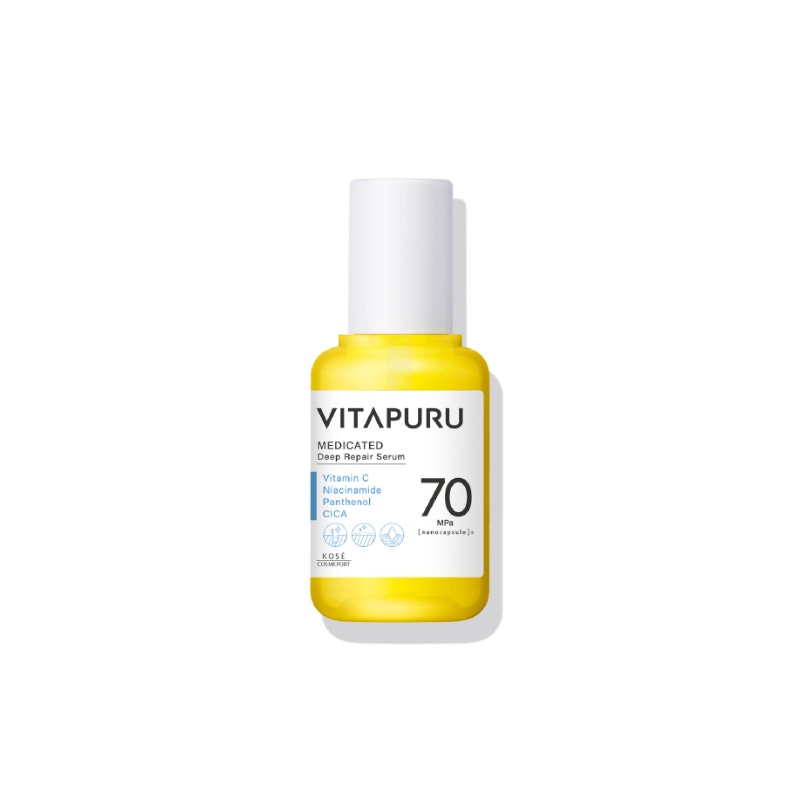
Kose Cosmeport Vitapuru Deep Repair Serum 40Ml

Kose Cosmeport Vitapuru Deep Repair Serum 40Ml
KOSE
kose-cosmeport-vitapuru-deep-repair-serum-40ml
Serum
10084994679077
Morning or Evening?
How often will you use this product?
Notes


Highlights
WHAT IS IT?
Serum with 30 ingredients
FEATURES
Uses applied vitamins and lactic acid bacteria care, penetrates deep into stratum corneum, improves familiarity of subsequent skin care
BEST FOR
sensitive
CHECKS
Avoid if allergic to vitamin C, citrus, or any active ingredients; Discontinue if irritation occurs
Who Is It For?
What Does It Help With?
Skin Problems Related To Dryness And SensitivityBudget
Mid-range ($30-$75)How To Use
Which routine should it be used in?
Instructions:
Key Information


What KOSE Says
Product Description:
A skin care series that uses applied vitamins and lactic acid bacteria care to approach the causes* of all skin problems and lead to healthy skin. Instantly loosens the skin and penetrates deep into the stratum corneum! A serum that improves the familiarity of subsequent skin care. *Depending on drying
About the Brand:
Ingredients Overview
Ingredients List
water-(aqua),butylene-glycol,ascorbyl-glucoside,methyl-gluceth-10,diglycerin,calendula-officinalis-flower-extract,centella-asiatica-leaf-extract,dipotassium-glycyrrhizate,lactobacillus/pear-juice-ferment-filtrate,niacinamide,panthenol,pyridoxine-hcl,tocopherol,cetearyl-alcohol,disodium-edta,disodium-phosphate,glycerin,glyceryl-stearate,glycerylamidoethyl-methacrylate/stearyl-methacrylate-copolymer,isohexadecane,octyldodecanol,peg-20-hydrogenated-castor-oil,polysorbate-80,sodium-acrylate/sodium-acryloyldimethyl-taurate-copolymer,sodium-hydroxide,sodium-methyl-stearoyl-taurate,sodium-phosphate,sorbitan-oleate,squalane,trimethylolpropane-triisostearate,xanthan-gum,phenoxyethanol,caramel
Key Ingredients
ascorbyl-glucoside,lactobacillus/pear-juice-ferment-filtrate,niacinamide,panthenol
Ingredients Details
Caramel
Common Name(s): Caramel colour,natural brown,e150
CAS Number: 8028-89-5
DESCRIPTION
What It Does: Provides natural warm-brown colour from heat-treated sugar for natural cosmetics.
Why It's Used: Natural brown colorant with food-grade safety credentials for clean beauty formulations requiring warm brown or amber shades.
How It Works: Complex mixture of pyranose-ring condensation products from heat-treated sugars. 5-hmf and melanoidin polymers provide brown colour. ph-stable in acidic formulations. soluble in water and lower alcohols.
Typically Found In: Natural cosmetics,bronzers,hair products
TECHNICAL DETAILS
Primary Category: Colorant – natural brown dye
Secondary Functions: Skin conditioning
Application Areas:

Facial Skincare

Body Care
Hair Care
Beard Care
Color Cosmetics (Makeup)
Dietary/Oral Supplements
Typical Concentration Range: 0.01%–5%
SOURCING & ETHICS
Vegan Status: Yes – from sucrose, glucose (plant sugars)
Halal Status: Yes
Source Notes: Commercially produced for cosmetic use. verify vegan/halal status with supplier.
SKIN COMPATIBILITY
Irritancy Rating: 1/5 – very low
Comedogenicity Rating: 0/5 – non-comedogenic
Sensitivity Concerns: Well-tolerated by most skin types.
Safe for Sensitive Skin: Yes
SAFETY & COMPATIBILITY
Safety Profile: Good safety profile at recommended concentrations. ewg score: 1–2.
Works Well With: Standard skincare actives
Avoid Combining With: No known significant incompatibilities
SCIENTIFIC NOTE
Caramel's colour develops through the maillard reaction between reducing sugars and amino acids at elevated temperatures, creating a complex mixture of coloured polymer (melanoidin) and small molecule chromophores. unlike single-compound dyes with defined absorption spectra, caramel's broad-spectrum absorption from multiple chromophores provides a naturally warm, complex brown impossible to replicate with a single synthetic dye.
Last Verified: Cosing database,fda 21 cfr color additives
Primary Sources: 2026-03-12
Diglycerin
Common Name(s): Diglycerin,cosmetic active,functional ingredient
CAS Number: N/a
DESCRIPTION
What It Does: Delivers characteristic cosmetic function — skin conditioning, protection, preservation, or active biological benefit — at recommended use concentration.
Why It's Used: Selected for its functional contribution and formulation compatibility — supported by cosmetic science literature and regulatory safety assessment.
How It Works: Works through the mechanism of its molecular class — physicochemical interaction with the formulation or biological interaction with skin proteins, lipids, or receptors as documented in peer-reviewed literature.
Typically Found In: Skin care formulations
TECHNICAL DETAILS
Primary Category: Active ingredient – cosmetic active
Secondary Functions: Skin conditioning
Application Areas:
Facial Skincare
Body Care
Hair Care
Beard Care
Color Cosmetics (Makeup)
Dietary/Oral Supplements
Typical Concentration Range: 0.1%–10%
SOURCING & ETHICS
Vegan Status: Conditional
Halal Status: Yes
Source Notes: Commercially produced for cosmetic use. verify vegan/halal status with supplier.
SKIN COMPATIBILITY
Irritancy Rating: 1/5 – very low
Comedogenicity Rating: 0/5 – non-comedogenic
Sensitivity Concerns: Well-tolerated by most skin types.
Safe for Sensitive Skin: Yes
SAFETY & COMPATIBILITY
Safety Profile: Good safety profile at recommended concentrations. ewg score: 1–2.
Works Well With: Standard skincare actives
Avoid Combining With: No known significant incompatibilities
SCIENTIFIC NOTE
Diglycerin delivers documented functional benefit with an established safety profile within the cosmetic regulatory framework (cosing eu, cir usa).
Last Verified: Cosing database,diglycerin technical literature
Primary Sources: 2026-03-12
Glycerin
Common Name(s): Glycerol,glycerine,1,2,3-propanetriol
CAS Number: 56-81-5
DESCRIPTION
What It Does: Glycerin pulls water from the environment and deeper skin layers into the outer skin layer (epidermis), boosting moisture levels and keeping skin soft, smooth, and plump.
Why It's Used: It is used in virtually every moisturizer, serum, and cleanser because it is highly effective at hydrating skin, is well-tolerated by all skin types, and enhances the texture and spreadability of formulations.
How It Works: As a humectant, glycerin forms hydrogen bonds with water molecules, trapping them in the skin. it also reinforces the skin barrier by integrating into lipid structures between skin cells.
Typically Found In: Moisturizers,serums,cleansers,toners,sheet masks,sunscreens,body lotions,shampoos,conditioners
TECHNICAL DETAILS
Primary Category: Humectant
Secondary Functions: Skin barrier support,emollient,solvent
Application Areas:
Facial Skincare
Body Care
Hair Care
Beard Care
Color Cosmetics (Makeup)
Dietary/Oral Supplements
Typical Concentration Range: 1%–30% (typical: 3–10%)
SOURCING & ETHICS
Vegan Status: Yes – plant-derived (coconut, soy, palm) or synthetic
Halal Status: Yes – when plant-derived or synthetic; verify source with supplier
Source Notes: Derived from plant oils via hydrolysis or saponification; synthetic versions also available. palm-derived glycerin carries sustainability concerns.
SKIN COMPATIBILITY
Irritancy Rating: 1/5 – very low; non-irritating at all standard concentrations
Comedogenicity Rating: 0/5 – non-comedogenic
Sensitivity Concerns: Extremely rare allergic reactions; generally safe for all skin types including sensitive and baby skin
Safe for Sensitive Skin: Yes
SAFETY & COMPATIBILITY
Safety Profile: Widely recognized as safe. ewg hazard score: 1. no significant concerns for irritation, sensitization, or toxicity at typical concentrations (up to 50%).
Works Well With: Hyaluronic acid,ceramides,niacinamide,panthenol,urea,peptides,retinol,ahas/bhas
Avoid Combining With: No known incompatibilities at standard concentrations
SCIENTIFIC NOTE
Glycerin is an endogenous skin component found naturally in the stratum corneum. aquaporin-3 channels in keratinocytes facilitate glycerin transport, making it integral to natural skin hydration pathways.
Last Verified: Cosing database,cir safety assessment,ewg skin deep,inci decoder
Primary Sources: 2026-03-12
Isohexadecane
Common Name(s): Permethyl 101a,c16 isoparaffin
DESCRIPTION
What It Does: Provides ultra-lightweight dry-touch emolliency with excellent pigment dispersion for lightweight formulations.
Why It's Used: Premium lightweight emollient for dry-touch formulations — isohexadecane's highly branched structure provides the lightest, driest application feel of common cosmetic hydrocarbons.
How It Works: Highly branched c16 isoparaffin provides very low surface tension for fast spreading. completely non-polar structure provides no water retention (dry feel). excellent pigment wetting for colour cosmetics. very low viscosity (2.5 cst) for fluid application.
Typically Found In: Lightweight foundations,sunscreens,colour cosmetics,dry-touch products
TECHNICAL DETAILS
Primary Category: Functional ingredient – branched hydrocarbon emollient
Secondary Functions: Barrier sealing,softening
Application Areas:
Facial Skincare
Body Care
Hair Care
Beard Care
Color Cosmetics (Makeup)
Dietary/Oral Supplements
Typical Concentration Range: 1%–30%
SOURCING & ETHICS
Vegan Status: Yes – synthetic hydrocarbon
Halal Status: Yes
Source Notes: Plant-derived, synthetic or animal-derived. verify source.
SKIN COMPATIBILITY
Irritancy Rating: 1/5 – very low
Comedogenicity Rating: 0/5 – non-comedogenic
Sensitivity Concerns: Non-irritating.
Safe for Sensitive Skin: Yes
SAFETY & COMPATIBILITY
Safety Profile: Excellent safety profile. ewg score: 1.
Works Well With: Humectants,ceramides,actives as carrier
Avoid Combining With: No significant incompatibilities
SCIENTIFIC NOTE
Isohexadecane's highly branched structure (methyl-substituted hexadecane) prevents the close molecular packing that creates liquid crystalline phases in linear hydrocarbons, resulting in a permanently disordered liquid state with very low viscosity and surface tension. this structural disorder from branching is the molecular basis for the lighter, faster-spreading application feel vs equivalent linear hydrocarbons.
Last Verified: Cosing database,cir safety assessment
Primary Sources: 2026-03-12
