

Khadi Organique
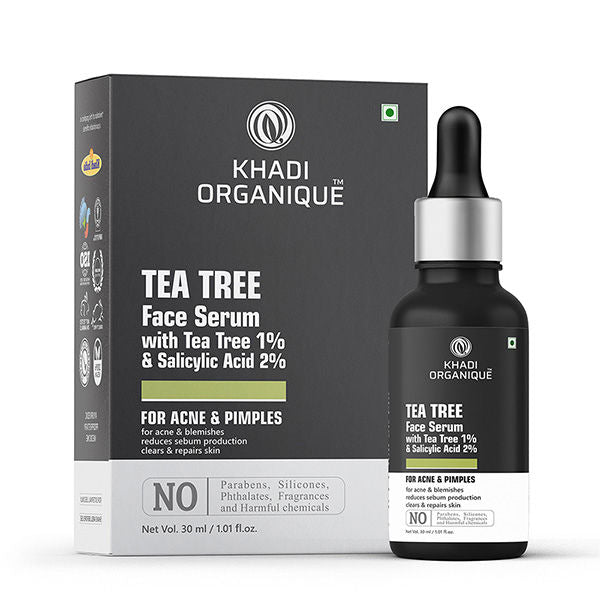
KHADI ORGANIQUE TEA TREE FACE SERUM WITH TEA TREE 1% + SALICYLIC ACID 2% FOR ACNE & BLEMISHES

KHADI ORGANIQUE TEA TREE FACE SERUM WITH TEA TREE 1% + SALICYLIC ACID 2% FOR ACNE & BLEMISHES
Khadi Organique
khadi-organique-tea-tree-face-serum-with-tea-tree-1-salicylic-acid-2-for-acne-blemishes
Serum
10085115494693
Morning or Evening?
How often will you use this product?
Notes


Highlights
WHAT IS IT?
Face serum with tea tree 1% and salicylic acid 2%
FEATURES
Treats acne and blemishes
BEST FOR
oily
CHECKS
Who Is It For?
Adults With Acne-prone SkinWhat Does It Help With?
Acne Treatment Blemish ControlBudget
Affordable (under $30)How To Use
Which routine should it be used in?
Instructions:
Key Information


What Khadi Organique Says
Product Description:
Tea tree face serum with 1% tea tree oil and 2% salicylic acid for treating acne and blemishes
About the Brand:
Ingredients Overview
Ingredients List
Tea Tree Oil, Salicylic Acid, Tomato, Liquorice
Key Ingredients
tea tree oil 1%, salicylic acid 2%
Ingredients Details
Salicylic Acid
Common Name(s): Bha,2-hydroxybenzoic acid,orthohydroxybenzoic acid,willow bark acid
CAS Number: 69-72-7
DESCRIPTION
What It Does: Salicylic acid exfoliates the skin surface and inside pores, dissolves the 'glue' holding dead skin cells together, reduces sebum production, and combats acne-causing bacteria.
Why It's Used: Its oil solubility makes it uniquely effective at penetrating pores and dissolving sebum plugs – a function that water-soluble ahas cannot perform. it is the preferred exfoliant for oily, acne-prone, and congested skin.
How It Works: Salicylic acid disrupts desmosomal bonds between corneocytes, promoting exfoliation. its oil solubility allows it to penetrate the sebaceous follicle, dissolving sebum and dead cells. it also has anti-inflammatory properties by inhibiting prostaglandin synthesis.
Typically Found In: Cleansers,toners,serums,spot treatments,masks,chemical peels,anti-dandruff shampoos,acne treatments
TECHNICAL DETAILS
Primary Category: Active ingredient – beta hydroxy acid (bha)
Secondary Functions: Anti-acne,anti-dandruff,keratolytic
Application Areas:

Facial Skincare

Body Care
Hair Care
Beard Care
Color Cosmetics (Makeup)
Dietary/Oral Supplements
Typical Concentration Range: 0.5%–2% (otc acne treatment in us); up to 30% in professional chemical peels
SOURCING & ETHICS
Vegan Status: Yes – synthetic or willow bark derived
Halal Status: Yes
Source Notes: Naturally occurring in willow bark (salix alba) and wintergreen oil. commercially produced synthetically via kolbe-schmitt reaction for cosmetic use.
SKIN COMPATIBILITY
Irritancy Rating: 3/5 – moderate; can cause dryness, peeling, and irritation, especially at higher concentrations
Comedogenicity Rating: 0/5 – non-comedogenic; actually anti-comedogenic
Sensitivity Concerns: Can cause irritation, dryness, and sun sensitivity. avoid contact with eyes. not recommended during pregnancy at high concentrations. can be drying – follow with moisturizer.
Safe for Sensitive Skin: Use with caution – start with lower concentrations and frequency; may not be suitable for reactive or rosacea-prone skin
SAFETY & COMPATIBILITY
Safety Profile: Safe at otc concentrations (0.5–2%). regulated as a drug in some countries (us: fda category i acne treatment). avoid in pregnancy at high concentrations.
Works Well With: Niacinamide,zinc,tea tree oil,benzoyl peroxide (at different times),hyaluronic acid (to counteract dryness)
Avoid Combining With: High concentrations of retinol (cumulative irritation),multiple exfoliating acids simultaneously,benzoyl peroxide in same step (can increase irritation)
SCIENTIFIC NOTE
Salicylic acid is a member of the salicylate family and shares structural similarity with aspirin. its anti-inflammatory mechanism mirrors aspirin's cox inhibition pathway, making it uniquely effective for inflammatory acne.
Last Verified: Cosing database,cir safety assessment,us fda acne monograph,journal of the american academy of dermatology
Primary Sources: 2026-03-12
Tea Tree Oil
Common Name(s): Tea tree oil,tto,melaleuca oil
CAS Number: 68647-73-4
DESCRIPTION
What It Does: Provides the most potent single-plant broad-spectrum antimicrobial essential oil for skin antiseptic applications.
Why It's Used: The antimicrobial essential oil – tea tree oil's terpinen-4-ol provides clinically proven broad-spectrum antimicrobial activity in rct-level clinical studies for acne and mrsa decolonisation.
How It Works: Terpinen-4-ol (30-48%) provides membrane-disrupting antimicrobial activity vs gram+/- bacteria, fungi, and enveloped viruses. iso 4730 requires minimum 30% terpinen-4-ol and maximum 5% 1,8-cineole (sensitiser). anti-biofilm activity vs staphylococcus.
Typically Found In: Anti-acne products,antiseptic formulas,natural antimicrobials,scalp treatments
TECHNICAL DETAILS
Primary Category: Active ingredient – soothing / anti-inflammatory
Secondary Functions: Redness reduction,anti-inflammatory,calming
Application Areas:
Facial Skincare
Body Care
Hair Care
Beard Care
Color Cosmetics (Makeup)
Dietary/Oral Supplements
Typical Concentration Range: 0.001%–5%
SOURCING & ETHICS
Vegan Status: Yes – from melaleuca alternifolia leaves (australia)
Halal Status: Yes
Source Notes: Plant-derived extract or synthetic.
SKIN COMPATIBILITY
Irritancy Rating: 1/5 – very low
Comedogenicity Rating: 0/5 – non-comedogenic
Sensitivity Concerns: Non-irritating; ideal for reactive and sensitive skin.
Safe for Sensitive Skin: Yes – particularly recommended for sensitive skin
SAFETY & COMPATIBILITY
Safety Profile: Iso 4730:2017 quality standard defines authentic tea tree oil. can cause contact sensitisation at high concentrations. toxic if ingested.
Works Well With: Ceramides,panthenol,allantoin,hyaluronic acid,centella asiatica
Avoid Combining With: No significant incompatibilities
SCIENTIFIC NOTE
Randomised controlled trial comparison of 5% tea tree oil gel vs 5% benzoyl peroxide lotion for acne demonstrated equivalent efficacy for acne lesion reduction at 3 months. tea tree's slower onset (8 weeks vs 4 weeks for bpo) was offset by significantly fewer side effects (dryness, irritation, peeling) in the tto group – providing evidence-based support for clinical tto use as a well-tolerated bpo alternative.
Last Verified: Cosing database,bassett et al. tea tree oil acne rct,iso 4730
Primary Sources: 2026-03-12
