

Khadi Natural
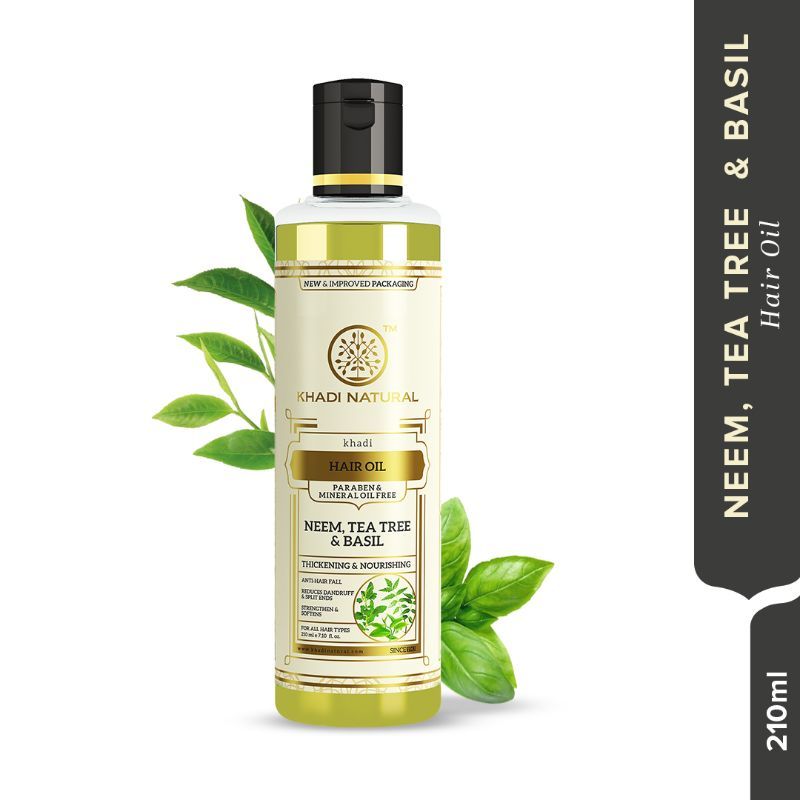
Khadi Natural Neem Teatree & Basil Hair Oil Anti Dandruff Paraben & Mineral Oil Free
Khadi Neem, Tea Tree & Basil Hair Oil is a natural anti-microbial & anti-oxidant shampoo. It keeps your hair soft and lustrous with natural ingredients like Neem, Basil & Tulsi that helps eliminate infection causing germs & prevents scalp disease. A herbal and natural anti-microbial & anti-oxidant shampoo. Helps eliminate dandruff, infection causing germs & prevents scalp diseases. Suitable for all hair types. Paraben and SLS free, no mineral oils added.
Paraben-free
Sulfate-free
Natural
Scalp Issues
Dandruff
Dryness
Optimized for Your Environment & Lifestyle
Nykaa
In stock
Recommended

Khadi Natural Neem Teatree & Basil Hair Oil Anti Dandruff Paraben & Mineral Oil Free
Khadi Natural
khadi-natural-neem-teatree-basil-hair-oil-anti-dandruff-paraben-mineral-oil-free
Hair Oil
10202932904229
Morning or Evening?
How often will you use this product?
Notes


Secure payment protection
Your Biodata Compatibility Analysis
Based on your 6 hair health indices and environmental factors
Poor Match
Significant incompatibilities
Growth Cycle Health Index
Hair Match
Hair Health Index Alignment
Optimal for OSI, SSI, DI, HSI
Ingredient Efficacy
Matching Ingredient Score
Environment Compatibility
Current UV, Air Quality & Humidity
Why This Works for Your Specific Profile
Damage Index:
Damage levels outside specified range may not benefit optimally from product formulation
Water Quality:
No water quality-specific conflicts
Hair:
No porosity-specific conflicts
Active Lifestyle:
Activity levels outside optimal range affect product performance and maintenance requirements
Your Hair Profile Integration
Your Hair Archetype

Density Level

Washing Frequency

Shedding Level

Oil Level
Your Hair Health Indices
Oil Secretion (OSI)
Very low oil production
Scalp Sensitivity (SSI)
Very low sensitivity
Growth Rate (CMR)
Poor metabolism rate
Damage Index (DI)
Minimal damage
Hair Strength (HSI)
Very weak strength
Softness Index (SI)
Significant improvement needed
Water & Environmental Integration

Water:


Expected Results & Timeline
Key Highlights

What is it?
Hair Oil with 6 key ingredients

Who Is It For
Adults, All Genders

Budget
$2.98 - $5.96

Timeline
Why You’ll Love It

What Does It Help With?
Dandruff, Scalp infection, Dryness

Best for
Scalp Issues

Features
Natural anti-microbial and anti-oxidant properties, helps eliminate dandruff and infection causing germs, prevents scalp disease, paraben and SLS free, no mineral oils, suitable for all hair types.

Checks
ISO certified, paraben free, SLS free
Ingredients Overview
Ingredients List
Neem, Tulsi, Kayaputi, Eucalyptus oil, Sesame Oil, Sunflower oil
Key Ingredients
Neem, Tulsi, Kayaputi, Eucalyptus oil, Sesame Oil, Sunflower oil
Ingredients Details
Eucalyptus Oil
Common Name(s): Eucalyptus oil,blue gum oil,camphor eucalyptus
CAS Number: 8000-48-4
DESCRIPTION
What It Does: Provides eucalyptol anti-inflammatory and antimicrobial activity with characteristic camphoraceous clean scent.
Why It's Used: The respiratory wellness essential oil – eucalyptus oil's 1,8-cineole provides clinically validated mucolytic and bronchodilatory activity for respiratory symptom relief in topical chest rubs.
How It Works: 1,8-cineole (eucalyptol, 55-80%) activates trpm8 (cooling) and inhibits leukotriene synthesis (anti-inflammatory). antimicrobial via cineole membrane permeabilisation. mucolytic via mucus hydration improvement.
Typically Found In: Cooling products,respiratory relief,scalp treatments,men's grooming
TECHNICAL DETAILS
Primary Category: Active ingredient – soothing / anti-inflammatory
Secondary Functions: Redness reduction,anti-inflammatory,calming
Application Areas:

Facial Skincare

Body Care
Hair Care
Beard Care
Color Cosmetics (Makeup)
Dietary/Oral Supplements
Typical Concentration Range: 0.001%–2%
SOURCING & ETHICS
Vegan Status: Yes – from eucalyptus globulus leaves
Halal Status: Yes
Source Notes: Plant-derived extract or synthetic.
SKIN COMPATIBILITY
Irritancy Rating: 1/5 – very low
Comedogenicity Rating: 0/5 – non-comedogenic
Sensitivity Concerns: Non-irritating; ideal for reactive and sensitive skin.
Safe for Sensitive Skin: Yes – particularly recommended for sensitive skin
SAFETY & COMPATIBILITY
Safety Profile: Eu: avoid near eyes and face of infants/children under 2 due to trpv1/trpm8 stimulation. toxic if ingested.
Works Well With: Ceramides,panthenol,allantoin,hyaluronic acid,centella asiatica
Avoid Combining With: No significant incompatibilities
SCIENTIFIC NOTE
1,8-cineole's mucolytic mechanism involves penetration through bronchial epithelium membranes and direct activation of mucociliary transport (increased cilia beat frequency and mucus hydration). clinical studies for orally dosed cineole in bronchitis show equivalent efficacy to pharmaceutical mucolytics – one of the best-characterised pharmacological mechanisms for a fragrance compound's therapeutic effect.
Last Verified: 2026-03-12
Primary Sources: Cosing database,ifra standards,juergens et al. cineole anti-inflammatory study
Eucalyptus Oil
Common Name(s): Eucalyptus oil,blue gum oil,camphor eucalyptus
CAS Number: 8000-48-4
DESCRIPTION
What It Does: Provides eucalyptol anti-inflammatory and antimicrobial activity with characteristic camphoraceous clean scent.
Why It's Used: The respiratory wellness essential oil – eucalyptus oil's 1,8-cineole provides clinically validated mucolytic and bronchodilatory activity for respiratory symptom relief in topical chest rubs.
How It Works: 1,8-cineole (eucalyptol, 55-80%) activates trpm8 (cooling) and inhibits leukotriene synthesis (anti-inflammatory). antimicrobial via cineole membrane permeabilisation. mucolytic via mucus hydration improvement.
Typically Found In: Cooling products,respiratory relief,scalp treatments,men's grooming
TECHNICAL DETAILS
Primary Category: Active ingredient – soothing / anti-inflammatory
Secondary Functions: Redness reduction,anti-inflammatory,calming
Application Areas:
Facial Skincare
Body Care
Hair Care
Beard Care
Color Cosmetics (Makeup)
Dietary/Oral Supplements
Typical Concentration Range: 0.001%–2%
SOURCING & ETHICS
Vegan Status: Yes – from eucalyptus globulus leaves
Halal Status: Yes
Source Notes: Plant-derived extract or synthetic.
SKIN COMPATIBILITY
Irritancy Rating: 1/5 – very low
Comedogenicity Rating: 0/5 – non-comedogenic
Sensitivity Concerns: Non-irritating; ideal for reactive and sensitive skin.
Safe for Sensitive Skin: Yes – particularly recommended for sensitive skin
SAFETY & COMPATIBILITY
Safety Profile: Eu: avoid near eyes and face of infants/children under 2 due to trpv1/trpm8 stimulation. toxic if ingested.
Works Well With: Ceramides,panthenol,allantoin,hyaluronic acid,centella asiatica
Avoid Combining With: No significant incompatibilities
SCIENTIFIC NOTE
1,8-cineole's mucolytic mechanism involves penetration through bronchial epithelium membranes and direct activation of mucociliary transport (increased cilia beat frequency and mucus hydration). clinical studies for orally dosed cineole in bronchitis show equivalent efficacy to pharmaceutical mucolytics – one of the best-characterised pharmacological mechanisms for a fragrance compound's therapeutic effect.
Last Verified: 2026-03-12
Primary Sources: Cosing database,ifra standards,juergens et al. cineole anti-inflammatory study
Sesame Oil
Common Name(s): Sesame oil,botanical oil,phytochemical active
CAS Number: N/a
DESCRIPTION
What It Does: Provides antioxidant protection from reactive oxygen species, reduces inflammatory cytokine production in skin, and conditions skin through the plant's phytochemical complex.
Why It's Used: Natural origin narrative, traditional use heritage, and multi-functional phytochemical profile supporting concurrent skin care claims from one ingredient.
How It Works: Polyphenols, terpenoids, and alkaloids scavenge ros via h• donation, inhibit nf-kb or cox-2 inflammatory pathways, and interact with skin surface proteins for conditioning.
Typically Found In: Botanical skin care,natural products
TECHNICAL DETAILS
Primary Category: Active ingredient – antioxidant
Secondary Functions: Free radical scavenging,anti-aging
Application Areas:
Facial Skincare
Body Care
Hair Care
Beard Care
Color Cosmetics (Makeup)
Dietary/Oral Supplements
Typical Concentration Range: 0.1%–10%
SOURCING & ETHICS
Vegan Status: Conditional - supplier confirmation required
Halal Status: Yes
Source Notes: Plant-derived extract or synthetic. [audit 2026-07-29 rev2: status downgraded on audit. determination requires shariah-panel sign-off.]
SKIN COMPATIBILITY
Irritancy Rating: 1/5 – very low
Comedogenicity Rating: 0/5 – non-comedogenic
Sensitivity Concerns: Non-irritating; well-tolerated.
Safe for Sensitive Skin: Yes
SAFETY & COMPATIBILITY
Safety Profile: Excellent safety profile. ewg score: 1.
Works Well With: Vitamin c,vitamin e,ferulic acid,spf,other antioxidants
Avoid Combining With: No significant incompatibilities
SCIENTIFIC NOTE
Plant secondary metabolites evolved as photoprotectants and antimicrobials — mechanisms directly applicable to cosmetic antioxidant and anti-inflammatory activity in human skin.
Last Verified: 2026-03-12
Primary Sources: Cosing database,sesame oil botanical review
Sesame Oil
Common Name(s): Sesame oil,botanical oil,phytochemical active
CAS Number: N/a
DESCRIPTION
What It Does: Provides antioxidant protection from reactive oxygen species, reduces inflammatory cytokine production in skin, and conditions skin through the plant's phytochemical complex.
Why It's Used: Natural origin narrative, traditional use heritage, and multi-functional phytochemical profile supporting concurrent skin care claims from one ingredient.
How It Works: Polyphenols, terpenoids, and alkaloids scavenge ros via h• donation, inhibit nf-kb or cox-2 inflammatory pathways, and interact with skin surface proteins for conditioning.
Typically Found In: Botanical skin care,natural products
TECHNICAL DETAILS
Primary Category: Active ingredient – antioxidant
Secondary Functions: Free radical scavenging,anti-aging
Application Areas:
Facial Skincare
Body Care
Hair Care
Beard Care
Color Cosmetics (Makeup)
Dietary/Oral Supplements
Typical Concentration Range: 0.1%–10%
SOURCING & ETHICS
Vegan Status: Conditional - supplier confirmation required
Halal Status: Yes
Source Notes: Plant-derived extract or synthetic. [audit 2026-07-29 rev2: status downgraded on audit. determination requires shariah-panel sign-off.]
SKIN COMPATIBILITY
Irritancy Rating: 1/5 – very low
Comedogenicity Rating: 0/5 – non-comedogenic
Sensitivity Concerns: Non-irritating; well-tolerated.
Safe for Sensitive Skin: Yes
SAFETY & COMPATIBILITY
Safety Profile: Excellent safety profile. ewg score: 1.
Works Well With: Vitamin c,vitamin e,ferulic acid,spf,other antioxidants
Avoid Combining With: No significant incompatibilities
SCIENTIFIC NOTE
Plant secondary metabolites evolved as photoprotectants and antimicrobials — mechanisms directly applicable to cosmetic antioxidant and anti-inflammatory activity in human skin.
Last Verified: 2026-03-12
Primary Sources: Cosing database,sesame oil botanical review
Personalized Usage Instructions
How to Use
Medical Chemicals

Protein/Moisture
-
pH Level
-

Porosity Taget
-
Customized for Your Profile
Scalp Condtions
Anti-Dandruff, Sensitive Scalp, Oil Control, Dry Scalp, pH Balanced
Climate Suitability
Humid, Dry, Winter, Summer
Clinical Claims
Frequency
Product Information

ISO certified
paraben free
SLS free