


Kérastase
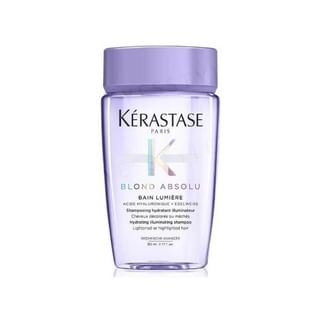
Kérastase Blond Absolu Bain Lumière Hydrating Illuminating Shampoo
A hydrating and illuminating shampoo designed for lightened, bleached, gray, or light faux-blonde hair. Infused with Hyaluronic Acid and Edelweiss Flower Extract, it gently cleanses, hydrates, and enhances shine.
Color-safe
Dryness
Dullness
Fine
Thick
Straight
Optimized for Your Environment & Lifestyle
Nykaa
In stock
Recommended

Kérastase Blond Absolu Bain Lumière Hydrating Illuminating Shampoo
Kérastase
kerastase-blond-absolu-bain-lumiere-hydrating-illuminating-shampoo
Shampoo
10407597867301
Morning or Evening?
How often will you use this product?
Notes


Secure payment protection
Your Biodata Compatibility Analysis
Based on your 6 hair health indices and environmental factors
Poor Match
Significant incompatibilities
Growth Cycle Health Index
Hair Match
Hair Health Index Alignment
Optimal for OSI, SSI, DI, HSI
Ingredient Efficacy
Matching Ingredient Score
Environment Compatibility
Current UV, Air Quality & Humidity
Why This Works for Your Specific Profile
Damage Index:
Very healthy or severely damaged hair falls outside optimal treatment parameters
Water Quality:
Soft or moderately hard water does not require intensive treatment causing over-cleansing and dryness
Hair:
Closed cuticles resist product penetration causing surface buildup without internal benefits
Active Lifestyle:
High activity and frequent washing rapidly strip product benefits requiring excessive reapplication
Your Hair Profile Integration
Your Hair Archetype

Density Level

Washing Frequency

Shedding Level

Oil Level
Your Hair Health Indices
Oil Secretion (OSI)
Very low oil production
Scalp Sensitivity (SSI)
Very low sensitivity
Growth Rate (CMR)
Poor metabolism rate
Damage Index (DI)
Minimal damage
Hair Strength (HSI)
Very weak strength
Softness Index (SI)
Significant improvement needed
Water & Environmental Integration

Water:


Expected Results & Timeline
Key Highlights

What is it?
Hydrating and illuminating shampoo with key ingredients Hyaluronic Acid and Edelweiss Flower Extract

Who Is It For
Adults

Budget
$28.50 - $57.00

Timeline
Immediate
Why You’ll Love It

What Does It Help With?
Dryness, Dullness

Best for
Color-treated

Features
Intensely hydrates hair fiber, removes impurities and build-up, illuminates naturally shiny hair

Checks
Ingredients Overview
Ingredients List
aqua-water-eau, sodium-laureth-sulfate, glycerin, coco-betaine, sodium-chloride, cocamide-mipa, citric-acid, sodium-benzoate, sodium-hydroxide, hexylene-glycol, hydroxypropyl-guar-hydroxypropyltrimonium-chloride, salicylic-acid, limonene, tocopherol, leontopodium-alpinum-flower-leaf-extract, sodium-hyaluronate, malva-sylvestris-flower-leaf-stem-extract-mallow-flower-leaf-stem-extract, potassium-sorbate, parfum-fragrance
Key Ingredients
Hyaluronic Acid, Edelweiss Flower Extract
Ingredients Details
Coco-betaine
Common Name(s): Coco-betaine,inci ingredient,cosmetic active
CAS Number: N/a
DESCRIPTION
What It Does: Provides documented cosmetic activity from coco-betaine.
Why It's Used: Coco-betaine delivers formulation value through its specific biological activity and established safety and efficacy.
How It Works: Source: coco-betaine. mechanism: documented in cosmetic literature. safety: cosing-reviewed. standard cosmetic use concentrations.
Typically Found In: Skin care formulations,active products
TECHNICAL DETAILS
Primary Category: Functional ingredient – humectant
Secondary Functions: Tewl reduction,skin plumping
Application Areas:

Facial Skincare
Body Care
Hair Care

Beard Care
Color Cosmetics (Makeup)
Dietary/Oral Supplements
Typical Concentration Range: 0.1%–5%
SOURCING & ETHICS
Vegan Status: Conditional - feedstock declaration required
Halal Status: Unverified - feedstock declaration required (plant, animal and petrochemical routes all exist)
Source Notes: Synthetic or naturally derived. excellent aqueous solubility. [audit 2026-07-29 rev2: origin-dependent: the same inci exists in plant, animal and petrochemical versions and the name does not discriminate. determination requires shariah-panel sign-off.]
SKIN COMPATIBILITY
Irritancy Rating: 1/5 – very low
Comedogenicity Rating: 0/5 – non-comedogenic
Sensitivity Concerns: Non-irritating; suitable for all skin types.
Safe for Sensitive Skin: Yes
SAFETY & COMPATIBILITY
Safety Profile: Excellent safety profile. ewg score: 1.
Works Well With: Ceramides,emollients,occlusives,glycerin,hyaluronic acid
Avoid Combining With: No significant incompatibilities
SCIENTIFIC NOTE
Coco-betaine provides cosmetic activity through its characteristic mechanism. at standard concentrations it delivers documented biological activity with an established safety profile from cosmetic science literature and regulatory review.
Last Verified: 2026-03-12
Primary Sources: Cosing database,coco-betaine technical literature
Glycerin
Common Name(s): Glycerol,glycerine,1,2,3-propanetriol
CAS Number: 56-81-5
DESCRIPTION
What It Does: Glycerin pulls water from the environment and deeper skin layers into the outer skin layer (epidermis), boosting moisture levels and keeping skin soft, smooth, and plump.
Why It's Used: It is used in virtually every moisturizer, serum, and cleanser because it is highly effective at hydrating skin, is well-tolerated by all skin types, and enhances the texture and spreadability of formulations.
How It Works: As a humectant, glycerin forms hydrogen bonds with water molecules, trapping them in the skin. it also reinforces the skin barrier by integrating into lipid structures between skin cells.
Typically Found In: Moisturizers,serums,cleansers,toners,sheet masks,sunscreens,body lotions,shampoos,conditioners
TECHNICAL DETAILS
Primary Category: Humectant
Secondary Functions: Skin barrier support,emollient,solvent
Application Areas:
Facial Skincare
Body Care
Hair Care
Beard Care
Color Cosmetics (Makeup)
Dietary/Oral Supplements
Typical Concentration Range: 1%–30% (typical: 3–10%)
SOURCING & ETHICS
Vegan Status: Conditional - feedstock declaration required
Halal Status: Unverified - feedstock declaration required (plant, animal and petrochemical routes all exist)
Source Notes: Derived from plant oils via hydrolysis or saponification; synthetic versions also available. palm-derived glycerin carries sustainability concerns. [audit 2026-07-29 rev2: origin-dependent: the same inci exists in plant, animal and petrochemical versions and the name does not discriminate. determination requires shariah-panel sign-off.]
SKIN COMPATIBILITY
Irritancy Rating: 1/5 – very low; non-irritating at all standard concentrations
Comedogenicity Rating: 0/5 – non-comedogenic
Sensitivity Concerns: Extremely rare allergic reactions; generally safe for all skin types including sensitive and baby skin
Safe for Sensitive Skin: Yes
SAFETY & COMPATIBILITY
Safety Profile: Widely recognized as safe. ewg hazard score: 1. no significant concerns for irritation, sensitization, or toxicity at typical concentrations (up to 50%).
Works Well With: Hyaluronic acid,ceramides,niacinamide,panthenol,urea,peptides,retinol,ahas/bhas
Avoid Combining With: No known incompatibilities at standard concentrations
SCIENTIFIC NOTE
Glycerin is an endogenous skin component found naturally in the stratum corneum. aquaporin-3 channels in keratinocytes facilitate glycerin transport, making it integral to natural skin hydration pathways.
Last Verified: 2026-03-12
Primary Sources: Cosing database,cir safety assessment,ewg skin deep,inci decoder
Hyaluronic Acid
Common Name(s): Ha,sodium hyaluronate (salt form),hyaluronan,d-glucuronic acid-n-acetyl-d-glucosamine polymer
CAS Number: 9004-61-9
DESCRIPTION
What It Does: Hyaluronic acid draws and locks moisture into the skin at multiple depths (surface and deeper layers depending on molecular weight), creating a plumping, smoothing, and hydrating effect.
Why It's Used: It is used because it is endogenous to human skin, making it exceptionally biocompatible and non-irritating. its unparalleled moisture-binding capacity makes it the most effective hydrating ingredient available.
How It Works: Ha binds water molecules through its many hydroxyl and carboxyl groups, creating a gel-like matrix. high molecular weight ha (>500 kda) hydrates the skin surface; low molecular weight ha (<50 kda) penetrates deeper to provide interior hydration.
Typically Found In: Serums,moisturizers,sheet masks,toners,eye creams,lip treatments,dermal fillers (injectable)
TECHNICAL DETAILS
Primary Category: Active ingredient – humectant/hydrator
Secondary Functions: Barrier repair,plumping,anti-aging
Application Areas:
Facial Skincare
Body Care
Hair Care
Beard Care
Color Cosmetics (Makeup)
Dietary/Oral Supplements
Typical Concentration Range: 0.1%–2% (effective at very low concentrations; multi-weight ha provides superior results)
SOURCING & ETHICS
Vegan Status: Conditional - feedstock declaration required
Halal Status: Unverified - feedstock declaration required (plant, animal and petrochemical routes all exist)
Source Notes: Originally extracted from rooster combs; now predominantly produced via biotechnology (bacterial fermentation), which is vegan and more sustainable. [audit 2026-07-29 rev2: origin-dependent: the same inci exists in plant, animal and petrochemical versions and the name does not discriminate. determination requires shariah-panel sign-off.]
SKIN COMPATIBILITY
Irritancy Rating: 1/5 – very low; one of the gentlest skincare ingredients known
Comedogenicity Rating: 0/5 – non-comedogenic
Sensitivity Concerns: In very dry environments, high-molecular-weight ha on the surface can potentially draw moisture out of the skin if not sealed with an occlusive. apply to damp skin and seal with moisturizer.
Safe for Sensitive Skin: Yes – ideal for all skin types including rosacea, eczema, and post-procedure skin
SAFETY & COMPATIBILITY
Safety Profile: Exceptional safety profile. endogenous molecule – no toxicity concerns. ewg hazard score: 1. safe during pregnancy.
Works Well With: Virtually all ingredients; especially ceramides,glycerin,peptides,retinol (reduces irritation),niacinamide,vitamin c
Avoid Combining With: No significant incompatibilities; high concentrations of alcohol in a formula may reduce its efficacy
SCIENTIFIC NOTE
Hyaluronic acid naturally degrades in skin (half-life ~1–2 days). the skin produces it endogenously, but production decreases with age. multi-molecular-weight ha formulas provide hydration at both surface and deeper skin levels.
Last Verified: 2026-03-12
Primary Sources: Cosing database,cir safety assessment,papakonstantinou et al. (2012) dermato-endocrinology
Limonene
Common Name(s): D-limonene,(r)-limonene,dipentene
CAS Number: 5989-27-5
DESCRIPTION
What It Does: Provides the defining fresh citrus fragrance note alongside solvent and antimicrobial properties.
Why It's Used: The citrus industry's primary fragrance compound and the most abundant terpene in essential oils – limonene provides the clean, universally appealing fresh citrus scent character.
How It Works: D-limonene activates trpv1 mildly at high concentrations. antimicrobial via membrane disruption. solvent for oils and lipophilic compounds. cleaning via emulsification of lipid soils.
Typically Found In: Citrus-scented products,cleaning products,fragrance compounds
TECHNICAL DETAILS
Primary Category: Fragrance component – cyclic monoterpene
Secondary Functions: Skin conditioning
Application Areas:
Facial Skincare
Body Care
Hair Care
Beard Care
Color Cosmetics (Makeup)
Dietary/Oral Supplements
Typical Concentration Range: 0.001%–3%
SOURCING & ETHICS
Vegan Status: Conditional - supplier confirmation required
Halal Status: Unverified - supplier confirmation required
Source Notes: Commercially produced for cosmetic use. verify vegan/halal status with supplier. [audit 2026-07-29 rev2: the record's own source_notes does not assert a non-animal origin, or instructs the reader to verify with the supplier; "yes" asserts knowledge the record does not hold. determination requires shariah-panel sign-off.]
SKIN COMPATIBILITY
Irritancy Rating: 1/5 – very low
Comedogenicity Rating: 0/5 – non-comedogenic
Sensitivity Concerns: Well-tolerated by most skin types.
Safe for Sensitive Skin: Yes
SAFETY & COMPATIBILITY
Safety Profile: Eu cosmetics regulation: declared fragrance allergen. oxidises to sensitising compounds (limonene hydroperoxides) on air exposure – use with antioxidant stabilisers. ifra guidelines apply.
Works Well With: Standard skincare actives
Avoid Combining With: No known significant incompatibilities
SCIENTIFIC NOTE
Limonene's sensitisation risk arises not from limonene itself but from its autooxidation products (limonene-1,2-epoxide and limonene hydroperoxides) formed on air exposure. fresh limonene has low sensitisation potential, but air-oxidised limonene's hydroperoxide products are potent skin sensitisers. this explains why oxidation-stabilised formulations (with bht or other antioxidants) are required to manage limonene safety.
Last Verified: 2026-03-12
Primary Sources: Cosing database,ifra standards,bråred christensson et al. limonene oxidation study
Personalized Usage Instructions
How to Use
Step 1
Apply to wet hair, massage, and rinse thoroughly
Step 2
In case of contact with eyes, rinse them immediately and thoroughly
Medical Chemicals

Protein/Moisture
- Moisture
pH Level
- Acidic

Porosity Taget
- High Porosity
Customized for Your Profile
Scalp Condtions
Sensitive Scalp, pH Balanced
Climate Suitability
Humid, Dry, Hard Water, Soft Water, UV Protection, Pollution Shield, Winter, Summer
Clinical Claims
-50% of Pollution Particles, 4x Shinier Hair, 11x Stronger Hair, +84% Hydrated Hair
Frequency
Apply to wet hair, massage, and rinse thoroughly. In case of contact with eyes, rinse them immediately and thoroughly.