

Nykaa E retail limited
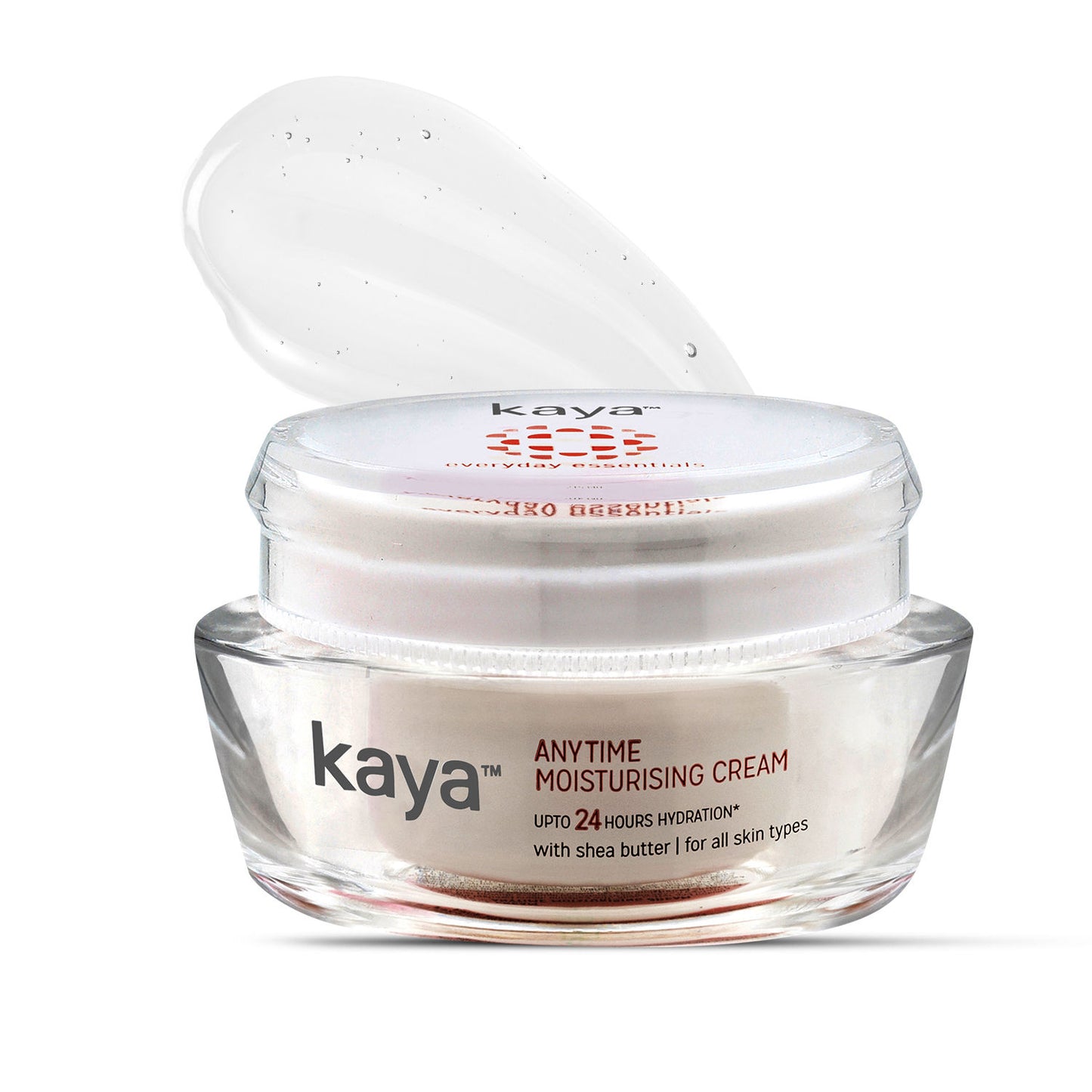
Kaya Anytime Moisturising Cream

Kaya Anytime Moisturising Cream
Nykaa E retail limited
kaya-anytime-moisturising-cream
Moisturize
10085086232869
Morning or Evening?
How often will you use this product?
Notes


Highlights
WHAT IS IT?
Moisturizing cream with Shea Butter
FEATURES
Suitable for all skin types
BEST FOR
normal
CHECKS
Who Is It For?
All Age Groups All GendersWhat Does It Help With?
MoisturizationBudget
Affordable (under $30)How To Use
Which routine should it be used in?
Instructions:
Key Information

What Nykaa E retail limited Says
Product Description:
Moisturizing cream with Shea Butter suitable for all skin types
About the Brand:
Ingredients Overview
Ingredients List
Kokum butter, Shea butter, Vitamin B5, Hydroxyethyl Urea
Key Ingredients
shea-butter
Ingredients Details
Hydroxyethyl Urea
Common Name(s): 2-hydroxyethylurea,hydrovance
CAS Number: 2078-71-9
DESCRIPTION
What It Does: Provides exceptional moisture retention with mild keratolytic action softening rough, dry skin.
Why It's Used: Used as a gentler, more formulation-stable alternative to urea in moisturizers and treatments where urea's irritation or formulation limitations are concerns.
How It Works: The hydroxyethyl group improves aqueous stability vs urea while maintaining hydrogen bond donation/acceptance for water retention. mild keratolytic activity from urea moiety softens stratum corneum without significant irritation.
Typically Found In: Intensive moisturizers,keratolytic treatments,body lotions,foot care
TECHNICAL DETAILS
Primary Category: Functional ingredient – urea derivative humectant
Secondary Functions: Keratolytic,superior humectant,skin softening
Application Areas:

Facial Skincare
Body Care
Hair Care

Beard Care
Color Cosmetics (Makeup)
Dietary/Oral Supplements
Typical Concentration Range: 2%–10%
SOURCING & ETHICS
Vegan Status: Yes – synthetic
Halal Status: Yes
Source Notes: Synthetic or naturally derived. excellent aqueous solubility.
SKIN COMPATIBILITY
Irritancy Rating: 1/5 – very low
Comedogenicity Rating: 0/5 – non-comedogenic
Sensitivity Concerns: Non-irritating; suitable for all skin types.
Safe for Sensitive Skin: Yes
SAFETY & COMPATIBILITY
Safety Profile: Excellent safety profile. better tolerated than high-concentration urea. ewg score: 1.
Works Well With: Ceramides,emollients,occlusives,glycerin,hyaluronic acid
Avoid Combining With: No significant incompatibilities
SCIENTIFIC NOTE
Hydroxyethyl modification significantly improves urea's aqueous stability (preventing hydrolysis to ammonia and co2) while the urea moiety retains hydrogen bond-forming capacity for superior water retention. superior formulation stability vs urea at equivalent concentrations.
Last Verified: Cosing database,cir safety assessment,loden urea review
Primary Sources: 2026-03-12
Shea Butter
Common Name(s): Shea butter,karite butter
CAS Number: 91080-23-8
DESCRIPTION
What It Does: Provides deep nourishing emolliency with anti-inflammatory cinnamic acid esters and a uniquely rich unsaponifiable fraction.
Why It's Used: The most nutritious plant butter – unique cinnamic acid esters, lupeol, and rich unsaponifiable fraction provide anti-inflammatory and wound healing benefits beyond standard fatty acid emolliency.
How It Works: Cinnamic acid esters absorb uv radiation providing mild natural uv filtering (spf 3-4). lupeol inhibits nf-kb for anti-inflammatory activity. high stearic acid provides occlusive barrier function. rich unsaponifiable fraction (4-9%) provides phytosterols, tocopherols, and triterpenes for bioactive skin benefits.
Typically Found In: Body butters,rich moisturizers,baby products,hair conditioners,lip balms
TECHNICAL DETAILS
Primary Category: Functional ingredient – emollient
Secondary Functions: Cinnamic acid uv support,lupeol anti-inflammatory,rich emolliency
Application Areas:
Facial Skincare
Body Care
Hair Care
Beard Care
Color Cosmetics (Makeup)
Dietary/Oral Supplements
Typical Concentration Range: 1%–100%
SOURCING & ETHICS
Vegan Status: Yes – from butyrospermum parkii nuts
Halal Status: Yes
Source Notes: Unrefined (raw) shea retains more unsaponifiable fraction and stronger natural scent/color. refined shea is odorless, white, and cleaner for formulation. certified fair trade supports west african women's cooperatives.
SKIN COMPATIBILITY
Irritancy Rating: 1/5 – very low
Comedogenicity Rating: 0/5 – non-comedogenic (refined); 2/5 – low (raw/unrefined)
Sensitivity Concerns: Non-irritating.
Safe for Sensitive Skin: Yes
SAFETY & COMPATIBILITY
Safety Profile: Excellent safety profile. ewg score: 1.
Works Well With: Humectants,ceramides,actives as carrier
Avoid Combining With: No significant incompatibilities
SCIENTIFIC NOTE
Shea butter's unsaponifiable fraction (4-9%, vs coconut oil's 0.5% and olive oil's 1-2%) is exceptionally rich in triterpenes, phytosterols, and tocopherols. this fraction is responsible for shea's anti-inflammatory and wound healing properties that simple fatty acid analysis fails to reveal.
Last Verified: Cosing database,lin et al. shea butter cinnamic acid study,cir safety assessment
Primary Sources: 2026-03-12
Vitamin B5
Common Name(s): Panthenol / vitamin b5,pro-vitamin humectant conditioner,wound healing active
CAS Number: N/a
DESCRIPTION
What It Does: Deeply hydrates by binding water in the viable epidermis (not just the sc surface), stimulates keratinocyte proliferation for wound healing and barrier repair, and coats hair strands for conditioning and shine.
Why It's Used: Panthenol penetrates far deeper than glycerin due to its smaller size — reaching the viable epidermis where it converts to pantothenic acid (coa precursor) for direct metabolic support of skin cell function.
How It Works: D-panthenol is oxidised to pantothenic acid by skin alcoholic dehydrogenase after sc penetration → incorporated into coenzyme a (coa) → acetyl-coa for fatty acid synthesis supporting ceramide production. the polyol oh groups provide direct humectant water binding during transit.
Typically Found In: Healing skin care,conditioning,hair products
TECHNICAL DETAILS
Primary Category: Functional ingredient – humectant
Secondary Functions: Tewl reduction,skin plumping
Application Areas:
Facial Skincare
Body Care
Hair Care
Beard Care
Color Cosmetics (Makeup)
Dietary/Oral Supplements
Typical Concentration Range: 0.5%–5%
SOURCING & ETHICS
Vegan Status: Yes
Halal Status: Yes
Source Notes: Synthetic or naturally derived. excellent aqueous solubility.
SKIN COMPATIBILITY
Irritancy Rating: 1/5 – very low
Comedogenicity Rating: 0/5 – non-comedogenic
Sensitivity Concerns: Non-irritating; suitable for all skin types.
Safe for Sensitive Skin: Yes
SAFETY & COMPATIBILITY
Safety Profile: Excellent safety profile. ewg score: 1.
Works Well With: Ceramides,emollients,occlusives,glycerin,hyaluronic acid
Avoid Combining With: No significant incompatibilities
SCIENTIFIC NOTE
Panthenol's unique dual mechanism — provitamin metabolic activity (via coa) and direct humectant function (via oh groups) — provides both immediate surface moisture and deeper metabolic skin support from a single vitamin ingredient.
Last Verified: Cosing database,d-panthenol vitamin b5 humectant wound healing review
Primary Sources: 2026-03-12
