

Nykaa E retail limited
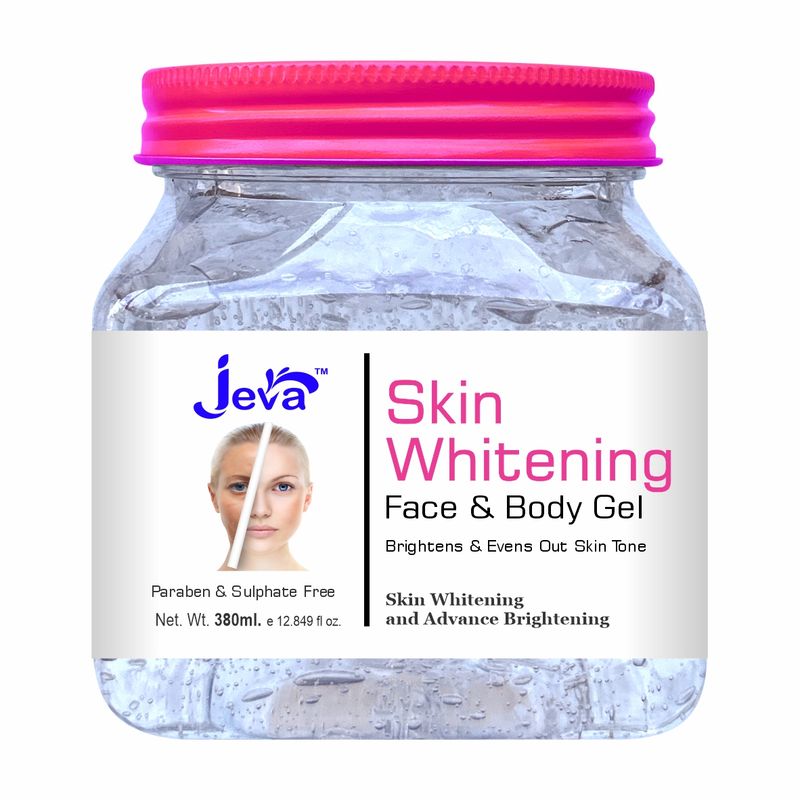
Jeva Skin Whitening & Brightening Instant Glow Gel For Normal To Dry Skin

Jeva Skin Whitening & Brightening Instant Glow Gel For Normal To Dry Skin
Nykaa E retail limited
jeva-skin-whitening-brightening-instant-glow-gel-for-normal-to-dry-skin
Moisturize
10085004935461
Morning or Evening?
How often will you use this product?
Notes


Highlights
WHAT IS IT?
Instant Glow Gel Brightening Gel with 13 ingredients
FEATURES
Reduces uneven pigmentation, enriched with sodium lactate and D-panthenol, reduces dark spots, rejuvenates skin, lightweight texture, suitable for dry and dehydrated skin, cruelty-free
BEST FOR
dry
CHECKS
Paraben-Free,Sulfate-free
Who Is It For?
What Does It Help With?
Pigmentation Reduction Brightening Dark Spot Reduction NourishmentBudget
Affordable (under $30)How To Use
Which routine should it be used in?
Instructions:
Key Information


What Nykaa E retail limited Says
Product Description:
Jeva Skin Brightening Instant Glow Gel is a breakthrough, advanced formula containing fruit and herbal extracts that reduce pigmentation and nourish your skin overnight. It helps brighten your skin overnight because it contains sodium lactate and D-panthenol. It reveals visibly brighter skin by reducing dark spots and enhancing your skin's radiance naturally. Features: Gel that helps brighten your skin tone by reducing uneven pigmentation, enriched with the goodness of sodium lactate, and D panthenol, unveils visibly brighter skin by reducing dark spots, rejuvenates the skin from within and provides extra glow, has a lightweight texture that is absorbed easily into the skin, suitable for dry and dehydrated skin, cruelty-free.
About the Brand:
Ingredients Overview
Ingredients List
D.M.Water,Glycerine,D-Panthenol,Propylene-Glycol,Carbopol,Xanthan-Gum,Polysorbate,Sodium-Lactate,Dmdm-Hydantoin,Phenoxyethanol,Disodium-Edta,Sodium-Benzoate,Triethanolamine,Perfume
Key Ingredients
Sodium Lactate,D-Panthenol
Ingredients Details
Carbopol
Common Name(s): Carbomer/acrylate crosspolymer,highly efficient gel former,rheology modifier
CAS Number: N/a
DESCRIPTION
What It Does: Forms transparent to translucent high-viscosity gels at very low concentration, suspends particles and pigments against sedimentation through yield stress, and provides the elegant shear-thinning texture of premium gel serums.
Why It's Used: The most efficient aqueous thickener available — achieving gel viscosity at 0.1% that requires 3–5% of xanthan gum or 2% of cellulose thickeners, enabling clean-label lightweight formulations with high active loading.
How It Works: At ph <4: –cooh groups protonated, polymer coiled compact, low viscosity. neutralisation with naoh/tea deprotonates –cooh to –coo⁻; like-charge repulsion expands polymer coil 100–1000×. above overlap concentration c* (~0.1%), expanded coils entangle forming viscoelastic gel network providing high zero-shear viscosity and shear-thinning.
Typically Found In: Gel serums,transparent toners,suspension systems
TECHNICAL DETAILS
Primary Category: Active ingredient – cosmetic active
Secondary Functions: Skin conditioning
Application Areas:

Facial Skincare

Body Care
Hair Care
Beard Care
Color Cosmetics (Makeup)
Dietary/Oral Supplements
Typical Concentration Range: 0.1%–2%
SOURCING & ETHICS
Vegan Status: Conditional - supplier confirmation required
Halal Status: Unverified - supplier confirmation required
Source Notes: Commercially produced for cosmetic use. verify vegan/halal status with supplier. [audit 2026-07-29 rev2: the record's own source_notes does not assert a non-animal origin, or instructs the reader to verify with the supplier; "yes" asserts knowledge the record does not hold. determination requires shariah-panel sign-off.]
SKIN COMPATIBILITY
Irritancy Rating: 1/5 – very low
Comedogenicity Rating: 0/5 – non-comedogenic
Sensitivity Concerns: Well-tolerated by most skin types.
Safe for Sensitive Skin: Yes
SAFETY & COMPATIBILITY
Safety Profile: Good safety profile at recommended concentrations. ewg score: 1–2.
Works Well With: Standard skincare actives
Avoid Combining With: No known significant incompatibilities
SCIENTIFIC NOTE
Carbomer is edta-sensitive — divalent cation contamination (ca²⁺, mg²⁺ from hard water) can collapse the electrostatic gel network. including edta or citric acid chelation in carbomer-gelled formulas is standard practice to maintain gel integrity.
Last Verified: 2026-03-12
Primary Sources: Cosing database,carbomer polyacrylate gel mechanism review
D-panthenol
Common Name(s): D-panthenol,b-vitamin skin active,multi-benefit conditioning
CAS Number: N/a
DESCRIPTION
What It Does: Provides the specific b-vitamin's characteristic skin and hair benefits: brightening and barrier reinforcement (niacinamide), keratin structural support (biotin), deep conditioning humectancy (panthenol).
Why It's Used: B-vitamins operate through fundamental cellular biochemistry pathways — nad⁺ for niacinamide, carboxylase cofactor for biotin, coa synthesis for panthenol — providing multi-benefit activity from essential metabolic chemistry.
How It Works: Acts as coenzyme or substrate in essential metabolic pathways: niacinamide → nad⁺/nadp⁺ → ceramide synthesis, melanosome transfer inhibition; biotin → carboxylase → fatty acid synthesis for ceramide; panthenol → pantothenic acid → coa → lipid metabolism.
Typically Found In: Multi-function skin care,b-vitamin formulas
TECHNICAL DETAILS
Primary Category: Active ingredient – vitamin b complex
Secondary Functions: Antioxidant cofactor,metabolic support
Application Areas:
Facial Skincare
Body Care
Hair Care
Beard Care
Color Cosmetics (Makeup)
Dietary/Oral Supplements
Typical Concentration Range: 0.1%–10%
SOURCING & ETHICS
Vegan Status: Yes
Halal Status: Yes
Source Notes: Synthetically produced for cosmetic use.
SKIN COMPATIBILITY
Irritancy Rating: 1/5 – very low
Comedogenicity Rating: 0/5 – non-comedogenic
Sensitivity Concerns: Non-irritating; excellent tolerability.
Safe for Sensitive Skin: Yes
SAFETY & COMPATIBILITY
Safety Profile: Excellent safety profile. ewg score: 1.
Works Well With: Other b vitamins,niacinamide,antioxidant complexes
Avoid Combining With: No significant incompatibilities
SCIENTIFIC NOTE
B-vitamins are water-soluble, non-irritating, and well-tolerated across all skin types — providing clinical efficacy with an exceptional safety profile from their essential nutrient status.
Last Verified: 2026-03-12
Primary Sources: Cosing database,d-panthenol b-vitamin skin review
Glycerine
Common Name(s): Glycerin,universal humectant,water-binding skin conditioning
CAS Number: N/a
DESCRIPTION
What It Does: Attracts and retains moisture in the sc, improves skin barrier function at low concentrations, provides gentle keratolytic softening, and acts as a co-solvent for water-soluble actives.
Why It's Used: The reference humectant — lowest cost, best safety profile, universal formulation compatibility, and present naturally in the sc via lipase-mediated glycerolipid hydrolysis makes glycerin the industry standard against which all humectants are benchmarked.
How It Works: Three hydroxyl groups form 6 h-bonds with water molecules per glycerol unit — the highest oh-group density per carbon of any commercial humectant. glycerin also down-regulates epidermal serine proteases that overactivate in dry sc, improving desquamation and barrier integrity.
Typically Found In: All cosmetics,universal
TECHNICAL DETAILS
Primary Category: Functional ingredient – humectant
Secondary Functions: Tewl reduction,skin plumping
Application Areas:
Facial Skincare
Body Care
Hair Care
Beard Care
Color Cosmetics (Makeup)
Dietary/Oral Supplements
Typical Concentration Range: 1%–40%
SOURCING & ETHICS
Vegan Status: Yes
Halal Status: Yes
Source Notes: Synthetic or naturally derived. excellent aqueous solubility.
SKIN COMPATIBILITY
Irritancy Rating: 1/5 – very low
Comedogenicity Rating: 0/5 – non-comedogenic
Sensitivity Concerns: Non-irritating; suitable for all skin types.
Safe for Sensitive Skin: Yes
SAFETY & COMPATIBILITY
Safety Profile: Excellent safety profile. ewg score: 1.
Works Well With: Ceramides,emollients,occlusives,glycerin,hyaluronic acid
Avoid Combining With: No significant incompatibilities
SCIENTIFIC NOTE
Epidermal lipases hydrolyse sc glycerophospholipids during cornification, releasing glycerol that contributes to the natural nmf — topical glycerin directly supplements this endogenous sc humectant pool.
Last Verified: 2026-03-12
Primary Sources: Cosing database,glycerin universal humectant review
Phenoxyethanol
Common Name(s): 2-phenoxyethanol,rose ether,ethylene glycol monophenyl ether
CAS Number: 122-99-6
DESCRIPTION
What It Does: Prevents microbial contamination and spoilage in cosmetic formulations.
Why It's Used: The benchmark cosmetic preservative – eu-permitted up to 1%, effective against virtually all cosmetically relevant microorganisms, and excellent tolerability.
How It Works: Phenol ring provides broad antimicrobial activity via disruption of bacterial and fungal cell membranes and inhibition of enzymatic activity. effective against gram-positive and gram-negative bacteria, yeasts (candida), and molds (aspergillus). activity ph range: 3-9.
Typically Found In: All cosmetic formulations as primary preservative
TECHNICAL DETAILS
Primary Category: Functional ingredient – broad-spectrum preservative
Secondary Functions: Skin conditioning
Application Areas:
Facial Skincare
Body Care
Hair Care
Beard Care
Color Cosmetics (Makeup)
Dietary/Oral Supplements
Typical Concentration Range: 0.1%–1% (eu max 1%)
SOURCING & ETHICS
Vegan Status: Conditional - supplier confirmation required
Halal Status: Unverified - supplier confirmation required
Source Notes: Commercially produced for cosmetic use. verify vegan/halal status with supplier. [audit 2026-07-29 rev2: the record's own source_notes does not assert a non-animal origin, or instructs the reader to verify with the supplier; "yes" asserts knowledge the record does not hold. determination requires shariah-panel sign-off.]
SKIN COMPATIBILITY
Irritancy Rating: 1/5 – very low
Comedogenicity Rating: 0/5 – non-comedogenic
Sensitivity Concerns: Well-tolerated by most skin types.
Safe for Sensitive Skin: Yes
SAFETY & COMPATIBILITY
Safety Profile: Eu cosmetics regulation max 1%. sccs assessed as safe at ≤1%. avoid use around eyes in baby products per some country regulations. ewg score: 4.
Works Well With: Standard skincare actives
Avoid Combining With: No known significant incompatibilities
SCIENTIFIC NOTE
Phenoxyethanol's widespread adoption as the primary cosmetic preservative followed the phaseout of parabens from many formulations in the 2000s-2010s. despite having a comparable or better safety profile to parabens, it is often cited in 'free-from' formulations – a consumer perception issue rather than a scientific safety concern.
Last Verified: