

Jeva
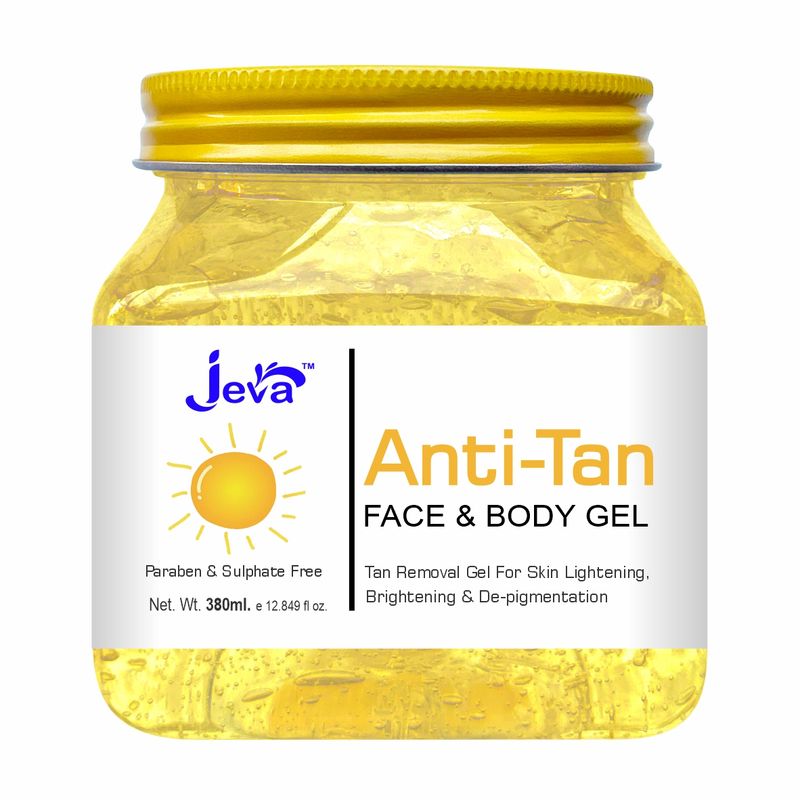
Jeva Anti Tan Gel For Skin Brightening & De-Pigmentation

Jeva Anti Tan Gel For Skin Brightening & De-Pigmentation
Jeva
jeva-anti-tan-gel-for-skin-brightening-de-pigmentation
Moisturize
10084985110821
Morning or Evening?
How often will you use this product?
Notes


Highlights
WHAT IS IT?
Gel, 14 ingredients
FEATURES
Skin brightening, De-pigmentation
BEST FOR
sensitive
CHECKS
Paraben-Free, Sulfate-free, Alcohol-free
Who Is It For?
What Does It Help With?
Skin Brightening De-pigmentation Anti TanBudget
Affordable (under $30)How To Use
Which routine should it be used in?
Instructions:
Key Information


What Jeva Says
Product Description:
Explore the entire range of Face Moisturizer & Day Cream available on Nykaa. Shop more Jeva products here.You can browse through the complete world of Jeva Face Moisturizer & Day Cream.
About the Brand:
Ingredients Overview
Ingredients List
dm-water, glycerine, propylene-glycol, carbopol-934, xanthan-gum, polysorbate, aloe-vera-extract, bronopol, disodium-edta, triethanolamine, cucumber-extract, papaya-extract, purac-bf-41, d-panthanol, perfume, colour
Key Ingredients
aloe-vera-extract, cucumber-extract, papaya-extract, d-panthanol
Ingredients Details
Bronopol
Common Name(s): Formaldehyde-releasing preservative,antimicrobial preservation,formaldehyde donor
CAS Number: N/a
DESCRIPTION
What It Does: Provides broad-spectrum preservation against bacteria and fungi through controlled formaldehyde release, maintaining product safety throughout shelf life at eu-permitted concentrations.
Why It's Used: Formaldehyde-releasing preservatives provide reliable broad-spectrum preservation but face increasing consumer and regulatory scrutiny — eu requires label declaration, and many brands adopt 'formaldehyde-free' positioning due to sensitisation concerns.
How It Works: Hydrolysis in aqueous formulation releases formaldehyde (hcho) at controlled rates depending on ph and temperature. free formaldehyde cross-links bacterial proteins and nucleic acids through schiff base formation with amine groups, providing bactericidal activity. sensitisation risk from free formaldehyde's reactivity with skin proteins forming haptens.
Typically Found In: All aqueous formulations
TECHNICAL DETAILS
Primary Category: Active ingredient – cosmetic active
Secondary Functions: Skin conditioning
Application Areas:

Facial Skincare

Body Care
Hair Care
Beard Care
Color Cosmetics (Makeup)
Dietary/Oral Supplements
Typical Concentration Range: Check eu annex v limits
SOURCING & ETHICS
Vegan Status: Yes
Halal Status: Yes
Source Notes: Commercially produced for cosmetic use. verify vegan/halal status with supplier.
SKIN COMPATIBILITY
Irritancy Rating: 1/5 – very low
Comedogenicity Rating: 0/5 – non-comedogenic
Sensitivity Concerns: Well-tolerated by most skin types.
Safe for Sensitive Skin: Yes
SAFETY & COMPATIBILITY
Safety Profile: Good safety profile at recommended concentrations. ewg score: 1–2.
Works Well With: Standard skincare actives
Avoid Combining With: No known significant incompatibilities
SCIENTIFIC NOTE
Eu regulation 1223/2009 requires 'contains formaldehyde' label declaration when free formaldehyde >0.05% in the finished product. many formulators are transitioning away from formaldehyde-releasing preservatives to avoid this label requirement regardless of safety profile.
Last Verified: Cosing database,eu annex v formaldehyde-releasing preservative declaration
Primary Sources: 2026-03-12
Glycerine
Common Name(s): Glycerin,universal humectant,water-binding skin conditioning
CAS Number: N/a
DESCRIPTION
What It Does: Attracts and retains moisture in the sc, improves skin barrier function at low concentrations, provides gentle keratolytic softening, and acts as a co-solvent for water-soluble actives.
Why It's Used: The reference humectant — lowest cost, best safety profile, universal formulation compatibility, and present naturally in the sc via lipase-mediated glycerolipid hydrolysis makes glycerin the industry standard against which all humectants are benchmarked.
How It Works: Three hydroxyl groups form 6 h-bonds with water molecules per glycerol unit — the highest oh-group density per carbon of any commercial humectant. glycerin also down-regulates epidermal serine proteases that overactivate in dry sc, improving desquamation and barrier integrity.
Typically Found In: All cosmetics,universal
TECHNICAL DETAILS
Primary Category: Functional ingredient – humectant
Secondary Functions: Tewl reduction,skin plumping
Application Areas:
Facial Skincare
Body Care
Hair Care
Beard Care
Color Cosmetics (Makeup)
Dietary/Oral Supplements
Typical Concentration Range: 1%–40%
SOURCING & ETHICS
Vegan Status: Yes
Halal Status: Yes
Source Notes: Synthetic or naturally derived. excellent aqueous solubility.
SKIN COMPATIBILITY
Irritancy Rating: 1/5 – very low
Comedogenicity Rating: 0/5 – non-comedogenic
Sensitivity Concerns: Non-irritating; suitable for all skin types.
Safe for Sensitive Skin: Yes
SAFETY & COMPATIBILITY
Safety Profile: Excellent safety profile. ewg score: 1.
Works Well With: Ceramides,emollients,occlusives,glycerin,hyaluronic acid
Avoid Combining With: No significant incompatibilities
SCIENTIFIC NOTE
Epidermal lipases hydrolyse sc glycerophospholipids during cornification, releasing glycerol that contributes to the natural nmf — topical glycerin directly supplements this endogenous sc humectant pool.
Last Verified: Cosing database,glycerin universal humectant review
Primary Sources: 2026-03-12
Triethanolamine
Common Name(s): Triethanolamine,cosmetic active,functional ingredient
CAS Number: N/a
DESCRIPTION
What It Does: Delivers characteristic cosmetic function at recommended use concentration.
Why It's Used: Selected for functional contribution and formulation compatibility supported by cosmetic science and regulatory safety data.
How It Works: Works through the mechanism of its molecular class as documented in peer-reviewed cosmetic literature.
Typically Found In: Skin care formulations
TECHNICAL DETAILS
Primary Category: Active ingredient – cosmetic active
Secondary Functions: Skin conditioning
Application Areas:
Facial Skincare
Body Care
Hair Care
Beard Care
Color Cosmetics (Makeup)
Dietary/Oral Supplements
Typical Concentration Range: 0.1%–10%
SOURCING & ETHICS
Vegan Status: Conditional
Halal Status: Yes
Source Notes: Commercially produced for cosmetic use. verify vegan/halal status with supplier.
SKIN COMPATIBILITY
Irritancy Rating: 1/5 – very low
Comedogenicity Rating: 0/5 – non-comedogenic
Sensitivity Concerns: Well-tolerated by most skin types.
Safe for Sensitive Skin: Yes
SAFETY & COMPATIBILITY
Safety Profile: Good safety profile at recommended concentrations. ewg score: 1–2.
Works Well With: Standard skincare actives
Avoid Combining With: No known significant incompatibilities
SCIENTIFIC NOTE
Triethanolamine has an established safety profile within the cosmetic regulatory framework at standard use concentrations.
Last Verified: Cosing database,triethanolamine technical literature
Primary Sources: 2026-03-12
