

Nykaa E retail limited
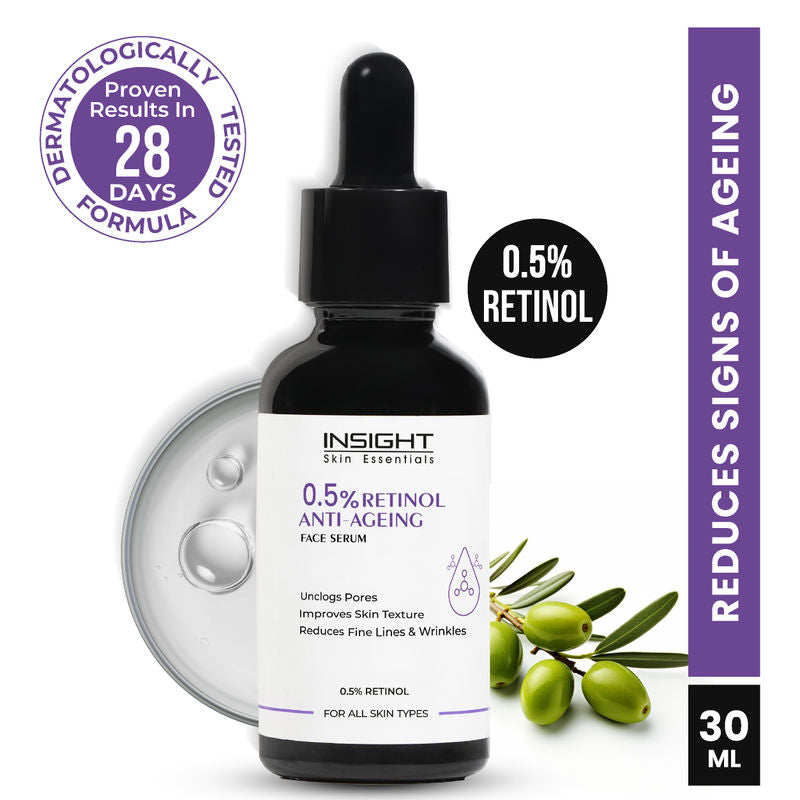
Insight Cosmetics 0.5% Retinol Anti-Ageing Face Serum

Insight Cosmetics 0.5% Retinol Anti-Ageing Face Serum
Nykaa E retail limited
insight-cosmetics-0-5-retinol-anti-ageing-face-serum
Serum
10084969677093
Morning or Evening?
How often will you use this product?
Notes


Highlights
WHAT IS IT?
Retinol Face Serum with 10 ingredients
FEATURES
Contains 0.5% Retinol, Anti-Ageing benefits, absorbs quickly into the skin, moisturizing with squalene and argan oil, antioxidant-rich with beta-carotene and tocopherol
BEST FOR
sensitive
CHECKS
Paraben-Free,Alcohol-free,Silicone-free
Who Is It For?
Adults UnisexWhat Does It Help With?
Anti-ageing Skin Renewal HydrationBudget
Affordable (under $30)How To Use
Which routine should it be used in?
Instructions:
Key Information


What Nykaa E retail limited Says
Product Description:
Explore the entire range of Serums & Essence available on Nykaa. Shop more Insight Cosmetics products here. You can browse through the complete world of Insight Cosmetics Serums & Essence.
About the Brand:
Ingredients Overview
Ingredients List
Squalene,Argania-Spinosa-L-Oil,Retinol,Hydrogenated-Polyisobutene,Crambe-Abyssinica-Seed-Oil,Beta-Carotene,Xanthophylls,Tocopherol,Helianthus-Annuus-Seed-Oil,Rosmarinus-Officinalis-Leaf-Extract
Key Ingredients
Retinol,Squalene,Argania Spinosa L. Oil,Beta-Carotene,Tocopherol
Ingredients Details
Beta-carotene
Common Name(s): Provitamin a,all-trans-beta-carotene
CAS Number: 7235-40-7
DESCRIPTION
What It Does: Neutralizes free radicals, provides photoprotection support, conditions skin, and imparts healthy skin tone.
Why It's Used: Natural antioxidant, skin conditioning, and natural colorant with additional provitamin a activity.
How It Works: Quenches singlet oxygen and free radicals. enzymatic cleavage yields retinal. accumulates in stratum corneum for photoprotective antioxidant defense.
Typically Found In: Self-tanners,sunscreens,natural colorants,anti-aging formulations
TECHNICAL DETAILS
Primary Category: Active ingredient – vitamin a derivative
Secondary Functions: Uv protection support,natural colorant,vitamin a precursor
Application Areas:

Facial Skincare
Body Care

Hair Care
Beard Care
Color Cosmetics (Makeup)
Dietary/Oral Supplements
Typical Concentration Range: 0.01%–1%
SOURCING & ETHICS
Vegan Status: Yes – plant-derived or fermentation
Halal Status: Yes
Source Notes: Derived from dunaliella salina algae, carrot oil, or synthesized. algae-derived most sustainable.
SKIN COMPATIBILITY
Irritancy Rating: 1/5 – very low
Comedogenicity Rating: 0/5 – non-comedogenic
Sensitivity Concerns: Very well-tolerated; high concentrations may impart orange tint.
Safe for Sensitive Skin: Yes
SAFETY & COMPATIBILITY
Safety Profile: Safe at cosmetic concentrations. use spf. avoid during pregnancy. ewg score: 2.
Works Well With: Niacinamide,ceramides,hyaluronic acid,spf,tocopherol
Avoid Combining With: No significant incompatibilities
SCIENTIFIC NOTE
Beta-carotene accumulates in the stratum corneum and provides measurable photoprotection against uv-induced oxidative stress when applied topically. not a replacement for uv filters.
Last Verified: Cosing database,cir safety assessment,stahl & sies carotenoid review
Primary Sources: 2026-03-12
Retinol
Common Name(s): Vitamin a,all-trans retinol,(all-e)-3,7-dimethyl-9-(2,6,6-trimethyl-1-cyclohexen-1-yl)-2,4,6,8-nonatetraen-1-ol
CAS Number: 68-26-8
DESCRIPTION
What It Does: Retinol accelerates skin cell turnover, stimulates collagen production, reduces fine lines and wrinkles, fades hyperpigmentation, and helps normalize pore size.
Why It's Used: It is the most evidence-backed anti-aging ingredient available without a prescription. it provides comprehensive skin renewal benefits that no other single cosmetic ingredient can match.
How It Works: Retinol is converted in the skin to retinoic acid, which binds to retinoid receptors in cell nuclei. this activates gene expression changes that accelerate cell turnover, boost collagen synthesis, and inhibit matrix metalloproteinases (collagen-degrading enzymes).
Typically Found In: Night creams,serums,eye creams,targeted treatment products,anti-aging formulations
TECHNICAL DETAILS
Primary Category: Active ingredient – vitamin a derivative
Secondary Functions: Exfoliating,anti-acne,brightening
Application Areas:
Facial Skincare
Body Care
Hair Care
Beard Care
Color Cosmetics (Makeup)
Dietary/Oral Supplements
Typical Concentration Range: 0.025%–1% (otc); start at low concentrations and build up slowly
SOURCING & ETHICS
Vegan Status: Conditional – can be animal-derived (fish liver, egg yolk) or synthetic; verify source
Halal Status: Conditional – verify source; synthetic retinol is halal
Source Notes: Cosmetic retinol is predominantly synthetically manufactured. some natural sources include fish liver oils. synthetic is preferred for purity and sustainability.
SKIN COMPATIBILITY
Irritancy Rating: 3/5 – moderate; can cause dryness, peeling, redness, especially during adjustment period (retinization)
Comedogenicity Rating: 0/5 – non-comedogenic; actually helps clear pores
Sensitivity Concerns: Retinization period: 2–6 weeks of potential dryness, flaking, and sensitivity. photosensitizing – must use spf when using retinol. avoid during pregnancy.
Safe for Sensitive Skin: Use with caution – start at 0.025%, buffer with moisturizer, use every 2–3 nights initially
SAFETY & COMPATIBILITY
Safety Profile: Safe for general use at otc concentrations. not recommended during pregnancy. avoid with waxing. use spf daily. ewg hazard score: varies by concentration.
Works Well With: Niacinamide (soothes irritation),peptides,ceramides,hyaluronic acid,spf (mandatory)
Avoid Combining With: Benzoyl peroxide (may inactivate retinol),ahas/bhas (when new to retinol – overexfoliation risk),vitamin c (use at different times)
SCIENTIFIC NOTE
Retinol is approximately 20 times less potent than prescription tretinoin (retinoic acid) but significantly better tolerated. the conversion rate of retinol to retinoic acid in skin is the rate-limiting step in its efficacy.
Last Verified: Cosing database,cir safety assessment,journal of investigative dermatology,kligman et al. studies
Primary Sources: 2026-03-12
Squalene
Common Name(s): Squalane,endogenous skin lipid,lightweight non-comedogenic emollient
CAS Number: N/a
DESCRIPTION
What It Does: Provides lightweight, fast-absorbing emolliency without comedogenicity — integrating into sc lipid bilayers, reducing tewl, and restoring sebum squalene depleted by aging and uv exposure.
Why It's Used: Uniquely produced by human sebaceous glands — squalane/squalene is the only conventional emollient with truly endogenous human origin, explaining zero comedogenicity and zero sensitisation potential.
How It Works: The branched, isoprenoid (2,6,10,15,19,23-hexamethyltetracosane) structure of squalane provides excellent sc integration through chain-length compatibility with sc lipids while the methyl branching prevents the tight packing that causes comedogenicity in straight-chain fatty acids.
Typically Found In: All skin types,facial oils,acne-safe
TECHNICAL DETAILS
Primary Category: Functional ingredient – emollient
Secondary Functions: Barrier sealing,softening
Application Areas:
Facial Skincare
Body Care
Hair Care
Beard Care
Color Cosmetics (Makeup)
Dietary/Oral Supplements
Typical Concentration Range: 1%–100%
SOURCING & ETHICS
Vegan Status: Conditional
Halal Status: Yes
Source Notes: Plant-derived, synthetic or animal-derived. verify source.
SKIN COMPATIBILITY
Irritancy Rating: 1/5 – very low
Comedogenicity Rating: 1/5 – low; formulation-dependent
Sensitivity Concerns: Non-irritating.
Safe for Sensitive Skin: Yes
SAFETY & COMPATIBILITY
Safety Profile: Excellent safety profile. ewg score: 1.
Works Well With: Humectants,ceramides,actives as carrier
Avoid Combining With: No significant incompatibilities
SCIENTIFIC NOTE
Sustainable squalane is now exclusively derived from olive oil (olea europaea) unsaponifiables by hydrogenation of plant squalene, replacing the shark liver oil source — cosmos approved from plant-derived sources.
Last Verified: Cosing database,squalane endogenous lipid non-comedogenic review
Primary Sources: 2026-03-12
Tocopherol
Common Name(s): Vitamin e,alpha-tocopherol,d-alpha-tocopherol,(+)-alpha-tocopherol
CAS Number: 59-02-9
DESCRIPTION
What It Does: Tocopherol neutralizes free radicals that damage skin cells, protects cell membranes from lipid peroxidation, moisturizes, and helps maintain a healthy skin barrier.
Why It's Used: It is used as both a skin-active antioxidant and a formulation stabilizer (preventing oxidation of other ingredients). it has decades of safety and efficacy evidence and works synergistically with vitamin c.
How It Works: As a chain-breaking antioxidant, tocopherol donates hydrogen atoms to interrupt lipid peroxidation chain reactions. it is regenerated by vitamin c (ascorbic acid) in the vitamins c+e antioxidant cycle, creating a more durable antioxidant defense.
Typically Found In: Moisturizers,serums,oils,sunscreens,eye creams,lip balms,antioxidant formulations,haircare products
TECHNICAL DETAILS
Primary Category: Active ingredient – antioxidant/vitamin e
Secondary Functions: Emollient,formulation stabilizer,barrier support
Application Areas:
Facial Skincare
Body Care
Hair Care
Beard Care
Color Cosmetics (Makeup)
Dietary/Oral Supplements
Typical Concentration Range: 0.1%–1% (typical: 0.1–0.5% as active; higher as formulation antioxidant)
SOURCING & ETHICS
Vegan Status: Yes – plant-derived (soybean, sunflower, wheat germ oil) or synthetic
Halal Status: Yes – plant-derived or synthetic
Source Notes: Natural d-alpha-tocopherol is derived from plant oils and is more bioactive. synthetic dl-alpha-tocopherol is less expensive. tocopherol acetate (tocopheryl acetate) is the more stable ester form.
SKIN COMPATIBILITY
Irritancy Rating: 1/5 – very low; rare contact sensitivity reported
Comedogenicity Rating: 2/5 – mildly comedogenic at higher concentrations; formulation-dependent
Sensitivity Concerns: A small percentage of people report contact sensitization to tocopherol, particularly with leave-on products. comedogenicity risk is higher in oil-heavy formulations.
Safe for Sensitive Skin: Generally yes; perform patch test if history of vitamin e sensitivity
SAFETY & COMPATIBILITY
Safety Profile: Very safe; widely used. ewg hazard score: 2–3 (depending on concentration). no significant systemic concerns from topical use.
Works Well With: Ascorbic acid (vitamin c) – synergistic antioxidant pair,ferulic acid – stabilizes and boosts both c and e,ceramides,spf,retinol
Avoid Combining With: Very high concentrations of benzoyl peroxide may oxidize tocopherol; potential comedogenicity concerns in acne-prone skin when in heavy oil bases
SCIENTIFIC NOTE
The combination of vitamin c, vitamin e, and ferulic acid (the 'ce ferulic' formulation) provides fourfold photoprotection against uv-induced free radical damage – a synergy documented in landmark research by pinnell et al.
Last Verified: Cosing database,cir safety assessment,pinnell et al. (2005) journal of investigative dermatology,efsa panel on food additives
Primary Sources: 2026-03-12
