

AfricanBotanicsStaging
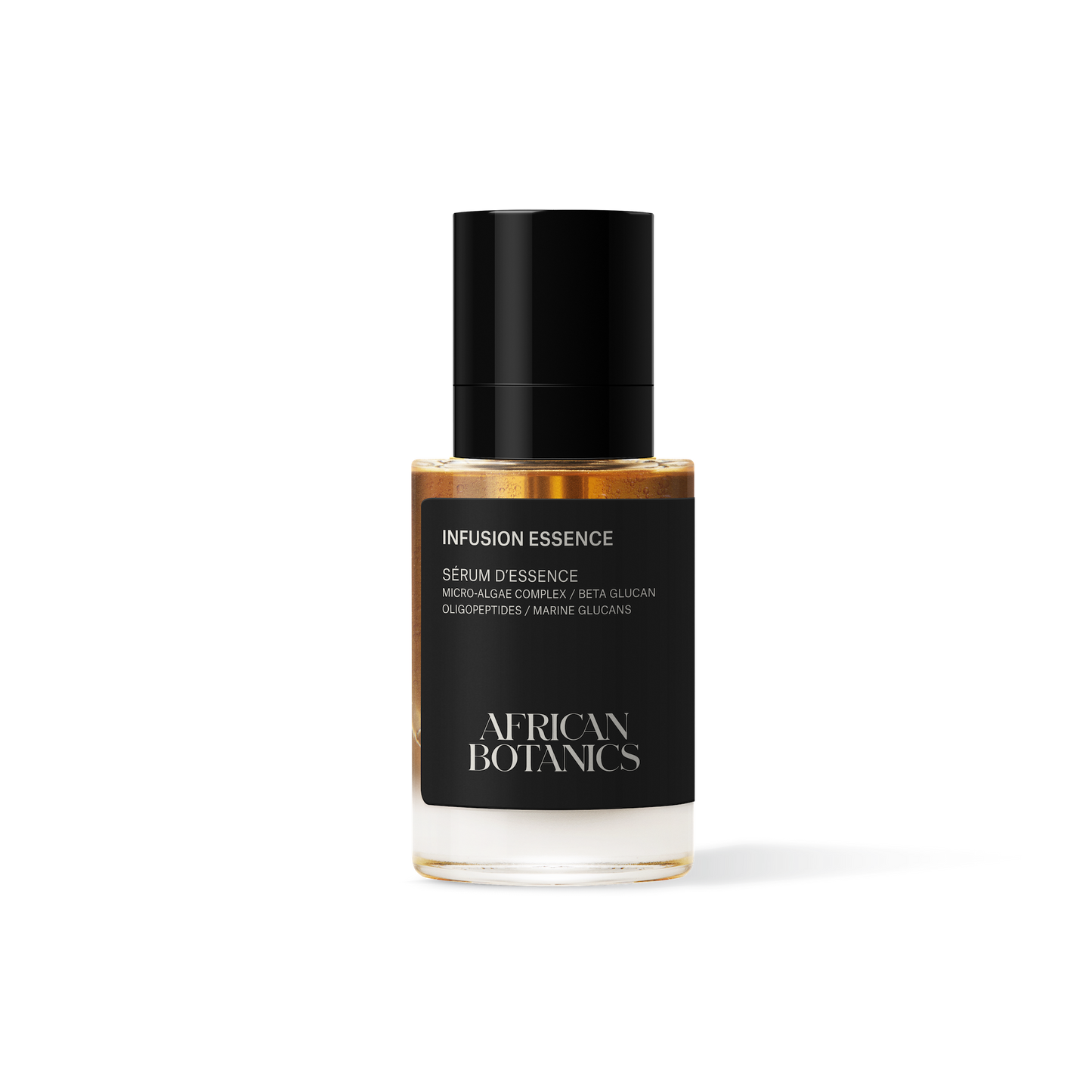
Infusion Essence

Infusion Essence
AfricanBotanicsStaging
infusion-essence
Tone
9784845762853
Morning or Evening?
How often will you use this product?
Notes


Highlights
WHAT IS IT?
Revitalizing micro-fluid essence
FEATURES
Locks in moisture, boosts epidermal lipid synthesis, reinforces barrier function, evens tone, nourishes, brings clarity and luminosity
BEST FOR
normal
CHECKS
Parabens-free, silicones-free, phthalates-free, mineral oil-free, artificial fragrance-free, colorants-free, SLS-free
Who Is It For?
All Ages And GendersWhat Does It Help With?
Hydration Skin Barrier Function Tone Evening Clarity LuminosityBudget
Premium ($76-$150)How To Use
Which routine should it be used in?
Instructions:
Key Information


What AfricanBotanicsStaging Says
Product Description:
This revitalizing micro-fluid essence locks in moisture with low molecular weight glutaminated oligopeptides obtained from White Lupine which help boost epidermal lipid synthesis and reinforce the barrier function while infusing skin with hydration. Saturates skin with Kalahari Desert Salt, hand harvested plants, Vitamin C, CoQ10, Willow Bark and Lactic Acid to even tone, nourish, bring clarity and luminosity to the skin. Suitable for all skin types and climate zones.
About the Brand:
Ingredients Overview
Ingredients List
Aqua (Water), Hamamelis Virginia_x0003_(Witch Hazel) Extract, Sodium Chloride (Kalahari Desert Salt), Butylene Glycol (Sugar Cane), Hydrolyzed Lupine Protein (Glutaminated oligopeptides), Helichrysum Stoechas Extract, Hydrolyzed Pea, Hydrolyzed Millet, Yeast Extract, Caprylic/Capric Triglyceride, Persea Gratissima (Avocado) Oil Unsaponifiables, Pavlova Lutheri Extract (Micro-Algae), Chlorella Sorokiniana Extract (Micro-Algae), Glycerin (Botanical), Myrothamus Flabellifolius (Resurrection) Plant Extract, Fucus Vesiculosis (Seaweed) Extract, Aspalathus Linearis (Rooibos) Leaf Extract, Cyclopia Genistoides (Honeybush) Leaf Extract, Kigelia Africana Fruit Extract, Equisetum Arvense (Horsetail) Extract, Ubiquinone (Coenzyme Q10), Ascorbyl Palmitate (Vitamin C), Hyaluronic Acid Complex, Sodium Hyaluronate, Salix Alba (Willow) Extract, Althaea Officinalis (Marshmallow) Extract, Anthemis Nobilis (Chamomile) Flower Extract, Citrus Aurantium (Neroli) Flower Extract, Allantoin, Lactic Acid, Sodium Citrate, Tetrasodium Glutamate Diacetate, Myrtrimonium Bromide, Rosa Centifolia (Rose) Flower Extract, Sclerocarya Birrea (Marula) Seed Oil, Aloe Ferox (Aloe) Leaf Extract, Helichrysum Angustifolium (Everlasting/Immortelle) Flower, Lutein, Ethylhexylglycerin, Phenoxyethanol
Key Ingredients
White Lupine Extract, Kalahari Desert Salt, Vitamin C, CoQ10, Willow Bark, Lactic Acid
Ingredients Details
Caprylic/capric Triglyceride
Common Name(s): Mct oil,fractionated coconut oil,c8/c10 triglyceride
CAS Number: 73398-61-5
DESCRIPTION
What It Does: Lightweight, stable emollient that solubilizes oil-soluble actives for excellent delivery without greasy feel.
Why It's Used: Universal lightweight emollient base and solubilizer for oil-soluble actives in serums and low-viscosity formulations where mineral oil or petrolatum would be too heavy.
How It Works: Medium-chain length provides ideal balance of spreading coefficient, penetration rate, and barrier-sealing properties. excellent solubilizer for vitamin e, retinoids, and other lipophilic actives.
Typically Found In: Serums,facial oils,sunscreens,anti-aging products,hair products
TECHNICAL DETAILS
Primary Category: Active ingredient – medium-chain triglyceride emollient
Secondary Functions: Active solubilizer,spreading agent
Application Areas:

Facial Skincare
Body Care
Hair Care

Beard Care
Color Cosmetics (Makeup)
Dietary/Oral Supplements
Typical Concentration Range: 1%–50%
SOURCING & ETHICS
Vegan Status: Conditional - feedstock declaration required
Halal Status: Unverified - feedstock declaration required (plant, animal and petrochemical routes all exist)
Source Notes: Fractionated by hydrolysis and re-esterification of coconut oil. only c8 and c10 fatty acids retained. [audit 2026-07-29 rev2: origin-dependent: the same inci exists in plant, animal and petrochemical versions and the name does not discriminate. determination requires shariah-panel sign-off.]
SKIN COMPATIBILITY
Irritancy Rating: 1/5 – very low
Comedogenicity Rating: 1/5 – very low; medium-chain length generally non-comedogenic
Sensitivity Concerns: Non-irritating.
Safe for Sensitive Skin: Yes
SAFETY & COMPATIBILITY
Safety Profile: Excellent safety profile. ewg score: 1.
Works Well With: Humectants,ceramides,actives as carrier
Avoid Combining With: No significant incompatibilities
SCIENTIFIC NOTE
Mct oil's medium-chain length (c8/c10) provides superior oxidative stability vs longer polyunsaturated chains and better skin aesthetics (lighter, less greasy) vs longer chain emollients (c16/c18). excellent solubilizer for retinoic acid, tocopheryl esters, and other lipophilic actives.
Last Verified: 2026-03-12
Primary Sources: Cosing database,cir safety assessment,ewg skin deep
Helichrysum Stoechas Extract
Common Name(s): Helichrysum stoechas extract
DESCRIPTION
What It Does: Provides antioxidant protection, soothing anti-inflammatory effects, and skin-conditioning benefits through plant-derived polyphenols and phytochemicals.
Why It's Used: Plant extracts concentrate bioactive phytochemicals evolved for environmental protection — uv, microbial, and oxidative stressors — that translate to skin benefits.
How It Works: Polyphenols (flavonoids, phenolic acids) inhibit nf-κb-mediated inflammatory signaling, scavenge reactive oxygen species through electron donation, and chelate pro-oxidant metal ions to reduce oxidative skin damage.
Typically Found In: Serums,toners,moisturizers,masks,essences
TECHNICAL DETAILS
Primary Category: Botanical extracts
Secondary Functions: Antioxidant,anti-inflammatory
Application Areas:
Facial Skincare
Body Care
Hair Care
Beard Care
Color Cosmetics (Makeup)
Dietary/Oral Supplements
Typical Concentration Range: 0.1–10%
SOURCING & ETHICS
Vegan Status: Yes
Halal Status: Yes
Source Notes: Plant-derived extract; no animal components.
SKIN COMPATIBILITY
Irritancy Rating: 1
Comedogenicity Rating: 0
Sensitivity Concerns: Low sensitization potential at recommended use concentrations.
Safe for Sensitive Skin: Yes
SAFETY & COMPATIBILITY
Safety Profile: Well-characterized cosmetic ingredient with established safety profile. generally non-irritating at typical use concentrations. suitable for leave-on and rinse-off cosmetics.
Works Well With: Niacinamide,hyaluronic acid,vitamin c,ceramides
Avoid Combining With: Strong oxidizing agents
SCIENTIFIC NOTE
Plant secondary metabolites (flavonoids, terpenes, phenolic acids) are biosynthesized as defense compounds against uv, herbivores, and pathogens. their anti-inflammatory activity typically derives from competitive inhibition of cox-2 and 5-lox enzymes (ic50 1–50 µm), while antioxidant activity involves single electron transfer (set) and hydrogen atom transfer (hat) mechanisms with structure-dependent rate constants.
Last Verified: 2025-01-15
Primary Sources: Cosing eu database; pcpc cosmetic ingredient safety reviews; phytochemical and ethnobotanical literature
Hydrolyzed Millet
Common Name(s): Hydrolyzed millet,hydrolyzed millet,botanical/plant hydrolysate,enhanced bioavailability active
CAS Number: N/a
DESCRIPTION
What It Does: Provides the botanical's active phytochemicals in low-mw, water-soluble hydrolysate form with improved sc penetration versus intact source material.
Why It's Used: Hydrolysis of botanical polymers and glycosides improves active delivery — macromolecule digestion generates fragments with improved solubility and penetration for botanical actives that are otherwise too large or insoluble for effective skin delivery.
How It Works: Hydrolysis releases: glycoside-bound polyphenols → free aglycones (improved sc penetration from increased logp); high-mw polysaccharide → low-mw oligosaccharides (improved penetration + prebiotic activity); protein-bound amino acids → free amino acids and peptides (conditioning + receptor activity).
Typically Found In: Botanical skin care,enhanced delivery
TECHNICAL DETAILS
Primary Category: Active ingredient – antioxidant
Secondary Functions: Free radical scavenging,anti-aging
Application Areas:
Facial Skincare
Body Care
Hair Care
Beard Care
Color Cosmetics (Makeup)
Dietary/Oral Supplements
Typical Concentration Range: 0.1%–5%
SOURCING & ETHICS
Vegan Status: Conditional - supplier confirmation required
Halal Status: Conditional - basis not stated in source record; supplier origin confirmation required to determine what evidence applies
Source Notes: Plant-derived extract or synthetic. [audit 2026-07-29 rev2: status downgraded on audit. determination requires shariah-panel sign-off.]
SKIN COMPATIBILITY
Irritancy Rating: 1/5 – very low
Comedogenicity Rating: 0/5 – non-comedogenic
Sensitivity Concerns: Non-irritating; well-tolerated.
Safe for Sensitive Skin: Yes
SAFETY & COMPATIBILITY
Safety Profile: Excellent safety profile. ewg score: 1.
Works Well With: Vitamin c,vitamin e,ferulic acid,spf,other antioxidants
Avoid Combining With: No significant incompatibilities
SCIENTIFIC NOTE
Hydrolysis conditions determine the active profile — mild acid (ph 3-4) releases o-glycosides; enzymatic (specific glycosidase) provides controlled aglycone release; protease digestion generates specific peptide fragment distributions.
Last Verified: 2026-03-22
Primary Sources: Cosing database,hydrolyzed millet hydrolysate enhanced bioavailability review
Hydrolyzed Pea
Common Name(s): Hydrolyzed pea,hydrolyzed pea,botanical/plant hydrolysate,enhanced bioavailability active
CAS Number: N/a
DESCRIPTION
What It Does: Provides the botanical's active phytochemicals in low-mw, water-soluble hydrolysate form with improved sc penetration versus intact source material.
Why It's Used: Hydrolysis of botanical polymers and glycosides improves active delivery — macromolecule digestion generates fragments with improved solubility and penetration for botanical actives that are otherwise too large or insoluble for effective skin delivery.
How It Works: Hydrolysis releases: glycoside-bound polyphenols → free aglycones (improved sc penetration from increased logp); high-mw polysaccharide → low-mw oligosaccharides (improved penetration + prebiotic activity); protein-bound amino acids → free amino acids and peptides (conditioning + receptor activity).
Typically Found In: Botanical skin care,enhanced delivery
TECHNICAL DETAILS
Primary Category: Active ingredient – antioxidant
Secondary Functions: Free radical scavenging,anti-aging
Application Areas:
Facial Skincare
Body Care
Hair Care
Beard Care
Color Cosmetics (Makeup)
Dietary/Oral Supplements
Typical Concentration Range: 0.1%–5%
SOURCING & ETHICS
Vegan Status: Conditional - supplier confirmation required
Halal Status: Conditional - basis not stated in source record; supplier origin confirmation required to determine what evidence applies
Source Notes: Plant-derived extract or synthetic. [audit 2026-07-29 rev2: status downgraded on audit. determination requires shariah-panel sign-off.]
SKIN COMPATIBILITY
Irritancy Rating: 1/5 – very low
Comedogenicity Rating: 0/5 – non-comedogenic
Sensitivity Concerns: Non-irritating; well-tolerated.
Safe for Sensitive Skin: Yes
SAFETY & COMPATIBILITY
Safety Profile: Excellent safety profile. ewg score: 1.
Works Well With: Vitamin c,vitamin e,ferulic acid,spf,other antioxidants
Avoid Combining With: No significant incompatibilities
SCIENTIFIC NOTE
Hydrolysis conditions determine the active profile — mild acid (ph 3-4) releases o-glycosides; enzymatic (specific glycosidase) provides controlled aglycone release; protease digestion generates specific peptide fragment distributions.
Last Verified: 2026-03-22
Primary Sources: Cosing database,hydrolyzed pea hydrolysate enhanced bioavailability review