

Indus Valley
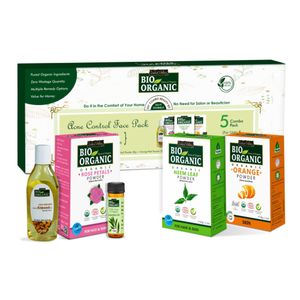
Indus Valley Bio Organic Acne Control Face Pack DIY Kit 30 gm+30 gm+30 gm+25 ml+5 ml

Indus Valley Bio Organic Acne Control Face Pack DIY Kit 30 gm+30 gm+30 gm+25 ml+5 ml
Indus Valley
indus-valley-bio-organic-acne-control-face-pack-diy-kit-30-gm-30-gm-30-gm-25-ml-5-ml
Face Mask
10085509988645
Morning or Evening?
How often will you use this product?
Notes


Highlights
WHAT IS IT?
Face Pack with multiple ingredients (Neem, Tea Tree Oil, Orange Peel Powder, Rose Petals Powder, Almond Oil)
FEATURES
Combats acne, reduces scars, dark circles, suntan, uneven pigmentation, unclogs pores, detoxifies skin from bacterial and microbial build-ups, reduces wrinkles and fine lines
BEST FOR
sensitive
CHECKS
Contains no preservatives
Who Is It For?
Everyone (gender Not Specified) Age Not SpecifiedWhat Does It Help With?
Acne Scars Dark Circles Suntan Uneven Pigmentation Wrinkles Fine Lines Pore CleansingBudget
Affordable (under $30)How To Use
Which routine should it be used in?
Instructions:
Key Information


What Indus Valley Says
Product Description:
Indus Valley BioOrganic Combo DIY Kit Acne Control Face Pack has been especially formulated to tackle and manage acne and pimples. It works with the power of Neem coupled with Tea Tree Oil and Orange Peel Powder to fight off bacterial and microbial buildups deep scrubs the skin to remove all dirt oils and dead skin cells. Rose Petals Powder and Almond Oil deep heal nourish condition and hydrate the skin from the inside out. A single application costs around Rs. 21.15 and you can do it all by yourself at home only without going for any professional help.
About the Brand:
Ingredients Overview
Ingredients List
neem,tea-tree-oil,orange-peel-powder,rose-petals-powder,almond-oil
Key Ingredients
Neem, Tea Tree Oil, Orange Peel Powder, Rose Petals Powder, Almond Oil
Ingredients Details
Almond Oil
Common Name(s): Almond oil,botanical carrier oil,emollient fatty acid delivery
CAS Number: N/a
DESCRIPTION
What It Does: Softens and conditions skin by integrating into sc lipid bilayers, delivers essential fatty acids (oleic, linoleic, linolenic) for barrier lipid synthesis, and provides rich, non-stripping moisturisation.
Why It's Used: Natural carrier oils provide the closest compositional match to endogenous sc lipids, delivering emolliency through genuine barrier integration rather than simple surface occlusion.
How It Works: Fatty acid triglycerides partition into sc lipid bilayers — oleic acid (c18:1) provides fluid, emollient integration; linoleic acid (c18:2) acts as essential ceramide precursor; saturated fatty acids provide more occlusive barrier reinforcement.
Typically Found In: Moisturisers,facial oils,natural skin care
TECHNICAL DETAILS
Primary Category: Functional ingredient – emollient
Secondary Functions: Barrier sealing,softening
Application Areas:

Facial Skincare
Body Care
Hair Care

Beard Care
Color Cosmetics (Makeup)
Dietary/Oral Supplements
Typical Concentration Range: 1%–100%
SOURCING & ETHICS
Vegan Status: Conditional - supplier confirmation required
Halal Status: Unverified - supplier confirmation required
Source Notes: Plant-derived, synthetic or animal-derived. verify source. [audit 2026-07-29 rev2: the record's own source_notes does not assert a non-animal origin, or instructs the reader to verify with the supplier; "yes" asserts knowledge the record does not hold. determination requires shariah-panel sign-off.]
SKIN COMPATIBILITY
Irritancy Rating: 1/5 – very low
Comedogenicity Rating: 1/5 – low; formulation-dependent
Sensitivity Concerns: Non-irritating.
Safe for Sensitive Skin: Yes
SAFETY & COMPATIBILITY
Safety Profile: Excellent safety profile. ewg score: 1.
Works Well With: Humectants,ceramides,actives as carrier
Avoid Combining With: No significant incompatibilities
SCIENTIFIC NOTE
Essential fatty acids — linoleic (c18:2, n-6) and α-linolenic (c18:3, n-3) acids — cannot be synthesised by the body; topical delivery through carrier oils provides direct substrate for ceramide and eicosanoid biosynthesis in the epidermis.
Last Verified: 2026-03-12
Primary Sources: Cosing database,almond oil carrier oil botanical review
Tea Tree Oil
Common Name(s): Tea tree oil,tto,melaleuca oil
CAS Number: 68647-73-4
DESCRIPTION
What It Does: Provides the most potent single-plant broad-spectrum antimicrobial essential oil for skin antiseptic applications.
Why It's Used: The antimicrobial essential oil – tea tree oil's terpinen-4-ol provides clinically proven broad-spectrum antimicrobial activity in rct-level clinical studies for acne and mrsa decolonisation.
How It Works: Terpinen-4-ol (30-48%) provides membrane-disrupting antimicrobial activity vs gram+/- bacteria, fungi, and enveloped viruses. iso 4730 requires minimum 30% terpinen-4-ol and maximum 5% 1,8-cineole (sensitiser). anti-biofilm activity vs staphylococcus.
Typically Found In: Anti-acne products,antiseptic formulas,natural antimicrobials,scalp treatments
TECHNICAL DETAILS
Primary Category: Active ingredient – soothing / anti-inflammatory
Secondary Functions: Redness reduction,anti-inflammatory,calming
Application Areas:
Facial Skincare
Body Care
Hair Care
Beard Care
Color Cosmetics (Makeup)
Dietary/Oral Supplements
Typical Concentration Range: 0.001%–5%
SOURCING & ETHICS
Vegan Status: Yes – from melaleuca alternifolia leaves (australia)
Halal Status: Yes
Source Notes: Plant-derived extract or synthetic.
SKIN COMPATIBILITY
Irritancy Rating: 1/5 – very low
Comedogenicity Rating: 0/5 – non-comedogenic
Sensitivity Concerns: Non-irritating; ideal for reactive and sensitive skin.
Safe for Sensitive Skin: Yes – particularly recommended for sensitive skin
SAFETY & COMPATIBILITY
Safety Profile: Iso 4730:2017 quality standard defines authentic tea tree oil. can cause contact sensitisation at high concentrations. toxic if ingested.
Works Well With: Ceramides,panthenol,allantoin,hyaluronic acid,centella asiatica
Avoid Combining With: No significant incompatibilities
SCIENTIFIC NOTE
Randomised controlled trial comparison of 5% tea tree oil gel vs 5% benzoyl peroxide lotion for acne demonstrated equivalent efficacy for acne lesion reduction at 3 months. tea tree's slower onset (8 weeks vs 4 weeks for bpo) was offset by significantly fewer side effects (dryness, irritation, peeling) in the tto group – providing evidence-based support for clinical tto use as a well-tolerated bpo alternative.
Last Verified: 2026-03-12
Primary Sources: Cosing database,bassett et al. tea tree oil acne rct,iso 4730