

I DEW CARE
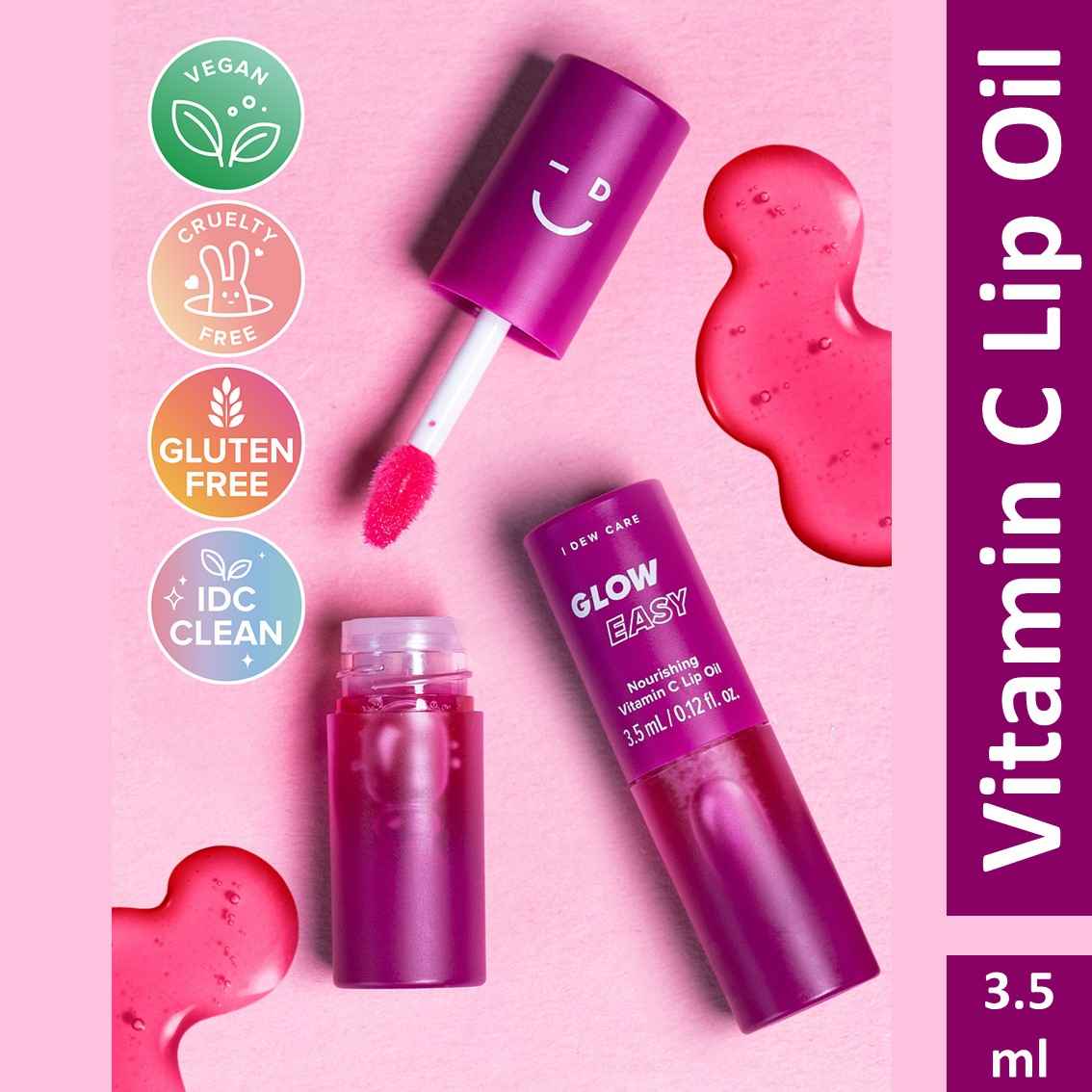
I DEW CARE GLOW EASY, Nourishing Vitamin C Lip Oil

I DEW CARE GLOW EASY, Nourishing Vitamin C Lip Oil
I DEW CARE
i-dew-care-glow-easy-nourishing-vitamin-c-lip-oil
Lip care
10084756947237
Morning or Evening?
How often will you use this product?
Notes


Highlights
WHAT IS IT?
Lip Oil; ingredient count not specified
FEATURES
Tinted lip formula, contains moisturizing raspberry seed oil, Vitamins C and E for protection and conditioning, provides color and shine
BEST FOR
sensitive
CHECKS
No specific exclusions mentioned
Who Is It For?
All Genders; Exact Age Range Not SpecifiedWhat Does It Help With?
Moisturizes Protects Conditions Lips Adds Color And ShineBudget
Mid-range ($30-$75)How To Use
Which routine should it be used in?
Instructions:
Key Information


What I DEW CARE Says
Product Description:
Get your glow on. A tinted formula that'll give your pout a juicy look. This formula is bursting with moisturizing raspberry seed oil plus Vitamins C and E to protect and condition the lips for a kiss of color and shine.
About the Brand:
Ingredients Overview
Ingredients List
Polyglyceryl-2 Isostearate/Dimer Dilinoleate Copolymer, Caprylic/Capric Triglyceride, Diisostearyl Malate, Simmondsia Chinensis (Jojoba) Seed Oil, Methyl Hydrogenated Rosinate, Silica Silylate, Anemarrhena Asphodeloides Root Extract, Capsicum Frutescens Fruit Extract, Fragaria Vesca (Strawberry) Fruit Extract, Punica Granatum Seed Oil*, Glycine Soja (Soybean) Oil, Zingiber Officinale (Ginger) Root Oil, Hydrogenated Polyisobutene, Ethylhexyl Palmitate, Tribehenin, Sorbitan Isostearate, Methyl Nicotinate, Lactic Acid, Ceramide Np, Ascorbic Acid**, Palmitoyl Tripeptide-1, Water, Tocopherol, Butylene Glycol, 1,2-Hexanediol, Fragrance, Dehydroacetic Acid, Red 21(Ci 45380), Red 28 Lake(Ci 45410), Red 7 Lake(Ci 15850), Yellow 5 Lake(Ci 19140), Limonene, Benzyl Benzoate, Linalool, Citral,
Key Ingredients
raspberry-seed-oil, vitamin-c, vitamin-e
Ingredients Details
1-2-hexanediol
Common Name(s): 1-2-hexanediol,cosmetic active,functional ingredient
CAS Number: N/a
DESCRIPTION
What It Does: Delivers characteristic cosmetic function at recommended use concentration.
Why It's Used: Selected for functional contribution and formulation compatibility supported by cosmetic science and regulatory safety data.
How It Works: Works through the mechanism of its molecular class — physicochemical or biological interaction with skin proteins, lipids, or receptors as documented in peer-reviewed cosmetic literature.
Typically Found In: Skin care formulations
TECHNICAL DETAILS
Primary Category: Active ingredient – cosmetic active
Secondary Functions: Skin conditioning
Application Areas:

Facial Skincare

Body Care
Hair Care
Beard Care
Color Cosmetics (Makeup)
Dietary/Oral Supplements
Typical Concentration Range: 0.1%–10%
SOURCING & ETHICS
Vegan Status: Conditional
Halal Status: Yes
Source Notes: Commercially produced for cosmetic use. verify vegan/halal status with supplier.
SKIN COMPATIBILITY
Irritancy Rating: 1/5 – very low
Comedogenicity Rating: 0/5 – non-comedogenic
Sensitivity Concerns: Well-tolerated by most skin types.
Safe for Sensitive Skin: Yes
SAFETY & COMPATIBILITY
Safety Profile: Good safety profile at recommended concentrations. ewg score: 1–2.
Works Well With: Standard skincare actives
Avoid Combining With: No known significant incompatibilities
SCIENTIFIC NOTE
1-2-hexanediol has an established safety and efficacy profile within the cosmetic regulatory framework at standard use concentrations.
Last Verified: Cosing database,1-2-hexanediol technical literature
Primary Sources: 2026-03-12
Anemarrhena Asphodeloides Root Extract
Common Name(s): Anemarrhena asphodeloides root extract,anemarrhena asphodeloides root extract,botanical extract,phytochemical active
CAS Number: N/a
DESCRIPTION
What It Does: Provides antioxidant protection from polyphenol radical scavenging, anti-inflammatory activity from terpenoid nf-kb/cox pathway inhibition, and skin conditioning from the phytochemical secondary metabolite complex.
Why It's Used: Anemarrhena asphodeloides root extract is selected for the characteristic secondary metabolite signature of anemarrhena asphodeloides — whether polyphenols, terpenoids, alkaloids, or polysaccharides, the phytochemical profile provides antioxidant, anti-inflammatory, or skin conditioning benefits specific to this botanical species.
How It Works: Polyphenol catechol h-atom donation scavenges ros (rate constants 10⁶-10⁹ m⁻¹s⁻¹); terpenoids inhibit iκb kinase blocking nf-κb; flavonoids compete at cox-1/2; alkaloids modulate specific receptor targets for additional bioactivity.
Typically Found In: Botanical skin care
TECHNICAL DETAILS
Primary Category: Active ingredient – antioxidant
Secondary Functions: Free radical scavenging,anti-aging
Application Areas:
Facial Skincare
Body Care
Hair Care
Beard Care
Color Cosmetics (Makeup)
Dietary/Oral Supplements
Typical Concentration Range: 0.1%–10%
SOURCING & ETHICS
Vegan Status: Conditional
Halal Status: Conditional
Source Notes: Plant-derived extract or synthetic.
SKIN COMPATIBILITY
Irritancy Rating: 1/5 – very low
Comedogenicity Rating: 0/5 – non-comedogenic
Sensitivity Concerns: Non-irritating; well-tolerated.
Safe for Sensitive Skin: Yes
SAFETY & COMPATIBILITY
Safety Profile: Excellent safety profile. ewg score: 1.
Works Well With: Vitamin c,vitamin e,ferulic acid,spf,other antioxidants
Avoid Combining With: No significant incompatibilities
SCIENTIFIC NOTE
Standardise to marker compound for consistent bioactivity — field-grown material varies 3-10× in secondary metabolite content.
Last Verified: Cosing database,anemarrhena asphodeloides root extr botanical extract review
Primary Sources: 2026-03-22
Ascorbic Acid
Common Name(s): Vitamin c,l-ascorbic acid,l-ascorbate
CAS Number: 50-81-7
DESCRIPTION
What It Does: Ascorbic acid neutralizes free radicals, stimulates collagen production, inhibits melanin synthesis for a brighter complexion, and supports skin repair.
Why It's Used: It is used because it offers comprehensive antioxidant and brightening benefits supported by extensive clinical evidence. it is the most bioavailable form of vitamin c for topical application.
How It Works: As an antioxidant, it donates electrons to neutralize reactive oxygen species. it is an essential cofactor for the hydroxylation of proline and lysine in collagen synthesis. it inhibits tyrosinase, the enzyme responsible for melanin production, reducing hyperpigmentation.
Typically Found In: Vitamin c serums,brightening moisturizers,antioxidant formulations,spf products,eye creams
TECHNICAL DETAILS
Primary Category: Active ingredient – vitamin c
Secondary Functions: Collagen booster,tyrosinase inhibitor,ph adjuster
Application Areas:
Facial Skincare
Body Care
Hair Care
Beard Care
Color Cosmetics (Makeup)
Dietary/Oral Supplements
Typical Concentration Range: 5%–20% (effective range: 10–20%; ph must be below 3.5 for activity)
SOURCING & ETHICS
Vegan Status: Yes – synthetically produced or corn/plant-derived
Halal Status: Yes
Source Notes: Commercially produced by reichstein synthesis or guangxi fermentation process from glucose. some plant-derived versions exist.
SKIN COMPATIBILITY
Irritancy Rating: 2/5 – low to moderate; low ph formulations can cause initial tingling or stinging, especially at concentrations above 15%
Comedogenicity Rating: 0/5 – non-comedogenic
Sensitivity Concerns: Acidic ph can irritate sensitive or compromised skin barriers. highly unstable – oxidizes rapidly when exposed to air, light, and heat (turns orange/brown). use in the morning under spf.
Safe for Sensitive Skin: Use with caution – start at lower concentrations (5–10%). stabilized derivative forms (vitamin c derivatives) may be better tolerated.
SAFETY & COMPATIBILITY
Safety Profile: Very safe; well-studied. key concern is formulation stability, not safety. ewg hazard score: 1.
Works Well With: Vitamin e (tocopherol) – synergistic antioxidant effect,ferulic acid – stabilizing and boosting,spf,hyaluronic acid,niacinamide (use at different times if concentrations are high)
Avoid Combining With: Retinol (use at separate times – ph incompatibility),benzoyl peroxide (oxidizes vitamin c),ahas/bhas (cumulative irritation risk)
SCIENTIFIC NOTE
L-ascorbic acid is the only form of vitamin c that is proven bioactive in skin at the molecular level. its instability (rapid oxidation) has driven development of numerous stable derivatives including ascorbyl glucoside, magnesium ascorbyl phosphate, and ascorbyl tetraisopalmitate.
Last Verified: Cosing database,cir safety assessment,pinnell et al. studies,journal of the american academy of dermatology
Primary Sources: 2026-03-12
Benzyl Benzoate
Common Name(s): Benzyl ester of benzoic acid,scabimite
CAS Number: 120-51-4
DESCRIPTION
What It Does: Provides fixative fragrance and solvent properties with anti-mite activity.
Why It's Used: Natural ester fragrance compound occurring in jasmine and ylang ylang providing fixative and solvent benefits in fragranced cosmetics.
How It Works: Ester of benzyl alcohol and benzoic acid. solvent for difficult-to-dissolve fragrance compounds. penetrates insect/mite cuticle for scabicidal activity. mild skin fixative from ester-protein interactions.
Typically Found In: Fragrances,floral compounds,medical scabies treatment
TECHNICAL DETAILS
Primary Category: Fragrance component / scabicide
Secondary Functions: Skin conditioning
Application Areas:
Facial Skincare
Body Care
Hair Care
Beard Care
Color Cosmetics (Makeup)
Dietary/Oral Supplements
Typical Concentration Range: 0.001%–1%
SOURCING & ETHICS
Vegan Status: Yes – from jasmine, ylang ylang, peru balsam
Halal Status: Yes
Source Notes: Commercially produced for cosmetic use. verify vegan/halal status with supplier.
SKIN COMPATIBILITY
Irritancy Rating: 1/5 – very low
Comedogenicity Rating: 0/5 – non-comedogenic
Sensitivity Concerns: Well-tolerated by most skin types.
Safe for Sensitive Skin: Yes
SAFETY & COMPATIBILITY
Safety Profile: Eu cosmetics regulation: declared fragrance allergen. ifra guidelines apply.
Works Well With: Standard skincare actives
Avoid Combining With: No known significant incompatibilities
SCIENTIFIC NOTE
Benzyl benzoate's natural occurrence in jasmine absolute (up to 6%) means that products containing jasmine absolute naturally contain benzyl benzoate as a declared fragrance allergen – regardless of whether the formulator intentionally added it. this highlights how natural ingredients can automatically generate regulatory allergen declarations.
Last Verified: Cosing database,ifra standards
Primary Sources: 2026-03-12
