

HydraGlow
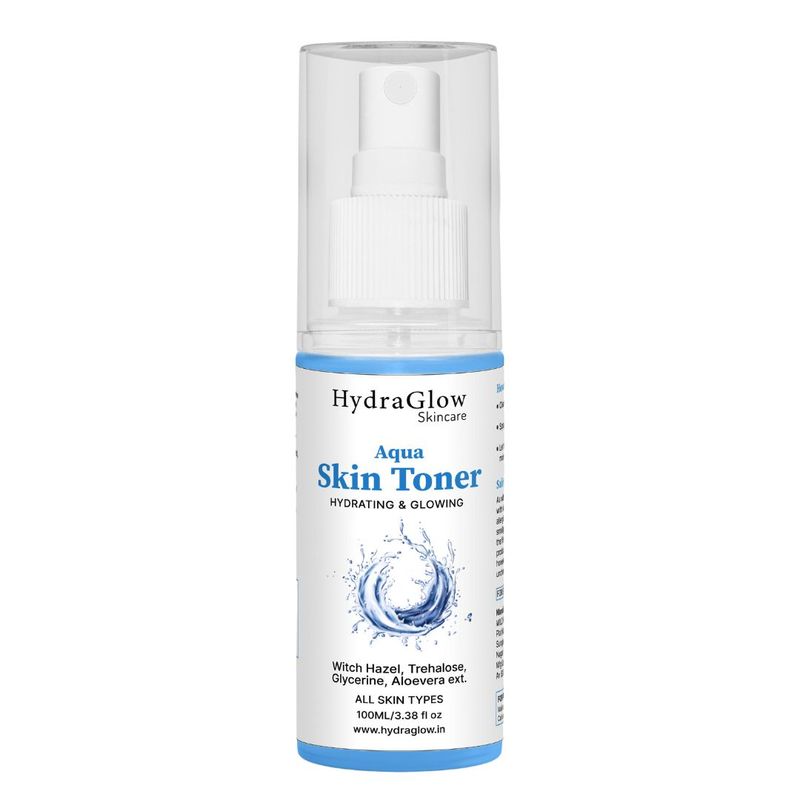
Hydra Glow Skincare Aqua Skin Toner Hydrating and Refreshing

Hydra Glow Skincare Aqua Skin Toner Hydrating and Refreshing
HydraGlow
hydra-glow-skincare-aqua-skin-toner-hydrating-and-refreshing
Tone
10084909220133
Morning or Evening?
How often will you use this product?
Notes


Highlights
WHAT IS IT?
Skin toner with natural ingredients including aloe vera, witch hazel, glycerin
FEATURES
Deeply hydrating toner, Maintains pH balance, Removes dirt and oil, Clears excess oil on skin
BEST FOR
dry
CHECKS
no harmful chemicals, no parabens, no alcohol
Who Is It For?
All Genders No Specific Age MentionedWhat Does It Help With?
Hydration Skin Smoothing Ph Balance Restoration Pore Tightening Oil ControlBudget
Affordable (under $30)How To Use
Which routine should it be used in?
Instructions:
Key Information


What HydraGlow Says
Product Description:
Hydra Glow Skincare Hydrating Toner enhanced with aloe vera extract, witch hazel, and glycerine ingredients creates an extra layer of hydration on your skin. It can help to clean skin and tighten pores, which can make your skin look smoother. It can help restore your skin's pH balance, remove excess dirt, and prepare your skin to better absorb other skincare products. It clears excess oil from the upper layer of skin and makes skin more hydrated and glowing. Contains no harmful chemicals and has natural ingredients.
About the Brand:
Ingredients Overview
Ingredients List
aloe-barbadensis-ghrit-kumari, glycerin-glycerol, azadirachta-indica-nimb, ocimum-sanctum-tulsi, aqua, hamamelis-virginiana-witch-hazel-water, propylene-glycol, perfume, phenoxyethanol, ethylhexylglycerin, trehalose, saccharide-isomerate, lactic-acid, sodium-gluconate
Key Ingredients
aloe-barbadensis-ghrit-kumari, glycerin-glycerol, hamamelis-virginiana-witch-hazel-water
Ingredients Details
Ethylhexylglycerin
Common Name(s): Octylglycerin,2-ethylhexyl glycerol ether,sensiva sc 10
CAS Number: 70445-33-9
DESCRIPTION
What It Does: Provides antimicrobial skin conditioning with deodorant activity and preservation system enhancement.
Why It's Used: Multifunctional clean beauty preservation active — ethylhexylglycerin provides antimicrobial, deodorant, and skin conditioning in a single ingredient accepted in most natural cosmetic certification schemes.
How It Works: Glycerol ether provides antimicrobial via bacterial membrane phospholipid disruption. deodorant activity via reduction of underarm lipase enzyme activity (similar mechanism to triethyl citrate). skin conditioning from glycerol humectant component. synergistic with phenoxyethanol and diols.
Typically Found In: Natural preservation systems,deodorants,skin conditioning products
TECHNICAL DETAILS
Primary Category: Functional ingredient – antimicrobial glycerol ether
Secondary Functions: Skin conditioning
Application Areas:

Facial Skincare

Body Care
Hair Care
Beard Care
Color Cosmetics (Makeup)
Dietary/Oral Supplements
Typical Concentration Range: 0.1%–0.5%
SOURCING & ETHICS
Vegan Status: Yes – synthetic
Halal Status: Yes
Source Notes: Commercially produced for cosmetic use. verify vegan/halal status with supplier.
SKIN COMPATIBILITY
Irritancy Rating: 1/5 – very low
Comedogenicity Rating: 0/5 – non-comedogenic
Sensitivity Concerns: Well-tolerated by most skin types.
Safe for Sensitive Skin: Yes
SAFETY & COMPATIBILITY
Safety Profile: Good safety profile at recommended concentrations. ewg score: 1–2.
Works Well With: Standard skincare actives
Avoid Combining With: No known significant incompatibilities
SCIENTIFIC NOTE
Ethylhexylglycerin's deodorant mechanism is pharmacologically identical to triethyl citrate: both inhibit skin surface microbial lipase enzymes that convert odourless triglycerides to odorous free fatty acids. the glycerol ether structure of ethylhexylglycerin, combined with the 2-ethylhexyl chain, provides lipase inhibition similar to ester-based lipase inhibitors from a different chemical class.
Last Verified: Cosing database,schülke sensiva sc 10 technical data,cir safety assessment
Primary Sources: 2026-03-12
Phenoxyethanol
Common Name(s): 2-phenoxyethanol,rose ether,ethylene glycol monophenyl ether
CAS Number: 122-99-6
DESCRIPTION
What It Does: Prevents microbial contamination and spoilage in cosmetic formulations.
Why It's Used: The benchmark cosmetic preservative – eu-permitted up to 1%, effective against virtually all cosmetically relevant microorganisms, and excellent tolerability.
How It Works: Phenol ring provides broad antimicrobial activity via disruption of bacterial and fungal cell membranes and inhibition of enzymatic activity. effective against gram-positive and gram-negative bacteria, yeasts (candida), and molds (aspergillus). activity ph range: 3-9.
Typically Found In: All cosmetic formulations as primary preservative
TECHNICAL DETAILS
Primary Category: Functional ingredient – broad-spectrum preservative
Secondary Functions: Skin conditioning
Application Areas:
Facial Skincare
Body Care
Hair Care
Beard Care
Color Cosmetics (Makeup)
Dietary/Oral Supplements
Typical Concentration Range: 0.1%–1% (eu max 1%)
SOURCING & ETHICS
Vegan Status: Yes – synthetic
Halal Status: Yes
Source Notes: Commercially produced for cosmetic use. verify vegan/halal status with supplier.
SKIN COMPATIBILITY
Irritancy Rating: 1/5 – very low
Comedogenicity Rating: 0/5 – non-comedogenic
Sensitivity Concerns: Well-tolerated by most skin types.
Safe for Sensitive Skin: Yes
SAFETY & COMPATIBILITY
Safety Profile: Eu cosmetics regulation max 1%. sccs assessed as safe at ≤1%. avoid use around eyes in baby products per some country regulations. ewg score: 4.
Works Well With: Standard skincare actives
Avoid Combining With: No known significant incompatibilities
SCIENTIFIC NOTE
Phenoxyethanol's widespread adoption as the primary cosmetic preservative followed the phaseout of parabens from many formulations in the 2000s-2010s. despite having a comparable or better safety profile to parabens, it is often cited in 'free-from' formulations – a consumer perception issue rather than a scientific safety concern.
Last Verified: Cosing database,sccs opinion on phenoxyethanol,cir safety assessment
Primary Sources: 2026-03-12
Trehalose
Common Name(s): Alpha,alpha-trehalose,mycose
CAS Number: 99-20-7
DESCRIPTION
What It Does: Provides superior moisture retention under dehydrating conditions – uniquely protective in extreme environments.
Why It's Used: Premium humectant for formulations targeting dehydration, environmental stress protection, and dry/mature skin hydration.
How It Works: Forms a protective glassy matrix that replaces water molecules around proteins and cell membranes during dehydration stress, preventing protein denaturation and membrane damage. stronger water binding than sucrose or glucose.
Typically Found In: Premium moisturizers,protective barrier formulas,anti-aging products
TECHNICAL DETAILS
Primary Category: Active ingredient – anhydrobiotic sugar / humectant
Secondary Functions: Stress protection,barrier support,cryoprotectant
Application Areas:
Facial Skincare
Body Care
Hair Care
Beard Care
Color Cosmetics (Makeup)
Dietary/Oral Supplements
Typical Concentration Range: 1%–10%
SOURCING & ETHICS
Vegan Status: Yes – fermentation-derived or from yeast
Halal Status: Yes
Source Notes: Produced by yeast fermentation or enzymatic conversion of starch. available as anhydrous or dihydrate form.
SKIN COMPATIBILITY
Irritancy Rating: 1/5 – very low
Comedogenicity Rating: 0/5 – non-comedogenic
Sensitivity Concerns: Non-irritating; exceptionally well-tolerated; endogenous to many organisms.
Safe for Sensitive Skin: Yes
SAFETY & COMPATIBILITY
Safety Profile: Excellent safety profile. ewg score: 1.
Works Well With: Ceramides,emollients,occlusives,glycerin,hyaluronic acid
Avoid Combining With: No significant incompatibilities
SCIENTIFIC NOTE
Trehalose's unique ability to form an amorphous glassy matrix during dehydration (replacing water molecules) explains the survival of tardigrades and resurrection plants. this property translates to exceptional skin protection under environmental dehydration stress.
Last Verified: Cosing database,crowe et al. trehalose anhydrobiosis review,cir safety assessment
Primary Sources: 2026-03-12
