

Tata Harper Skincare
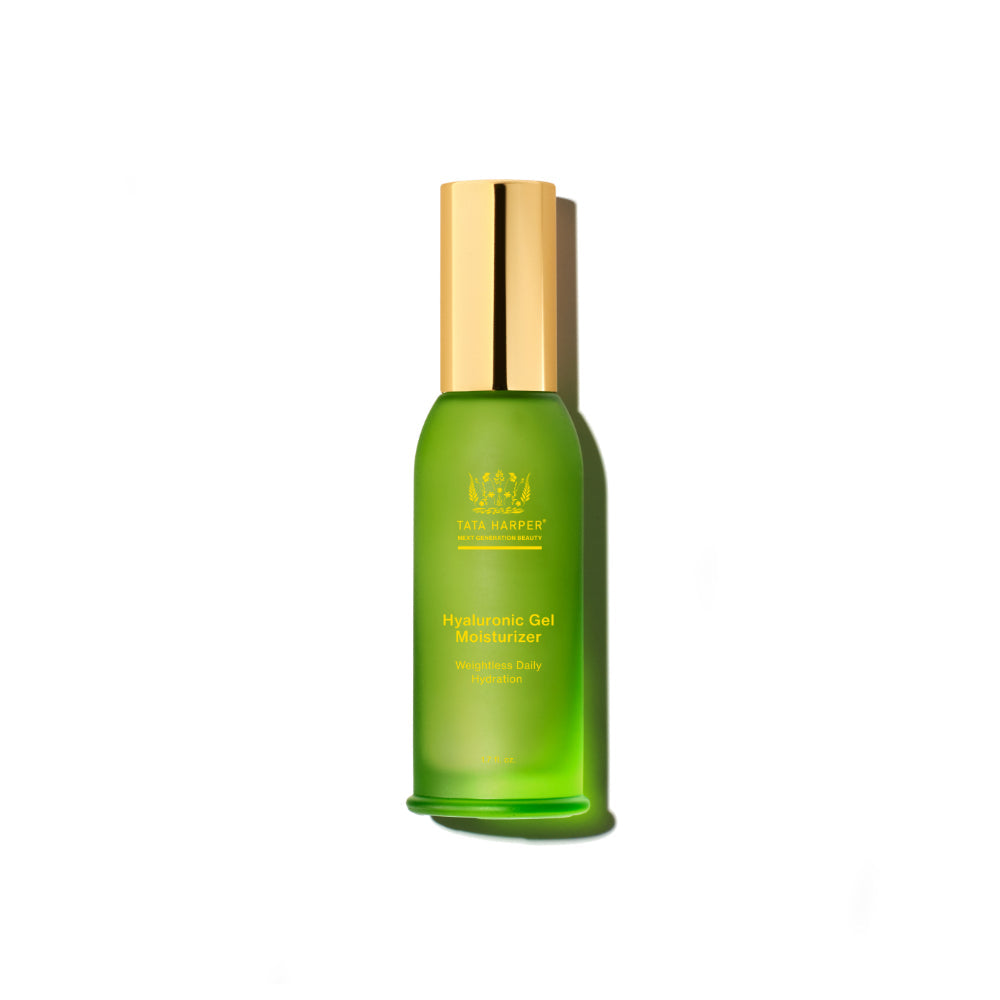
Hyaluronic Gel Moisturizer

Hyaluronic Gel Moisturizer
Tata Harper Skincare
hyaluronic-gel-moisturizer
Moisturize
9784764137765
Morning or Evening?
How often will you use this product?
Notes


Highlights
WHAT IS IT?
Gel Moisturizer
FEATURES
Ultra-lightweight, weightless moisture delivery
BEST FOR
oily
CHECKS
Free from harsh chemicals, synthetic chemicals, toxin, GMOs, fillers, artificial colors, artificial fragrances
Who Is It For?
What Does It Help With?
Replenishes And Restores Moisture Helps With Uneven SkinBudget
Premium ($76-$150)How To Use
Which routine should it be used in?
Instructions:
Key Information


What Tata Harper Skincare Says
Product Description:
An ultra-lightweight gel moisturizer for oily/combination skin that replenishes and restores moisture weightlessly. Best for oily or uneven skin.
About the Brand:
Ingredients Overview
Ingredients List
Hordeum Vulgare Leaf Juice*, Glycerin, Propanediol, Aqua/Water/Eau, Cocos Nucifera (Coconut) Oil*, Fructooligosaccharides, Shea Butter Ethyl Esters, Polyglyceryl-2 Stearate, Lavandula Angustifolia (Lavender) Flower/Leaf/Stem Water*, Rosa Damascena Flower Water*, Salvia Hispanica Seed Extract, Hyaluronic Acid, Sodium Hyaluronate, Musa Sapientum Flower Extract, Salicornia Herbacea Extract, Biosaccharide Gum-1, Saccharide Isomerate, Carthamus Tinctorius (Safflower) Oleosomes, Camellia Oleifera Seed Oil*, Tremella Fuciformis Sporocarp Extract, Anigozanthos Flavidus Extract, Banksia Serrata Flower Extract, Grevillea Speciosa Flower Extract, Arnica Montana (Arnica) Extract*, Borago Officinalis (Borage) Leaf Extract*, Calendula Officinalis (Calendula) Flower Extract*, Medicago Sativa (Alfalfa) Extract*, Spiraea Ulmaria (Meadowsweet) Extract*, Magnolia Officinalis Bark Extract, Beta Vulgaris/Beet Root Extract/Extrait de Racine de Betterave, Squalane, Jojoba Esters, Sambucus Nigra Fruit Extract, Tocopherol, Myrica Cerifera Fruit Wax, Olea Europaea (Olive) Oil*, Anthemis Nobilis (Chamomile) Flower Oil, Juniperus Communis (Juniper Berry) Extract, Helianthus Annuus Seed Oil, Jasminum Grandiflorum (Jasmine) CO2 Extract, Salvia Sclarea (Clary Sage) Oil, Rosa Damascena (Rose) Flower Oil, Glyceryl Caprylate, Glyceryl Stearate, Glyceryl Undecylenate, Stearyl Alcohol, Lysolecithin, Sodium Levulinate, Caprylic/Capric Triglyceride, Cymbopogon Flexuosus (Lemongrass) Oil, Sodium Anisate, Xanthan Gum, Sclerotium Gum, Pullulan, Sodium Phytate, Phenethyl Alcohol, Sodium Citrate, Citric Acid, Alcohol, Linalool, Citronellol, Citral, Benzyl Benzoate, Benzyl Alcohol, Geraniol, Limonene, Eugenol
Key Ingredients
Hyaluronic-Acid
Ingredients Details
Cocos Nucifera (coconut) Oil
Common Name(s): Cocos nucifera (coconut) oil,cosmetic active,functional ingredient
CAS Number: N/a
DESCRIPTION
What It Does: Delivers characteristic cosmetic function — skin conditioning, protection, preservation, or active biological benefit — at recommended use concentration.
Why It's Used: Selected for its functional contribution and formulation compatibility — supported by cosmetic science literature and regulatory safety assessment.
How It Works: Works through the mechanism of its molecular class — physicochemical interaction with the formulation or biological interaction with skin proteins, lipids, or receptors as documented in peer-reviewed literature.
Typically Found In: Skin care formulations
TECHNICAL DETAILS
Primary Category: Active ingredient – cosmetic active
Secondary Functions: Skin conditioning
Application Areas:

Facial Skincare

Body Care
Hair Care
Beard Care
Color Cosmetics (Makeup)
Dietary/Oral Supplements
Typical Concentration Range: 0.1%–10%
SOURCING & ETHICS
Vegan Status: Conditional
Halal Status: Yes
Source Notes: Commercially produced for cosmetic use. verify vegan/halal status with supplier.
SKIN COMPATIBILITY
Irritancy Rating: 1/5 – very low
Comedogenicity Rating: 0/5 – non-comedogenic
Sensitivity Concerns: Well-tolerated by most skin types.
Safe for Sensitive Skin: Yes
SAFETY & COMPATIBILITY
Safety Profile: Good safety profile at recommended concentrations. ewg score: 1–2.
Works Well With: Standard skincare actives
Avoid Combining With: No known significant incompatibilities
SCIENTIFIC NOTE
Cocos nucifera (coconut) oil delivers documented functional benefit with an established safety profile within the cosmetic regulatory framework (cosing eu, cir usa).
Last Verified: Cosing database,cocos nucifera (coconut) oil technical literature
Primary Sources: 2026-03-12
Fructooligosaccharides
Common Name(s): Fos,oligofructose,short-chain inulin
CAS Number: 308066-66-2
DESCRIPTION
What It Does: Provides rapid-acting prebiotic microbiome support with humectant conditioning from short-chain fructan oligomers.
Why It's Used: Fast-acting prebiotic for rapid microbiome support — fos's shorter chain length provides faster fermentation by beneficial bacteria vs long-chain inulin, enabling quicker microbiome compositional shifts.
How It Works: Dp 2-10 fructooligomers (vs inulin's dp 10-60) provide more rapid access to bacterial fermentation enzymes. higher water solubility and humectant activity than long-chain inulin. more bioavailable to skin surface bacteria vs longer-chain inulin that penetrates deeper before fermentation.
Typically Found In: Prebiotic skin care,rapid microbiome support products
TECHNICAL DETAILS
Primary Category: Active ingredient – short-chain prebiotic
Secondary Functions: Tewl reduction,skin plumping
Application Areas:
Facial Skincare
Body Care
Hair Care
Beard Care
Color Cosmetics (Makeup)
Dietary/Oral Supplements
Typical Concentration Range: 0.5%–5%
SOURCING & ETHICS
Vegan Status: Yes – from sucrose enzymatic synthesis or inulin hydrolysis
Halal Status: Yes
Source Notes: Synthetic or naturally derived. excellent aqueous solubility.
SKIN COMPATIBILITY
Irritancy Rating: 1/5 – very low
Comedogenicity Rating: 0/5 – non-comedogenic
Sensitivity Concerns: Non-irritating; suitable for all skin types.
Safe for Sensitive Skin: Yes
SAFETY & COMPATIBILITY
Safety Profile: Excellent safety profile. ewg score: 1.
Works Well With: Ceramides,emollients,occlusives,glycerin,hyaluronic acid
Avoid Combining With: No significant incompatibilities
SCIENTIFIC NOTE
Fos's shorter chain length provides different prebiotic kinetics vs long-chain inulin: short-chain fos (dp 2-5) is fermented within 12-24 hours by surface bacteria, while long-chain inulin (dp 10-60) ferments over 48-72 hours. this temporal difference enables formulation of 'fast-acting' (fos) vs 'sustained-release' (inulin) prebiotic products with different microbiome support kinetics.
Last Verified: Cosing database,roberfroid fos prebiotic review
Primary Sources: 2026-03-12
Glycerin
Common Name(s): Glycerol,glycerine,1,2,3-propanetriol
CAS Number: 56-81-5
DESCRIPTION
What It Does: Glycerin pulls water from the environment and deeper skin layers into the outer skin layer (epidermis), boosting moisture levels and keeping skin soft, smooth, and plump.
Why It's Used: It is used in virtually every moisturizer, serum, and cleanser because it is highly effective at hydrating skin, is well-tolerated by all skin types, and enhances the texture and spreadability of formulations.
How It Works: As a humectant, glycerin forms hydrogen bonds with water molecules, trapping them in the skin. it also reinforces the skin barrier by integrating into lipid structures between skin cells.
Typically Found In: Moisturizers,serums,cleansers,toners,sheet masks,sunscreens,body lotions,shampoos,conditioners
TECHNICAL DETAILS
Primary Category: Humectant
Secondary Functions: Skin barrier support,emollient,solvent
Application Areas:
Facial Skincare
Body Care
Hair Care
Beard Care
Color Cosmetics (Makeup)
Dietary/Oral Supplements
Typical Concentration Range: 1%–30% (typical: 3–10%)
SOURCING & ETHICS
Vegan Status: Yes – plant-derived (coconut, soy, palm) or synthetic
Halal Status: Yes – when plant-derived or synthetic; verify source with supplier
Source Notes: Derived from plant oils via hydrolysis or saponification; synthetic versions also available. palm-derived glycerin carries sustainability concerns.
SKIN COMPATIBILITY
Irritancy Rating: 1/5 – very low; non-irritating at all standard concentrations
Comedogenicity Rating: 0/5 – non-comedogenic
Sensitivity Concerns: Extremely rare allergic reactions; generally safe for all skin types including sensitive and baby skin
Safe for Sensitive Skin: Yes
SAFETY & COMPATIBILITY
Safety Profile: Widely recognized as safe. ewg hazard score: 1. no significant concerns for irritation, sensitization, or toxicity at typical concentrations (up to 50%).
Works Well With: Hyaluronic acid,ceramides,niacinamide,panthenol,urea,peptides,retinol,ahas/bhas
Avoid Combining With: No known incompatibilities at standard concentrations
SCIENTIFIC NOTE
Glycerin is an endogenous skin component found naturally in the stratum corneum. aquaporin-3 channels in keratinocytes facilitate glycerin transport, making it integral to natural skin hydration pathways.
Last Verified: Cosing database,cir safety assessment,ewg skin deep,inci decoder
Primary Sources: 2026-03-12
Hordeum Vulgare Leaf Juice
Common Name(s): Hordeum vulgare leaf juice,hordeum vulgare (barley) young leaf juice (barley grass) extract
DESCRIPTION
What It Does: Provides antioxidant,sod enzyme,chlorophyll,alkaline mineral rich and skin-conditioning activity from natural plant source.
Why It's Used: Used for its antioxidant,sod enzyme,chlorophyll,alkaline mineral rich activity derived from hordeum vulgare (barley); supports skin health and vitality.
How It Works: Bioactive compounds from hordeum vulgare (barley) young leaf juice (barley grass) — including polyphenols, flavonoids, and plant-specific phytochemicals — deliver antioxidant,sod enzyme,chlorophyll,alkaline mineral rich benefits.
Typically Found In: Green skin care,antioxidant products,detox formulas
TECHNICAL DETAILS
Primary Category: Active ingredient – botanical
Secondary Functions: Skin conditioning,antioxidant,botanical active
Application Areas:
Facial Skincare
Body Care
Hair Care
Beard Care
Color Cosmetics (Makeup)
Dietary/Oral Supplements
Typical Concentration Range: 0.1%–5%
SOURCING & ETHICS
Vegan Status: Yes
Halal Status: Yes
Source Notes: Extract from hordeum vulgare (barley); natural plant origin.
SKIN COMPATIBILITY
Irritancy Rating: 1/5 – very low
Comedogenicity Rating: 0/5 – non-comedogenic
Sensitivity Concerns: Generally well tolerated; rare botanical sensitivity possible.
Safe for Sensitive Skin: Yes
SAFETY & COMPATIBILITY
Safety Profile: Good safety profile. ewg score: 1.
Works Well With: Other botanical extracts,antioxidants,humectants
Avoid Combining With: No significant incompatibilities
SCIENTIFIC NOTE
Barley leaf juice contains 2-o-giv — a barley-unique flavone with potent antioxidant activity — and sod enzyme; sod is among the most powerful natural antioxidant enzymes; young barley grass juice is used in both food supplements and cosmetics for its dense antioxidant content.
Last Verified: Cosing database,inci dictionary
Primary Sources: 2026-03-28
