
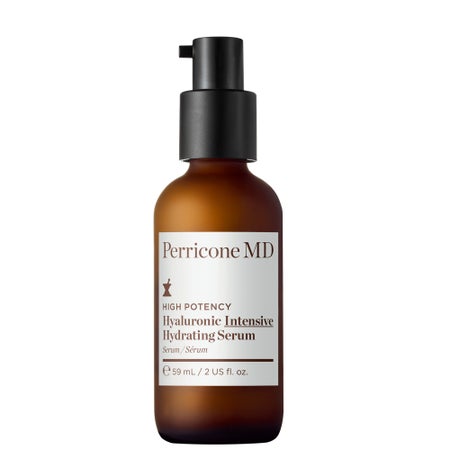

Perricone MD
High Potency Hyaluronic Intensive Hydrating Serum

High Potency Hyaluronic Intensive Hydrating Serum
Perricone MD
high-potency-hyaluronic-intensive-hydrating-serum
Serum
9643623547173
Morning or Evening?
How often will you use this product?
Notes


Highlights
WHAT IS IT?
Hydrating serum with multiple forms of hyaluronic acid
FEATURES
Fast-absorbing, strengthens moisture barrier, reduces appearance of fine lines and wrinkles
BEST FOR
Dry, dehydrated skin
CHECKS
Alcohol-free, fragrance-free, essential oil-free
Who Is It For?
Adults Both Men And WomenWhat Does It Help With?
Dryness Dehydration Loss Of Radiance Loss Of Volume Fine Lines & WrinklesBudget
PremiumHow To Use
Which routine should it be used in?
Instructions:
Key Information


What Perricone MD Says
Product Description:
This deeply nourishing serum is designed with 4 forms and 2 natural building blocks of hyaluronic acid to instantly replenish with essential moisture for visibly smoother, firmer and plumper skin. This fast-absorbing formula helps strengthen skin's moisture barrier, increase the feel of skin cushion and reduce the appearance of fine lines and wrinkles for a healthy, youthful-looking appearance. Leaves skin looking and feeling soft, supple and rejuvenated.
About the Brand:
Ingredients Overview
Ingredients List
Water/Aqua/Eau, Dimethicone, Butylene Glycol, Niacinamide, Acetyl Glucosamine, Squalane, Sodium Acrylate/Sodium Acryloyldimethyl Taurate Copolymer, Polysilicone-11, Cetearyl Olivate, HDI/Trimethylol Hexyllactone Crosspolymer, Polyisobutene, Sorbitan Olivate, Dimethyl Isosorbide, Polysorbate 20, 1,2-Hexanediol, Caprylyl Glycol, Dimethyl MEA, Hydroxyacetophenone, Citric Acid, Ceramide NP, Caprylyl/Capryl Glucoside, Sorbitan Oleate, Sodium Gluconate, Spermidine, Silica, Sodium Acetylated Hyaluronate, Sodium Hyaluronate, Phenoxyethanol, Phytosphingosine, Sodium Hyaluronate Crosspolymer, Hyaluronic Acid, Ethylhexylglycerin, Acetyl Tetrapeptide-11, Acetyl Tetrapeptide-9, Glycerin, Disodium Acetyl Glucosamine Phosphate, Sodium Glucuronate, Magnesium Sulfate
Key Ingredients
Hyaluronic Acid (multiple forms), DMAE, Niacinamide
Ingredients Details
Acetyl Glucosamine
Common Name(s): Acetyl glucosamine,cosmetic active,functional ingredient
CAS Number: N/a
DESCRIPTION
What It Does: Delivers characteristic cosmetic function — skin conditioning, protection, preservation, or active biological benefit — at recommended use concentration.
Why It's Used: Selected for its functional contribution and formulation compatibility — supported by cosmetic science literature and regulatory safety assessment.
How It Works: Works through the mechanism of its molecular class — physicochemical interaction with the formulation or biological interaction with skin proteins, lipids, or receptors as documented in peer-reviewed literature.
Typically Found In: Skin care formulations
TECHNICAL DETAILS
Primary Category: Active ingredient – cosmetic active
Secondary Functions: Skin conditioning
Application Areas:

Facial Skincare

Body Care
Hair Care
Beard Care
Color Cosmetics (Makeup)
Dietary/Oral Supplements
Typical Concentration Range: 0.1%–10%
SOURCING & ETHICS
Vegan Status: Conditional
Halal Status: Yes
Source Notes: Commercially produced for cosmetic use. verify vegan/halal status with supplier.
SKIN COMPATIBILITY
Irritancy Rating: 1/5 – very low
Comedogenicity Rating: 0/5 – non-comedogenic
Sensitivity Concerns: Well-tolerated by most skin types.
Safe for Sensitive Skin: Yes
SAFETY & COMPATIBILITY
Safety Profile: Good safety profile at recommended concentrations. ewg score: 1–2.
Works Well With: Standard skincare actives
Avoid Combining With: No known significant incompatibilities
SCIENTIFIC NOTE
Acetyl glucosamine delivers documented functional benefit with an established safety profile within the cosmetic regulatory framework (cosing eu, cir usa).
Last Verified: Cosing database,acetyl glucosamine technical literature
Primary Sources: 2026-03-12
Butylene Glycol
Common Name(s): 1,3-butanediol,bg,1,3-butylene glycol
CAS Number: 107-88-0
DESCRIPTION
What It Does: Provides humectant hydration and active ingredient solubilization with excellent skin feel.
Why It's Used: Preferred glycol humectant in premium and k-beauty formulations for superior skin feel vs propylene glycol with equivalent functionality.
How It Works: Two hydroxyl groups at 1,3-positions provide water binding and solvent activity. better tolerated than propylene glycol with minimal sensitization risk. 4-carbon backbone provides slightly greater hydrophobic character enabling dissolution of less polar actives vs pg.
Typically Found In: Toners,essences,serums,k-beauty formulas
TECHNICAL DETAILS
Primary Category: Functional ingredient – glycol humectant
Secondary Functions: Tewl reduction,skin plumping
Application Areas:
Facial Skincare
Body Care
Hair Care
Beard Care
Color Cosmetics (Makeup)
Dietary/Oral Supplements
Typical Concentration Range: 1%–10%
SOURCING & ETHICS
Vegan Status: Yes – synthetic
Halal Status: Yes
Source Notes: Synthetic or naturally derived. excellent aqueous solubility.
SKIN COMPATIBILITY
Irritancy Rating: 1/5 – very low
Comedogenicity Rating: 0/5 – non-comedogenic
Sensitivity Concerns: Non-irritating; suitable for all skin types.
Safe for Sensitive Skin: Yes
SAFETY & COMPATIBILITY
Safety Profile: Excellent safety profile. ewg score: 1.
Works Well With: Ceramides,emollients,occlusives,glycerin,hyaluronic acid
Avoid Combining With: No significant incompatibilities
SCIENTIFIC NOTE
K-beauty's preference for butylene glycol over propylene glycol is driven by two factors: bg's superior skin feel (less tacky than pg's higher viscosity) and its lower sensitization potential (1,3-bg has better spatial distribution of hydroxyl groups that reduces protein interaction vs pg's 1,2-position oh groups).
Last Verified: Cosing database,cir safety assessment
Primary Sources: 2026-03-12
Cetearyl Olivate
Common Name(s): Nonionic emulsifier,o/w surfactant,emulsion stabiliser
CAS Number: N/a
DESCRIPTION
What It Does: Stabilises o/w emulsions by forming a molecular monolayer at the oil-water interface, provides co-emulsification synergy with other emulsifiers, and contributes to emulsion texture through interfacial film properties.
Why It's Used: Nonionic emulsifiers are preferred for sensitive skin and ph-extreme formulations — no ionic charge means no electrostatic interaction with skin proteins, no ph-dependent function loss, and compatibility with both anionic and cationic co-ingredients.
How It Works: Hlb determines emulsion type: hlb 8–12 for o/w emulsification; hlb 3–6 for w/o. the peg or glycoside head group provides hydrophilicity while the c16–c18 fatty chain provides lipophilicity. at the o/w interface, nonionic emulsifiers form a mixed monolayer reducing interfacial tension from ~35 mn/m (clean oil-water) to 5–10 mn/m, providing thermodynamic stabilisation.
Typically Found In: Creams,lotions,o/w emulsions
TECHNICAL DETAILS
Primary Category: Active ingredient – cosmetic active
Secondary Functions: Skin conditioning
Application Areas:
Facial Skincare
Body Care
Hair Care
Beard Care
Color Cosmetics (Makeup)
Dietary/Oral Supplements
Typical Concentration Range: 1%–10%
SOURCING & ETHICS
Vegan Status: Conditional
Halal Status: Yes
Source Notes: Commercially produced for cosmetic use. verify vegan/halal status with supplier.
SKIN COMPATIBILITY
Irritancy Rating: 1/5 – very low
Comedogenicity Rating: 0/5 – non-comedogenic
Sensitivity Concerns: Well-tolerated by most skin types.
Safe for Sensitive Skin: Yes
SAFETY & COMPATIBILITY
Safety Profile: Good safety profile at recommended concentrations. ewg score: 1–2.
Works Well With: Standard skincare actives
Avoid Combining With: No known significant incompatibilities
SCIENTIFIC NOTE
Mixed emulsifier systems (e.g., glyceryl stearate + peg-100 stearate, or cetearyl glucoside + cetearyl alcohol) provide better emulsion stability than single emulsifiers — synergistic packing of different molecular geometries creates a more cohesive, mechanically robust interfacial film.
Last Verified: Cosing database,nonionic emulsifier hlb system review
Primary Sources: 2026-03-12
Dimethicone
Common Name(s): Pdms,polydimethylsiloxane,silicone fluid
CAS Number: 9006-65-9
DESCRIPTION
What It Does: Provides silicone-characteristic silky feel and skin protection with adjustable viscosity.
Why It's Used: The benchmark cosmetic silicone – sets the gold standard for silky application feel, spreadability, and skin protection in virtually all skin care categories.
How It Works: Polydimethylsiloxane chain flexibility provides extremely low surface tension and high spreadability. inert si-o backbone provides chemical stability and excellent skin tolerance. occlusive film formation reduces tewl. higher viscosity grades provide more intense conditioning.
Typically Found In: Moisturizers,foundations,primers,sunscreens – nearly universal
TECHNICAL DETAILS
Primary Category: Functional ingredient – polydimethylsiloxane
Secondary Functions: Barrier sealing,softening
Application Areas:
Facial Skincare
Body Care
Hair Care
Beard Care
Color Cosmetics (Makeup)
Dietary/Oral Supplements
Typical Concentration Range: 0.1%–30%
SOURCING & ETHICS
Vegan Status: Yes – synthetic
Halal Status: Yes
Source Notes: Plant-derived, synthetic or animal-derived. verify source.
SKIN COMPATIBILITY
Irritancy Rating: 1/5 – very low
Comedogenicity Rating: 1/5 – low; formulation-dependent
Sensitivity Concerns: Non-irritating.
Safe for Sensitive Skin: Yes
SAFETY & COMPATIBILITY
Safety Profile: Excellent safety profile. ewg score: 1.
Works Well With: Humectants,ceramides,actives as carrier
Avoid Combining With: No significant incompatibilities
SCIENTIFIC NOTE
Dimethicone's exceptional silky feel arises from its very low intermolecular attractive forces (weak van der waals forces due to non-polar methyl groups) that allow silicone chains to slide freely over skin. the coefficient of kinetic friction for pdms against skin (~0.04) is among the lowest of any cosmetic material – explaining why even small amounts transform product feel.
Last Verified: Cosing database,cir safety assessment
Primary Sources: 2026-03-12
