

Mario Badescu
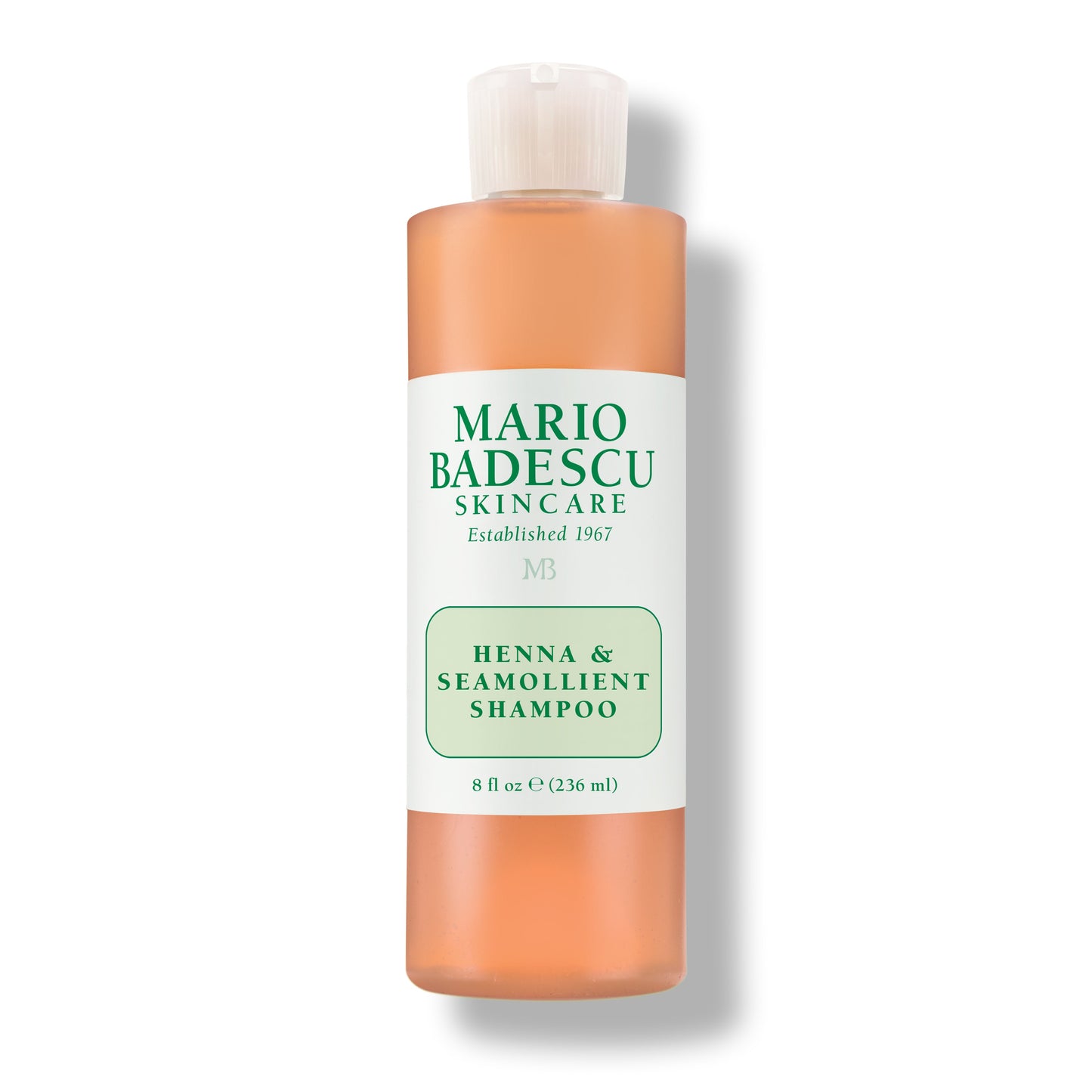
Henna & Seamollient Shampoo

Henna & Seamollient Shampoo
Mario Badescu
henna-seamollient-shampoo
9818368868645
Morning or Evening?
How often will you use this product?
Notes


Highlights
WHAT IS IT?
Enhancing shampoo with Henna and Lemongrass Extract
FEATURES
Leaves hair shiny and glossy, enhances natural highlights, improves hair tone and vibrancy, adds volume and body
BEST FOR
all hair types
CHECKS
Free of paraben, phthalate
Who Is It For?
All Hair TypesWhat Does It Help With?
Hair Tone Enhancement Natural Highlights Enhancement Hair Shine And VolumeBudget
Affordable (under $30)How To Use
Which routine should it be used in?
Instructions:
Key Information


What Mario Badescu Says
Product Description:
Visibly enhance hair tone and natural highlights with this cleansing shampoo containing Henna and Lemongrass Extract.
About the Brand:
Ingredients Overview
Ingredients List
AMMONIUM LAURETH SULFATE, AQUA, HENNA, CITRIC ACID, PANTHENOL, UREA, ALGAE EXTRACT, SODIUM CHLORIDE, PECITIN, CYMBOPOGON, SCHOENANTHUS EXTRACT
Key Ingredients
Henna, Lemongrass-Extract, Seaweed-Extract, Glycerin
Ingredients Details
Ammonium Laureth Sulfate
Common Name(s): Ammonium laureth sulfate,cosmetic active,functional ingredient
CAS Number: N/a
DESCRIPTION
What It Does: Delivers characteristic cosmetic function at recommended use concentration.
Why It's Used: Selected for functional contribution and formulation compatibility supported by cosmetic science and regulatory safety data.
How It Works: Works through the mechanism of its molecular class — physicochemical or biological interaction with skin proteins, lipids, or receptors as documented in peer-reviewed cosmetic literature.
Typically Found In: Skin care formulations
TECHNICAL DETAILS
Primary Category: Active ingredient – cosmetic active
Secondary Functions: Skin conditioning
Application Areas:

Facial Skincare

Body Care
Hair Care
Beard Care
Color Cosmetics (Makeup)
Dietary/Oral Supplements
Typical Concentration Range: 0.1%–10%
SOURCING & ETHICS
Vegan Status: Conditional
Halal Status: Yes
Source Notes: Commercially produced for cosmetic use. verify vegan/halal status with supplier.
SKIN COMPATIBILITY
Irritancy Rating: 1/5 – very low
Comedogenicity Rating: 0/5 – non-comedogenic
Sensitivity Concerns: Well-tolerated by most skin types.
Safe for Sensitive Skin: Yes
SAFETY & COMPATIBILITY
Safety Profile: Good safety profile at recommended concentrations. ewg score: 1–2.
Works Well With: Standard skincare actives
Avoid Combining With: No known significant incompatibilities
SCIENTIFIC NOTE
Ammonium laureth sulfate has an established safety and efficacy profile within the cosmetic regulatory framework at standard use concentrations.
Last Verified: Cosing database,ammonium laureth sulfate technical literature
Primary Sources: 2026-03-12
Henna
Common Name(s): Henna powder,lawsone source,mehndi
CAS Number: 84988-64-7
DESCRIPTION
What It Does: Provides lawsone keratin-reactive orange-red colour for permanent natural hair colouring.
Why It's Used: The only natural permanent hair colorant – lawsone's covalent bonding to keratin provides permanent colouration unavailable from any other natural botanical.
How It Works: Lawsone (2-oh-1,4-naphthoquinone) undergoes michael addition to cysteine thiols in keratin providing covalent bond and permanent colour. ph affects reaction rate (alkaline accelerates). colour range: orange to deep auburn depending on starting hair colour and processing.
Typically Found In: Natural hair colouring,mehndi temporary skin tattooing
TECHNICAL DETAILS
Primary Category: Colorant – natural hair/skin dye
Secondary Functions: Skin conditioning
Application Areas:
Facial Skincare
Body Care
Hair Care
Beard Care
Color Cosmetics (Makeup)
Dietary/Oral Supplements
Typical Concentration Range: 10%–100% (paste)
SOURCING & ETHICS
Vegan Status: Yes – from lawsonia inermis leaves
Halal Status: Yes
Source Notes: Commercially produced for cosmetic use. verify vegan/halal status with supplier.
SKIN COMPATIBILITY
Irritancy Rating: 1/5 – very low
Comedogenicity Rating: 0/5 – non-comedogenic
Sensitivity Concerns: Well-tolerated by most skin types.
Safe for Sensitive Skin: Yes
SAFETY & COMPATIBILITY
Safety Profile: Good safety profile at recommended concentrations. ewg score: 1–2.
Works Well With: Standard skincare actives
Avoid Combining With: No known significant incompatibilities
SCIENTIFIC NOTE
Lawsone's covalent bonding mechanism (michael addition to keratin cysteine thiols) is fundamentally different from synthetic oxidative hair dyes (which form new chromophores by oxidative coupling inside the hair shaft). lawsone reacts with exposed thiol groups primarily at the hair surface and cuticle, providing surface-level colour that is permanent (covalent bond) but can be stripped by bleaching or thiol-reducing treatments.
Last Verified: Cosing database,cir safety assessment
Primary Sources: 2026-03-12
