

Heliocare
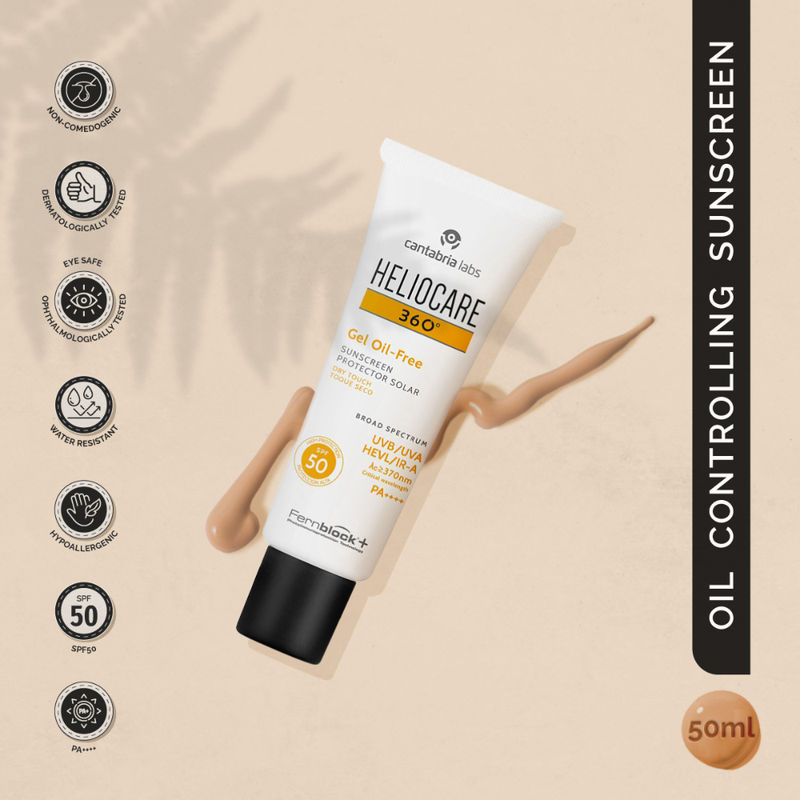
Heliocare 360 Gel Oil-Free Sunscreen SPF 50 Pa++++ Oily & Combination Skin, Anti-Acne, Matte Finish

Heliocare 360 Gel Oil-Free Sunscreen SPF 50 Pa++++ Oily & Combination Skin, Anti-Acne, Matte Finish
Heliocare
heliocare-360-gel-oil-free-sunscreen-spf-50-pa-oily-combination-skin-anti-acne-matte-finish
Suncare
10084761403685
Morning or Evening?
How often will you use this product?
Notes


Highlights
WHAT IS IT?
Gel oil-free sunscreen with multiple active filters and antioxidant ingredients
FEATURES
Oil-free gel texture, double mattifying-sebo-regulating action, protects against UVB, UVA, visible and infrared radiation, sweat- and water-resistant, dermatologically tested, suitable for oily or acne-prone skin
BEST FOR
oily
CHECKS
Alcohol, Parabens
Who Is It For?
All Genders Age Range Not SpecifiedWhat Does It Help With?
Sun Protection Controlling Shine And Oiliness Repair Of Sun DamageBudget
Premium ($76-$150)How To Use
Which routine should it be used in?
Instructions:
Key Information


What Heliocare Says
Product Description:
Heliocare Gel, an oil-free, non-comedogenic formula and lightweight, oil-free gel texture leave skin soft, smooth, and shine-free after application. Its complex double-mattifying-sebo-regulating action makes it suitable for oily or acne-prone skin, with a matte and dry finish. It meets the highest photoprotection standards. With Fernblock+, specific filters, and repairing and antioxidant active ingredients, it protects against the 4 types of radiation (UVB, UVA, visible, and infrared), neutralizes, and repairs sun damage. Tested under dermatological and ophthalmological control.
About the Brand:
Ingredients Overview
Ingredients List
Aqua,C12-15 Alkyl Benzoate,Arginine,Phenylbenzimidazole Sulfonic Acid,Disodium Phenyl Dibenzimidazole Tetrasulfonate,Bis-Ethylhexyloxyphenol Methoxyphenyl Triazine,Titanium Dioxide(Nano),Hexylene Glycol,C14-22 Alcohols,C12-20 Alkyl Glucoside,Diethylamino Hydroxybenzoyl Hexyl Benzoate,Nylon-12,Myristyl Alcohol,Dipropylene Glycol Dibenzoate,Ceteareth-25,Diethylhexyl Butamido Triazone,Phenoxyethanol,Polypodium Leucotomos Leaf Extract,Ferulic Acid,Caffeic Acid,Physalis Angulata Extract,Caprylyl Glycol,Melanin,Myristyl Glucoside,Ethylhexyl Triazone,Caprylyl Methicone,Hydrolyzed Wheat Protein/PVP Crosspolymer,Glycerin,3-O-Ethyl Ascorbic Acid,Alumina,PPG-15 Stearyl Ether Benzoate,Disodium Ethylene Dicocamide PEG-15 Disulfate,Camellia Sinensis Extract,Ethylhexylglycerin,Tocopheryl Acetate,Xanthan Gum,Phytosphingosine Hcl,Plankton Extract,Ethyl Lauroyl Arginate Hcl,Panthenyl Triacetate,Parfum,Simethicone,Oxothiazolidine,Disodium EDTA,Silica,Ethyl Linoleate,Caprylic/Capric Triglyceride,Oleyl Alcohol,Butylene Glycol,Propylene Glycol,Lecithin,Sodium Benzoate,Tocopherol,Linalool,Limonene
Key Ingredients
Fernblock Technology, Phenylbenzimidazole Sulfonic Acid, Bis-Ethylhexyloxyphenol Methoxyphenyl Triazine, Titanium Dioxide (Nano), Polypodium Leucotomos Leaf Extract, Ferulic Acid, Caffeic Acid
Ingredients Details
3-o-ethyl Ascorbic Acid
Common Name(s): 3-o-ethyl ascorbic acid
DESCRIPTION
What It Does: Loosens corneocyte adhesion in the stratum corneum, accelerating cell turnover, refining skin texture, and improving radiance.
Why It's Used: Organic acids at cosmetic ph values provide controlled keratolytic exfoliation that improves skin texture, pore appearance, and radiance without mechanical irritation.
How It Works: At appropriate ph, the acid's undissociated form penetrates the stratum corneum and dissolves the ionic bonds between corneocyte desmosomes (calcium chelation mechanism), facilitating controlled desquamation and cell renewal.
Typically Found In: Toners,exfoliants,serums,peels,cleansers
TECHNICAL DETAILS
Primary Category: Exfoliants
Secondary Functions: Brightening,keratolytic
Application Areas:

Facial Skincare

Body Care
Hair Care
Beard Care
Color Cosmetics (Makeup)
Dietary/Oral Supplements
Typical Concentration Range: 0.5–20%
SOURCING & ETHICS
Vegan Status: Yes
Halal Status: Yes
Source Notes: Synthetic or plant-derived acid; no animal components.
SKIN COMPATIBILITY
Irritancy Rating: 2
Comedogenicity Rating: 0
Sensitivity Concerns: May cause irritation or stinging in sensitive or barrier-compromised skin at high concentrations; patch test recommended.
Safe for Sensitive Skin: Conditional
SAFETY & COMPATIBILITY
Safety Profile: Safe within recommended ph and concentration ranges. sensitization risk increases above 10% aha. patch test recommended for sensitive skin. mildly irritating to some individuals at typical cosmetic use concentrations.
Works Well With: Niacinamide,hyaluronic acid,ceramides,vitamin c
Avoid Combining With: High concentrations on sensitive/broken skin; avoid with physical exfoliants
SCIENTIFIC NOTE
Cosmetic acids function at the pka boundary: only the undissociated acid (rcooh) penetrates the stratum corneum lipid barrier, while the ionized carboxylate (rcoo⁻) does not. the henderson-hasselbalch equation governs the fraction of active species at formulation ph; typically 0.5–3.0% undissociated acid provides efficacy while minimizing irritation.
Last Verified: Cosing eu database; pcpc cosmetic ingredient safety reviews; ingredient-specific safety and efficacy literature
Primary Sources: 2025-01-15
Alumina
Common Name(s): Alumina,cosmetic active,functional ingredient
CAS Number: N/a
DESCRIPTION
What It Does: Delivers characteristic cosmetic function at recommended use concentration.
Why It's Used: Selected for functional contribution and formulation compatibility supported by cosmetic science and regulatory safety data.
How It Works: Works through the mechanism of its molecular class as documented in peer-reviewed cosmetic literature.
Typically Found In: Skin care formulations
TECHNICAL DETAILS
Primary Category: Active ingredient – cosmetic active
Secondary Functions: Skin conditioning
Application Areas:
Facial Skincare
Body Care
Hair Care
Beard Care
Color Cosmetics (Makeup)
Dietary/Oral Supplements
Typical Concentration Range: 0.1%–10%
SOURCING & ETHICS
Vegan Status: Conditional
Halal Status: Yes
Source Notes: Commercially produced for cosmetic use. verify vegan/halal status with supplier.
SKIN COMPATIBILITY
Irritancy Rating: 1/5 – very low
Comedogenicity Rating: 0/5 – non-comedogenic
Sensitivity Concerns: Well-tolerated by most skin types.
Safe for Sensitive Skin: Yes
SAFETY & COMPATIBILITY
Safety Profile: Good safety profile at recommended concentrations. ewg score: 1–2.
Works Well With: Standard skincare actives
Avoid Combining With: No known significant incompatibilities
SCIENTIFIC NOTE
Alumina has an established safety profile within the cosmetic regulatory framework at standard use concentrations.
Last Verified: Cosing database,alumina technical literature
Primary Sources: 2026-03-12
Arginine
Common Name(s): L-arginine,2-amino-5-guanidinopentanoic acid
CAS Number: 74-79-3
DESCRIPTION
What It Does: Conditions skin, attracts moisture, supports wound healing, and improves microcirculation via no synthesis.
Why It's Used: Multi-functional amino acid for skin hydration, conditioning, and wound healing in peptide and nmf formulations.
How It Works: Guanidinium group binds water (humectant). substrate for nitric oxide synthase (enos) producing nitric oxide that vasodilates capillaries improving skin nutrition. stimulates fibroblast proliferation for wound healing.
Typically Found In: Anti-aging serums,wound healing products,nmf moisturizers,scalp treatments
TECHNICAL DETAILS
Primary Category: Active ingredient – amino acid
Secondary Functions: Wound healing,microcirculation,nmf component
Application Areas:
Facial Skincare
Body Care
Hair Care
Beard Care
Color Cosmetics (Makeup)
Dietary/Oral Supplements
Typical Concentration Range: 0.5%–5%
SOURCING & ETHICS
Vegan Status: Yes – plant-derived or synthetic
Halal Status: Yes
Source Notes: Fermentation-derived or synthetic. natural skin component.
SKIN COMPATIBILITY
Irritancy Rating: 1/5 – very low
Comedogenicity Rating: 0/5 – non-comedogenic
Sensitivity Concerns: Non-irritating; endogenous skin molecule.
Safe for Sensitive Skin: Yes
SAFETY & COMPATIBILITY
Safety Profile: Excellent safety profile. natural skin nmf component. ewg score: 1.
Works Well With: Hyaluronic acid,ceramides,peptides,other amino acids
Avoid Combining With: No significant incompatibilities
SCIENTIFIC NOTE
Arginine is a conditionally essential amino acid in wound healing where local demand exceeds synthesis capacity. topical arginine provides the nos substrate locally for no-mediated vasodilation and immune cell function in healing tissue.
Last Verified: Cosing database,cir safety assessment,witte & barbul arginine wound healing review
Primary Sources: 2026-03-12
Bis-ethylhexyloxyphenol Methoxyphenyl Triazine
Common Name(s): Bis-ethylhexyloxyphenol methoxyphenyl triazine,antimicrobial biocide,broad-spectrum preservative-grade
CAS Number: N/a
DESCRIPTION
What It Does: Kills bacteria, fungi, and viruses on skin and within formulations through membrane disruption, protein denaturation, or enzyme inhibition — providing antiseptic, preservation, or therapeutic antimicrobial protection.
Why It's Used: Chosen when broad-spectrum antimicrobial coverage including gram-negative bacteria (particularly pseudomonas) is required, where standard cosmetic preservatives provide insufficient protection for challenge tests.
How It Works: Cationic biocides (qacs) adsorb electrostatically to negative microbial surfaces then insert hydrophobic chains into lipid bilayers, collapsing membrane potential. non-ionic biocides (triclosan) inhibit fatty acid synthesis (fabi enoyl reductase). oxidants (h₂o₂, chlorine dioxide) oxidise microbial thiol enzymes non-specifically.
Typically Found In: Antiseptics,therapeutic skin care
TECHNICAL DETAILS
Primary Category: Active ingredient – cosmetic active
Secondary Functions: Skin conditioning
Application Areas:
Facial Skincare
Body Care
Hair Care
Beard Care
Color Cosmetics (Makeup)
Dietary/Oral Supplements
Typical Concentration Range: Check regulatory limits
SOURCING & ETHICS
Vegan Status: Yes
Halal Status: Yes
Source Notes: Commercially produced for cosmetic use. verify vegan/halal status with supplier.
SKIN COMPATIBILITY
Irritancy Rating: 1/5 – very low
Comedogenicity Rating: 0/5 – non-comedogenic
Sensitivity Concerns: Well-tolerated by most skin types.
Safe for Sensitive Skin: Yes
SAFETY & COMPATIBILITY
Safety Profile: Good safety profile at recommended concentrations. ewg score: 1–2.
Works Well With: Standard skincare actives
Avoid Combining With: No known significant incompatibilities
SCIENTIFIC NOTE
Regulatory limits vary significantly by compound and application — formulators must verify permitted concentrations in target market (eu annex v, fda otc monographs) before formulating at functional concentrations.
Last Verified: Cosing database,bis-ethylhexyloxyphenol methoxyphenyl triazine antimicrobial regulatory review
Primary Sources: 2026-03-12
