

HEIMISH
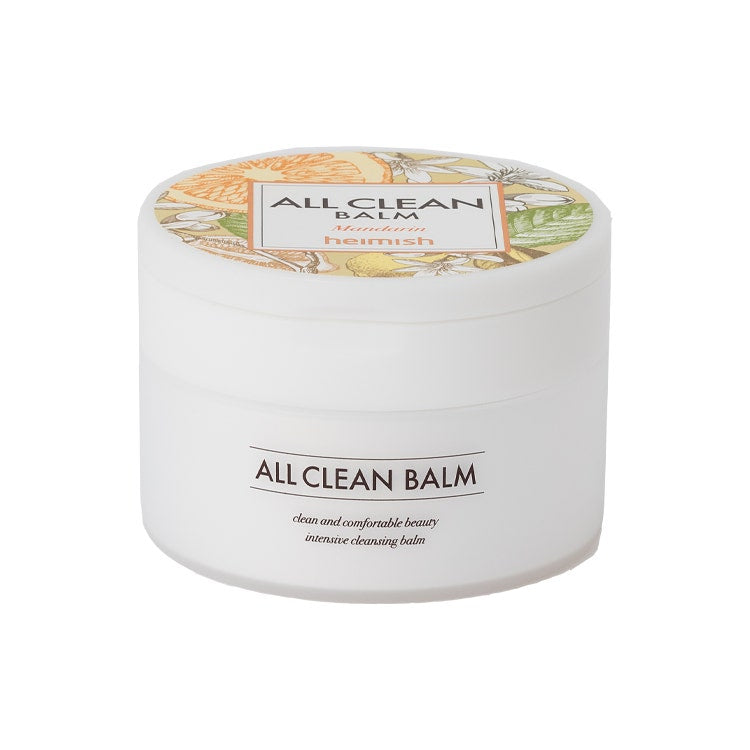
Heimish All Clean Balm Mandarin 120Ml

Heimish All Clean Balm Mandarin 120Ml
HEIMISH
heimish-all-clean-balm-mandarin-120ml
Cleanse
10084706320677
Morning or Evening?
How often will you use this product?
Notes


Highlights
WHAT IS IT?
Cleansing balm with multiple herbal oils and extracts, contains more than 20 ingredients
FEATURES
Removes waterproof makeup and impurities, no eye irritation, low irritation, vegan, includes mini spatula, mild herbal fragrance
BEST FOR
sensitive
CHECKS
No eye irritation, no pain, no double cleansing needed
Who Is It For?
Pregnant Women Sensitive Skin Acne-prone SkinWhat Does It Help With?
Removes Makeup Dirt Blackheads Gentle On Eyes And SkinBudget
Mid-range ($30-$75)How To Use
Which routine should it be used in?
Instructions:
Key Information


What HEIMISH Says
Product Description:
Easily and quickly removes waterproof makeup, impurities, and other residue that pile up throughout your day. No need to double cleanse! No more eye irritation with this gentle cleanser!
-Multi-Purpose Cleanser for waterproof makeup, dirt, and blackheads - Quickly dissolves into oil when in contact with skin and cleans all residue.
-No Eye Irritation - No pain when accidentally getting some product in your eyes while cleansing.
-Low-Irritation and Vegan - For those who are pregnant and/or have sensitive, acne-prone skin.
-Scoop Out for Your Face - Convenient mini spatula included in the product.
-A Spa-like Experience - Contains a mild herbal fragrance that does not linger on the skin.
About the Brand:
Ingredients Overview
Ingredients List
Ethylhexyl-Palmitate,Cetyl-Ethylhexanoate,PEG-20-Glyceryl-Triisostearate,Synthetic-Wax,PEG-8-Isostearate,Artemisia-Vulgaris-Oil,Citrus-Aurantium-Amara-Leaf-Twig-Oil,Lavandula-Angustifolia-Oil,Litsea-Cubeba-Fruit-Oil,Laurus-Nobilis-Leaf-Extract,Cetyl-PEG-PPG-10-1-Dimethicone,1-2-Hexanediol,Curcuma-Longa-Turmeric-Root-Extract,Melia-Azadirachta-Flower-Extract,Melia-Azadirachta-Leaf-Extract,Corallina-Officinalis-Extract,Melia-Azadirachta-Bark-Extract,Moringa-Oleifera-Seed-Oil,Ocimum-Sanctum-Leaf-Extract,Tocopheryl-Acetate,Eclipta-Prostrata-Extract,Glycerin,Ceramide-NP,Phytosphingosine,Hydrogenated-Lecithin,Octyldodecanol,Oleyl-Alcohol,Butyrospermum-Parkii-Shea-Butter,Candida-Bombicola-Glucose-Methyl-Rapeseedate-Ferment,Glycine-Soja-Soybean-Sterols,Tocopherol,Citrus-Junos-Fruit-Oil,Citrus-Unshiu-Fruit-Oil,Water,Butylene-Glycol,Carica-Papaya-Papaya-Fruit-Extract,Camellia-Sinensis-Leaf-Extract,Vaccinium-Macrocarpon-Cranberry-Fruit-Extract
Key Ingredients
Ethylhexyl Palmitate, Cetyl Ethylhexanoate, Artemisia Vulgaris Oil, Citrus Aurantium Amara Leaf/Twig Oil, Moringa Oleifera Seed Oil
Ingredients Details
1-2-hexanediol
Common Name(s): 1-2-hexanediol,cosmetic active,functional ingredient
CAS Number: N/a
DESCRIPTION
What It Does: Delivers characteristic cosmetic function at recommended use concentration.
Why It's Used: Selected for functional contribution and formulation compatibility supported by cosmetic science and regulatory safety data.
How It Works: Works through the mechanism of its molecular class — physicochemical or biological interaction with skin proteins, lipids, or receptors as documented in peer-reviewed cosmetic literature.
Typically Found In: Skin care formulations
TECHNICAL DETAILS
Primary Category: Active ingredient – cosmetic active
Secondary Functions: Skin conditioning
Application Areas:

Facial Skincare

Body Care
Hair Care
Beard Care
Color Cosmetics (Makeup)
Dietary/Oral Supplements
Typical Concentration Range: 0.1%–10%
SOURCING & ETHICS
Vegan Status: Conditional
Halal Status: Yes
Source Notes: Commercially produced for cosmetic use. verify vegan/halal status with supplier.
SKIN COMPATIBILITY
Irritancy Rating: 1/5 – very low
Comedogenicity Rating: 0/5 – non-comedogenic
Sensitivity Concerns: Well-tolerated by most skin types.
Safe for Sensitive Skin: Yes
SAFETY & COMPATIBILITY
Safety Profile: Good safety profile at recommended concentrations. ewg score: 1–2.
Works Well With: Standard skincare actives
Avoid Combining With: No known significant incompatibilities
SCIENTIFIC NOTE
1-2-hexanediol has an established safety and efficacy profile within the cosmetic regulatory framework at standard use concentrations.
Last Verified: Cosing database,1-2-hexanediol technical literature
Primary Sources: 2026-03-12
Glycerin
Common Name(s): Glycerol,glycerine,1,2,3-propanetriol
CAS Number: 56-81-5
DESCRIPTION
What It Does: Glycerin pulls water from the environment and deeper skin layers into the outer skin layer (epidermis), boosting moisture levels and keeping skin soft, smooth, and plump.
Why It's Used: It is used in virtually every moisturizer, serum, and cleanser because it is highly effective at hydrating skin, is well-tolerated by all skin types, and enhances the texture and spreadability of formulations.
How It Works: As a humectant, glycerin forms hydrogen bonds with water molecules, trapping them in the skin. it also reinforces the skin barrier by integrating into lipid structures between skin cells.
Typically Found In: Moisturizers,serums,cleansers,toners,sheet masks,sunscreens,body lotions,shampoos,conditioners
TECHNICAL DETAILS
Primary Category: Humectant
Secondary Functions: Skin barrier support,emollient,solvent
Application Areas:
Facial Skincare
Body Care
Hair Care
Beard Care
Color Cosmetics (Makeup)
Dietary/Oral Supplements
Typical Concentration Range: 1%–30% (typical: 3–10%)
SOURCING & ETHICS
Vegan Status: Yes – plant-derived (coconut, soy, palm) or synthetic
Halal Status: Yes – when plant-derived or synthetic; verify source with supplier
Source Notes: Derived from plant oils via hydrolysis or saponification; synthetic versions also available. palm-derived glycerin carries sustainability concerns.
SKIN COMPATIBILITY
Irritancy Rating: 1/5 – very low; non-irritating at all standard concentrations
Comedogenicity Rating: 0/5 – non-comedogenic
Sensitivity Concerns: Extremely rare allergic reactions; generally safe for all skin types including sensitive and baby skin
Safe for Sensitive Skin: Yes
SAFETY & COMPATIBILITY
Safety Profile: Widely recognized as safe. ewg hazard score: 1. no significant concerns for irritation, sensitization, or toxicity at typical concentrations (up to 50%).
Works Well With: Hyaluronic acid,ceramides,niacinamide,panthenol,urea,peptides,retinol,ahas/bhas
Avoid Combining With: No known incompatibilities at standard concentrations
SCIENTIFIC NOTE
Glycerin is an endogenous skin component found naturally in the stratum corneum. aquaporin-3 channels in keratinocytes facilitate glycerin transport, making it integral to natural skin hydration pathways.
Last Verified: Cosing database,cir safety assessment,ewg skin deep,inci decoder
Primary Sources: 2026-03-12
Octyldodecanol
Common Name(s): 2-octyldodecanol,eutanol g,c20 branched alcohol
CAS Number: 5333-42-6
DESCRIPTION
What It Does: Provides elegant dry-touch emolliency with excellent solubilisation for active ingredients.
Why It's Used: Premium emollient solvent — octyldodecanol's branched c20 structure provides a uniquely dry, elegant emollient character with exceptional compatibility for challenging actives.
How It Works: Branched c20 fatty alcohol provides dry, non-greasy emolliency. excellent solvent for fat-soluble vitamins, retinoids, uv filters, and flavour compounds. lower viscosity than longer-chain fatty alcohols for elegant application. very good spreading coefficient for uniform application.
Typically Found In: Premium skincare,sunscreens,vitamin delivery systems
TECHNICAL DETAILS
Primary Category: Functional ingredient – emollient
Secondary Functions: Barrier sealing,softening
Application Areas:
Facial Skincare
Body Care
Hair Care
Beard Care
Color Cosmetics (Makeup)
Dietary/Oral Supplements
Typical Concentration Range: 1%–20%
SOURCING & ETHICS
Vegan Status: Yes – from c10 alcohols via guerbet reaction (plant-derived)
Halal Status: Yes
Source Notes: Plant-derived, synthetic or animal-derived. verify source.
SKIN COMPATIBILITY
Irritancy Rating: 1/5 – very low
Comedogenicity Rating: 1/5 – low; formulation-dependent
Sensitivity Concerns: Non-irritating.
Safe for Sensitive Skin: Yes
SAFETY & COMPATIBILITY
Safety Profile: Excellent safety profile. ewg score: 1.
Works Well With: Humectants,ceramides,actives as carrier
Avoid Combining With: No significant incompatibilities
SCIENTIFIC NOTE
Octyldodecanol is produced via the guerbet reaction — a base-catalysed self-condensation of two c10 alcohol molecules (decanol) yielding the branched c20 2-octyldodecanol. this reaction produces a highly branched structure that prevents crystallisation (liquid at room temperature), providing liquid-state emolliency with a completely different tactile profile than the waxy feel of linear c20 fatty alcohols.
Last Verified: Cosing database,cir safety assessment
Primary Sources: 2026-03-12
Phytosphingosine
Common Name(s): 4-hydroxysphinganine,tetrahydroxysphinganine
CAS Number: 554-62-1
DESCRIPTION
What It Does: Provides antimicrobial activity against p. acnes and s. aureus while supporting ceramide synthesis and reducing inflammation.
Why It's Used: Used in acne and sensitive skin formulations for combined antimicrobial, anti-inflammatory, and barrier repair activity from a single plant-derived sphingoid base.
How It Works: Trihydroxy structure provides stronger antimicrobial activity vs sphingosine. substrate for ceramide synthase to form phytoceramides. reduces pro-inflammatory cytokine production in keratinocytes.
Typically Found In: Anti-acne products,sensitive skin treatments,barrier repair formulations
TECHNICAL DETAILS
Primary Category: Active ingredient – plant sphingoid base
Secondary Functions: Anti-acne,ceramide synthesis,anti-inflammatory
Application Areas:
Facial Skincare
Body Care
Hair Care
Beard Care
Color Cosmetics (Makeup)
Dietary/Oral Supplements
Typical Concentration Range: 0.01%–0.5%
SOURCING & ETHICS
Vegan Status: Yes – plant/yeast-derived
Halal Status: Yes
Source Notes: Derived from yeast (pichia) fermentation or plant sphingolipid hydrolysis. fully plant-derived.
SKIN COMPATIBILITY
Irritancy Rating: 1/5 – very low
Comedogenicity Rating: 0/5 – non-comedogenic
Sensitivity Concerns: Endogenous molecule; excellent tolerability.
Safe for Sensitive Skin: Yes
SAFETY & COMPATIBILITY
Safety Profile: Exceptional safety profile. natural skin component. ewg score: 1.
Works Well With: Other ceramides,cholesterol,free fatty acids,hyaluronic acid,niacinamide
Avoid Combining With: No significant incompatibilities
SCIENTIFIC NOTE
Phytosphingosine's additional 4-hydroxy group (vs sphingosine) significantly enhances antimicrobial activity while maintaining ceramide precursor function. clinically demonstrated to reduce p. acnes counts and inflammatory lesions in acne studies.
Last Verified: Cosing database,lintner phytosphingosine review,kawano et al. ceramide precursor study
Primary Sources: 2026-03-12
