

HEIMISH
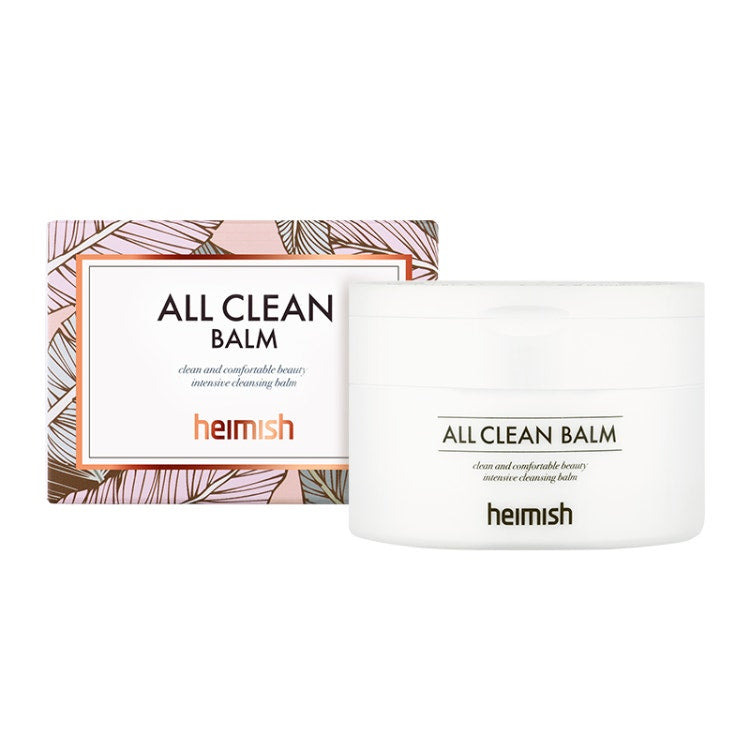
Heimish All Clean Balm 120Ml

Heimish All Clean Balm 120Ml
HEIMISH
heimish-all-clean-balm-120ml
Cleanse
10084706550053
Morning or Evening?
How often will you use this product?
Notes


Highlights
WHAT IS IT?
Cleansing balm, multiple ingredients
FEATURES
Removes waterproof makeup, cleans impurities and residue, no eye irritation, low irritation, vegan, includes spatula, mild herbal fragrance
BEST FOR
sensitive
CHECKS
No eye irritation, no harsh ingredients indicated
Who Is It For?
Pregnant And/or Sensitive Acne-prone Skin UsersWhat Does It Help With?
Waterproof Makeup Removal Dirt And Blackhead Cleansing Gentle On Eyes And Sensitive SkinBudget
Mid-range ($30-$75)How To Use
Which routine should it be used in?
Instructions:
Key Information


What HEIMISH Says
Product Description:
Easily and quickly removes waterproof makeup, impurities, and other residue that pile up throughout your day. No need to double cleanse! No more eye irritation with this gentle cleanser! Multi-Purpose Cleanser for waterproof makeup, dirt, and blackheads - Quickly dissolves into oil when in contact with skin and cleans all residue. No Eye Irritation - No pain when accidentally getting some product in your eyes while cleansing. Low-Irritation and Vegan - For those who are pregnant and/or have sensitive, acne-prone skin. Scoop Out for Your Face - Convenient mini spatula included in the product. A Spa-like Experience - Contains a mild herbal fragrance that does not linger on the skin.
About the Brand:
Ingredients Overview
Ingredients List
Ethylhexyl-Palmitate,Cetyl-Ethylhexanoate,PEG-20-Glyceryl-Triisostearate,Polyethylene,PEG-8-Isostearate,1,2-Hexanediol,Butyrospermum-Parkii-(Shea)-Butter,Tocopheryl-Acetate,Citrus-Aurantium-Dulcis-(Orange)-Peel-Oil,Lavandula-Angustifolia-(Lavender)-Oil,Pelargonium-Graveolens-Flower-Oil,Amyris-Balsamifera-Bark-Oil,Eucalyptus-Globulus-Leaf-Oil,Melaleuca-Alternifolia-(Tea-Tree)-Leaf-Oil,Citrus-Paradisi-(Grapefruit)-Peel-Oil,Citrus-Aurantium-Bergamia-(Bergamot)-Fruit-Oil,Boswellia-Carterii-Oil,Juniperus-Mexicana-Oil,Water,Cocos-Nucifera-(Coconut)-Fruit-Extract,Butylene-Glycol,Citrus-Aurantifolia-(Lime)-Fruit-Extract,Citric-Acid,Phenoxyethanol,Nelumbium-Speciosum-Flower-Extract,Freesia-Refracta-Extract,Rose-Extract,Leontopodium-Alpinum-Extract,Jasminum-Officinale-(Jasmine)-Extract,Narcissus-Pseudo-Narcissus-(Daffodil)-Flower-Extract,Lilium-Tigrinum-Extract,Iris-Versicolor-Extract,Ethylhexylglycerin,Limonene,Citral,Linalool
Key Ingredients
Shea Butter,Tocopheryl Acetate,Orange Peel Oil,Lavender Oil,Tea Tree Leaf Oil
Ingredients Details
1-2-hexanediol
Common Name(s): 1-2-hexanediol,cosmetic active,functional ingredient
CAS Number: N/a
DESCRIPTION
What It Does: Delivers characteristic cosmetic function at recommended use concentration.
Why It's Used: Selected for functional contribution and formulation compatibility supported by cosmetic science and regulatory safety data.
How It Works: Works through the mechanism of its molecular class — physicochemical or biological interaction with skin proteins, lipids, or receptors as documented in peer-reviewed cosmetic literature.
Typically Found In: Skin care formulations
TECHNICAL DETAILS
Primary Category: Active ingredient – cosmetic active
Secondary Functions: Skin conditioning
Application Areas:

Facial Skincare

Body Care
Hair Care
Beard Care
Color Cosmetics (Makeup)
Dietary/Oral Supplements
Typical Concentration Range: 0.1%–10%
SOURCING & ETHICS
Vegan Status: Conditional
Halal Status: Yes
Source Notes: Commercially produced for cosmetic use. verify vegan/halal status with supplier.
SKIN COMPATIBILITY
Irritancy Rating: 1/5 – very low
Comedogenicity Rating: 0/5 – non-comedogenic
Sensitivity Concerns: Well-tolerated by most skin types.
Safe for Sensitive Skin: Yes
SAFETY & COMPATIBILITY
Safety Profile: Good safety profile at recommended concentrations. ewg score: 1–2.
Works Well With: Standard skincare actives
Avoid Combining With: No known significant incompatibilities
SCIENTIFIC NOTE
1-2-hexanediol has an established safety and efficacy profile within the cosmetic regulatory framework at standard use concentrations.
Last Verified: Cosing database,1-2-hexanediol technical literature
Primary Sources: 2026-03-12
Citral
Common Name(s): 3,7-dimethyl-2,6-octadienal,geranial+neral mix
CAS Number: 5392-40-5
DESCRIPTION
What It Does: Provides the defining intense lemon-citrus fragrance note.
Why It's Used: The lemon scent compound – citral defines the fresh lemon scent in lemon essential oil and lemongrass with potent antimicrobial activity.
How It Works: Mixture of e-isomer (geranial) and z-isomer (neral). antimicrobial via michael addition to thiol enzymes. inhibits nf-kb for anti-inflammatory activity. antioxidant via allylic aldehyde.
Typically Found In: Citrus fragrances,antibacterial products,lemon-scented cosmetics
TECHNICAL DETAILS
Primary Category: Fragrance component – lemon aldehyde
Secondary Functions: Skin conditioning
Application Areas:
Facial Skincare
Body Care
Hair Care
Beard Care
Color Cosmetics (Makeup)
Dietary/Oral Supplements
Typical Concentration Range: 0.001%–0.5%
SOURCING & ETHICS
Vegan Status: Yes – from lemon, lemongrass, melissa oils
Halal Status: Yes
Source Notes: Commercially produced for cosmetic use. verify vegan/halal status with supplier.
SKIN COMPATIBILITY
Irritancy Rating: 1/5 – very low
Comedogenicity Rating: 0/5 – non-comedogenic
Sensitivity Concerns: Well-tolerated by most skin types.
Safe for Sensitive Skin: Yes
SAFETY & COMPATIBILITY
Safety Profile: Eu cosmetics regulation: declared fragrance allergen. high sensitisation potential from alpha,beta-unsaturated aldehyde structure. ifra strict limits.
Works Well With: Standard skincare actives
Avoid Combining With: No known significant incompatibilities
SCIENTIFIC NOTE
Citral's high sensitisation potential (llna ec3 ~0.11%) is a consequence of its alpha,beta-unsaturated aldehyde structure providing a highly reactive michael acceptor for skin protein covalent binding. the e/z mixture (geranial/neral) in natural citral means both isomers contribute to the sensitisation burden – explaining why lemongrass oil (very high citral content, ~60-80%) is one of the more common essential oil allergens.
Last Verified: Cosing database,ifra standards
Primary Sources: 2026-03-12
Ethylhexylglycerin
Common Name(s): Octylglycerin,2-ethylhexyl glycerol ether,sensiva sc 10
CAS Number: 70445-33-9
DESCRIPTION
What It Does: Provides antimicrobial skin conditioning with deodorant activity and preservation system enhancement.
Why It's Used: Multifunctional clean beauty preservation active — ethylhexylglycerin provides antimicrobial, deodorant, and skin conditioning in a single ingredient accepted in most natural cosmetic certification schemes.
How It Works: Glycerol ether provides antimicrobial via bacterial membrane phospholipid disruption. deodorant activity via reduction of underarm lipase enzyme activity (similar mechanism to triethyl citrate). skin conditioning from glycerol humectant component. synergistic with phenoxyethanol and diols.
Typically Found In: Natural preservation systems,deodorants,skin conditioning products
TECHNICAL DETAILS
Primary Category: Functional ingredient – antimicrobial glycerol ether
Secondary Functions: Skin conditioning
Application Areas:
Facial Skincare
Body Care
Hair Care
Beard Care
Color Cosmetics (Makeup)
Dietary/Oral Supplements
Typical Concentration Range: 0.1%–0.5%
SOURCING & ETHICS
Vegan Status: Yes – synthetic
Halal Status: Yes
Source Notes: Commercially produced for cosmetic use. verify vegan/halal status with supplier.
SKIN COMPATIBILITY
Irritancy Rating: 1/5 – very low
Comedogenicity Rating: 0/5 – non-comedogenic
Sensitivity Concerns: Well-tolerated by most skin types.
Safe for Sensitive Skin: Yes
SAFETY & COMPATIBILITY
Safety Profile: Good safety profile at recommended concentrations. ewg score: 1–2.
Works Well With: Standard skincare actives
Avoid Combining With: No known significant incompatibilities
SCIENTIFIC NOTE
Ethylhexylglycerin's deodorant mechanism is pharmacologically identical to triethyl citrate: both inhibit skin surface microbial lipase enzymes that convert odourless triglycerides to odorous free fatty acids. the glycerol ether structure of ethylhexylglycerin, combined with the 2-ethylhexyl chain, provides lipase inhibition similar to ester-based lipase inhibitors from a different chemical class.
Last Verified: Cosing database,schülke sensiva sc 10 technical data,cir safety assessment
Primary Sources: 2026-03-12
Limonene
Common Name(s): D-limonene,(r)-limonene,dipentene
CAS Number: 5989-27-5
DESCRIPTION
What It Does: Provides the defining fresh citrus fragrance note alongside solvent and antimicrobial properties.
Why It's Used: The citrus industry's primary fragrance compound and the most abundant terpene in essential oils – limonene provides the clean, universally appealing fresh citrus scent character.
How It Works: D-limonene activates trpv1 mildly at high concentrations. antimicrobial via membrane disruption. solvent for oils and lipophilic compounds. cleaning via emulsification of lipid soils.
Typically Found In: Citrus-scented products,cleaning products,fragrance compounds
TECHNICAL DETAILS
Primary Category: Fragrance component – cyclic monoterpene
Secondary Functions: Skin conditioning
Application Areas:
Facial Skincare
Body Care
Hair Care
Beard Care
Color Cosmetics (Makeup)
Dietary/Oral Supplements
Typical Concentration Range: 0.001%–3%
SOURCING & ETHICS
Vegan Status: Yes – from citrus peel essential oils
Halal Status: Yes
Source Notes: Commercially produced for cosmetic use. verify vegan/halal status with supplier.
SKIN COMPATIBILITY
Irritancy Rating: 1/5 – very low
Comedogenicity Rating: 0/5 – non-comedogenic
Sensitivity Concerns: Well-tolerated by most skin types.
Safe for Sensitive Skin: Yes
SAFETY & COMPATIBILITY
Safety Profile: Eu cosmetics regulation: declared fragrance allergen. oxidises to sensitising compounds (limonene hydroperoxides) on air exposure – use with antioxidant stabilisers. ifra guidelines apply.
Works Well With: Standard skincare actives
Avoid Combining With: No known significant incompatibilities
SCIENTIFIC NOTE
Limonene's sensitisation risk arises not from limonene itself but from its autooxidation products (limonene-1,2-epoxide and limonene hydroperoxides) formed on air exposure. fresh limonene has low sensitisation potential, but air-oxidised limonene's hydroperoxide products are potent skin sensitisers. this explains why oxidation-stabilised formulations (with bht or other antioxidants) are required to manage limonene safety.
Last Verified: Cosing database,ifra standards,bråred christensson et al. limonene oxidation study
Primary Sources: 2026-03-12
