

HADA LABO
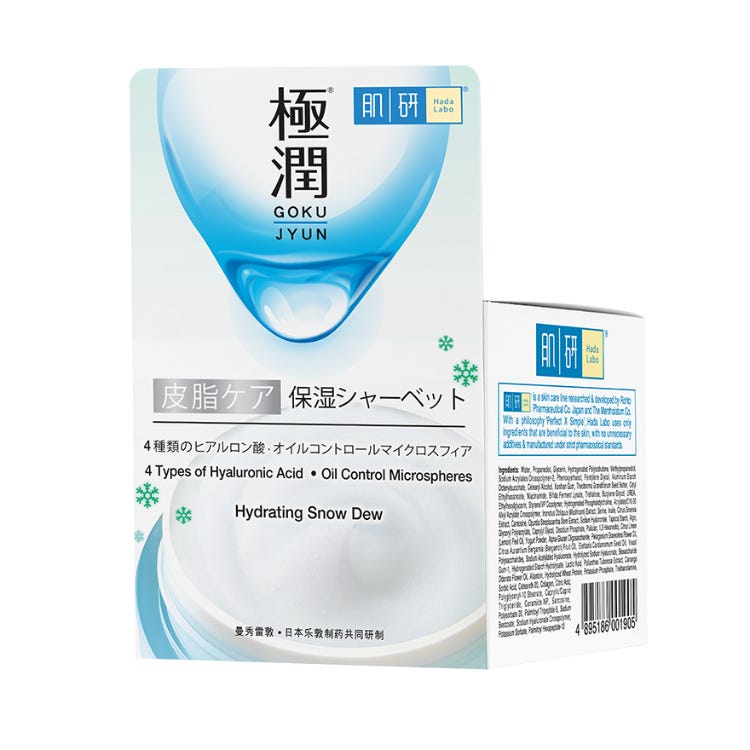
Hada Labo Hydrating Snow Dew 50G

Hada Labo Hydrating Snow Dew 50G
HADA LABO
hada-labo-hydrating-snow-dew-50g
Moisturize
10084705599781
Morning or Evening?
How often will you use this product?
Notes


Highlights
WHAT IS IT?
Moisturizer with enriched Ceramide and 4 types of Hyaluronic Acid
FEATURES
Sorbet texture for instant refreshing feel, High Performance Penetrating & Deep Moisturising, Enriched with Ceramide for skin barrier protection, Lilac & Swiss Edelweiss Essences to minimize pores and control oil, Gentle formula with low irritation, Free of colorants, alcohol, fragrance, mineral oil, paraben, MIT & Diglycol
BEST FOR
sensitive
CHECKS
Free of colorants, alcohol, fragrance, mineral oil, paraben, MIT & Diglycol
Who Is It For?
What Does It Help With?
Minimizes Pores Controls Oil Moisturizes Deeply Strengthens Skin Barrier Protects Against Moisture Loss And Environmental AggressorsBudget
Premium ($76-$150)How To Use
Which routine should it be used in?
Instructions:
Key Information


What HADA LABO Says
Product Description:
- Sorbet texture melts into the skin for an instant refreshing feel. - High Performance Penetrating & Deep Moisturising (HPP&M). - Enriched with Ceramide - Contains high moisturizing nutrients that penetrate deeply into skin and strengthen skin barrier to protect against moisture loss and environmental aggressors. - Lilac & Swiss Edelweiss Essences – Effectively minimize pores & controls oil for a fresh, dewy skin. - Gentle formula. Low irritation. Free of colorants, alcohol, fragrance, mineral oil, paraben, MIT & Diglycol
About the Brand:
Ingredients Overview
Ingredients List
Water,Glycerin,Propanediol,Pentylene-Glycol,1,2-Hexanediol,Isononyl-Isononanoate,Sodium-Acrylates-Crosspolymer-2,Phenoxyethanol,Cetearyl-Alcohol,Trehalose,Urea,Ethylhexylglycerin,Styrene/VP-Copolymer,Hydrogenated-Phosphatidylcholine,Serine,Citrus-Sinensis-Extract,Citric-Acid,Carnosine,Bifida-Ferment-Lysate,Glyceryl-Polyacrylate,Algin,Caprylyl-Glycol,Sodium-Hyaluronate,Pullulan,Disodium-Phosphate,Citrus-Limon-(Lemon)-Peel-Oil,Pelargonium-Graveolens-Flower-Oil,Elettaria-Cardamomum-Seed-Oil,Citrus-Aurantium-Bergamia-(Bergamot)-Fruit-Oil,Leontopodium-Alpinum-Extract,Sodium-Acetylated-Hyaluronate,Hydrolyzed-Sodium-Hyaluronate,Sodium-Hyaluronate-(Medium-size-HA),Butylene-Glycol,Cananga-Odorata-Flower-Oil,Polianthes-Tuberosa-Extract,Potassium-Phosphate,Collagen,Sorbic-Acid,Palmitoyl-Tripeptide-5,Sodium-Benzoate,Potassium-Sorbate,Ceteareth-20,Caprylic/Capric-Triglyceride,Polyglyceryl-10-Stearate,Ceramide-3,Polysorbate-20,Sodium-Hyaluronate-Crosspolymer,Maltodextrin,Palmitoyl-Hexapeptide-12,Syringa-Vulgaris-(Lilac)-Extract
Key Ingredients
Ceramide, Lilac Extract, Swiss Edelweiss Extract, 4 Types of Hyaluronic Acid
Ingredients Details
1-2-hexanediol
Common Name(s): 1-2-hexanediol,cosmetic active,functional ingredient
CAS Number: N/a
DESCRIPTION
What It Does: Delivers characteristic cosmetic function at recommended use concentration.
Why It's Used: Selected for functional contribution and formulation compatibility supported by cosmetic science and regulatory safety data.
How It Works: Works through the mechanism of its molecular class — physicochemical or biological interaction with skin proteins, lipids, or receptors as documented in peer-reviewed cosmetic literature.
Typically Found In: Skin care formulations
TECHNICAL DETAILS
Primary Category: Active ingredient – cosmetic active
Secondary Functions: Skin conditioning
Application Areas:

Facial Skincare

Body Care
Hair Care
Beard Care
Color Cosmetics (Makeup)
Dietary/Oral Supplements
Typical Concentration Range: 0.1%–10%
SOURCING & ETHICS
Vegan Status: Conditional
Halal Status: Yes
Source Notes: Commercially produced for cosmetic use. verify vegan/halal status with supplier.
SKIN COMPATIBILITY
Irritancy Rating: 1/5 – very low
Comedogenicity Rating: 0/5 – non-comedogenic
Sensitivity Concerns: Well-tolerated by most skin types.
Safe for Sensitive Skin: Yes
SAFETY & COMPATIBILITY
Safety Profile: Good safety profile at recommended concentrations. ewg score: 1–2.
Works Well With: Standard skincare actives
Avoid Combining With: No known significant incompatibilities
SCIENTIFIC NOTE
1-2-hexanediol has an established safety and efficacy profile within the cosmetic regulatory framework at standard use concentrations.
Last Verified: Cosing database,1-2-hexanediol technical literature
Primary Sources: 2026-03-12
Algin
Common Name(s): Algin,cosmetic active,functional ingredient
CAS Number: N/a
DESCRIPTION
What It Does: Delivers characteristic cosmetic function at recommended use concentration.
Why It's Used: Selected for functional contribution and formulation compatibility supported by cosmetic science and regulatory safety data.
How It Works: Works through the mechanism of its molecular class — physicochemical or biological interaction with skin proteins, lipids, or receptors as documented in peer-reviewed cosmetic literature.
Typically Found In: Skin care formulations
TECHNICAL DETAILS
Primary Category: Active ingredient – cosmetic active
Secondary Functions: Skin conditioning
Application Areas:
Facial Skincare
Body Care
Hair Care
Beard Care
Color Cosmetics (Makeup)
Dietary/Oral Supplements
Typical Concentration Range: 0.1%–10%
SOURCING & ETHICS
Vegan Status: Conditional
Halal Status: Yes
Source Notes: Commercially produced for cosmetic use. verify vegan/halal status with supplier.
SKIN COMPATIBILITY
Irritancy Rating: 1/5 – very low
Comedogenicity Rating: 0/5 – non-comedogenic
Sensitivity Concerns: Well-tolerated by most skin types.
Safe for Sensitive Skin: Yes
SAFETY & COMPATIBILITY
Safety Profile: Good safety profile at recommended concentrations. ewg score: 1–2.
Works Well With: Standard skincare actives
Avoid Combining With: No known significant incompatibilities
SCIENTIFIC NOTE
Algin has an established safety and efficacy profile within the cosmetic regulatory framework at standard use concentrations.
Last Verified: Cosing database,algin technical literature
Primary Sources: 2026-03-12
Carnosine
Common Name(s): Beta-alanyl-l-histidine,n-beta-alanyl-l-histidine dipeptide
CAS Number: 305-84-0
DESCRIPTION
What It Does: Provides anti-glycation and anti-carbonylation activity protecting collagen from glycation-induced crosslinking.
Why It's Used: Natural anti-age dipeptide targeting glycation — complementary to antioxidant-only anti-aging strategies with documented collagen protection.
How It Works: Histidine imidazole chelates cu²⁺ for antioxidant metal chelation. beta-alanine traps reactive carbonyl species (glycating aldehydes). quenches 4-hydroxynonenal (hne) protein carbonylation. anti-glycation via competing with lysine residues.
Typically Found In: Anti-aging serums,anti-glycation products,longevity skincare
TECHNICAL DETAILS
Primary Category: Active ingredient – antioxidant
Secondary Functions: Free radical scavenging,anti-aging
Application Areas:
Facial Skincare
Body Care
Hair Care
Beard Care
Color Cosmetics (Makeup)
Dietary/Oral Supplements
Typical Concentration Range: 0.5%–5%
SOURCING & ETHICS
Vegan Status: Yes – synthetic
Halal Status: Yes
Source Notes: Plant-derived extract or synthetic.
SKIN COMPATIBILITY
Irritancy Rating: 1/5 – very low
Comedogenicity Rating: 0/5 – non-comedogenic
Sensitivity Concerns: Non-irritating; well-tolerated.
Safe for Sensitive Skin: Yes
SAFETY & COMPATIBILITY
Safety Profile: Excellent safety profile. ewg score: 1.
Works Well With: Vitamin c,vitamin e,ferulic acid,spf,other antioxidants
Avoid Combining With: No significant incompatibilities
SCIENTIFIC NOTE
Carnosine's anti-glycation mechanism is sacrificial carbonyl trapping: reactive carbonyl species (methylglyoxal, glyoxal) that would normally glycate collagen lysines are instead captured by carnosine's free amino groups — carnosine acts as a sacrificial protector for collagen, being consumed in the process of preventing more damaging collagen glycation.
Last Verified: Cosing database,guiotto et al. carnosine anti-glycation review
Primary Sources: 2026-03-12
Ceteareth-20
Common Name(s): Polyethylene glycol cetearyl ether,peg-20 cetearyl ether
CAS Number: 68439-49-6
DESCRIPTION
What It Does: Provides high-hlb o/w emulsification for stable cream formation from ethoxylated cetearyl alcohol.
Why It's Used: Classic self-emulsifying wax component for standard pharmaceutical and cosmetic cream formulation.
How It Works: 20 eo units on cetearyl alcohol chain provide hlb ~15-17 for strong o/w emulsification. often pre-blended with cetearyl alcohol as 'emulsifying wax' for simplified cream making. combined low-hlb cetearyl alcohol + high-hlb ceteareth-20 forms a balanced self-emulsifying system.
Typically Found In: Classic pharmaceutical and cosmetic creams
TECHNICAL DETAILS
Primary Category: Functional ingredient – ethoxylated fatty alcohol emulsifier
Secondary Functions: Skin conditioning
Application Areas:
Facial Skincare
Body Care
Hair Care
Beard Care
Color Cosmetics (Makeup)
Dietary/Oral Supplements
Typical Concentration Range: 1%–8%
SOURCING & ETHICS
Vegan Status: Conditional – peg petroleum; cetearyl vegetable
Halal Status: Yes
Source Notes: Commercially produced for cosmetic use. verify vegan/halal status with supplier.
SKIN COMPATIBILITY
Irritancy Rating: 1/5 – very low
Comedogenicity Rating: 0/5 – non-comedogenic
Sensitivity Concerns: Well-tolerated by most skin types.
Safe for Sensitive Skin: Yes
SAFETY & COMPATIBILITY
Safety Profile: Good safety profile at recommended concentrations. ewg score: 1–2.
Works Well With: Standard skincare actives
Avoid Combining With: No known significant incompatibilities
SCIENTIFIC NOTE
Ceteareth-20's combination with cetearyl alcohol in the classic 'emulsifying wax nf' creates what is called a 'mixed emulsifier system' where the fatty alcohol forms lamellar crystal phases that physically trap and stabilize oil droplets. this physical (lamellar crystal) + chemical (hlb balance) dual stabilization provides superior stability compared to either component alone.
Last Verified: Cosing database,cir safety assessment
Primary Sources: 2026-03-12
