

HADA LABO
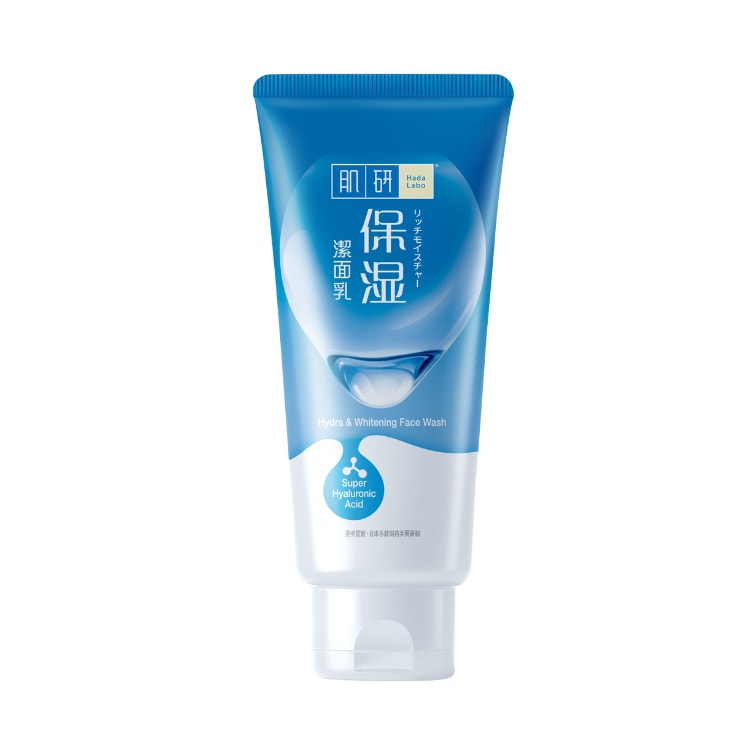
Hada Labo Hydra Whitening Face Wash 100G

Hada Labo Hydra Whitening Face Wash 100G
HADA LABO
hada-labo-hydra-whitening-face-wash-100g
Cleanse
10085059100965
Morning or Evening?
How often will you use this product?
Notes


Highlights
WHAT IS IT?
Face Wash with Super Hyaluronic Acid
FEATURES
Contains Super Hyaluronic Acid, hydrates and moisturizes skin, maintains skin pH balance, low irritation, free of fragrances, mineral oil, alcohol and colorant
BEST FOR
sensitive
CHECKS
Fragrance, mineral oil, alcohol, colorant
Who Is It For?
What Does It Help With?
Hydration Skin Moisture Fresh And Soft SkinBudget
Affordable (under $30)How To Use
Which routine should it be used in?
Instructions:
Key Information

What HADA LABO Says
Product Description:
A face wash formulated with Super Hyaluronic Acid to hydrate and refresh your skin for a smooth finish. Combines natural cleansing properties with superior hydrating ingredient of Super Hyaluronic Acid to deep hydrate and moisturize skin as it cleanses. Skin feels fresh, soft and supple. Skin pH balance. Low irritation. Free of fragrances, mineral oil, alcohol and colorant.
About the Brand:
Ingredients Overview
Ingredients List
Water,Lauric-Acid,Glycerin,Stearic-Acid,Cocamidopropyl-Betaine,Potassium-Hydroxide,Butylene-Glycol,Palmitic-Acid,Acrylates-Copolymer,Glycol-Distearate,Polyquaternium-7,Sodium-Laureth-Sulfate,Cocamide-DEA,Potassium-Cocoyl-Glycinate,Disteardimonium-Hectorite,Disodium-EDTA,Methylisothiazolinone,Idopropynyl-Butylcarbamate,Resveratrol,Sodium-Hyaluronate,Sodium-Acetylated-Hyaluronate,Algae-Extract,Sorbitol
Key Ingredients
Super Hyaluronic Acid,Resveratrol,Sodium Hyaluronate,Sodium Acetylated Hyaluronate,Algae Extract
Ingredients Details
Glycerin
Common Name(s): Glycerol,glycerine,1,2,3-propanetriol
CAS Number: 56-81-5
DESCRIPTION
What It Does: Glycerin pulls water from the environment and deeper skin layers into the outer skin layer (epidermis), boosting moisture levels and keeping skin soft, smooth, and plump.
Why It's Used: It is used in virtually every moisturizer, serum, and cleanser because it is highly effective at hydrating skin, is well-tolerated by all skin types, and enhances the texture and spreadability of formulations.
How It Works: As a humectant, glycerin forms hydrogen bonds with water molecules, trapping them in the skin. it also reinforces the skin barrier by integrating into lipid structures between skin cells.
Typically Found In: Moisturizers,serums,cleansers,toners,sheet masks,sunscreens,body lotions,shampoos,conditioners
TECHNICAL DETAILS
Primary Category: Humectant
Secondary Functions: Skin barrier support,emollient,solvent
Application Areas:

Facial Skincare
Body Care
Hair Care
Beard Care

Color Cosmetics (Makeup)
Dietary/Oral Supplements
Typical Concentration Range: 1%–30% (typical: 3–10%)
SOURCING & ETHICS
Vegan Status: Yes – plant-derived (coconut, soy, palm) or synthetic
Halal Status: Yes – when plant-derived or synthetic; verify source with supplier
Source Notes: Derived from plant oils via hydrolysis or saponification; synthetic versions also available. palm-derived glycerin carries sustainability concerns.
SKIN COMPATIBILITY
Irritancy Rating: 1/5 – very low; non-irritating at all standard concentrations
Comedogenicity Rating: 0/5 – non-comedogenic
Sensitivity Concerns: Extremely rare allergic reactions; generally safe for all skin types including sensitive and baby skin
Safe for Sensitive Skin: Yes
SAFETY & COMPATIBILITY
Safety Profile: Widely recognized as safe. ewg hazard score: 1. no significant concerns for irritation, sensitization, or toxicity at typical concentrations (up to 50%).
Works Well With: Hyaluronic acid,ceramides,niacinamide,panthenol,urea,peptides,retinol,ahas/bhas
Avoid Combining With: No known incompatibilities at standard concentrations
SCIENTIFIC NOTE
Glycerin is an endogenous skin component found naturally in the stratum corneum. aquaporin-3 channels in keratinocytes facilitate glycerin transport, making it integral to natural skin hydration pathways.
Last Verified: Cosing database,cir safety assessment,ewg skin deep,inci decoder
Primary Sources: 2026-03-12
Methylisothiazolinone
Common Name(s): Mit,kathon,neolone
CAS Number: 2682-20-4
DESCRIPTION
What It Does: Provides highly potent broad-spectrum preservation at very low concentrations in rinse-off formulations.
Why It's Used: Most potent cosmetic preservative — mit provides effective preservation at concentrations 10-100× lower than most other preservatives, enabling clean-label preservation at minimal ingredient load.
How It Works: Electrophilic isothiazolinone ring reacts with bacterial thiol enzymes (glutathione, coa-dependent enzymes) via michael addition for rapid kill. very potent — mic vs e. coli 0.06μg/ml (vs phenoxyethanol mic ~400μg/ml — 6000× more potent). rapidly biodegradable.
Typically Found In: Rinse-off shampoos,body washes,conditioners
TECHNICAL DETAILS
Primary Category: Functional ingredient – isothiazolinone preservative
Secondary Functions: Skin conditioning
Application Areas:
Facial Skincare
Body Care
Hair Care
Beard Care
Color Cosmetics (Makeup)
Dietary/Oral Supplements
Typical Concentration Range: 0.0015%–0.0015% (max 15ppm eu rinse-off)
SOURCING & ETHICS
Vegan Status: Yes – synthetic
Halal Status: Yes
Source Notes: Commercially produced for cosmetic use. verify vegan/halal status with supplier.
SKIN COMPATIBILITY
Irritancy Rating: 1/5 – very low
Comedogenicity Rating: 0/5 – non-comedogenic
Sensitivity Concerns: Well-tolerated by most skin types.
Safe for Sensitive Skin: Yes
SAFETY & COMPATIBILITY
Safety Profile: Eu regulation 2014/1298: mit banned from leave-on products. max 15ppm in rinse-off only. contact sensitiser — causes occupational dermatitis epidemic in hairdressers and consumers. sccs noted no safe level for leave-on. 2016 eu restriction driven by major sensitisation epidemic.
Works Well With: Standard skincare actives
Avoid Combining With: No known significant incompatibilities
SCIENTIFIC NOTE
Mit's sensitisation epidemic (2010-2015) is one of the most significant cosmetic safety events in modern dermatology: a dramatic increase in contact allergy patch test positive rates from <1% (2005) to 7% (2015) in the eu was directly traceable to the widespread introduction of mit in leave-on products. this epidemic prompted the fastest eu cosmetic regulatory action in history and demonstrates the critical importance of patch test surveillance in monitoring emerging cosmetic allergens.
Last Verified: Cosing database,eu regulation 2014/1298,yazar et al. mit sensitisation epidemic study
Primary Sources: 2026-03-12
Polyquaternium-7
Common Name(s): Polyquaternium-7,cationic conditioning polymer,substantive film-former
CAS Number: N/a
DESCRIPTION
What It Does: Deposits a conditioning film on hair and skin through electrostatic attraction to negative cuticle/corneocyte surfaces, reduces hair-on-hair friction for improved combability and detangling, eliminates static charge buildup, and provides anti-frizz humidity resistance.
Why It's Used: Cationic polymers are the primary hair conditioning technology — the permanent positive quaternary ammonium groups provide substantive deposition that resists rinsing, delivering persistent conditioning between washes unlike small-molecule cationic conditioners.
How It Works: At shampoo/conditioner ph 4.5–5.5, hair cuticle carries net negative charge (isoelectric point ph ~3.5). polyquaternium cations undergo electrostatic attraction depositing on the cuticle surface. during rinsing, the deposited polymer film persists from reduced surface-solution equilibrium at low bulk concentration — substantive deposition from favourable interfacial versus bulk partitioning.
Typically Found In: Shampoos,conditioners,leave-in products
TECHNICAL DETAILS
Primary Category: Active ingredient – cosmetic active
Secondary Functions: Skin conditioning
Application Areas:
Facial Skincare
Body Care
Hair Care
Beard Care
Color Cosmetics (Makeup)
Dietary/Oral Supplements
Typical Concentration Range: 0.1%–3%
SOURCING & ETHICS
Vegan Status: Yes
Halal Status: Yes
Source Notes: Commercially produced for cosmetic use. verify vegan/halal status with supplier.
SKIN COMPATIBILITY
Irritancy Rating: 1/5 – very low
Comedogenicity Rating: 0/5 – non-comedogenic
Sensitivity Concerns: Well-tolerated by most skin types.
Safe for Sensitive Skin: Yes
SAFETY & COMPATIBILITY
Safety Profile: Good safety profile at recommended concentrations. ewg score: 1–2.
Works Well With: Standard skincare actives
Avoid Combining With: No known significant incompatibilities
SCIENTIFIC NOTE
Different polyquaternium numbers indicate different backbone chemistries: pq-7 (acrylamide/quaternary acrylate copolymer) for leave-on flexibility; pq-10 (hydroxyethylcellulose/quaternary ammonium) for substantive deposition; pq-11 (vp/dimethylaminoethyl methacrylate) for styling fixation.
Last Verified: Cosing database,polyquaternium-7 cationic conditioning deposition review
Primary Sources: 2026-03-12
Resveratrol
Common Name(s): Trans-resveratrol,3,5,4'-trihydroxystilbene,red wine antioxidant
CAS Number: 501-36-0
DESCRIPTION
What It Does: Provides potent antioxidant protection, activates anti-aging sirtuin pathways, and reduces inflammation.
Why It's Used: Premium anti-aging antioxidant targeting sirt1-mediated longevity pathways alongside strong direct antioxidant and anti-inflammatory activity.
How It Works: Direct free radical scavenging via hydroxystilbene phenolic groups. activates sirt1 deacetylase, promoting mitochondrial biogenesis and dna repair. inhibits nf-kb for anti-inflammatory effects. may block tyrosinase for mild brightening.
Typically Found In: Premium anti-aging serums,antioxidant complexes,anti-inflammatory products
TECHNICAL DETAILS
Primary Category: Active ingredient – stilbene antioxidant
Secondary Functions: Sirtuin activation,anti-inflammatory,longevity pathway
Application Areas:
Facial Skincare
Body Care
Hair Care
Beard Care
Color Cosmetics (Makeup)
Dietary/Oral Supplements
Typical Concentration Range: 0.1%–1%
SOURCING & ETHICS
Vegan Status: Yes – plant-derived or synthetic
Halal Status: Yes
Source Notes: Extracted from japanese knotweed (polygonum cuspidatum), grape skins, or synthesized. trans-form is bioactive; cis-form less active.
SKIN COMPATIBILITY
Irritancy Rating: 1/5 – very low
Comedogenicity Rating: 0/5 – non-comedogenic
Sensitivity Concerns: Generally well-tolerated; rare reports of contact sensitization at high concentrations.
Safe for Sensitive Skin: Yes
SAFETY & COMPATIBILITY
Safety Profile: Excellent safety profile. ewg score: 1.
Works Well With: Vitamin c,vitamin e,ferulic acid,spf,other antioxidants
Avoid Combining With: No significant incompatibilities
SCIENTIFIC NOTE
Resveratrol's sirt1 activation promotes mitochondrial biogenesis via pgc-1α, potentially reversing age-related mitochondrial dysfunction in skin cells – the same longevity pathway activated by caloric restriction in model organisms.
Last Verified: Cosing database,baur & sinclair resveratrol review,cir safety assessment
Primary Sources: 2026-03-12
