

Yes To
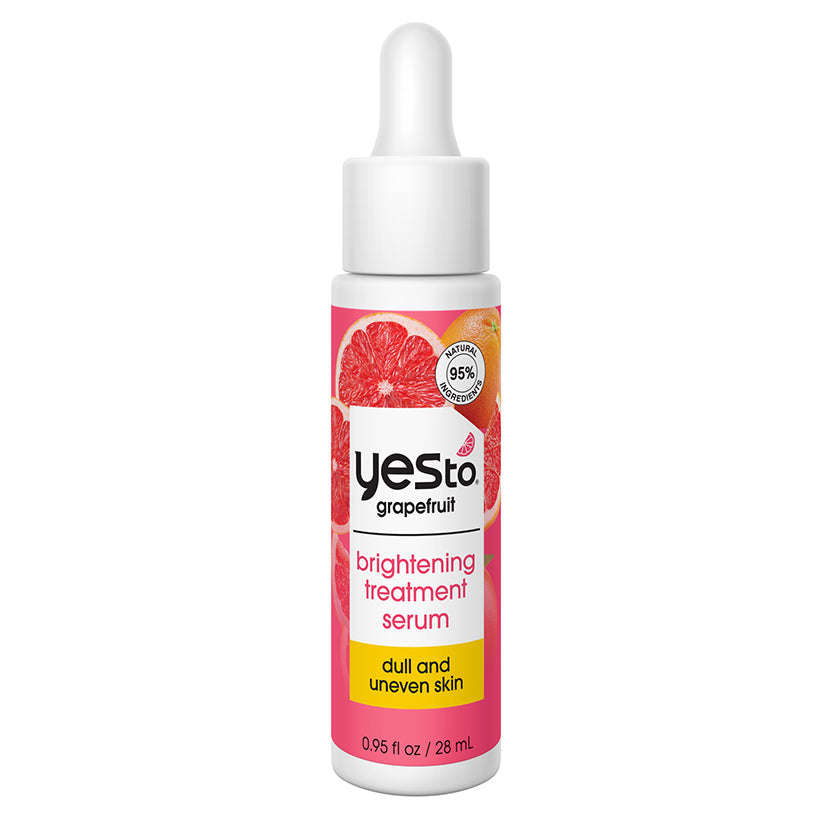
grapefruit brightening treatment serum dull and uneven skin

grapefruit brightening treatment serum dull and uneven skin
Yes To
grapefruit-brightening-treatment-serum-dull-and-uneven-skin
Serum
9706831806757
Morning or Evening?
How often will you use this product?
Notes


Highlights
WHAT IS IT?
Brightening treatment serum
FEATURES
Lightweight, helps loosen dead skin cells, improves skin tone and texture, moisturizing, absorbs quickly, no sticky residue
BEST FOR
Dull and uneven skin
CHECKS
Free of parabens, silicones, phthalates
Who Is It For?
Adults Both Women And MenWhat Does It Help With?
Brightening Exfoliating Smoothing SkinBudget
AffordableHow To Use
Which routine should it be used in?
Instructions:
Key Information

What Yes To Says
Product Description:
Reveal radiant-looking skin with a daily dose (3-4 drops to be exact) of Vitamin C. This lightweight brightening serum helps to loosen dead skin cells on the surface of skin to allow other skin-transforming ingredients to penetrate deeper, resulting in a glowing, soft complexion.
About the Brand:
Ingredients Overview
Ingredients List
Water (Aqua), Aloe Barbadensis Leaf Juice, Propanediol, Gluconolactone, Polyglyceryl-10 Laurate, Sodium Hyaluronate, Citrus Grandis (Grapefruit) Fruit Extract, Sodium Ascorbyl Phosphate, Vaccinium Myrtillus Fruit/Leaf Extract, Saccharum Officinarum (Sugarcane) Extract, Citrus Aurantium Dulcis (Orange) Fruit Extract, Citrus Limon (Lemon) Fruit Extract, Acer Saccharum (Sugar Maple) Extract, Jasminum Officinale (Jasmine) Flower Extract, Lilium Candidum Bulb Extract, Leontopodium Alpinum Flower Extract, Glycyrrhiza Glabra (Licorice) Root Extract, Glycerin, Hydrolyzed Corn Protein, Hydrolyzed Wheat Protein, Hydrolyzed Soy Protein, Sodium Gluconate, Sodium Stearoyl Glutamate, Hydroxyethylcellulose, Xanthan Gum, Pullulan, Sorbitol, Trehalose, Acacia Senegal Gum, Sodium Hydroxide, Sodium Citrate, Citric Acid, Leuconostoc/Radish Root Ferment Filtrate, Sodium Benzoate, Phenoxyethanol, Fragrance (Parfum), Benzyl Benzoate, Limonene. Vitamin C
Key Ingredients
Grapefruit, Vitamin C, Polyhydroxy Acids (PHAs)
Ingredients Details
Aloe Barbadensis Leaf Juice
Common Name(s): Aloe barbadensis leaf juice,cosmetic active,functional ingredient
CAS Number: N/a
DESCRIPTION
What It Does: Delivers characteristic cosmetic function — skin conditioning, protection, preservation, or active biological benefit — at recommended use concentration.
Why It's Used: Selected for its functional contribution and formulation compatibility — supported by cosmetic science literature and regulatory safety assessment.
How It Works: Works through the mechanism of its molecular class — physicochemical interaction with the formulation or biological interaction with skin proteins, lipids, or receptors as documented in peer-reviewed literature.
Typically Found In: Skin care formulations
TECHNICAL DETAILS
Primary Category: Active ingredient – cosmetic active
Secondary Functions: Skin conditioning
Application Areas:

Facial Skincare

Body Care
Hair Care
Beard Care
Color Cosmetics (Makeup)
Dietary/Oral Supplements
Typical Concentration Range: 0.1%–10%
SOURCING & ETHICS
Vegan Status: Conditional
Halal Status: Yes
Source Notes: Commercially produced for cosmetic use. verify vegan/halal status with supplier.
SKIN COMPATIBILITY
Irritancy Rating: 1/5 – very low
Comedogenicity Rating: 0/5 – non-comedogenic
Sensitivity Concerns: Well-tolerated by most skin types.
Safe for Sensitive Skin: Yes
SAFETY & COMPATIBILITY
Safety Profile: Good safety profile at recommended concentrations. ewg score: 1–2.
Works Well With: Standard skincare actives
Avoid Combining With: No known significant incompatibilities
SCIENTIFIC NOTE
Aloe barbadensis leaf juice delivers documented functional benefit with an established safety profile within the cosmetic regulatory framework (cosing eu, cir usa).
Last Verified: Cosing database,aloe barbadensis leaf juice technical literature
Primary Sources: 2026-03-12
Gluconolactone
Common Name(s): D-gluconolactone,delta-gluconolactone
CAS Number: 90-80-2
DESCRIPTION
What It Does: Provides the gentlest chemical exfoliation with simultaneous antioxidant, moisture retention, and barrier support.
Why It's Used: Preferred exfoliant for rosacea, eczema, sensitive skin, and post-procedure recovery where standard ahas cause unacceptable irritation.
How It Works: Hydrolyzes slowly on skin surface to gluconic acid providing gentle exfoliation. multiple hydroxyl groups enable water binding (humectant) and metal chelation (antioxidant).
Typically Found In: Sensitive skin exfoliants,rosacea treatments,eczema care,post-procedure recovery
TECHNICAL DETAILS
Primary Category: Active ingredient – polyhydroxy acid (pha)
Secondary Functions: Gentle exfoliation,antioxidant,humectant
Application Areas:
Facial Skincare
Body Care
Hair Care
Beard Care
Color Cosmetics (Makeup)
Dietary/Oral Supplements
Typical Concentration Range: 5%–15%
SOURCING & ETHICS
Vegan Status: Yes – fermentation or synthetic
Halal Status: Yes
Source Notes: Fermentation-derived from glucose or synthetic. among the safest chemical exfoliants available.
SKIN COMPATIBILITY
Irritancy Rating: 1/5 – very low
Comedogenicity Rating: 0/5 – non-comedogenic
Sensitivity Concerns: No photosensitization; no stinging; suitable for very sensitive skin.
Safe for Sensitive Skin: Yes – ideal for sensitive, reactive, rosacea, and eczema-prone skin; no photosensitization
SAFETY & COMPATIBILITY
Safety Profile: Exceptional safety profile. no photosensitization. ewg score: 1.
Works Well With: Ceramides,niacinamide,hyaluronic acid,soothing actives
Avoid Combining With: No significant incompatibilities
SCIENTIFIC NOTE
Phas have molecular weights 2–3× larger than ahas, limiting penetration to superficial layers. combined humectant and antioxidant properties make them uniquely well-tolerated while providing meaningful exfoliation.
Last Verified: Cosing database,green & yu (2003) pha review,cir safety assessment
Primary Sources: 2026-03-12
Polyglyceryl-10 Laurate
Common Name(s): Polyglyceryl ester emulsifier,cosmos natural emulsifier,multi-glycerol hlb-tunable
CAS Number: N/a
DESCRIPTION
What It Does: Stabilises o/w or w/o emulsions depending on polyglyceryl chain length and fatty acid combination, provides gentle nonionic emulsification without the peg chemistry concerns of ethoxylated emulsifiers, and contributes skin-conditioning fatty acid emolliency.
Why It's Used: Cosmos-accepted alternative to peg emulsifiers — polyglyceryl esters provide equivalent emulsification performance from renewable glycerol + vegetable fatty acids without ethylene oxide chemistry, enabling certified natural/organic formulation.
How It Works: Polyglyceryl degree (pg-2 to pg-10) controls hlb: pg-2 (low eo equivalent) → lower hlb → w/o tendency; pg-10 → higher hlb → o/w emulsification. fatty acid chain (laurate c12, oleate c18:1, stearate c18:0) modulates lipophilicity within the hlb range. cosmos accepts from fermentation-derived glycerol + natural fatty acids.
Typically Found In: Cosmos natural emulsions,clean label formulas
TECHNICAL DETAILS
Primary Category: Active ingredient – cosmetic active
Secondary Functions: Skin conditioning
Application Areas:
Facial Skincare
Body Care
Hair Care
Beard Care
Color Cosmetics (Makeup)
Dietary/Oral Supplements
Typical Concentration Range: 1%–10%
SOURCING & ETHICS
Vegan Status: Yes
Halal Status: Yes
Source Notes: Commercially produced for cosmetic use. verify vegan/halal status with supplier.
SKIN COMPATIBILITY
Irritancy Rating: 1/5 – very low
Comedogenicity Rating: 0/5 – non-comedogenic
Sensitivity Concerns: Well-tolerated by most skin types.
Safe for Sensitive Skin: Yes
SAFETY & COMPATIBILITY
Safety Profile: Good safety profile at recommended concentrations. ewg score: 1–2.
Works Well With: Standard skincare actives
Avoid Combining With: No known significant incompatibilities
SCIENTIFIC NOTE
Polyglyceryl-3 diisostearate (pg-3 diisostearate) is the leading natural w/o emulsifier for natural sunscreen formulations — providing stable w/o emulsification for mineral uv filter dispersions in cosmos-certified sun care.
Last Verified: Cosing database,polyglyceryl-10 laurate polyglyceryl emulsifier cosmos review
Primary Sources: 2026-03-12
Propanediol
Common Name(s): 1,3-propanediol,zemea,bio-propanediol
CAS Number: 504-63-2
DESCRIPTION
What It Does: Provides humectant and solvent functionality from sustainable corn-based fermentation.
Why It's Used: Bio-based propylene glycol alternative from renewable corn — propanediol provides equivalent functionality to propylene glycol with sustainable renewable feedstock and superior skin feel.
How It Works: Two oh groups provide humectant water binding. excellent solvent for fragrances, actives, and preservatives. mild antimicrobial from diol structure for preservative system boosting. renew corn fermentation origin (dupont zemea process). better skin feel than propylene glycol — less sticky.
Typically Found In: Virtually all cosmetic categories as pg alternative
TECHNICAL DETAILS
Primary Category: Functional ingredient – humectant
Secondary Functions: Tewl reduction,skin plumping
Application Areas:
Facial Skincare
Body Care
Hair Care
Beard Care
Color Cosmetics (Makeup)
Dietary/Oral Supplements
Typical Concentration Range: 1%–20%
SOURCING & ETHICS
Vegan Status: Yes – from corn sugar fermentation
Halal Status: Yes
Source Notes: Synthetic or naturally derived. excellent aqueous solubility.
SKIN COMPATIBILITY
Irritancy Rating: 1/5 – very low
Comedogenicity Rating: 0/5 – non-comedogenic
Sensitivity Concerns: Non-irritating; suitable for all skin types.
Safe for Sensitive Skin: Yes
SAFETY & COMPATIBILITY
Safety Profile: Excellent safety profile. ewg score: 1.
Works Well With: Ceramides,emollients,occlusives,glycerin,hyaluronic acid
Avoid Combining With: No significant incompatibilities
SCIENTIFIC NOTE
Propanediol's dupont tate & lyle bio products 'zemea' process ferments corn sugar to 1,3-propanediol using engineered e. coli — one of the first commercially viable bio-fermentation routes to a cosmetic diol previously made only from petroleum. the renewable route produces chemically identical 1,3-propanediol while reducing carbon footprint by approximately 40% vs petrochemical synthesis.
Last Verified: Cosing database,dupont tate & lyle zemea technical data,cir safety assessment
Primary Sources: 2026-03-12
