

Good Vibes
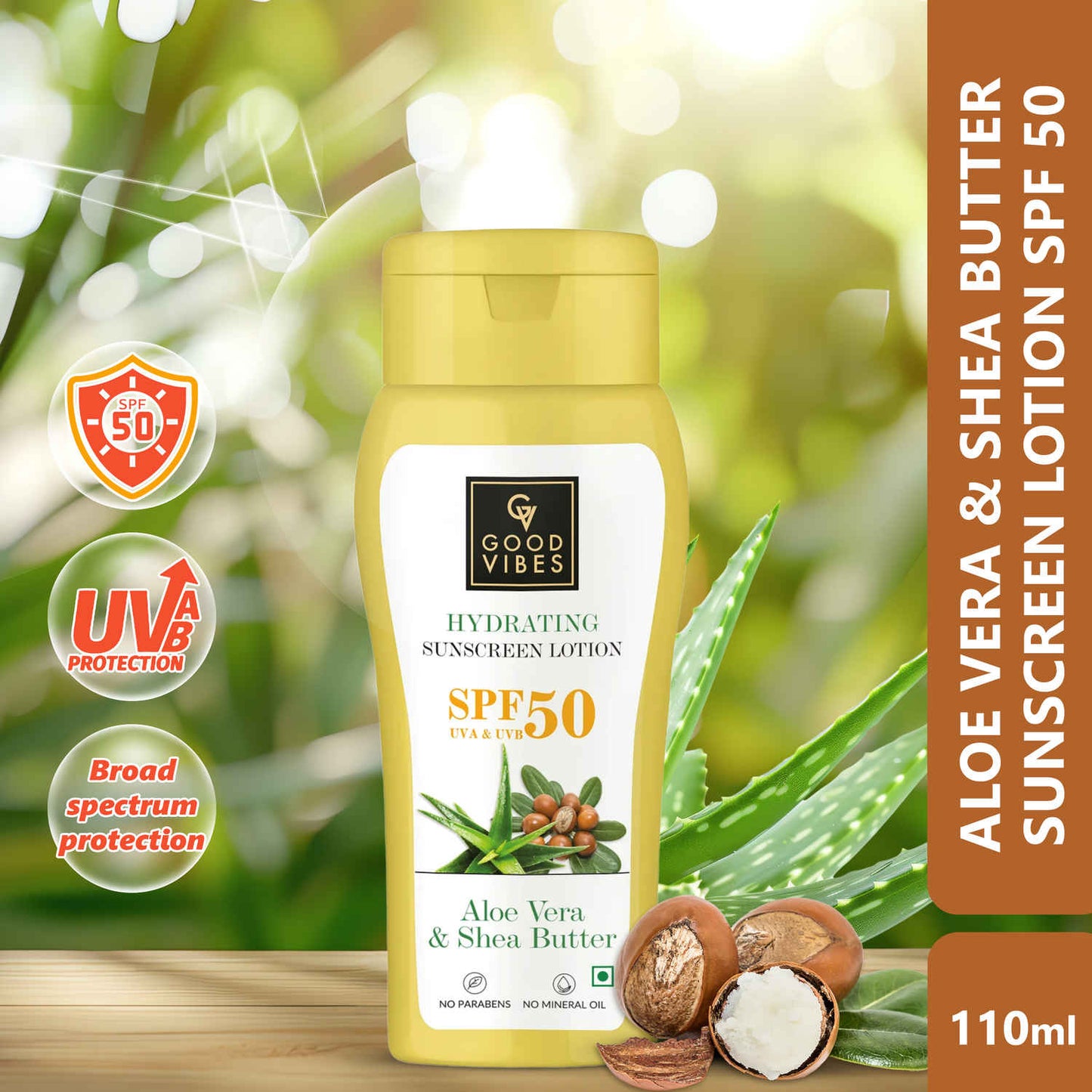
Good Vibes Aloe Vera & Shea Butter Hydrating Sunscreen Lotion SPF 50, Skin Moisturizing | Vegan, No Parabens, No Mineral Oil, No Silicones (110 ml)

Good Vibes Aloe Vera & Shea Butter Hydrating Sunscreen Lotion SPF 50, Skin Moisturizing | Vegan, No Parabens, No Mineral Oil, No Silicones (110 ml)
Good Vibes
good-vibes-aloe-vera-shea-butter-hydrating-sunscreen-lotion-spf-50-skin-moisturizing-vegan-no-parabens-no-mineral-oil-no-silicones-110-ml
Moisturize
10084854235429
Morning or Evening?
How often will you use this product?
Notes


Highlights
WHAT IS IT?
Hydrating Sunscreen Lotion
FEATURES
Contains Aloe Vera and Shea Butter, Hydrates and soothes skin, SPF 50 protection, Lightweight texture, Blocks harmful UVA and UVB rays, Fights free radicals, Cools inflammation
BEST FOR
sensitive
CHECKS
No Parabens, No Mineral Oil, No Silicones
Who Is It For?
Adults All GendersWhat Does It Help With?
Sun Protection Hydration Skin Soothing Anti-inflammatory BenefitsBudget
Affordable (under $30)How To Use
Which routine should it be used in?
Instructions:
Key Information


What Good Vibes Says
Product Description:
Good Vibes Aloe Vera & Shea Butter Hydrating Sunscreen Lotion SPF 50 is here to protect, cool and hydrate your skin from dusk to dawn. Created with Aloe Vera and Shea Butter, it refreshes and revives the skin on these scorching sunny days. Aloe Vera is a desert lily that contains anti-inflammatory and exceptional hydrating properties that calm irritation and makes the skin supple. Shea Butter's magical skin protection and healing properties make it a balanced addition to sunscreen. A blend of this creamy sunscreen soothes, hydrates and nourishes the skin. With no nasties involved, its lightweight texture quickly melts into the skin, making it soft, supple and radiant. Powered with SPF 50 protection, it blocks harmful UVA and UVB rays, fights free radicals, cools inflammation and revives the skin with Aloe freshness. Whether you're seated indoors or stepping out, a daily application of this hydrating lotion is sure to steer clear your way to water-glow summer skin.
About the Brand:
Ingredients Overview
Ingredients List
Aloe Vera, Shea Butter
Key Ingredients
Aloe Vera, Shea Butter
Ingredients Details
Aloe Vera
Common Name(s): Aloe vera juice,aloe vera gel,aloe barbadensis
CAS Number: 85507-69-3
DESCRIPTION
What It Does: Provides acemannan-based wound healing and comprehensive moisturising skin conditioning from the quintessential healing plant.
Why It's Used: The most universally recognised natural healing plant — aloe vera's acemannan polysaccharides, vitamins, and enzymes provide a comprehensive wound healing and soothing profile with thousands of years of documented use.
How It Works: Acemannan (poly-mannose) activates dectin-1 for wound healing immune stimulation. gibberellin promotes fibroblast growth. salicylic acid derivative provides anti-inflammatory. vitamins c and e provide antioxidant. glucomannan provides humectant.
Typically Found In: After-sun products,wound healing,moisturisers,virtually all skin care categories
TECHNICAL DETAILS
Primary Category: Active ingredient – aloe vera gel
Secondary Functions: Redness reduction,anti-inflammatory,calming
Application Areas:

Facial Skincare
Body Care

Hair Care
Beard Care
Color Cosmetics (Makeup)
Dietary/Oral Supplements
Typical Concentration Range: 0.5%–99%
SOURCING & ETHICS
Vegan Status: Yes – from aloe barbadensis leaf
Halal Status: Yes
Source Notes: Plant-derived extract or synthetic.
SKIN COMPATIBILITY
Irritancy Rating: 1/5 – very low
Comedogenicity Rating: 0/5 – non-comedogenic
Sensitivity Concerns: Non-irritating; ideal for reactive and sensitive skin.
Safe for Sensitive Skin: Yes – particularly recommended for sensitive skin
SAFETY & COMPATIBILITY
Safety Profile: Excellent safety profile. ewg score: 1.
Works Well With: Ceramides,panthenol,allantoin,hyaluronic acid,centella asiatica
Avoid Combining With: No significant incompatibilities
SCIENTIFIC NOTE
Aloe vera's clinical evidence for sunburn relief is among the best for any botanical wound healing ingredient. multiple rcts demonstrate that aloe vera gel reduces healing time of first and second degree burns and sunburns, attributed primarily to acemannan's immunomodulatory wound healing activity and the anti-inflammatory salicylate derivatives providing prostaglandin inhibition.
Last Verified: Cosing database,surjushe et al. aloe vera skin review,cir safety assessment
Primary Sources: 2026-03-12
Shea Butter
Common Name(s): Shea butter,karite butter
CAS Number: 91080-23-8
DESCRIPTION
What It Does: Provides deep nourishing emolliency with anti-inflammatory cinnamic acid esters and a uniquely rich unsaponifiable fraction.
Why It's Used: The most nutritious plant butter – unique cinnamic acid esters, lupeol, and rich unsaponifiable fraction provide anti-inflammatory and wound healing benefits beyond standard fatty acid emolliency.
How It Works: Cinnamic acid esters absorb uv radiation providing mild natural uv filtering (spf 3-4). lupeol inhibits nf-kb for anti-inflammatory activity. high stearic acid provides occlusive barrier function. rich unsaponifiable fraction (4-9%) provides phytosterols, tocopherols, and triterpenes for bioactive skin benefits.
Typically Found In: Body butters,rich moisturizers,baby products,hair conditioners,lip balms
TECHNICAL DETAILS
Primary Category: Functional ingredient – emollient
Secondary Functions: Cinnamic acid uv support,lupeol anti-inflammatory,rich emolliency
Application Areas:
Facial Skincare
Body Care
Hair Care
Beard Care
Color Cosmetics (Makeup)
Dietary/Oral Supplements
Typical Concentration Range: 1%–100%
SOURCING & ETHICS
Vegan Status: Yes – from butyrospermum parkii nuts
Halal Status: Yes
Source Notes: Unrefined (raw) shea retains more unsaponifiable fraction and stronger natural scent/color. refined shea is odorless, white, and cleaner for formulation. certified fair trade supports west african women's cooperatives.
SKIN COMPATIBILITY
Irritancy Rating: 1/5 – very low
Comedogenicity Rating: 0/5 – non-comedogenic (refined); 2/5 – low (raw/unrefined)
Sensitivity Concerns: Non-irritating.
Safe for Sensitive Skin: Yes
SAFETY & COMPATIBILITY
Safety Profile: Excellent safety profile. ewg score: 1.
Works Well With: Humectants,ceramides,actives as carrier
Avoid Combining With: No significant incompatibilities
SCIENTIFIC NOTE
Shea butter's unsaponifiable fraction (4-9%, vs coconut oil's 0.5% and olive oil's 1-2%) is exceptionally rich in triterpenes, phytosterols, and tocopherols. this fraction is responsible for shea's anti-inflammatory and wound healing properties that simple fatty acid analysis fails to reveal.
Last Verified: Cosing database,lin et al. shea butter cinnamic acid study,cir safety assessment
Primary Sources: 2026-03-12
