
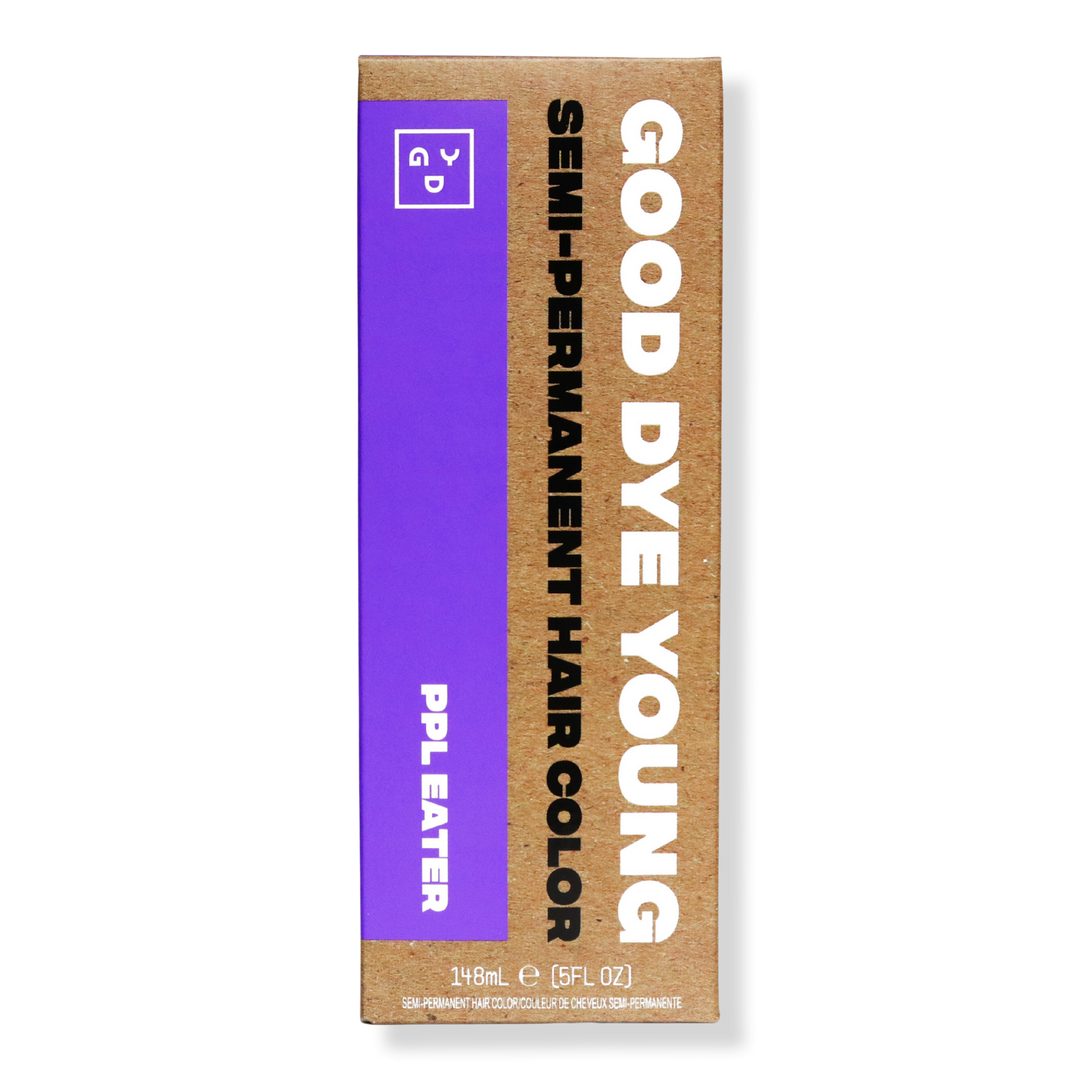

Good Dye Young
Good Dye Young Semi-Permanent Hair Dye - PPL Eater
Good Dye Young's Semi-Permanent Hair Dye combines salon-grade pigments with a nontoxic formula that deposits ultra-vibrant color. These semi-permanent hair dyes do not damage the hair; they're super conditioning with a high-quality cream base that acts like a hydrating hair mask with essential oils.
Color-safe
Vegan
Cruelty-free
Color Fading
Color-treated
As Needed
Optimized for Your Environment & Lifestyle
Nykaa
In stock
Recommended

Good Dye Young Semi-Permanent Hair Dye - PPL Eater
Good Dye Young
good-dye-young-semi-permanent-hair-dye-ppl-eater
Semi-Permanent Hair Dye
10407556677925
Morning or Evening?
How often will you use this product?
Notes


Secure payment protection
Your Biodata Compatibility Analysis
Based on your 6 hair health indices and environmental factors
Poor Match
Significant incompatibilities
Growth Cycle Health Index
Hair Match
Hair Health Index Alignment
Optimal for OSI, SSI, DI, HSI
Ingredient Efficacy
Matching Ingredient Score
Environment Compatibility
Current UV, Air Quality & Humidity
Why This Works for Your Specific Profile
Damage Index:
Very healthy or severely damaged hair falls outside optimal treatment parameters
Water Quality:
Hair:
Closed cuticles resist product penetration causing surface buildup without internal benefits
Active Lifestyle:
High activity and frequent washing rapidly strip product benefits requiring excessive reapplication
Your Hair Profile Integration
Your Hair Archetype

Density Level

Washing Frequency

Shedding Level

Oil Level
Your Hair Health Indices
Oil Secretion (OSI)
Very low oil production
Scalp Sensitivity (SSI)
Very low sensitivity
Growth Rate (CMR)
Poor metabolism rate
Damage Index (DI)
Minimal damage
Hair Strength (HSI)
Very weak strength
Softness Index (SI)
Significant improvement needed
Water & Environmental Integration

Water:


Expected Results & Timeline
Key Highlights

What is it?
Semi-Permanent Hair Dye with conditioning properties

Who Is It For
Adults

Budget
$19.00 - $38.00

Timeline
Lasts anywhere from 15 to 24+ washes
Why You’ll Love It

What Does It Help With?
Color Fading

Best for
Color-treated hair

Features
High-quality cream base, Packed with professional-grade pigment, Lasts anywhere from 15 to 24+ washes

Checks
Vegan, Cruelty-free, Free from 4-ABP, Resorcinol, and Phthalates
Ingredients Overview
Ingredients List
water-aqua, cetearyl-alcohol, cetyl-alcohol, glycerin, propanediol, stearalkonium-chloride, glyceryl-stearate, guar-hydroxypropyltrimonium-chloride, fragrance-parfum, peg-100-stearate, stearyl-alcohol, ceteareth-20, methylpropanediol, caprylyl-glycol, quaternium-75, citric-acid, helianthus-annuus-sunflower-seed-oil, tetrasodium-glutamate-diacetate, hydrolyzed-rice-protein, citrus-aurantium-bergamia-bergamot-fruit-oil, dextrose, didecyldimonium-chloride, polyquaternium-80, limonene, linalool, basic-blue-99, basic-violet-2, basic-violet-11-1, hc-blue-no-15
Key Ingredients
Sunflower Seed Oil, Hydrolyzed Rice Protein, Bergamot Fruit Oil
Ingredients Details
Ceteareth-20
Common Name(s): Polyethylene glycol cetearyl ether,peg-20 cetearyl ether
CAS Number: 68439-49-6
DESCRIPTION
What It Does: Provides high-hlb o/w emulsification for stable cream formation from ethoxylated cetearyl alcohol.
Why It's Used: Classic self-emulsifying wax component for standard pharmaceutical and cosmetic cream formulation.
How It Works: 20 eo units on cetearyl alcohol chain provide hlb ~15-17 for strong o/w emulsification. often pre-blended with cetearyl alcohol as 'emulsifying wax' for simplified cream making. combined low-hlb cetearyl alcohol + high-hlb ceteareth-20 forms a balanced self-emulsifying system.
Typically Found In: Classic pharmaceutical and cosmetic creams
TECHNICAL DETAILS
Primary Category: Functional ingredient – ethoxylated fatty alcohol emulsifier
Secondary Functions: Skin conditioning
Application Areas:

Facial Skincare

Body Care
Hair Care
Beard Care
Color Cosmetics (Makeup)
Dietary/Oral Supplements
Typical Concentration Range: 1%–8%
SOURCING & ETHICS
Vegan Status: Conditional - feedstock declaration required
Halal Status: Unverified - feedstock declaration required (plant, animal and petrochemical routes all exist)
Source Notes: Commercially produced for cosmetic use. verify vegan/halal status with supplier. [audit 2026-07-29 rev2: origin-dependent: the same inci exists in plant, animal and petrochemical versions and the name does not discriminate. determination requires shariah-panel sign-off.]
SKIN COMPATIBILITY
Irritancy Rating: 1/5 – very low
Comedogenicity Rating: 0/5 – non-comedogenic
Sensitivity Concerns: Well-tolerated by most skin types.
Safe for Sensitive Skin: Yes
SAFETY & COMPATIBILITY
Safety Profile: Good safety profile at recommended concentrations. ewg score: 1–2.
Works Well With: Standard skincare actives
Avoid Combining With: No known significant incompatibilities
SCIENTIFIC NOTE
Ceteareth-20's combination with cetearyl alcohol in the classic 'emulsifying wax nf' creates what is called a 'mixed emulsifier system' where the fatty alcohol forms lamellar crystal phases that physically trap and stabilize oil droplets. this physical (lamellar crystal) + chemical (hlb balance) dual stabilization provides superior stability compared to either component alone.
Last Verified: 2026-03-12
Primary Sources: Cosing database,cir safety assessment
Glycerin
Common Name(s): Glycerol,glycerine,1,2,3-propanetriol
CAS Number: 56-81-5
DESCRIPTION
What It Does: Glycerin pulls water from the environment and deeper skin layers into the outer skin layer (epidermis), boosting moisture levels and keeping skin soft, smooth, and plump.
Why It's Used: It is used in virtually every moisturizer, serum, and cleanser because it is highly effective at hydrating skin, is well-tolerated by all skin types, and enhances the texture and spreadability of formulations.
How It Works: As a humectant, glycerin forms hydrogen bonds with water molecules, trapping them in the skin. it also reinforces the skin barrier by integrating into lipid structures between skin cells.
Typically Found In: Moisturizers,serums,cleansers,toners,sheet masks,sunscreens,body lotions,shampoos,conditioners
TECHNICAL DETAILS
Primary Category: Humectant
Secondary Functions: Skin barrier support,emollient,solvent
Application Areas:
Facial Skincare
Body Care
Hair Care
Beard Care
Color Cosmetics (Makeup)
Dietary/Oral Supplements
Typical Concentration Range: 1%–30% (typical: 3–10%)
SOURCING & ETHICS
Vegan Status: Conditional - feedstock declaration required
Halal Status: Unverified - feedstock declaration required (plant, animal and petrochemical routes all exist)
Source Notes: Derived from plant oils via hydrolysis or saponification; synthetic versions also available. palm-derived glycerin carries sustainability concerns. [audit 2026-07-29 rev2: origin-dependent: the same inci exists in plant, animal and petrochemical versions and the name does not discriminate. determination requires shariah-panel sign-off.]
SKIN COMPATIBILITY
Irritancy Rating: 1/5 – very low; non-irritating at all standard concentrations
Comedogenicity Rating: 0/5 – non-comedogenic
Sensitivity Concerns: Extremely rare allergic reactions; generally safe for all skin types including sensitive and baby skin
Safe for Sensitive Skin: Yes
SAFETY & COMPATIBILITY
Safety Profile: Widely recognized as safe. ewg hazard score: 1. no significant concerns for irritation, sensitization, or toxicity at typical concentrations (up to 50%).
Works Well With: Hyaluronic acid,ceramides,niacinamide,panthenol,urea,peptides,retinol,ahas/bhas
Avoid Combining With: No known incompatibilities at standard concentrations
SCIENTIFIC NOTE
Glycerin is an endogenous skin component found naturally in the stratum corneum. aquaporin-3 channels in keratinocytes facilitate glycerin transport, making it integral to natural skin hydration pathways.
Last Verified: 2026-03-12
Primary Sources: Cosing database,cir safety assessment,ewg skin deep,inci decoder
Hydrolyzed Rice Protein
Common Name(s): Rice protein hydrolysate,oryza sativa protein
DESCRIPTION
What It Does: Provides vegan rice protein conditioning for hair strengthening and film formation.
Why It's Used: Leading vegan plant protein for hair conditioning formulations as an alternative to animal-derived hydrolyzed proteins.
How It Works: High glutelin and prolamin peptide content provides film-forming adsorption to hair surface. amino acid conditioning for hair and skin. lower cysteine than keratin hydrolysate but excellent vegan alternative. good substantivity via hydrogen bonding.
Typically Found In: Vegan hair conditioners,plant-based hair treatments
TECHNICAL DETAILS
Primary Category: Active ingredient – plant protein
Secondary Functions: Skin conditioning
Application Areas:
Facial Skincare
Body Care
Hair Care
Beard Care
Color Cosmetics (Makeup)
Dietary/Oral Supplements
Typical Concentration Range: 0.5%–10%
SOURCING & ETHICS
Vegan Status: Conditional - supplier confirmation required
Halal Status: Unverified - supplier confirmation required
Source Notes: Commercially produced for cosmetic use. verify vegan/halal status with supplier. [audit 2026-07-29 rev2: the record's own source_notes does not assert a non-animal origin, or instructs the reader to verify with the supplier; "yes" asserts knowledge the record does not hold. determination requires shariah-panel sign-off.]
SKIN COMPATIBILITY
Irritancy Rating: 1/5 – very low
Comedogenicity Rating: 0/5 – non-comedogenic
Sensitivity Concerns: Well-tolerated by most skin types.
Safe for Sensitive Skin: Yes
SAFETY & COMPATIBILITY
Safety Profile: Good safety profile at recommended concentrations. ewg score: 1–2.
Works Well With: Standard skincare actives
Avoid Combining With: No known significant incompatibilities
SCIENTIFIC NOTE
Rice protein's amino acid profile (high in glutamic acid and leucine) provides different conditioning character than wheat (glutamine-dominant) or silk (glycine/alanine-dominant) proteins. rice protein hydrolysate forms slightly less cohesive films than wheat protein but deposits more evenly across the hair fiber due to lower molecular weight distribution.
Last Verified: 2026-03-12
Primary Sources: Cosing database,cir safety assessment
Limonene
Common Name(s): D-limonene,(r)-limonene,dipentene
CAS Number: 5989-27-5
DESCRIPTION
What It Does: Provides the defining fresh citrus fragrance note alongside solvent and antimicrobial properties.
Why It's Used: The citrus industry's primary fragrance compound and the most abundant terpene in essential oils – limonene provides the clean, universally appealing fresh citrus scent character.
How It Works: D-limonene activates trpv1 mildly at high concentrations. antimicrobial via membrane disruption. solvent for oils and lipophilic compounds. cleaning via emulsification of lipid soils.
Typically Found In: Citrus-scented products,cleaning products,fragrance compounds
TECHNICAL DETAILS
Primary Category: Fragrance component – cyclic monoterpene
Secondary Functions: Skin conditioning
Application Areas:
Facial Skincare
Body Care
Hair Care
Beard Care
Color Cosmetics (Makeup)
Dietary/Oral Supplements
Typical Concentration Range: 0.001%–3%
SOURCING & ETHICS
Vegan Status: Conditional - supplier confirmation required
Halal Status: Unverified - supplier confirmation required
Source Notes: Commercially produced for cosmetic use. verify vegan/halal status with supplier. [audit 2026-07-29 rev2: the record's own source_notes does not assert a non-animal origin, or instructs the reader to verify with the supplier; "yes" asserts knowledge the record does not hold. determination requires shariah-panel sign-off.]
SKIN COMPATIBILITY
Irritancy Rating: 1/5 – very low
Comedogenicity Rating: 0/5 – non-comedogenic
Sensitivity Concerns: Well-tolerated by most skin types.
Safe for Sensitive Skin: Yes
SAFETY & COMPATIBILITY
Safety Profile: Eu cosmetics regulation: declared fragrance allergen. oxidises to sensitising compounds (limonene hydroperoxides) on air exposure – use with antioxidant stabilisers. ifra guidelines apply.
Works Well With: Standard skincare actives
Avoid Combining With: No known significant incompatibilities
SCIENTIFIC NOTE
Limonene's sensitisation risk arises not from limonene itself but from its autooxidation products (limonene-1,2-epoxide and limonene hydroperoxides) formed on air exposure. fresh limonene has low sensitisation potential, but air-oxidised limonene's hydroperoxide products are potent skin sensitisers. this explains why oxidation-stabilised formulations (with bht or other antioxidants) are required to manage limonene safety.
Last Verified: 2026-03-12
Primary Sources: Cosing database,ifra standards,bråred christensson et al. limonene oxidation study
Personalized Usage Instructions
How to Use
Step 1
Step 1: To create the best blank canvas for your color, we recommend that you first lighten your hair with our easy-to-use GDY Lightening Kit
Step 2
This is because our semi-permanent dye shows up best on level 9 or 10 light blonde hair
Step 3
You can use DYEposit in Platinum to pre-tone the hair to remove any yellow tones
Step 4
Step 2: Squeeze your color into the GDY Biodegradable Tool Kit
Step 5
Remember: wear gloves to prevent staining on your hands
Step 1
Step 3: Do a strand test on a piece of hair in the lower back portion of your head before applying the color all over your hair to ensure you love the look! Step 4: Divide your hair into 4 equal sections and apply dye directly onto dry hair
Step 2
Make sure the color is fully saturated throughout each section by applying a dollop of color for every two-inch portion of your hair
Step 3
Gently emulsify/massage into the hair to ensure coverage
Step 4
Step 5: Let the color sit on your hair for at least 30 minutes
Step 5
Step 6: Rinse very well with cool water only
Step 1
If desired, use Color Kind Wash and Rinse to remove any residual dye
Step 2
Shampoo and conditioner are not required, however
Step 3
Step 7: Style your freshly dyed locks just the way you like
Medical Chemicals

Protein/Moisture
- Protein/Moisture balance
pH Level
- Acidic

Porosity Taget
- High Porosity
Customized for Your Profile
Scalp Condtions
Sensitive Scalp
Climate Suitability
Humid, Dry
Clinical Claims
Frequency
Step 1: To create the best blank canvas for your color, we recommend that you first lighten your hair with our easy-to-use GDY Lightening Kit. This is because our semi-permanent dye shows up best on level 9 or 10 light blonde hair. You can use DYEposit in Platinum to pre-tone the hair to remove any yellow tones. Step 2: Squeeze your color into the GDY Biodegradable Tool Kit. Remember: wear gloves to prevent staining on your hands. Step 3: Do a strand test on a piece of hair in the lower back portion of your head before applying the color all over your hair to ensure you love the look! Step 4: Divide your hair into 4 equal sections and apply dye directly onto dry hair. Make sure the color is fully saturated throughout each section by applying a dollop of color for every two-inch portion of your hair. Gently emulsify/massage into the hair to ensure coverage. Step 5: Let the color sit on your hair for at least 30 minutes. Step 6: Rinse very well with cool water only. If desired, use Color Kind Wash and Rinse to remove any residual dye. Shampoo and conditioner are not required, however. Step 7: Style your freshly dyed locks just the way you like.
Product Information

Vegan
Cruelty-free
Free from 4-ABP
Resorcinol
and Phthalates