

Peach & Lily
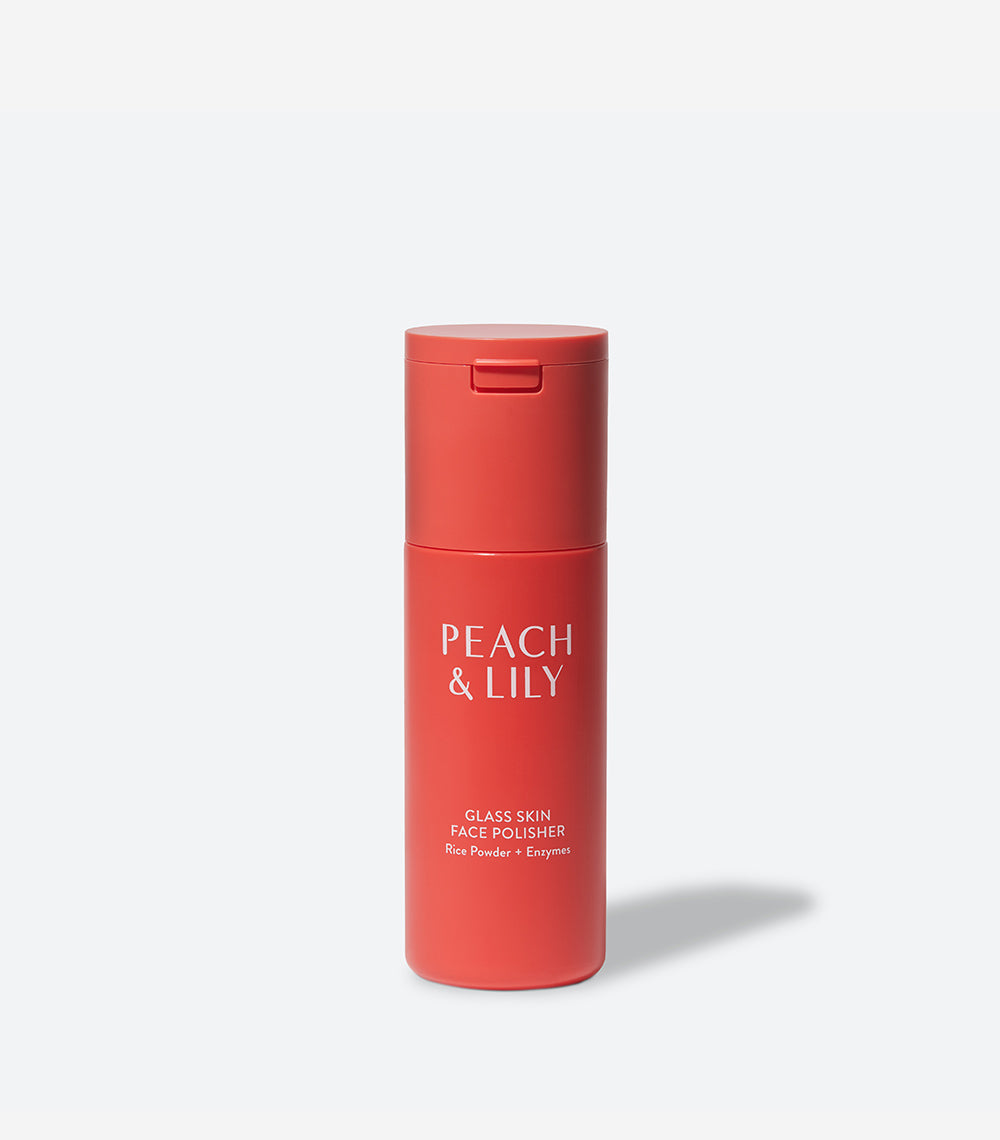
Glass Skin Face Polisher

Glass Skin Face Polisher
Peach & Lily
glass-skin-face-polisher
Exfoliation
9784823546149
Morning or Evening?
How often will you use this product?
Notes


Highlights
WHAT IS IT?
Enzyme powder exfoliator with CrystalRiceTM formula
FEATURES
Self-dissolving formula, customizable exfoliation intensity, gentle daily use
BEST FOR
combination
CHECKS
Gluten-free
Who Is It For?
All Skin TypesWhat Does It Help With?
Dullness Uneven Texture Pores Anti-aging Firmness Uneven Skin ToneBudget
Mid-range ($30-$75)How To Use
Which routine should it be used in?
Instructions:
Key Information


What Peach & Lily Says
Product Description:
An innovative CrystalRiceTM formula that gently buffs away dead skin cells with enzyme powder microcrystalline cellulose, rice bran, and cornstarch. Contains salicylic acid and fruit extracts for evening tone and texture, plus allantoin and green tea for calming effects.
About the Brand:
Ingredients Overview
Ingredients List
Zea-Mays-Starch,Microcrystalline-Cellulose,Sodium-Cocoyl-Isethionate,Sodium-Lauroyl-Glutamate,Diglycerin,Oryza-Sativa-Extract,Aspergillus-Rice-Ferment-Filtrate,Papain,Prunus-Mume-Fruit-Extract,Vitis-Vinifera-Fruit-Extract,Carica-Papaya-Fruit-Extract,Pyrus-Malus-Fruit-Extract,Salicylic-Acid,Camellia-Sinensis-Leaf-Extract,Glycerin,Angelica-Acutiloba-Root-Extract,Allantoin,Vigna-Radiata-Seed-Extract,Moringa-Pterygosperma-Seed-Extract,Panax-Ginseng-Root-Extract,Maltodextrin,Water,Butylene-Glycol,1-2-Hexanediol,Ethylhexylglycerin,Caprylyl-Glycol
Key Ingredients
Rice bran extract, Salicylic acid, Green tea extract, Allantoin, Papain enzyme
Ingredients Details
Aspergillus/rice Ferment Filtrate
Common Name(s): Rice ferment filtrate ferment
DESCRIPTION
What It Does: Delivers postbiotic skin-conditioning metabolites, antioxidant protection, and microbiome-balancing activity through fermentation-derived bioactives.
Why It's Used: Fermentation biotransforms parent substrates into smaller, more bioavailable molecular fractions with enhanced skin activity and postbiotic microbiome benefits.
How It Works: Fermentation-derived metabolites (organic acids, enzymes, peptides, and bioactive polyphenols) interact with skin surface receptors, modulate the microbiome, and penetrate the stratum corneum to condition and protect skin cells.
Typically Found In: Serums,toners,essences,k-beauty formulations,microbiome skincare
TECHNICAL DETAILS
Primary Category: Fermented ingredients
Secondary Functions: Antioxidant,skin-conditioning,brightening
Application Areas:

Facial Skincare

Body Care
Hair Care
Beard Care
Color Cosmetics (Makeup)
Dietary/Oral Supplements
Typical Concentration Range: 0.5–10%
SOURCING & ETHICS
Vegan Status: Yes
Halal Status: Yes
Source Notes: Produced by fermentation process; no animal components unless substrate is animal-derived.
SKIN COMPATIBILITY
Irritancy Rating: 1
Comedogenicity Rating: 0
Sensitivity Concerns: Low sensitization potential at recommended use concentrations.
Safe for Sensitive Skin: Yes
SAFETY & COMPATIBILITY
Safety Profile: Well-characterized cosmetic ingredient with established safety profile. generally non-irritating at typical use concentrations. suitable for leave-on and rinse-off cosmetics.
Works Well With: Niacinamide,hyaluronic acid,ceramides,vitamin c,probiotics
Avoid Combining With: Strong oxidizers; extreme ph
SCIENTIFIC NOTE
Fermentation typically reduces molecular weight of substrate polysaccharides and proteins through enzymatic hydrolysis, increasing skin penetration. postbiotic metabolites (short-chain fatty acids, bacteriocins, organic acids) modulate tlr receptor signaling in keratinocytes, influencing barrier gene expression (filaggrin, loricrin) and immune tone without live microorganism exposure.
Last Verified: 2025-01-15
Primary Sources: Cosing eu database; pcpc cosmetic ingredient safety reviews; postbiotic cosmetic ingredient literature; fermentation biotechnology reviews
Diglycerin
Common Name(s): Diglycerin,cosmetic active,functional ingredient
CAS Number: N/a
DESCRIPTION
What It Does: Delivers characteristic cosmetic function — skin conditioning, protection, preservation, or active biological benefit — at recommended use concentration.
Why It's Used: Selected for its functional contribution and formulation compatibility — supported by cosmetic science literature and regulatory safety assessment.
How It Works: Works through the mechanism of its molecular class — physicochemical interaction with the formulation or biological interaction with skin proteins, lipids, or receptors as documented in peer-reviewed literature.
Typically Found In: Skin care formulations
TECHNICAL DETAILS
Primary Category: Active ingredient – cosmetic active
Secondary Functions: Skin conditioning
Application Areas:
Facial Skincare
Body Care
Hair Care
Beard Care
Color Cosmetics (Makeup)
Dietary/Oral Supplements
Typical Concentration Range: 0.1%–10%
SOURCING & ETHICS
Vegan Status: Conditional - supplier confirmation required
Halal Status: Unverified - supplier confirmation required
Source Notes: Commercially produced for cosmetic use. verify vegan/halal status with supplier. [audit 2026-07-29 rev2: the record's own source_notes does not assert a non-animal origin, or instructs the reader to verify with the supplier; "yes" asserts knowledge the record does not hold. determination requires shariah-panel sign-off.]
SKIN COMPATIBILITY
Irritancy Rating: 1/5 – very low
Comedogenicity Rating: 0/5 – non-comedogenic
Sensitivity Concerns: Well-tolerated by most skin types.
Safe for Sensitive Skin: Yes
SAFETY & COMPATIBILITY
Safety Profile: Good safety profile at recommended concentrations. ewg score: 1–2.
Works Well With: Standard skincare actives
Avoid Combining With: No known significant incompatibilities
SCIENTIFIC NOTE
Diglycerin delivers documented functional benefit with an established safety profile within the cosmetic regulatory framework (cosing eu, cir usa).
Last Verified: 2026-03-12
Primary Sources: Cosing database,diglycerin technical literature
Microcrystalline Cellulose
Common Name(s): Natural or modified biopolymer thickener,rheology modifier,film-former
CAS Number: N/a
DESCRIPTION
What It Does: Builds aqueous viscosity through polymer chain entanglement above the overlap concentration, forms conditioning films on skin and hair, and stabilises suspensions through yield stress.
Why It's Used: Natural biopolymer thickeners provide elegant formulation sensory without the tight ph requirements of synthetic carbomers — preferred in shampoos and conditioners where broad ph tolerance and natural origin are both required.
How It Works: Polysaccharide chains above overlap concentration c* entangle forming a viscoelastic network — viscosity scales as c^4.7 above c*, providing steep concentration-viscosity dependence. chemical modification (hydroxypropyl, hydroxyethyl) increases water solubility and cold-processability of otherwise difficult-to-dissolve natural polysaccharides.
Typically Found In: Shampoos,conditioners,gels
TECHNICAL DETAILS
Primary Category: Active ingredient – cosmetic active
Secondary Functions: Skin conditioning
Application Areas:
Facial Skincare
Body Care
Hair Care
Beard Care
Color Cosmetics (Makeup)
Dietary/Oral Supplements
Typical Concentration Range: 0.1%–5%
SOURCING & ETHICS
Vegan Status: Conditional - supplier confirmation required
Halal Status: Unverified - supplier confirmation required
Source Notes: Commercially produced for cosmetic use. verify vegan/halal status with supplier. [audit 2026-07-29 rev2: the record's own source_notes does not assert a non-animal origin, or instructs the reader to verify with the supplier; "yes" asserts knowledge the record does not hold. determination requires shariah-panel sign-off.]
SKIN COMPATIBILITY
Irritancy Rating: 1/5 – very low
Comedogenicity Rating: 0/5 – non-comedogenic
Sensitivity Concerns: Well-tolerated by most skin types.
Safe for Sensitive Skin: Yes
SAFETY & COMPATIBILITY
Safety Profile: Good safety profile at recommended concentrations. ewg score: 1–2.
Works Well With: Standard skincare actives
Avoid Combining With: No known significant incompatibilities
SCIENTIFIC NOTE
Biopolymer thickeners are sensitive to electrolyte concentration — high salt levels screen polymer charge interactions reducing viscosity. formulation salt content must be accounted for when selecting polymer concentration for target viscosity.
Last Verified: 2026-03-12
Primary Sources: Cosing database,microcrystalline cellulose biopolymer thickener review
Papain
Common Name(s): Carica papaya enzyme,papaya protease
CAS Number: 9001-73-4
DESCRIPTION
What It Does: Gently digests dead keratin proteins for enzymatic exfoliation without acid irritation.
Why It's Used: Gentle enzymatic exfoliant for acid-sensitive skin types requiring exfoliation without ph-dependent aha/bha irritation.
How It Works: Cysteine protease specifically cleaves peptide bonds in keratin proteins at neutral ph, dissolving corneocyte protein bridges without requiring acidic ph. activity is ph- and temperature-dependent (optimal ph 6.5, 37°c). also gently solubilizes sebum plugs.
Typically Found In: Enzyme peels,gentle exfoliants,sensitive skin exfoliants,brightening masks
TECHNICAL DETAILS
Primary Category: Active ingredient – enzyme
Secondary Functions: Protein-specific exfoliation,neutral-ph keratolysis
Application Areas:
Facial Skincare
Body Care
Hair Care
Beard Care
Color Cosmetics (Makeup)
Dietary/Oral Supplements
Typical Concentration Range: 1%–10% (active enzyme)
SOURCING & ETHICS
Vegan Status: Yes – from carica papaya latex
Halal Status: Yes
Source Notes: Plant-derived (papaya, pineapple) or fermentation-derived.
SKIN COMPATIBILITY
Irritancy Rating: 2/5 – low to moderate; potential sensitization with repeated exposure
Comedogenicity Rating: 0/5 – non-comedogenic
Sensitivity Concerns: Patch test recommended; potential for enzymatic sensitization.
Safe for Sensitive Skin: Use with caution – potential sensitization
SAFETY & COMPATIBILITY
Safety Profile: Latex allergy cross-reactivity possible. avoid high concentrations on compromised skin.
Works Well With: Ahas (synergistic),hyaluronic acid,ceramides
Avoid Combining With: High concentrations on sensitive or compromised skin
SCIENTIFIC NOTE
Papain's specificity for peptide bonds at hydrophobic residues (leu, phe, val) in keratin provides preferential digestion of the abundant hydrophobic corneocyte proteins, causing selective dissolution of corneocyte protein bridges without disrupting the non-protein lipid matrix of the stratum corneum.
Last Verified: 2026-03-12
Primary Sources: Cosing database,cir safety assessment,enzyme exfoliant review literature