

GLAMOUR WORLD AYURVEDIC CO PVT LTD
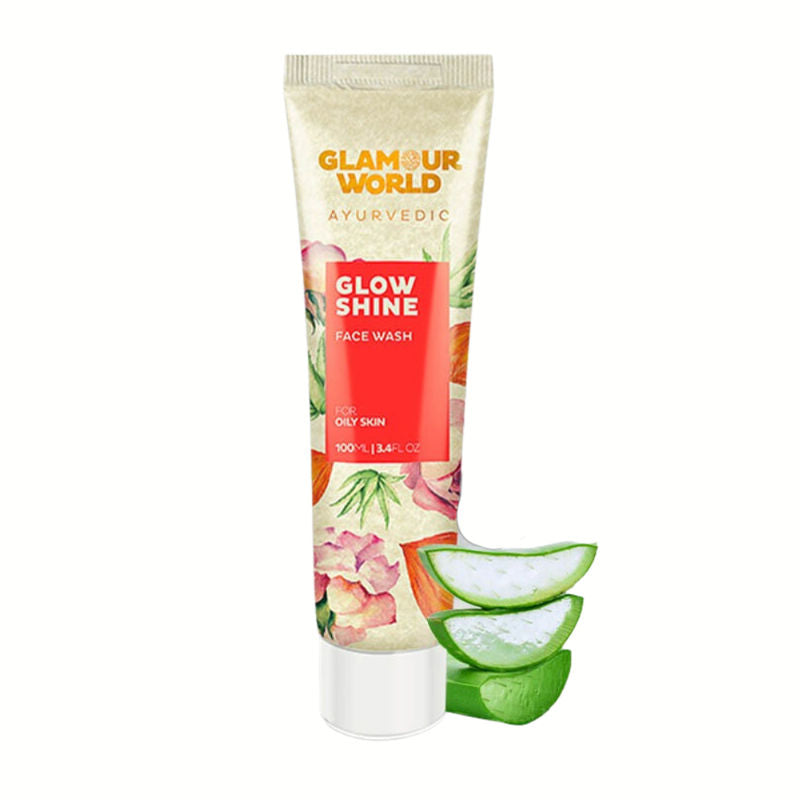
GLAMOUR WORLD AYURVEDIC Glow Shine Face Wash

GLAMOUR WORLD AYURVEDIC Glow Shine Face Wash
GLAMOUR WORLD AYURVEDIC CO PVT LTD
glamour-world-ayurvedic-glow-shine-face-wash
Cleanse
10084985045285
Morning or Evening?
How often will you use this product?
Notes


Highlights
WHAT IS IT?
Face wash with 14 ingredients
FEATURES
Controls excess oil, cleanses gently, brightens skin, oil free
BEST FOR
oily
CHECKS
Sodium Lauryl Ether Sulphate, Sodium Chloride, Sodium Benzoate, Bronopol, Pigment Orange 13
Who Is It For?
What Does It Help With?
Excess Oil Control Healthy Bright SkinBudget
Affordable (under $30)How To Use
Which routine should it be used in?
Instructions:
Key Information


What GLAMOUR WORLD AYURVEDIC CO PVT LTD Says
Product Description:
Controls excess oil and cleanses face gently for a healthy bright skin. Gives oil free healthy bright skin. Aloe Vera Neem Ashwaghandha Rose Honey Protein Lemon Oil.
About the Brand:
Ingredients Overview
Ingredients List
Aloevera,Aswagandha,Rose,Swet-chandan,Neem,Honey,Protein-hydrolyzates,Sodium-Lauryl-Ether-Sulphate,Glycerin,Sodium-Chloride,Sodium-Benzoate,Lemon-Oil,Bronopol,Pigment-Orange-13,Purified-Water
Key Ingredients
Aloevera,Aswagandha,Rose,Neem,Honey,Lemon-Oil
Ingredients Details
Bronopol
Common Name(s): Formaldehyde-releasing preservative,antimicrobial preservation,formaldehyde donor
CAS Number: N/a
DESCRIPTION
What It Does: Provides broad-spectrum preservation against bacteria and fungi through controlled formaldehyde release, maintaining product safety throughout shelf life at eu-permitted concentrations.
Why It's Used: Formaldehyde-releasing preservatives provide reliable broad-spectrum preservation but face increasing consumer and regulatory scrutiny — eu requires label declaration, and many brands adopt 'formaldehyde-free' positioning due to sensitisation concerns.
How It Works: Hydrolysis in aqueous formulation releases formaldehyde (hcho) at controlled rates depending on ph and temperature. free formaldehyde cross-links bacterial proteins and nucleic acids through schiff base formation with amine groups, providing bactericidal activity. sensitisation risk from free formaldehyde's reactivity with skin proteins forming haptens.
Typically Found In: All aqueous formulations
TECHNICAL DETAILS
Primary Category: Active ingredient – cosmetic active
Secondary Functions: Skin conditioning
Application Areas:

Facial Skincare

Body Care
Hair Care
Beard Care
Color Cosmetics (Makeup)
Dietary/Oral Supplements
Typical Concentration Range: Check eu annex v limits
SOURCING & ETHICS
Vegan Status: Yes
Halal Status: Yes
Source Notes: Commercially produced for cosmetic use. verify vegan/halal status with supplier.
SKIN COMPATIBILITY
Irritancy Rating: 1/5 – very low
Comedogenicity Rating: 0/5 – non-comedogenic
Sensitivity Concerns: Well-tolerated by most skin types.
Safe for Sensitive Skin: Yes
SAFETY & COMPATIBILITY
Safety Profile: Good safety profile at recommended concentrations. ewg score: 1–2.
Works Well With: Standard skincare actives
Avoid Combining With: No known significant incompatibilities
SCIENTIFIC NOTE
Eu regulation 1223/2009 requires 'contains formaldehyde' label declaration when free formaldehyde >0.05% in the finished product. many formulators are transitioning away from formaldehyde-releasing preservatives to avoid this label requirement regardless of safety profile.
Last Verified: Cosing database,eu annex v formaldehyde-releasing preservative declaration
Primary Sources: 2026-03-12
Glycerin
Common Name(s): Glycerol,glycerine,1,2,3-propanetriol
CAS Number: 56-81-5
DESCRIPTION
What It Does: Glycerin pulls water from the environment and deeper skin layers into the outer skin layer (epidermis), boosting moisture levels and keeping skin soft, smooth, and plump.
Why It's Used: It is used in virtually every moisturizer, serum, and cleanser because it is highly effective at hydrating skin, is well-tolerated by all skin types, and enhances the texture and spreadability of formulations.
How It Works: As a humectant, glycerin forms hydrogen bonds with water molecules, trapping them in the skin. it also reinforces the skin barrier by integrating into lipid structures between skin cells.
Typically Found In: Moisturizers,serums,cleansers,toners,sheet masks,sunscreens,body lotions,shampoos,conditioners
TECHNICAL DETAILS
Primary Category: Humectant
Secondary Functions: Skin barrier support,emollient,solvent
Application Areas:
Facial Skincare
Body Care
Hair Care
Beard Care
Color Cosmetics (Makeup)
Dietary/Oral Supplements
Typical Concentration Range: 1%–30% (typical: 3–10%)
SOURCING & ETHICS
Vegan Status: Yes – plant-derived (coconut, soy, palm) or synthetic
Halal Status: Yes – when plant-derived or synthetic; verify source with supplier
Source Notes: Derived from plant oils via hydrolysis or saponification; synthetic versions also available. palm-derived glycerin carries sustainability concerns.
SKIN COMPATIBILITY
Irritancy Rating: 1/5 – very low; non-irritating at all standard concentrations
Comedogenicity Rating: 0/5 – non-comedogenic
Sensitivity Concerns: Extremely rare allergic reactions; generally safe for all skin types including sensitive and baby skin
Safe for Sensitive Skin: Yes
SAFETY & COMPATIBILITY
Safety Profile: Widely recognized as safe. ewg hazard score: 1. no significant concerns for irritation, sensitization, or toxicity at typical concentrations (up to 50%).
Works Well With: Hyaluronic acid,ceramides,niacinamide,panthenol,urea,peptides,retinol,ahas/bhas
Avoid Combining With: No known incompatibilities at standard concentrations
SCIENTIFIC NOTE
Glycerin is an endogenous skin component found naturally in the stratum corneum. aquaporin-3 channels in keratinocytes facilitate glycerin transport, making it integral to natural skin hydration pathways.
Last Verified: Cosing database,cir safety assessment,ewg skin deep,inci decoder
Primary Sources: 2026-03-12
Honey
Common Name(s): Honey,bee-derived humectant antimicrobial,wound healing active
CAS Number: N/a
DESCRIPTION
What It Does: Provides humectant moisture retention from the hygroscopic fructose/glucose matrix, antimicrobial activity from enzymatically generated h₂o₂ and (in manuka) methylglyoxal, anti-inflammatory activity from phenolic compounds, and wound healing promotion from growth factor activation.
Why It's Used: Honey is the only food-derived ingredient with documented clinical wound healing efficacy in medical grade form (medihoney) — combining humectancy, antimicrobial, anti-inflammatory, and healing activity in a gras, consumer-familiar ingredient.
How It Works: Glucose oxidase in honey catalyses glucose + o₂ → gluconolactone + h₂o₂ — providing sustained low-level h₂o₂ generation that provides bactericidal activity without tissue toxicity. manuka honey's methylglyoxal (mgo) provides additional non-peroxide antimicrobial activity through protein glycation of bacterial enzymes.
Typically Found In: Wound care,anti-aging,humectant products
TECHNICAL DETAILS
Primary Category: Active ingredient – cosmetic active
Secondary Functions: Skin conditioning
Application Areas:
Facial Skincare
Body Care
Hair Care
Beard Care
Color Cosmetics (Makeup)
Dietary/Oral Supplements
Typical Concentration Range: 1%–20%
SOURCING & ETHICS
Vegan Status: No – bee-derived
Halal Status: Conditional
Source Notes: Commercially produced for cosmetic use. verify vegan/halal status with supplier.
SKIN COMPATIBILITY
Irritancy Rating: 1/5 – very low
Comedogenicity Rating: 0/5 – non-comedogenic
Sensitivity Concerns: Well-tolerated by most skin types.
Safe for Sensitive Skin: Yes
SAFETY & COMPATIBILITY
Safety Profile: Good safety profile at recommended concentrations. ewg score: 1–2.
Works Well With: Standard skincare actives
Avoid Combining With: No known significant incompatibilities
SCIENTIFIC NOTE
Manuka honey's unique mānuka factor (umf) grades correlate with methylglyoxal (mgo) concentration — umf10+ (mgo 263 mg/kg) provides bactericidal activity against mrsa at concentrations achievable in topical formulation.
Last Verified: Cosing database,honey manuka honey wound healing antimicrobial review
Primary Sources: 2026-03-12
