

Givenchy
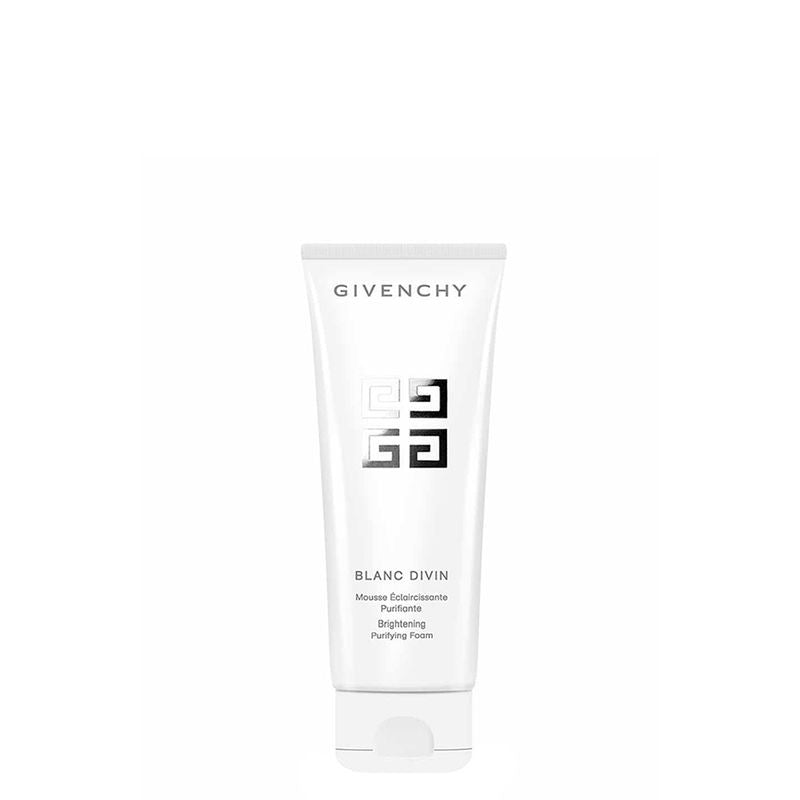
Givenchy Blanc Divin Brightening Purifying Foam

Givenchy Blanc Divin Brightening Purifying Foam
Givenchy
givenchy-blanc-divin-brightening-purifying-foam
Cleanse
10084980228389
Morning or Evening?
How often will you use this product?
Notes


Highlights
WHAT IS IT?
Brightening purifying foam with 4 key ingredients
FEATURES
Boosts transparency, improves evenness of complexion, smoothes skin, creates soft foam, cleanses intensively, eliminates impurities and dullness, refines skin texture, minimizes pores, restores clarity and freshness
BEST FOR
sensitive
CHECKS
Preservative-Free,Sulfate-free,Alcohol-free
Who Is It For?
What Does It Help With?
Dullness Uneven Skin Tone Impurities PoresBudget
Premium ($76-$150)How To Use
Which routine should it be used in?
Instructions:
Key Information


What Givenchy Says
Product Description:
Cleansing with a sumptuous fluffy foam that boosts transparency, improves evenness of the complexion and smoothes the skin. The first step in the Blanc Divin ritual. On contact with water, this rich and creamy texture puffs into an irresistible cloud of softness and freshness, giving the skin a surprising “cushioning” sensation. Enriched with the Glow Reviver Complex, it cleanses the skin intensively, seems to eliminate impurities and the dull veil. The complexion appears more translucent and more even, with renewed clarity and freshness. The skin texture seems refined and the appearance of pores seems minimized. The skin regains a divine purity.
About the Brand:
Ingredients Overview
Ingredients List
Glycerin,Aqua-(Water),Peg-8,Palmitic-Acid,Stearic-Acid,Sodium-Lauroyl-Glutamate,Potassium-Hydroxide,Lauric-Acid,Myristic-Acid,Sorbitol,Parfum-(Fragrance),Butylene-Glycol,Phenoxyethanol,Glyceryl-Stearate,Peg-100-Stearate,Citric-Acid,Ascorbyl-Glucoside,Hydroxycitronellal,Citronellol,Bht,Geraniol,Bellis-Perennis-(Daisy)-Flower-Extract,Prunus-Mume-Fruit-Extract,Potassium-Sorbate,Sodium-Phosphate,Magnolia-Obovata-Bark-Extract
Key Ingredients
Vitamin C Derivative,Daisy Extract,Japanese Magnolia Extract,Apricot Flower Extract
Ingredients Details
Bht
Common Name(s): Bht
DESCRIPTION
What It Does: Delivers targeted skin-conditioning or bioactive benefits through a specific mechanism of action suited to the formulation's intended purpose.
Why It's Used: Specialty actives address specific skin concerns through targeted molecular mechanisms, providing efficacy beyond what base formulation ingredients alone can achieve.
How It Works: The bioactive compound interacts with specific molecular targets in skin cells or the extracellular matrix — enzymes, receptors, structural proteins, or signaling molecules — triggering beneficial biological responses.
Typically Found In: Serums,treatments,moisturizers,specialty products
TECHNICAL DETAILS
Primary Category: Specialty actives
Secondary Functions: Skin-conditioning,anti-aging
Application Areas:

Facial Skincare

Body Care
Hair Care
Beard Care
Color Cosmetics (Makeup)
Dietary/Oral Supplements
Typical Concentration Range: 0.01–5%
SOURCING & ETHICS
Vegan Status: Yes
Halal Status: Yes
Source Notes: Specialty active ingredient; check individual sourcing for vegan status.
SKIN COMPATIBILITY
Irritancy Rating: 1
Comedogenicity Rating: 0
Sensitivity Concerns: Low sensitization potential at recommended use concentrations.
Safe for Sensitive Skin: Yes
SAFETY & COMPATIBILITY
Safety Profile: Well-characterized cosmetic ingredient with established safety profile. generally non-irritating at typical use concentrations. suitable for leave-on and rinse-off cosmetics.
Works Well With: Niacinamide,hyaluronic acid,vitamin c,peptides
Avoid Combining With: Incompatible with oxidizing agents; check ph stability
SCIENTIFIC NOTE
Specialty actives typically work through enzyme inhibition (e.g., tyrosinase inhibition for brightening, mmp inhibition for anti-aging), receptor activation (e.g., retinoid receptors, ppar-γ for barrier genes), or transcription factor modulation (e.g., nrf2 for antioxidant gene upregulation). structure-activity relationships determine potency and selectivity.
Last Verified: Cosing eu database; pcpc cosmetic ingredient safety reviews; ingredient-specific safety and efficacy literature
Primary Sources: 2025-01-15
Citronellol
Common Name(s): (r)-3,7-dimethyl-6-octen-1-ol,rhodinol
CAS Number: 106-22-9
DESCRIPTION
What It Does: Provides soft, lasting rose-floral fragrance note.
Why It's Used: Essential rose fragrance monoterpene for lasting smooth floral notes in high-quality perfumery and cosmetic fragrances.
How It Works: Allylic alcohol monoterpene provides fixative property in fragrance blends. good skin substantivity for lasting scent. softer, rounder rose note vs geraniol's fresher character. natural in rose otto at 18-34%.
Typically Found In: Rose perfumes,floral fragrances,luxury skincare
TECHNICAL DETAILS
Primary Category: Fragrance component – monoterpene alcohol
Secondary Functions: Skin conditioning
Application Areas:
Facial Skincare
Body Care
Hair Care
Beard Care
Color Cosmetics (Makeup)
Dietary/Oral Supplements
Typical Concentration Range: 0.001%–1%
SOURCING & ETHICS
Vegan Status: Yes – from rose, geranium, citronella oils
Halal Status: Yes
Source Notes: Commercially produced for cosmetic use. verify vegan/halal status with supplier.
SKIN COMPATIBILITY
Irritancy Rating: 1/5 – very low
Comedogenicity Rating: 0/5 – non-comedogenic
Sensitivity Concerns: Well-tolerated by most skin types.
Safe for Sensitive Skin: Yes
SAFETY & COMPATIBILITY
Safety Profile: Eu cosmetics regulation: declared fragrance allergen. ifra guidelines apply.
Works Well With: Standard skincare actives
Avoid Combining With: No known significant incompatibilities
SCIENTIFIC NOTE
Citronellol's r-enantiomer (natural) vs s-enantiomer (synthetic) provide meaningfully different scent character – a remarkable demonstration of chiral scent discrimination by olfactory receptors. the (r) form provides the characteristic rose note while the (s) form has a distinctly different, less pleasant character. this enantiomeric scent difference means that the biological handedness of naturally-sourced vs racemic synthetic citronellol produces perceptibly different fragrance quality.
Last Verified: Cosing database,ifra standards
Primary Sources: 2026-03-12
Geraniol
Common Name(s): (e)-3,7-dimethyl-2,6-octadien-1-ol,geranyl alcohol
CAS Number: 106-24-1
DESCRIPTION
What It Does: Provides fresh rose-geranium floral scent with antimicrobial activity.
Why It's Used: The rose fragrance terpene – geraniol defines the fresh, sweet rose-geranium note found in more than 60 essential oils and is essential for recreating natural floral fragrance profiles.
How It Works: Monoterpene alcohol inhibits bacterial membrane integrity for antimicrobial activity. activates trpv1 for anti-nociception. inhibits nf-kb for anti-inflammatory activity. antioxidant via allylic radical scavenging.
Typically Found In: Rose-scented products,floral fragrances,natural cosmetics
TECHNICAL DETAILS
Primary Category: Fragrance component – acyclic monoterpene alcohol
Secondary Functions: Skin conditioning
Application Areas:
Facial Skincare
Body Care
Hair Care
Beard Care
Color Cosmetics (Makeup)
Dietary/Oral Supplements
Typical Concentration Range: 0.001%–1%
SOURCING & ETHICS
Vegan Status: Yes – from rose, geranium, palmarosa oils
Halal Status: Yes
Source Notes: Commercially produced for cosmetic use. verify vegan/halal status with supplier.
SKIN COMPATIBILITY
Irritancy Rating: 1/5 – very low
Comedogenicity Rating: 0/5 – non-comedogenic
Sensitivity Concerns: Well-tolerated by most skin types.
Safe for Sensitive Skin: Yes
SAFETY & COMPATIBILITY
Safety Profile: Eu cosmetics regulation: declared fragrance allergen. ifra guidelines apply.
Works Well With: Standard skincare actives
Avoid Combining With: No known significant incompatibilities
SCIENTIFIC NOTE
Geraniol's isomers (geraniol, nerol, citronellol) provide subtly different scent characters despite identical molecular formulae (c10h18o): geraniol provides the sweet, fresh rose note while its z-isomer nerol has a more delicate, neroli-like character. these isomeric scent differences arise from different spatial presentation of the hydroxyl and double bond groups to the olfactory receptor – demonstrating the extraordinary structural sensitivity of olfactory perception.
Last Verified: Cosing database,ifra standards
Primary Sources: 2026-03-12
Glycerin
Common Name(s): Glycerol,glycerine,1,2,3-propanetriol
CAS Number: 56-81-5
DESCRIPTION
What It Does: Glycerin pulls water from the environment and deeper skin layers into the outer skin layer (epidermis), boosting moisture levels and keeping skin soft, smooth, and plump.
Why It's Used: It is used in virtually every moisturizer, serum, and cleanser because it is highly effective at hydrating skin, is well-tolerated by all skin types, and enhances the texture and spreadability of formulations.
How It Works: As a humectant, glycerin forms hydrogen bonds with water molecules, trapping them in the skin. it also reinforces the skin barrier by integrating into lipid structures between skin cells.
Typically Found In: Moisturizers,serums,cleansers,toners,sheet masks,sunscreens,body lotions,shampoos,conditioners
TECHNICAL DETAILS
Primary Category: Humectant
Secondary Functions: Skin barrier support,emollient,solvent
Application Areas:
Facial Skincare
Body Care
Hair Care
Beard Care
Color Cosmetics (Makeup)
Dietary/Oral Supplements
Typical Concentration Range: 1%–30% (typical: 3–10%)
SOURCING & ETHICS
Vegan Status: Yes – plant-derived (coconut, soy, palm) or synthetic
Halal Status: Yes – when plant-derived or synthetic; verify source with supplier
Source Notes: Derived from plant oils via hydrolysis or saponification; synthetic versions also available. palm-derived glycerin carries sustainability concerns.
SKIN COMPATIBILITY
Irritancy Rating: 1/5 – very low; non-irritating at all standard concentrations
Comedogenicity Rating: 0/5 – non-comedogenic
Sensitivity Concerns: Extremely rare allergic reactions; generally safe for all skin types including sensitive and baby skin
Safe for Sensitive Skin: Yes
SAFETY & COMPATIBILITY
Safety Profile: Widely recognized as safe. ewg hazard score: 1. no significant concerns for irritation, sensitization, or toxicity at typical concentrations (up to 50%).
Works Well With: Hyaluronic acid,ceramides,niacinamide,panthenol,urea,peptides,retinol,ahas/bhas
Avoid Combining With: No known incompatibilities at standard concentrations
SCIENTIFIC NOTE
Glycerin is an endogenous skin component found naturally in the stratum corneum. aquaporin-3 channels in keratinocytes facilitate glycerin transport, making it integral to natural skin hydration pathways.
Last Verified: Cosing database,cir safety assessment,ewg skin deep,inci decoder
Primary Sources: 2026-03-12
