
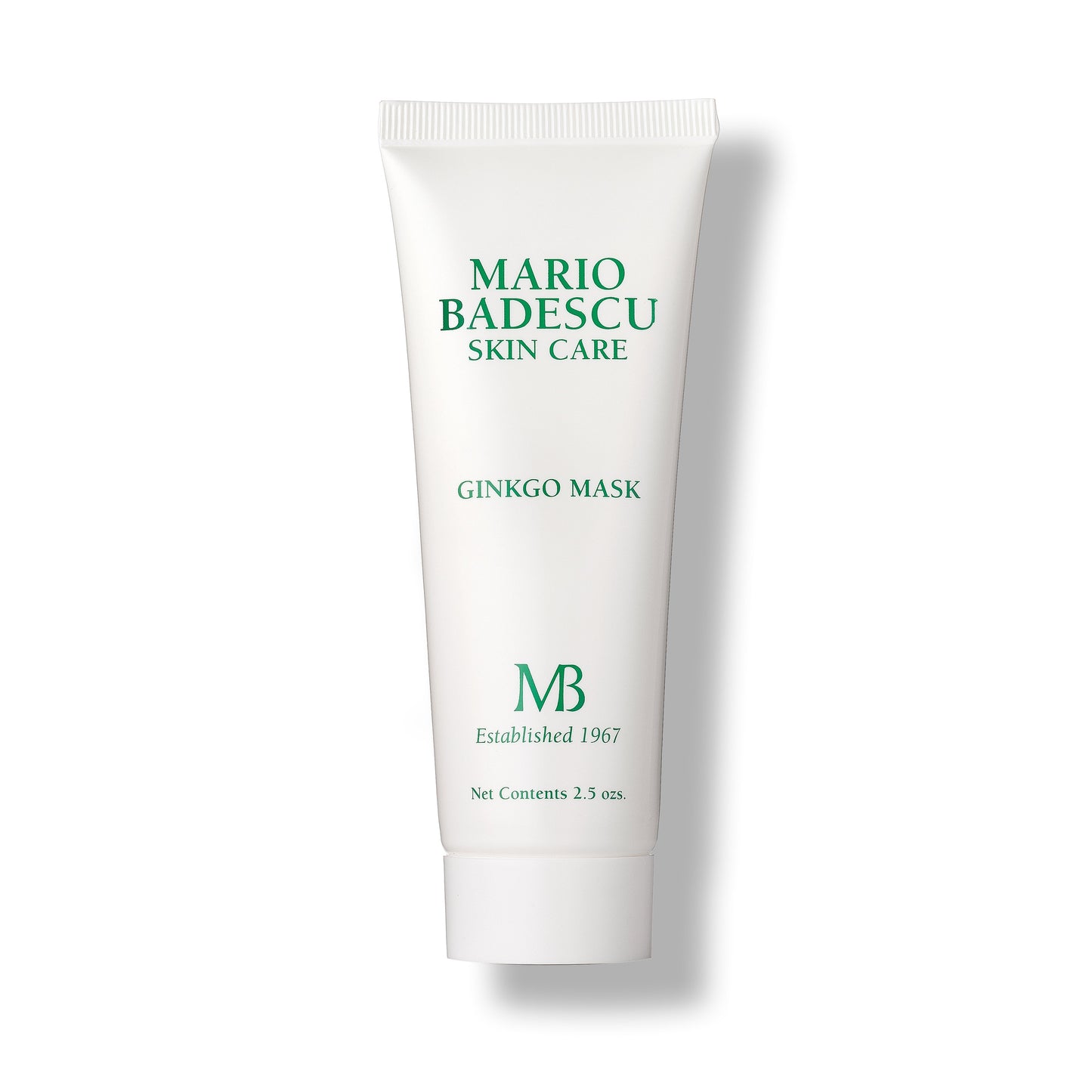

Mario Badescu
Ginkgo Mask

Ginkgo Mask
Mario Badescu
ginkgo-mask
Face Mask
9818371490085
Morning or Evening?
How often will you use this product?
Notes


Highlights
WHAT IS IT?
Moisture-intensive face mask
FEATURES
Provides invigorating boost, nourishes skin, encourages softer and smoother complexion
BEST FOR
dry, combination, sensitive
CHECKS
Who Is It For?
All Ages And Genders With Dry Sensitive Or Combination SkinWhat Does It Help With?
Dehydration Dryness Tired Skin Skin Softening Smoothing RadianceBudget
Affordable (under $30)How To Use
Which routine should it be used in?
Instructions:
Key Information

What Mario Badescu Says
Product Description:
Revive tired, dehydrated skin with our moisture-intensive mask. Ginkgo Biloba provides parched skin with an invigorating boost as Allantoin, Shea Butter, and Vitamin E combine to nourish skin and encourage a softer, smoother, more radiant complexion.
About the Brand:
Ingredients Overview
Ingredients List
AQUA (WATER), BUTYROSPERMUM PARKII (SHEA) BUTTER, GLYCERIN, MACADAMIA TERNIFOLIA SEED OIL, CETEARYL ALCOHOL, CETYL ALCOHOL, GLYCERYL STEARATE, SIMMONDSIA CHINENSIS (JOJOBA) SEED OIL, PARFUM (FRAGRANCE), PEG-75 STEARATE, PHENOXYETHANOL, ALLANTOIN, CETETH-20, STEARETH-20, ETHYLHEXYLGLYCERIN, CHLORPHENESIN, POLYACRYLAMIDE, SILK AMINO ACIDS, ACTINIDIA CHINENSIS (KIWI) FRUIT EXTRACT, TOCOPHEROL, C13-14 ISOPARAFFIN, GLYCINE SOJA (SOYBEAN) OIL, PUNICA GRANATUM SEED OIL, SERINE, GINKGO BILOBA LEAF EXTRACT, LAURETH-7, CITRIC ACID, POTASSIUM SORBATE, XANTHAN GUM, SORBIC ACID
Key Ingredients
Ginkgo Biloba, Allantoin, Shea Butter, Vitamin E
Ingredients Details
Allantoin
Common Name(s): 5-ureidohydantoin,glyoxyldiureide,aluminum dihydroxy allantoinate
CAS Number: 97-59-6
DESCRIPTION
What It Does: Soothes irritation, accelerates wound healing, promotes skin cell renewal, and provides mild keratolytic exfoliation.
Why It's Used: Gold standard multi-function soothing active – one of the most widely used cosmetic ingredients across all product types for its exceptional tolerability and clinically proven multi-action skin conditioning.
How It Works: Promotes keratinocyte proliferation and fibroblast migration for wound healing. mild keratolytic activity by disrupting corneocyte binding. anti-irritant via direct protein binding and anti-inflammatory cytokine reduction. humectant activity via hydroxyl groups.
Typically Found In: Post-procedure products,sensitive skin formulas,wound care,anti-acne treatments,baby products
TECHNICAL DETAILS
Primary Category: Active ingredient – soothing / anti-inflammatory
Secondary Functions: Wound healing,keratolytic,anti-irritant
Application Areas:

Facial Skincare
Body Care

Hair Care
Beard Care
Color Cosmetics (Makeup)
Dietary/Oral Supplements
Typical Concentration Range: 0.1%–2%
SOURCING & ETHICS
Vegan Status: Yes – synthetic or comfrey-derived
Halal Status: Yes
Source Notes: Plant-derived extract or synthetic.
SKIN COMPATIBILITY
Irritancy Rating: 1/5 – very low
Comedogenicity Rating: 0/5 – non-comedogenic
Sensitivity Concerns: Exceptionally well-tolerated; suitable for all skin types including baby and compromised skin.
Safe for Sensitive Skin: Yes – particularly recommended for sensitive skin
SAFETY & COMPATIBILITY
Safety Profile: Excellent safety profile. ewg score: 1.
Works Well With: Ceramides,panthenol,allantoin,hyaluronic acid,centella asiatica
Avoid Combining With: No significant incompatibilities
SCIENTIFIC NOTE
Allantoin's keratinocyte proliferation stimulation occurs via receptor-mediated signaling (possibly machr activation) rather than non-specific irritation-driven proliferation, making it a true wound-healing stimulant rather than a pro-inflammatory proliferative signal.
Last Verified: Cosing database,cir safety assessment,araújo et al. allantoin review
Primary Sources: 2026-03-12
Shea Butter
Common Name(s): Shea butter,karite butter
CAS Number: 91080-23-8
DESCRIPTION
What It Does: Provides deep nourishing emolliency with anti-inflammatory cinnamic acid esters and a uniquely rich unsaponifiable fraction.
Why It's Used: The most nutritious plant butter – unique cinnamic acid esters, lupeol, and rich unsaponifiable fraction provide anti-inflammatory and wound healing benefits beyond standard fatty acid emolliency.
How It Works: Cinnamic acid esters absorb uv radiation providing mild natural uv filtering (spf 3-4). lupeol inhibits nf-kb for anti-inflammatory activity. high stearic acid provides occlusive barrier function. rich unsaponifiable fraction (4-9%) provides phytosterols, tocopherols, and triterpenes for bioactive skin benefits.
Typically Found In: Body butters,rich moisturizers,baby products,hair conditioners,lip balms
TECHNICAL DETAILS
Primary Category: Functional ingredient – emollient
Secondary Functions: Cinnamic acid uv support,lupeol anti-inflammatory,rich emolliency
Application Areas:
Facial Skincare
Body Care
Hair Care
Beard Care
Color Cosmetics (Makeup)
Dietary/Oral Supplements
Typical Concentration Range: 1%–100%
SOURCING & ETHICS
Vegan Status: Yes – from butyrospermum parkii nuts
Halal Status: Yes
Source Notes: Unrefined (raw) shea retains more unsaponifiable fraction and stronger natural scent/color. refined shea is odorless, white, and cleaner for formulation. certified fair trade supports west african women's cooperatives.
SKIN COMPATIBILITY
Irritancy Rating: 1/5 – very low
Comedogenicity Rating: 0/5 – non-comedogenic (refined); 2/5 – low (raw/unrefined)
Sensitivity Concerns: Non-irritating.
Safe for Sensitive Skin: Yes
SAFETY & COMPATIBILITY
Safety Profile: Excellent safety profile. ewg score: 1.
Works Well With: Humectants,ceramides,actives as carrier
Avoid Combining With: No significant incompatibilities
SCIENTIFIC NOTE
Shea butter's unsaponifiable fraction (4-9%, vs coconut oil's 0.5% and olive oil's 1-2%) is exceptionally rich in triterpenes, phytosterols, and tocopherols. this fraction is responsible for shea's anti-inflammatory and wound healing properties that simple fatty acid analysis fails to reveal.
Last Verified: Cosing database,lin et al. shea butter cinnamic acid study,cir safety assessment
Primary Sources: 2026-03-12
Vitamin E
Common Name(s): Vitamin e,cosmetic active,functional ingredient
CAS Number: N/a
DESCRIPTION
What It Does: Delivers characteristic cosmetic function at recommended use concentration.
Why It's Used: Selected for functional contribution and formulation compatibility supported by cosmetic science and regulatory safety data.
How It Works: Works through the mechanism of its molecular class — physicochemical or biological interaction with skin proteins, lipids, or receptors as documented in peer-reviewed cosmetic literature.
Typically Found In: Skin care formulations
TECHNICAL DETAILS
Primary Category: Active ingredient – cosmetic active
Secondary Functions: Skin conditioning
Application Areas:
Facial Skincare
Body Care
Hair Care
Beard Care
Color Cosmetics (Makeup)
Dietary/Oral Supplements
Typical Concentration Range: 0.1%–10%
SOURCING & ETHICS
Vegan Status: Conditional
Halal Status: Yes
Source Notes: Commercially produced for cosmetic use. verify vegan/halal status with supplier.
SKIN COMPATIBILITY
Irritancy Rating: 1/5 – very low
Comedogenicity Rating: 0/5 – non-comedogenic
Sensitivity Concerns: Well-tolerated by most skin types.
Safe for Sensitive Skin: Yes
SAFETY & COMPATIBILITY
Safety Profile: Good safety profile at recommended concentrations. ewg score: 1–2.
Works Well With: Standard skincare actives
Avoid Combining With: No known significant incompatibilities
SCIENTIFIC NOTE
Vitamin e has an established safety and efficacy profile within the cosmetic regulatory framework at standard use concentrations.
Last Verified: Cosing database,vitamin e technical literature
Primary Sources: 2026-03-12
