
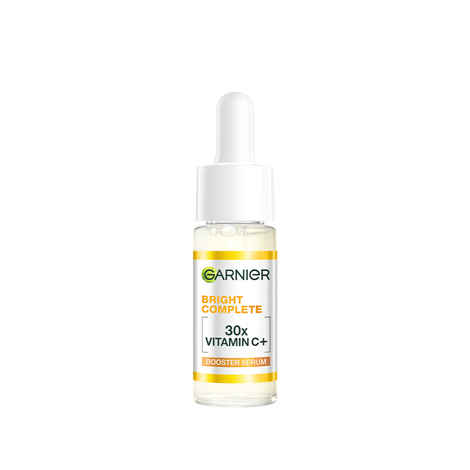

Garnier
Garnier Vitamin C + Face Serum for Skin Brightening & Anti-Dark Spots|100X Stronger than Vit C |2% Niacinamide 0.5% Salicylic Acid / BHA |Suitable for Oily, Dry, Sensitive Skin |For Men & Women, 15 ml

Garnier Vitamin C + Face Serum for Skin Brightening & Anti-Dark Spots|100X Stronger than Vit C |2% Niacinamide 0.5% Salicylic Acid / BHA |Suitable for Oily, Dry, Sensitive Skin |For Men & Women, 15 ml
Garnier
garnier-vitamin-c-face-serum-for-skin-brightening-anti-dark-spots-100x-stronger-than-vit-c-2-niacinamide-0-5-salicylic-acid-bha-suitable-for-oily-dry-sensitive-skin-for-men-women-15-ml
Serum
10084768481573
Morning or Evening?
How often will you use this product?
Notes


Highlights
WHAT IS IT?
Face Serum, Concentrated brightening formula
FEATURES
Brightening and spot reduction formula, 30X Vitamin C, Lightweight and non-oily, Reduces dark spots in 3 days, Suitable for all skin types
BEST FOR
sensitive
CHECKS
No info on alcohol, preservatives, sulfates
Who Is It For?
Men & Women All AgesWhat Does It Help With?
Brightens Skin Reduces Dark Spots Combats Dull Skin ToneBudget
Affordable (under $30)How To Use
Which routine should it be used in?
Instructions:
Key Information


What Garnier Says
Product Description:
Introducing the Garnier Bright Complete Vitamin C serum Garnier Skin Natural’s most concentrated brightening and spot reduction formula in a face serum. Enriched with the power of 30X Vitamin C and Lemons the lightweight and nonoily formula instantly penetrates the skin to give you an instant glow and fade dark spots in 3 days making it one of the best vitamin C serums for the face. Experience fast and visible results with Garnier Bright Complete Vitamin C Face Serum. Bright Complete Vitamin C Booster Face Serum is Garnier's most concentrated brightening formula yet. Compared to our day cream this serum is enriched with 30 times the amount of Vitamin C Together with the lemon extract this lightweight nonoily formula penetrates the skin to instantly increase its glow as well as reduce dark spots in 3 days all in a safe and natural way According to clinical tests • Face serum suitable for all skin types • Instantly combats a dull skin tone and reduces dark spots when used regularly • How to use Cleanse skin using a face wash Apply 3-4 drops of serum and spread evenly over the face and neck using gentle tapping motions Use twice a day and follow up with moisturising creams • Enriched with lemon extracts and 30 times the amount of Vitamin C of Garnier's Bright Complete face creams to combat dark spots • Contents 1x Garnier Bright Complete Vitamin C Booster Face Serum
About the Brand:
Ingredients Overview
Ingredients List
Aqua/Water, Glycerin, Alcohol, Dipropylene Glycol, Butylene Glycol, PEG/PPG/Polybutylene Glycol-8/5/3 Glycerin, Niacinamide, Hydroxyethislpiperazine-Ethane Ethylene SRL Ascorbic Acid, Isononyl Isononanoate, BHT, Linalool, Geraniol, Perfume/Fragrance, Salicylic Acid, Sodium Citrate, Sodium Hyaluronate, Phenoxyethanol, Phenylethyl Resorcinol, Adenosine, Ammonium Polyacryloyldimethyl Torah, Tocopheryl Acetate, Disodium EDTA, Limonene, Hydrogenated Lecithin, Citric Acid, Citrus Limon Fruit Extract/ Lemon Fruit Extract. Citrus Junos Fruit Extract, Xanthan Gum, Maltodextrin, Acetyl Trifluoromethylphenyl Valylglycine, Oxothiazolidinecaroholenboxylylic Acid, Benzyl Salicylate, Benzyl Alcohol
Key Ingredients
Vitamin C, Lemon Extract, 2% Niacinamide, 0.5% Salicylic Acid
Ingredients Details
Acetyl Trifluoromethylphenyl Valylglycine
Common Name(s): Acetyl trifluoromethylphenyl valylglycine,acetyl trifluoromethylphenyl valylglycine,lipid-conjugated or aromatic-modified peptide,advanced anti-aging signal peptide
CAS Number: N/a
DESCRIPTION
What It Does: Delivers signal peptide bioactivity to deeper sc layers through the lipid anchor's sc lipid-phase integration — providing receptor-mediated collagen synthesis stimulation at dermal targets accessible only to lipophilic peptide conjugates.
Why It's Used: Lipid conjugation is the essential enabling technology for peptide skin care — without sc penetration enhancement, most signal peptides remain on the surface and cannot reach their fibroblast receptor targets in the dermis.
How It Works: The fatty acid or aromatic anchor (logp contribution ~+3 per c16 chain) partitions the peptide into sc lipid bilayers. lateral diffusion through the sc lipid matrix carries the peptide toward the dermis where tissue enzymes cleave the lipid, releasing the active peptide sequence for receptor binding. spps synthesis provides >98% purity for reliable receptor pharmacology.
Typically Found In: Premium anti-aging serums,collagen products
TECHNICAL DETAILS
Primary Category: Active ingredient – peptide
Secondary Functions: Collagen synthesis,anti-aging
Application Areas:

Facial Skincare

Body Care
Hair Care
Beard Care
Color Cosmetics (Makeup)
Dietary/Oral Supplements
Typical Concentration Range: 1–5000 ppm
SOURCING & ETHICS
Vegan Status: Yes
Halal Status: Yes
Source Notes: Synthetically produced via solid-phase peptide synthesis (spps).
SKIN COMPATIBILITY
Irritancy Rating: 1/5 – very low
Comedogenicity Rating: 0/5 – non-comedogenic
Sensitivity Concerns: Non-irritating at recommended concentrations.
Safe for Sensitive Skin: Yes
SAFETY & COMPATIBILITY
Safety Profile: Excellent safety profile. ewg score: 1.
Works Well With: Retinoids,niacinamide,vitamin c,hyaluronic acid
Avoid Combining With: Strong acids below ph 3.5; oxidising agents
SCIENTIFIC NOTE
Lipid anchor selection impacts delivery profile: longer chain (c18) → higher logp, slower sc transit, deeper penetration; shorter chain (c12) → faster release, shallower delivery. formulator selects based on target receptor tissue depth.
Last Verified: Cosing database,acetyl trifluoromethylphenyl valylg lipid-conjugated peptide anti-aging review
Primary Sources: 2026-03-22
Adenosine
Common Name(s): Adenine riboside,9-beta-d-ribofuranosyladenine
CAS Number: 58-61-7
DESCRIPTION
What It Does: Reduces fine lines, stimulates collagen, firms skin, and reduces inflammation.
Why It's Used: Fda-recognized anti-wrinkle active with multi-action collagen stimulation + wrinkle reduction + anti-inflammatory efficacy.
How It Works: Activates adenosine a2a receptors on fibroblasts stimulating collagen type i. also activates pka pathway promoting atp production and reducing inflammatory cytokines.
Typically Found In: Anti-aging serums,wrinkle treatments,korean skincare
TECHNICAL DETAILS
Primary Category: Active ingredient – purine nucleoside / anti-aging
Secondary Functions: Collagen stimulation,anti-inflammatory,cell energy
Application Areas:
Facial Skincare
Body Care
Hair Care
Beard Care
Color Cosmetics (Makeup)
Dietary/Oral Supplements
Typical Concentration Range: 0.04%–0.1%
SOURCING & ETHICS
Vegan Status: Yes – synthetically produced
Halal Status: Yes
Source Notes: Synthetically produced for cosmetic use.
SKIN COMPATIBILITY
Irritancy Rating: 1/5 – very low
Comedogenicity Rating: 0/5 – non-comedogenic
Sensitivity Concerns: Non-irritating; excellent tolerability.
Safe for Sensitive Skin: Yes
SAFETY & COMPATIBILITY
Safety Profile: Excellent safety profile. fda-recognized as safe and effective anti-wrinkle ingredient. ewg score: 1.
Works Well With: Other b vitamins,niacinamide,antioxidant complexes
Avoid Combining With: No significant incompatibilities
SCIENTIFIC NOTE
A 2002 clinical study demonstrated 0.04% adenosine cream significantly reduced wrinkle depth and increased skin elasticity after 4 weeks. fda recognition requires controlled clinical trial evidence.
Last Verified: Cosing database,adenosine anti-aging clinical data,fda otc anti-wrinkle monograph
Primary Sources: 2026-03-12
Alcohol
Common Name(s): Alcohol,cosmetic active,functional ingredient
CAS Number: N/a
DESCRIPTION
What It Does: Delivers characteristic cosmetic function at recommended use concentration.
Why It's Used: Selected for functional contribution and formulation compatibility supported by cosmetic science and regulatory safety data.
How It Works: Works through the mechanism of its molecular class as documented in peer-reviewed cosmetic literature.
Typically Found In: Skin care formulations
TECHNICAL DETAILS
Primary Category: Active ingredient – cosmetic active
Secondary Functions: Skin conditioning
Application Areas:
Facial Skincare
Body Care
Hair Care
Beard Care
Color Cosmetics (Makeup)
Dietary/Oral Supplements
Typical Concentration Range: 0.1%–10%
SOURCING & ETHICS
Vegan Status: Conditional
Halal Status: Yes
Source Notes: Commercially produced for cosmetic use. verify vegan/halal status with supplier.
SKIN COMPATIBILITY
Irritancy Rating: 1/5 – very low
Comedogenicity Rating: 0/5 – non-comedogenic
Sensitivity Concerns: Well-tolerated by most skin types.
Safe for Sensitive Skin: Yes
SAFETY & COMPATIBILITY
Safety Profile: Good safety profile at recommended concentrations. ewg score: 1–2.
Works Well With: Standard skincare actives
Avoid Combining With: No known significant incompatibilities
SCIENTIFIC NOTE
Alcohol has an established safety profile within the cosmetic regulatory framework at standard use concentrations.
Last Verified: Cosing database,alcohol technical literature
Primary Sources: 2026-03-12
Benzyl Alcohol
Common Name(s): Phenylcarbinol,benzenemethanol,alpha-hydroxytoluene
CAS Number: 100-51-6
DESCRIPTION
What It Does: Provides dual fragrance and preservative activity as an aromatic alcohol.
Why It's Used: Multi-function ingredient serving as both fragrance component and preservative – reduces formulation complexity by providing both functions in one ingredient.
How It Works: Phenylcarbinol provides antimicrobial activity via membrane disruption (effective vs gram-positive bacteria and moulds). solvent for fragrances and difficult-to-dissolve actives. mild oxidative conversion to benzaldehyde provides sweet almond-like fragrance.
Typically Found In: Fragrances,preserved cosmetics,solvent systems
TECHNICAL DETAILS
Primary Category: Fragrance component / preservative
Secondary Functions: Skin conditioning
Application Areas:
Facial Skincare
Body Care
Hair Care
Beard Care
Color Cosmetics (Makeup)
Dietary/Oral Supplements
Typical Concentration Range: 0.001%–1% (fragrance); up to 1% as preservative
SOURCING & ETHICS
Vegan Status: Yes – from toluene, or jasmine absolute
Halal Status: Yes
Source Notes: Commercially produced for cosmetic use. verify vegan/halal status with supplier.
SKIN COMPATIBILITY
Irritancy Rating: 1/5 – very low
Comedogenicity Rating: 0/5 – non-comedogenic
Sensitivity Concerns: Well-tolerated by most skin types.
Safe for Sensitive Skin: Yes
SAFETY & COMPATIBILITY
Safety Profile: Eu cosmetics regulation: declared fragrance allergen. also listed as approved preservative (annex v, max 1%). dual regulatory status (fragrance + preservative) depending on function and concentration.
Works Well With: Standard skincare actives
Avoid Combining With: No known significant incompatibilities
SCIENTIFIC NOTE
Benzyl alcohol's dual regulatory status (fragrance allergen and approved preservative) creates a formulation paradox: it must be listed as a fragrance allergen if present >0.001% (leave-on) regardless of whether it was added for fragrance or preservation. this regulatory dual identity means a preservative added for antimicrobial function triggers the same allergen declaration requirement as a fragrance added for scent.
Last Verified: Cosing database,ifra standards,eu preservative annex v
Primary Sources: 2026-03-12
