

Garnier
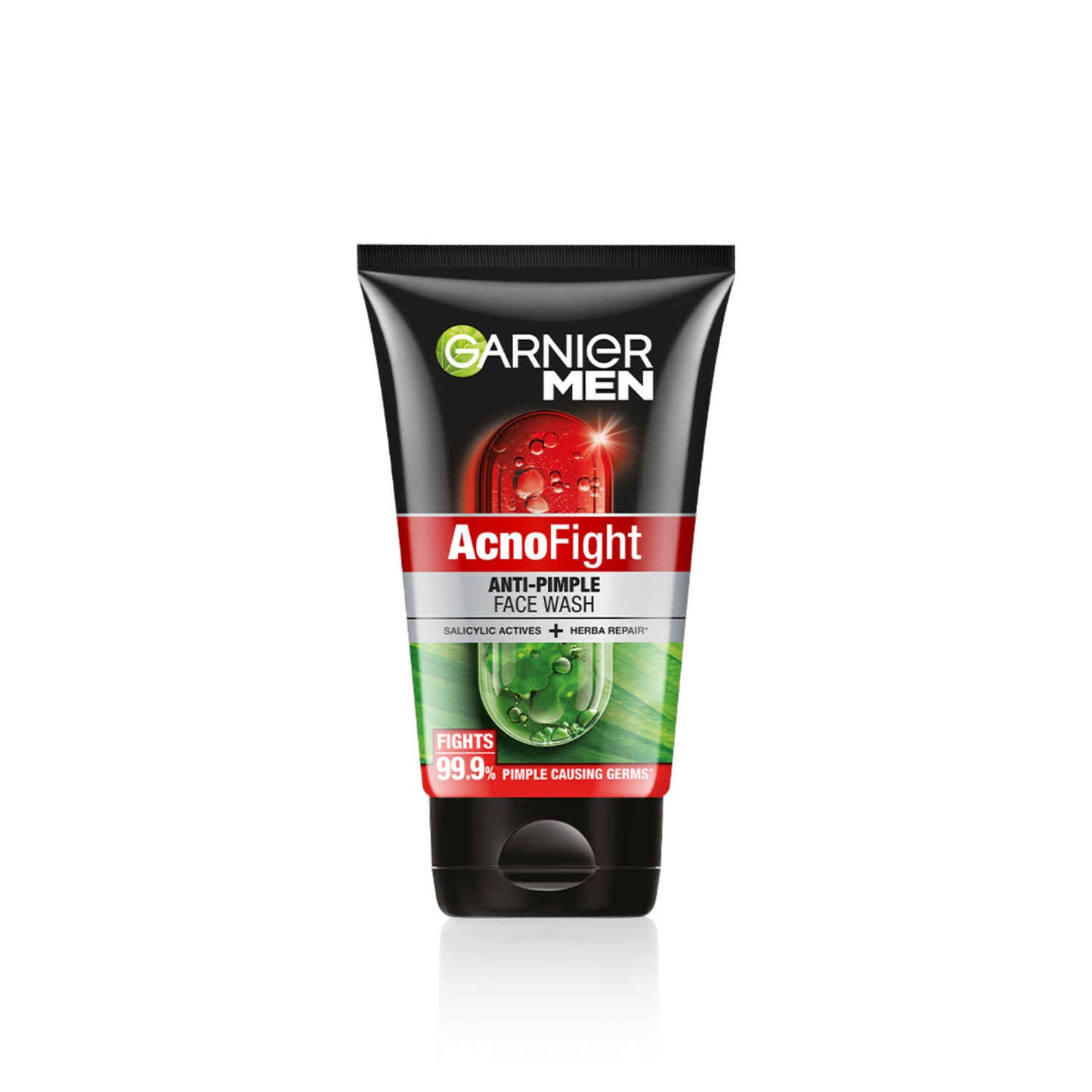
Garnier Men, Anti-Pimple Face Wash, Repairs Skin & Balances Oils, AcnoFight, 100 gm

Garnier Men, Anti-Pimple Face Wash, Repairs Skin & Balances Oils, AcnoFight, 100 gm
Garnier
garnier-men-anti-pimple-face-wash-repairs-skin-balances-oils-acnofight-100-gm
Cleanse
10085040029989
Morning or Evening?
How often will you use this product?
Notes


Highlights
WHAT IS IT?
Face Wash, ingredient count unknown
FEATURES
Deep cleansing, eliminates impurities, fights acne-causing bacteria, controls oiliness, restores moisture, offers all-day moisturization, suitable for sensitive skin, enriched with salicylic acid
BEST FOR
sensitive
CHECKS
No parabens, sulfates, or harmful chemicals mentioned specifically
Who Is It For?
Men No Specific Age Range MentionedWhat Does It Help With?
Pimples Acne-causing Bacteria Oily Skin Skin SoothingBudget
Affordable (under $30)How To Use
Which routine should it be used in?
Instructions:
Key Information


What Garnier Says
Product Description:
The Garnier Men Acno Fight Anti-Pimple Face Wash 100g is formulated with a deep cleanse to eliminate impurities, pore-clogging dirt and oiliness. It contains active ingredients that fight acne-causing bacteria and helps keep oiliness in check. This gel-based face wash formula restores moisture and offers all-day moisturization. Suitable for men with excessive pimples and for all skin types including sensitive skin. It combats germs causing pimples and soothes skin, leaving it healthier and soothed. Enriched with natural ingredients such as salicylic acids which dry out pimples.
About the Brand:
Ingredients Overview
Ingredients List
AQUA / WATER, GLYCERIN, MYRISTIC ACID, PALMITIC ACID, STEARIC ACID, POTASSIUM HYDROXIDE, LAURIC ACID, GLYCERYL DISTEARATE, GLYCERYL STEARATE, PARFUM / FRAGRANCE, KAOLIN, PEG-14M, CI 42090 / BLUE 1, CI 74160 / PIGMENT BLUE 15, PARAFFINUM LIQUIDUM / MINERAL OIL, SORBITOL, VACCINIUM MYRTILLUS FRUIT EXTRACT, PUMICE, SALICYLIC ACID, PERLITE, PHENOXYETHANOL, PROPYLENE GLYCOL, TETRASODIUM EDTA, CITRUS LIMON FRUIT EXTRACT / LEMON FRUIT EXTRACT, MENTHOL, ETHYLCELLULOSE
Key Ingredients
salicylic acid
Ingredients Details
Ethylcellulose
Common Name(s): Ec,ethocel,cellulose ethyl ether
CAS Number: 9004-57-3
DESCRIPTION
What It Does: Provides water-resistant cellulose film for sustained film formation and active encapsulation.
Why It's Used: Water-resistant cellulose film former for long-lasting topical products and active ingredient microencapsulation.
How It Works: Ethyl substitution makes cellulose hydrophobic. dissolves in organic solvents for application, depositing water-resistant film on evaporation. thermoplastic character enables heat processing. used in controlled-release applications for gradual active delivery.
Typically Found In: Long-lasting products,active encapsulation,film-coating applications
TECHNICAL DETAILS
Primary Category: Functional ingredient – cellulose film former
Secondary Functions: Skin conditioning
Application Areas:

Facial Skincare

Body Care
Hair Care
Beard Care
Color Cosmetics (Makeup)
Dietary/Oral Supplements
Typical Concentration Range: 0.1%–10%
SOURCING & ETHICS
Vegan Status: Yes – from cellulose (plant)
Halal Status: Yes
Source Notes: Commercially produced for cosmetic use. verify vegan/halal status with supplier.
SKIN COMPATIBILITY
Irritancy Rating: 1/5 – very low
Comedogenicity Rating: 0/5 – non-comedogenic
Sensitivity Concerns: Well-tolerated by most skin types.
Safe for Sensitive Skin: Yes
SAFETY & COMPATIBILITY
Safety Profile: Good safety profile at recommended concentrations. ewg score: 1–2.
Works Well With: Standard skincare actives
Avoid Combining With: No known significant incompatibilities
SCIENTIFIC NOTE
Ethylcellulose's hydrophobic character (ethyl groups replacing hydroxyl groups) is in complete contrast to its parent cellulose (highly water-soluble hec or cmc). this inversion from hydrophilic to hydrophobic demonstrates that cellulose ether chemistry can produce nearly any desired polarity by choosing the substituting group – providing a family of cellulose derivatives spanning from highly hydrophilic (cmc) to highly hydrophobic (ethylcellulose).
Last Verified: Cosing database,dow ethocel technical data,cir safety assessment
Primary Sources: 2026-03-12
Glycerin
Common Name(s): Glycerol,glycerine,1,2,3-propanetriol
CAS Number: 56-81-5
DESCRIPTION
What It Does: Glycerin pulls water from the environment and deeper skin layers into the outer skin layer (epidermis), boosting moisture levels and keeping skin soft, smooth, and plump.
Why It's Used: It is used in virtually every moisturizer, serum, and cleanser because it is highly effective at hydrating skin, is well-tolerated by all skin types, and enhances the texture and spreadability of formulations.
How It Works: As a humectant, glycerin forms hydrogen bonds with water molecules, trapping them in the skin. it also reinforces the skin barrier by integrating into lipid structures between skin cells.
Typically Found In: Moisturizers,serums,cleansers,toners,sheet masks,sunscreens,body lotions,shampoos,conditioners
TECHNICAL DETAILS
Primary Category: Humectant
Secondary Functions: Skin barrier support,emollient,solvent
Application Areas:
Facial Skincare
Body Care
Hair Care
Beard Care
Color Cosmetics (Makeup)
Dietary/Oral Supplements
Typical Concentration Range: 1%–30% (typical: 3–10%)
SOURCING & ETHICS
Vegan Status: Yes – plant-derived (coconut, soy, palm) or synthetic
Halal Status: Yes – when plant-derived or synthetic; verify source with supplier
Source Notes: Derived from plant oils via hydrolysis or saponification; synthetic versions also available. palm-derived glycerin carries sustainability concerns.
SKIN COMPATIBILITY
Irritancy Rating: 1/5 – very low; non-irritating at all standard concentrations
Comedogenicity Rating: 0/5 – non-comedogenic
Sensitivity Concerns: Extremely rare allergic reactions; generally safe for all skin types including sensitive and baby skin
Safe for Sensitive Skin: Yes
SAFETY & COMPATIBILITY
Safety Profile: Widely recognized as safe. ewg hazard score: 1. no significant concerns for irritation, sensitization, or toxicity at typical concentrations (up to 50%).
Works Well With: Hyaluronic acid,ceramides,niacinamide,panthenol,urea,peptides,retinol,ahas/bhas
Avoid Combining With: No known incompatibilities at standard concentrations
SCIENTIFIC NOTE
Glycerin is an endogenous skin component found naturally in the stratum corneum. aquaporin-3 channels in keratinocytes facilitate glycerin transport, making it integral to natural skin hydration pathways.
Last Verified: Cosing database,cir safety assessment,ewg skin deep,inci decoder
Primary Sources: 2026-03-12
Glyceryl Distearate
Common Name(s): Glyceryl distearate,cosmetic active,functional ingredient
CAS Number: N/a
DESCRIPTION
What It Does: Delivers characteristic cosmetic function at recommended use concentration.
Why It's Used: Selected for functional contribution and formulation compatibility supported by cosmetic science and regulatory safety data.
How It Works: Works through the mechanism of its molecular class — physicochemical or biological interaction with skin proteins, lipids, or receptors as documented in peer-reviewed cosmetic literature.
Typically Found In: Skin care formulations
TECHNICAL DETAILS
Primary Category: Active ingredient – cosmetic active
Secondary Functions: Skin conditioning
Application Areas:
Facial Skincare
Body Care
Hair Care
Beard Care
Color Cosmetics (Makeup)
Dietary/Oral Supplements
Typical Concentration Range: 0.1%–10%
SOURCING & ETHICS
Vegan Status: Conditional
Halal Status: Yes
Source Notes: Commercially produced for cosmetic use. verify vegan/halal status with supplier.
SKIN COMPATIBILITY
Irritancy Rating: 1/5 – very low
Comedogenicity Rating: 0/5 – non-comedogenic
Sensitivity Concerns: Well-tolerated by most skin types.
Safe for Sensitive Skin: Yes
SAFETY & COMPATIBILITY
Safety Profile: Good safety profile at recommended concentrations. ewg score: 1–2.
Works Well With: Standard skincare actives
Avoid Combining With: No known significant incompatibilities
SCIENTIFIC NOTE
Glyceryl distearate has an established safety and efficacy profile within the cosmetic regulatory framework at standard use concentrations.
Last Verified: Cosing database,glyceryl distearate technical literature
Primary Sources: 2026-03-12
Glyceryl Stearate
Common Name(s): Glycerol monostearate,gms,glycerin monostearate
CAS Number: 31566-31-1
DESCRIPTION
What It Does: Provides o/w emulsification with emolliency and skin feel improvement from a natural glycerol ester.
Why It's Used: Standard cosmetic monoglyceride emulsifier – widely used for o/w cream formation with clean, natural-origin credentials and good sensory profile.
How It Works: Monoglyceride structure (one fatty acid + glycerol) provides amphiphilic hlb ~3-4 for o/w emulsification when combined with higher hlb co-emulsifiers. forms alpha-gel lamellar structure with water for emulsion stabilization. direct skin conditioning via fatty acid film.
Typically Found In: Creams,lotions,moisturizers – standard in o/w emulsions
TECHNICAL DETAILS
Primary Category: Functional ingredient – monoglyceride emulsifier
Secondary Functions: Barrier sealing,softening
Application Areas:
Facial Skincare
Body Care
Hair Care
Beard Care
Color Cosmetics (Makeup)
Dietary/Oral Supplements
Typical Concentration Range: 1%–10%
SOURCING & ETHICS
Vegan Status: Yes – from vegetable glycerol and stearic acid
Halal Status: Yes
Source Notes: Plant-derived, synthetic or animal-derived. verify source.
SKIN COMPATIBILITY
Irritancy Rating: 1/5 – very low
Comedogenicity Rating: 1/5 – low; formulation-dependent
Sensitivity Concerns: Non-irritating.
Safe for Sensitive Skin: Yes
SAFETY & COMPATIBILITY
Safety Profile: Excellent safety profile. ewg score: 1.
Works Well With: Humectants,ceramides,actives as carrier
Avoid Combining With: No significant incompatibilities
SCIENTIFIC NOTE
Glyceryl stearate's alpha-gel lamellar phase formation (distinguishable by x-ray crystallography from beta crystalline phase) provides superior emulsion stability compared to its beta crystalline form. the alpha-gel phase creates a viscoelastic network that resists droplet coalescence – the fundamental mechanism behind gms's long use as a reliable primary emulsifier.
Last Verified: Cosing database,cir safety assessment
Primary Sources: 2026-03-12
