

Fre
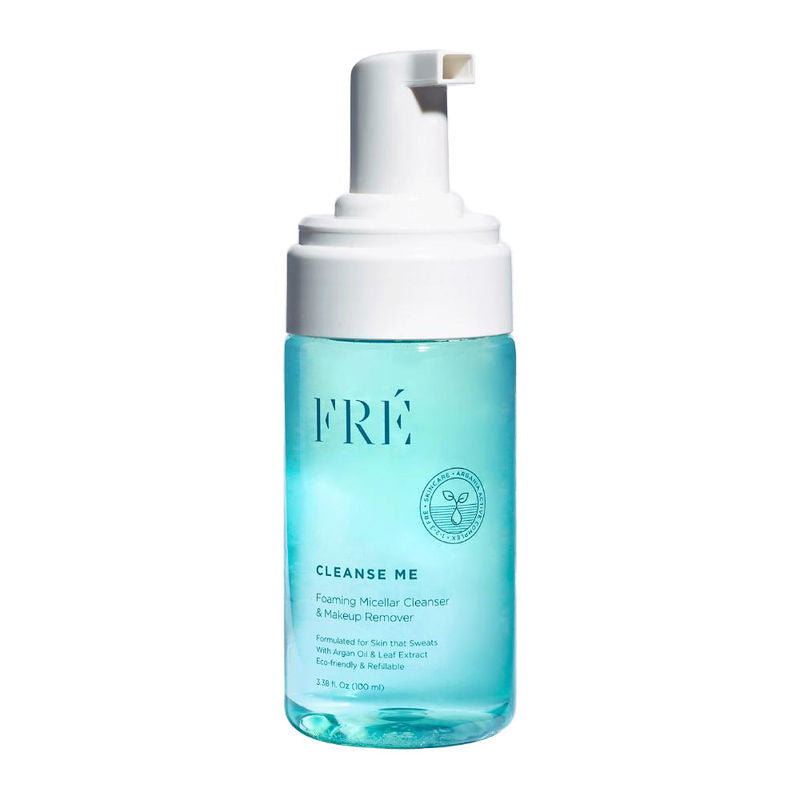
Fre Cleanse Me Foaming Micellar Cleanser & Makeup Remover

Fre Cleanse Me Foaming Micellar Cleanser & Makeup Remover
Fre
fre-cleanse-me-foaming-micellar-cleanser-makeup-remover
Cleanse
10084788666661
Morning or Evening?
How often will you use this product?
Notes


Highlights
WHAT IS IT?
Foaming micellar cleanser, 26 ingredients
FEATURES
Removes makeup, dirt and impurities from skin, Restores skin’s natural barrier, Delicate calming natural aroma of rose
BEST FOR
sensitive
CHECKS
Does not contain sulfates, parabens, silicones
Who Is It For?
All Genders No Specific Age Range StatedWhat Does It Help With?
Makeup Removal Cleansing Impurities Restoring Skin BarrierBudget
Premium ($76-$150)How To Use
Which routine should it be used in?
Instructions:
Key Information


What Fre Says
Product Description:
This breakthrough multipurpose formula is a facial cleanser and makeup remover that transforms from micellar water into a light and fluffy foam for use. It removes dirt, makeup, and impurities from your skin. Deeply cleanse while enjoying the delicate, calming natural aroma of rose. Features: Removes makeup, dirt and impurities from your skin, Restores skin’s natural barrier using powerful clean ingredients.
About the Brand:
Ingredients Overview
Ingredients List
water,-aqua,-eau,decyl-glucoside,glycerin,sodium-lauroyl-sarcosinate,sodium-coceth-sulfate,heptyl-glucoside,argania-spinosa-leaf-extract,argania-spinosa-kernel-oil,betaine,sorbitol,sodium-pca,disodium-cocoyl-glutamate,levulinic-acid,proline,threonine,arginine,lysine,alanine,glutamic-acid,glycine,serine,p-anisic-acid,sodium-cocoyl-glutamate,saccharide-isomerate,xanthan-gum,hyaluronic-acid,rosa-damascena-flower-oil,cananga-odorata-flower-oil,azulene
Key Ingredients
Argania Spinosa Leaf Extract, Argania Spinosa Kernel Oil, Hyaluronic Acid, Rosa Damascena Flower Oil, Cananga Odorata Flower Oil
Ingredients Details
Alanine
Common Name(s): L-alanine,2-aminopropanoic acid
CAS Number: 56-41-7
DESCRIPTION
What It Does: Provides nmf-type humectant moisture retention and skin conditioning.
Why It's Used: Simple, well-tolerated nmf amino acid humectant for skin conditioning formulations.
How It Works: Small methyl side chain contributes to protein hydrophobic core but as free amino acid provides direct humectant activity via amino and carboxyl groups. converted to pyruvate for cellular atp production via gluconeogenesis.
Typically Found In: Nmf moisturizers,skin conditioning products
TECHNICAL DETAILS
Primary Category: Active ingredient – amino acid
Secondary Functions: Nmf component,cellular energy
Application Areas:

Facial Skincare

Body Care
Hair Care
Beard Care
Color Cosmetics (Makeup)
Dietary/Oral Supplements
Typical Concentration Range: 0.5%–5%
SOURCING & ETHICS
Vegan Status: Conditional - feedstock declaration required
Halal Status: Unverified - feedstock declaration required (plant, animal and petrochemical routes all exist)
Source Notes: Fermentation-derived or synthetic. natural skin component. [audit 2026-07-29 rev2: origin-dependent: the same inci exists in plant, animal and petrochemical versions and the name does not discriminate. determination requires shariah-panel sign-off.]
SKIN COMPATIBILITY
Irritancy Rating: 1/5 – very low
Comedogenicity Rating: 0/5 – non-comedogenic
Sensitivity Concerns: Non-irritating; endogenous skin molecule.
Safe for Sensitive Skin: Yes
SAFETY & COMPATIBILITY
Safety Profile: Excellent safety profile. natural skin nmf component. ewg score: 1.
Works Well With: Hyaluronic acid,ceramides,peptides,other amino acids
Avoid Combining With: No significant incompatibilities
SCIENTIFIC NOTE
Free alanine is among the most abundant amino acids in the stratum corneum nmf, where it contributes to the aqueous phase hydration that keeps the stratum corneum flexible and functional.
Last Verified: 2026-03-12
Primary Sources: Cosing database,cir safety assessment
Arginine
Common Name(s): L-arginine,2-amino-5-guanidinopentanoic acid
CAS Number: 74-79-3
DESCRIPTION
What It Does: Conditions skin, attracts moisture, supports wound healing, and improves microcirculation via no synthesis.
Why It's Used: Multi-functional amino acid for skin hydration, conditioning, and wound healing in peptide and nmf formulations.
How It Works: Guanidinium group binds water (humectant). substrate for nitric oxide synthase (enos) producing nitric oxide that vasodilates capillaries improving skin nutrition. stimulates fibroblast proliferation for wound healing.
Typically Found In: Anti-aging serums,wound healing products,nmf moisturizers,scalp treatments
TECHNICAL DETAILS
Primary Category: Active ingredient – amino acid
Secondary Functions: Wound healing,microcirculation,nmf component
Application Areas:
Facial Skincare
Body Care
Hair Care
Beard Care
Color Cosmetics (Makeup)
Dietary/Oral Supplements
Typical Concentration Range: 0.5%–5%
SOURCING & ETHICS
Vegan Status: Conditional - feedstock declaration required
Halal Status: Unverified - feedstock declaration required (plant, animal and petrochemical routes all exist)
Source Notes: Fermentation-derived or synthetic. natural skin component. [audit 2026-07-29 rev2: origin-dependent: the same inci exists in plant, animal and petrochemical versions and the name does not discriminate. determination requires shariah-panel sign-off.]
SKIN COMPATIBILITY
Irritancy Rating: 1/5 – very low
Comedogenicity Rating: 0/5 – non-comedogenic
Sensitivity Concerns: Non-irritating; endogenous skin molecule.
Safe for Sensitive Skin: Yes
SAFETY & COMPATIBILITY
Safety Profile: Excellent safety profile. natural skin nmf component. ewg score: 1.
Works Well With: Hyaluronic acid,ceramides,peptides,other amino acids
Avoid Combining With: No significant incompatibilities
SCIENTIFIC NOTE
Arginine is a conditionally essential amino acid in wound healing where local demand exceeds synthesis capacity. topical arginine provides the nos substrate locally for no-mediated vasodilation and immune cell function in healing tissue.
Last Verified: 2026-03-12
Primary Sources: Cosing database,cir safety assessment,witte & barbul arginine wound healing review
Azulene
Common Name(s): Azulene,chamomile sesquiterpene,anti-inflammatory blue chromophore
CAS Number: N/a
DESCRIPTION
What It Does: Reduces skin inflammation and redness through nf-kb and cox-2 inhibition, provides potent antioxidant activity from the electron-rich azulene aromatic system, and delivers the visible confirmation of authentic german chamomile activity through its characteristic intense blue colour.
Why It's Used: The visible blue colour of azulene provides formulation differentiation and consumer assurance of authentic chamomile chemistry — a rare case where an anti-inflammatory active provides its own visible quality indicator.
How It Works: Azulene's non-benzenoid 5-7 fused ring system has higher electron density than benzene rings, providing excellent single-electron donation to free radicals. nf-kb inhibition occurs through azulene's electrophilic interaction with ikb kinase cysteine residues; cox-2 inhibition through intercalation at the enzyme active site hydrophobic channel.
Typically Found In: Anti-inflammatory soothing,chamomile products
TECHNICAL DETAILS
Primary Category: Active ingredient – antioxidant
Secondary Functions: Free radical scavenging,anti-aging
Application Areas:
Facial Skincare
Body Care
Hair Care
Beard Care
Color Cosmetics (Makeup)
Dietary/Oral Supplements
Typical Concentration Range: 0.01%–1%
SOURCING & ETHICS
Vegan Status: Conditional - supplier confirmation required
Halal Status: Unverified - supplier confirmation required
Source Notes: Plant-derived extract or synthetic. [audit 2026-07-29 rev2: status downgraded on audit. determination requires shariah-panel sign-off.]
SKIN COMPATIBILITY
Irritancy Rating: 1/5 – very low
Comedogenicity Rating: 0/5 – non-comedogenic
Sensitivity Concerns: Non-irritating; well-tolerated.
Safe for Sensitive Skin: Yes
SAFETY & COMPATIBILITY
Safety Profile: Excellent safety profile. ewg score: 1.
Works Well With: Vitamin c,vitamin e,ferulic acid,spf,other antioxidants
Avoid Combining With: No significant incompatibilities
SCIENTIFIC NOTE
Azulene is a thermal rearrangement product of matricine and chamazulene precursors during steam distillation of chamomile — not present in the fresh plant but formed during essential oil production. the intensity of blue colour indicates distillation temperature and duration, providing a quality indicator for chamomile oil processing conditions.
Last Verified: 2026-03-12
Primary Sources: Cosing database,azulene chamomile anti-inflammatory blue sesquiterpene review
Betaine
Common Name(s): Trimethylglycine,tmg,natural betaine
CAS Number: 107-43-7
DESCRIPTION
What It Does: Provides osmoprotective humectant conditioning with anti-irritant and mild foam-boosting activity.
Why It's Used: Natural-origin multifunctional osmolyte from sugar beet providing hydration, anti-irritancy, and conditioning in virtually every cosmetic category.
How It Works: Quaternary ammonium betaine provides zwitterionic character for water binding via ionic hydration. osmoprotective function at 100–500mm as compatible solute protecting cells from osmotic stress. reduces surfactant irritation by competing with sls for protein binding sites. mild foam enhancement.
Typically Found In: Virtually all categories — moisturisers, shampoos, cleansers
TECHNICAL DETAILS
Primary Category: Functional ingredient – humectant
Secondary Functions: Tewl reduction,skin plumping
Application Areas:
Facial Skincare
Body Care
Hair Care
Beard Care
Color Cosmetics (Makeup)
Dietary/Oral Supplements
Typical Concentration Range: 0.5%–10%
SOURCING & ETHICS
Vegan Status: Conditional - feedstock declaration required
Halal Status: Unverified - feedstock declaration required (plant, animal and petrochemical routes all exist)
Source Notes: Synthetic or naturally derived. excellent aqueous solubility. [audit 2026-07-29 rev2: origin-dependent: the same inci exists in plant, animal and petrochemical versions and the name does not discriminate. determination requires shariah-panel sign-off.]
SKIN COMPATIBILITY
Irritancy Rating: 1/5 – very low
Comedogenicity Rating: 0/5 – non-comedogenic
Sensitivity Concerns: Non-irritating; suitable for all skin types.
Safe for Sensitive Skin: Yes
SAFETY & COMPATIBILITY
Safety Profile: Excellent safety profile. ewg score: 1.
Works Well With: Ceramides,emollients,occlusives,glycerin,hyaluronic acid
Avoid Combining With: No significant incompatibilities
SCIENTIFIC NOTE
Betaine's anti-irritant mechanism for surfactant systems involves competitive protein protection: betaine at high concentrations preferentially interacts with skin proteins, occupying binding sites that would otherwise be occupied by surfactant molecules causing protein denaturation. this competition reduces available protein binding for irritating surfactants, explaining betaine's well-documented ability to reduce sls irritation when co-formulated.
Last Verified: 2026-03-12
Primary Sources: Cosing database,craig betaine osmoprotective review,cir safety assessment