

Nykaa E retail limited
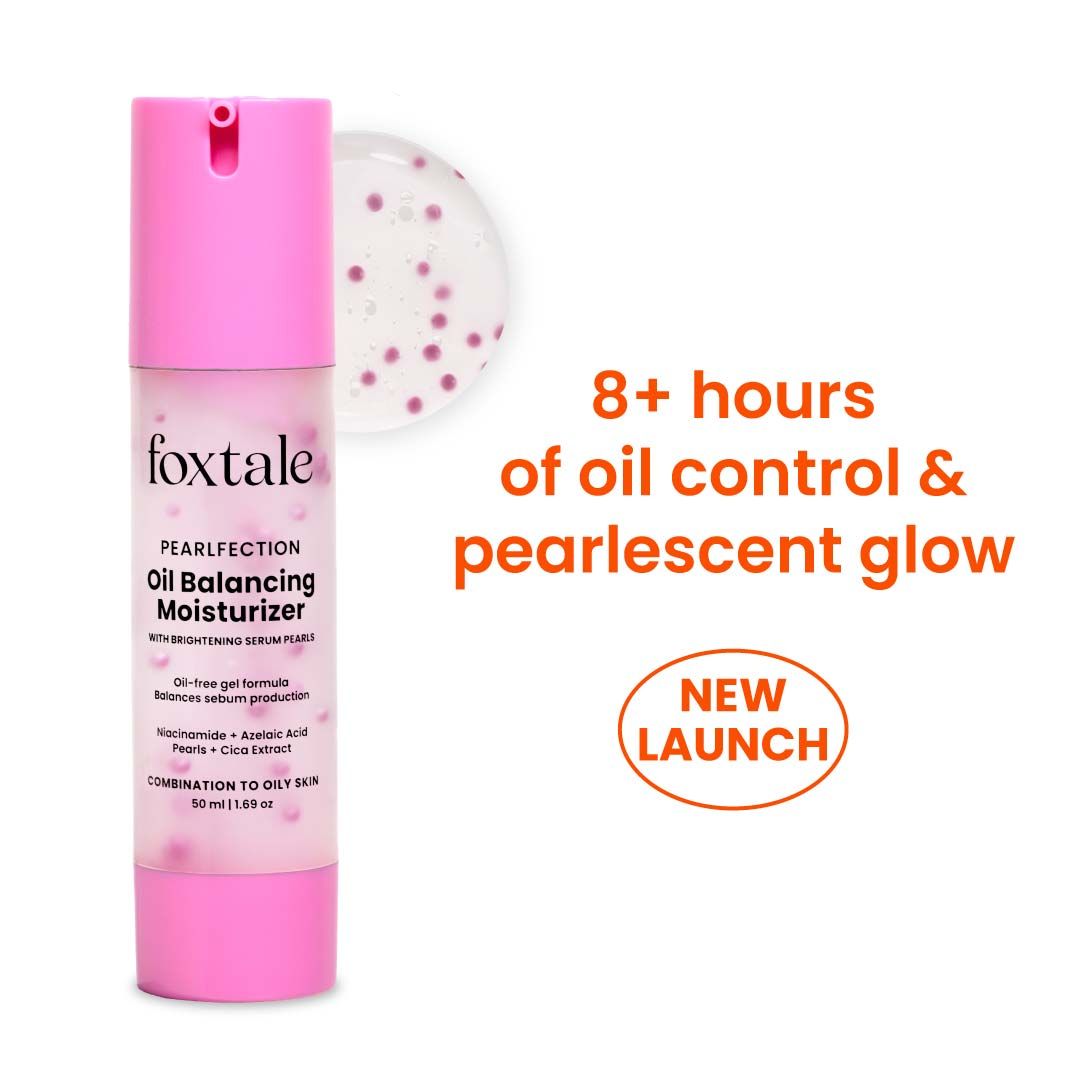
Foxtale Oil Balancing Moisturizer Azelaic Acid & Niacinamide

Foxtale Oil Balancing Moisturizer Azelaic Acid & Niacinamide
Nykaa E retail limited
foxtale-oil-balancing-moisturizer-azelaic-acid-niacinamide
Moisturize
10084728242469
Morning or Evening?
How often will you use this product?
Notes


Highlights
WHAT IS IT?
Oil Balancing Moisturizer with Azelaic Acid & Niacinamide, 50ML
FEATURES
BEST FOR
oily
CHECKS
Who Is It For?
What Does It Help With?
Oil BalanceBudget
Affordable (under $30)How To Use
Which routine should it be used in?
Instructions:
Key Information


About the Brand:
Ingredients Overview
Ingredients List
Aqua, Glycerin, Dimethicone, Propanediol, Niacinamide, Glyceryl Glucoside, Propylene Glycol, Dicaprylyl Carbonate, Centella asiatica Extract, Betaine, Phenoxyethanol, Capryloyl Glycine, Azelaic Acid, Allantoin, Cyclopentasiloxane, Ammonium Acryloyldimethyltaurate/VP Copolymer, Carbomer, Ethylhexylglycerin, Calcium Alginate, Xanthan Gum, Agar, Mica, 1,2-Hexanediol, Hydroxyacetophenone, Sodium Hydroxide, Disodium EDTA, Allergen free fragrance, CI 77891, CI 12490, CI 74160
Key Ingredients
azelaic acid, niacinamide
Ingredients Details
1-2-hexanediol
Common Name(s): 1-2-hexanediol,cosmetic active,functional ingredient
CAS Number: N/a
DESCRIPTION
What It Does: Delivers characteristic cosmetic function at recommended use concentration.
Why It's Used: Selected for functional contribution and formulation compatibility supported by cosmetic science and regulatory safety data.
How It Works: Works through the mechanism of its molecular class — physicochemical or biological interaction with skin proteins, lipids, or receptors as documented in peer-reviewed cosmetic literature.
Typically Found In: Skin care formulations
TECHNICAL DETAILS
Primary Category: Active ingredient – cosmetic active
Secondary Functions: Skin conditioning
Application Areas:

Facial Skincare

Body Care
Hair Care
Beard Care
Color Cosmetics (Makeup)
Dietary/Oral Supplements
Typical Concentration Range: 0.1%–10%
SOURCING & ETHICS
Vegan Status: Conditional
Halal Status: Yes
Source Notes: Commercially produced for cosmetic use. verify vegan/halal status with supplier.
SKIN COMPATIBILITY
Irritancy Rating: 1/5 – very low
Comedogenicity Rating: 0/5 – non-comedogenic
Sensitivity Concerns: Well-tolerated by most skin types.
Safe for Sensitive Skin: Yes
SAFETY & COMPATIBILITY
Safety Profile: Good safety profile at recommended concentrations. ewg score: 1–2.
Works Well With: Standard skincare actives
Avoid Combining With: No known significant incompatibilities
SCIENTIFIC NOTE
1-2-hexanediol has an established safety and efficacy profile within the cosmetic regulatory framework at standard use concentrations.
Last Verified: Cosing database,1-2-hexanediol technical literature
Primary Sources: 2026-03-12
Agar
Common Name(s): Agar-agar,agarose,gelidium amansii extract
CAS Number: 9002-18-0
DESCRIPTION
What It Does: Provides firm, thermally reversible marine-derived gels from natural seaweed polysaccharide.
Why It's Used: Natural seaweed gellant for clean beauty formulations requiring firm, stiff gel textures with authentic marine provenance.
How It Works: Agarose chains form double helix junction zones that aggregate into bundles forming a rigid gel network below 38°c. melts at 85°c but re-gels at 38°c – this 47°c hysteresis window means agar gels remain solid at skin contact (33°c) but dissolve cleanly in hot water for rinse-off products.
Typically Found In: Sheet masks,gel cleansers,firm gel products
TECHNICAL DETAILS
Primary Category: Functional ingredient – seaweed gellant
Secondary Functions: Tewl reduction,skin plumping
Application Areas:
Facial Skincare
Body Care
Hair Care
Beard Care
Color Cosmetics (Makeup)
Dietary/Oral Supplements
Typical Concentration Range: 0.5%–3%
SOURCING & ETHICS
Vegan Status: Yes – from red seaweed
Halal Status: Yes
Source Notes: Synthetic or naturally derived. excellent aqueous solubility.
SKIN COMPATIBILITY
Irritancy Rating: 1/5 – very low
Comedogenicity Rating: 0/5 – non-comedogenic
Sensitivity Concerns: Non-irritating; suitable for all skin types.
Safe for Sensitive Skin: Yes
SAFETY & COMPATIBILITY
Safety Profile: Excellent safety profile. ewg score: 1.
Works Well With: Ceramides,emollients,occlusives,glycerin,hyaluronic acid
Avoid Combining With: No significant incompatibilities
SCIENTIFIC NOTE
Agar's thermal hysteresis (melts 85°c, sets 38°c) is unique among natural gellants. this hysteresis arises from the different temperatures required for helix-coil disruption (melting) vs helix formation (setting) in the agarose chains. the practical consequence – a gel that can be sterilized at 121°c yet remains stable at skin temperature (33°c) – makes agar uniquely useful for thermally stable cosmetic gels.
Last Verified: Cosing database,cir safety assessment,fda gras
Primary Sources: 2026-03-12
Allantoin
Common Name(s): 5-ureidohydantoin,glyoxyldiureide,aluminum dihydroxy allantoinate
CAS Number: 97-59-6
DESCRIPTION
What It Does: Soothes irritation, accelerates wound healing, promotes skin cell renewal, and provides mild keratolytic exfoliation.
Why It's Used: Gold standard multi-function soothing active – one of the most widely used cosmetic ingredients across all product types for its exceptional tolerability and clinically proven multi-action skin conditioning.
How It Works: Promotes keratinocyte proliferation and fibroblast migration for wound healing. mild keratolytic activity by disrupting corneocyte binding. anti-irritant via direct protein binding and anti-inflammatory cytokine reduction. humectant activity via hydroxyl groups.
Typically Found In: Post-procedure products,sensitive skin formulas,wound care,anti-acne treatments,baby products
TECHNICAL DETAILS
Primary Category: Active ingredient – soothing / anti-inflammatory
Secondary Functions: Wound healing,keratolytic,anti-irritant
Application Areas:
Facial Skincare
Body Care
Hair Care
Beard Care
Color Cosmetics (Makeup)
Dietary/Oral Supplements
Typical Concentration Range: 0.1%–2%
SOURCING & ETHICS
Vegan Status: Yes – synthetic or comfrey-derived
Halal Status: Yes
Source Notes: Plant-derived extract or synthetic.
SKIN COMPATIBILITY
Irritancy Rating: 1/5 – very low
Comedogenicity Rating: 0/5 – non-comedogenic
Sensitivity Concerns: Exceptionally well-tolerated; suitable for all skin types including baby and compromised skin.
Safe for Sensitive Skin: Yes – particularly recommended for sensitive skin
SAFETY & COMPATIBILITY
Safety Profile: Excellent safety profile. ewg score: 1.
Works Well With: Ceramides,panthenol,allantoin,hyaluronic acid,centella asiatica
Avoid Combining With: No significant incompatibilities
SCIENTIFIC NOTE
Allantoin's keratinocyte proliferation stimulation occurs via receptor-mediated signaling (possibly machr activation) rather than non-specific irritation-driven proliferation, making it a true wound-healing stimulant rather than a pro-inflammatory proliferative signal.
Last Verified: Cosing database,cir safety assessment,araújo et al. allantoin review
Primary Sources: 2026-03-12
Ammonium Acryloyldimethyltaurate/vp Copolymer
Common Name(s): Ammonium acryloyldimethyltaurate/vp copolymer
DESCRIPTION
What It Does: Delivers targeted skin-conditioning or bioactive benefits through a specific mechanism of action suited to the formulation's intended purpose.
Why It's Used: Specialty actives address specific skin concerns through targeted molecular mechanisms, providing efficacy beyond what base formulation ingredients alone can achieve.
How It Works: The bioactive compound interacts with specific molecular targets in skin cells or the extracellular matrix — enzymes, receptors, structural proteins, or signaling molecules — triggering beneficial biological responses.
Typically Found In: Serums,treatments,moisturizers,specialty products
TECHNICAL DETAILS
Primary Category: Specialty actives
Secondary Functions: Skin-conditioning,anti-aging
Application Areas:
Facial Skincare
Body Care
Hair Care
Beard Care
Color Cosmetics (Makeup)
Dietary/Oral Supplements
Typical Concentration Range: 0.01–5%
SOURCING & ETHICS
Vegan Status: Yes
Halal Status: Yes
Source Notes: Specialty active ingredient; check individual sourcing for vegan status.
SKIN COMPATIBILITY
Irritancy Rating: 1
Comedogenicity Rating: 0
Sensitivity Concerns: Low sensitization potential at recommended use concentrations.
Safe for Sensitive Skin: Yes
SAFETY & COMPATIBILITY
Safety Profile: Well-characterized cosmetic ingredient with established safety profile. generally non-irritating at typical use concentrations. suitable for leave-on and rinse-off cosmetics.
Works Well With: Niacinamide,hyaluronic acid,vitamin c,peptides
Avoid Combining With: Incompatible with oxidizing agents; check ph stability
SCIENTIFIC NOTE
Specialty actives typically work through enzyme inhibition (e.g., tyrosinase inhibition for brightening, mmp inhibition for anti-aging), receptor activation (e.g., retinoid receptors, ppar-γ for barrier genes), or transcription factor modulation (e.g., nrf2 for antioxidant gene upregulation). structure-activity relationships determine potency and selectivity.
Last Verified: Cosing eu database; pcpc cosmetic ingredient safety reviews; ingredient-specific safety and efficacy literature
Primary Sources: 2025-01-15
