

Nykaa E retail limited
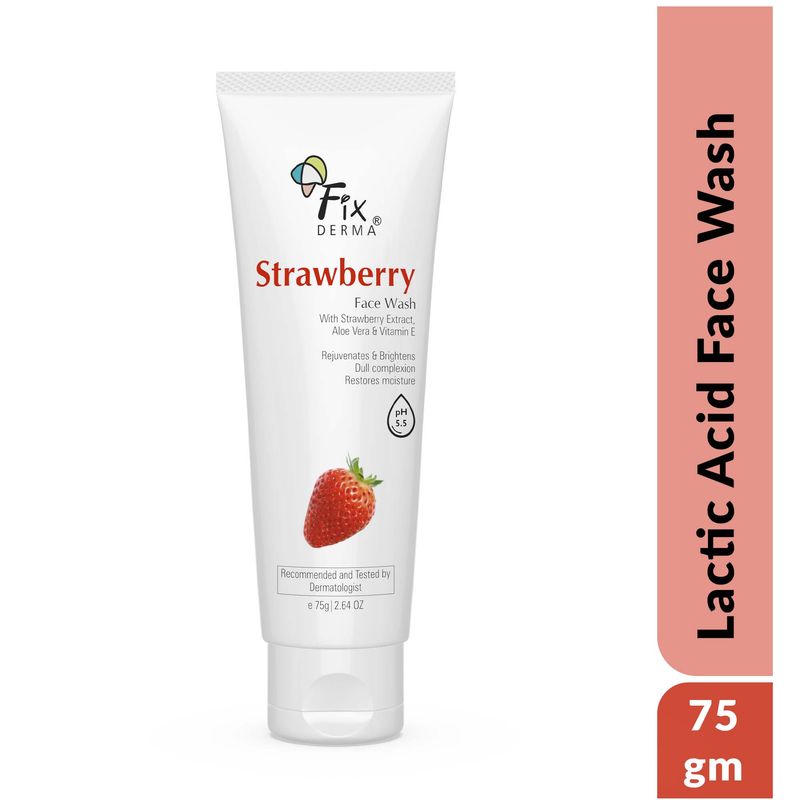
Fixderma Strawberry Face Wash

Fixderma Strawberry Face Wash
Nykaa E retail limited
fixderma-strawberry-face-wash
Cleanse
10085500158245
Morning or Evening?
How often will you use this product?
Notes


Highlights
WHAT IS IT?
Face wash with 4 key ingredients
FEATURES
Gentle cleansing for daily use, enriched with strawberry extract, glycolic acid, and lactic acid, cleanses and tightens pores, improves skin tone, hydrates and nourishes skin, ideal for normal to dry skin, suitable for all skin types, free of parabens, vegan and cruelty-free.
BEST FOR
normal
CHECKS
Parabens
Who Is It For?
All Genders Age Range Not SpecifiedWhat Does It Help With?
Improves Skin Texture Rejuvenates Skin Clears Clogged Pores Controls Excess Oil Reduces Inflammation Glowing ComplexionBudget
Affordable (under $30)How To Use
Which routine should it be used in?
Instructions:
Key Information


What Nykaa E retail limited Says
Product Description:
Fixderma Strawberry Face Wash, specially formulated for normal to dry skin, contains precious botanical extracts to give your skin a soft, silky, and glowing complexion. Improves skin texture, rejuvenates, and gives a clean and fresh look. This face wash helps not just with cleaning the face but also gives your skin a refreshing glow internally. It's completely non-toxic and non-comedogenic in nature, with reducing inflammation and cooling properties. It provides a protective layer on the skin, which helps retain moisture. It clears off the clogged pores and controls excess oil secretion; thus, it helps maintain the skin's complexion and makes it radiant and glowing. It has exfoliating agents, which help remove debris. Features: Gentle cleansing face wash for daily use, Enriched with strawberry extract, glycolic acid, and lactic acid, Cleanses and tighten the pores, Improves skin tone, Hydrates and nourishes the skin, Ideal for normal to dry skin, Suitable for all skin types, Free of parabens, Vegan and cruelty-free.
About the Brand:
Ingredients Overview
Ingredients List
strawberry-extract, lactic-acid, vitamin-e, aloe-vera
Key Ingredients
Strawberry Extract, Lactic Acid, Vitamin E, Aloe Vera
Ingredients Details
Aloe Vera
Common Name(s): Aloe vera juice,aloe vera gel,aloe barbadensis
CAS Number: 85507-69-3
DESCRIPTION
What It Does: Provides acemannan-based wound healing and comprehensive moisturising skin conditioning from the quintessential healing plant.
Why It's Used: The most universally recognised natural healing plant — aloe vera's acemannan polysaccharides, vitamins, and enzymes provide a comprehensive wound healing and soothing profile with thousands of years of documented use.
How It Works: Acemannan (poly-mannose) activates dectin-1 for wound healing immune stimulation. gibberellin promotes fibroblast growth. salicylic acid derivative provides anti-inflammatory. vitamins c and e provide antioxidant. glucomannan provides humectant.
Typically Found In: After-sun products,wound healing,moisturisers,virtually all skin care categories
TECHNICAL DETAILS
Primary Category: Active ingredient – aloe vera gel
Secondary Functions: Redness reduction,anti-inflammatory,calming
Application Areas:

Facial Skincare
Body Care

Hair Care
Beard Care
Color Cosmetics (Makeup)
Dietary/Oral Supplements
Typical Concentration Range: 0.5%–99%
SOURCING & ETHICS
Vegan Status: Yes – from aloe barbadensis leaf
Halal Status: Yes
Source Notes: Plant-derived extract or synthetic.
SKIN COMPATIBILITY
Irritancy Rating: 1/5 – very low
Comedogenicity Rating: 0/5 – non-comedogenic
Sensitivity Concerns: Non-irritating; ideal for reactive and sensitive skin.
Safe for Sensitive Skin: Yes – particularly recommended for sensitive skin
SAFETY & COMPATIBILITY
Safety Profile: Excellent safety profile. ewg score: 1.
Works Well With: Ceramides,panthenol,allantoin,hyaluronic acid,centella asiatica
Avoid Combining With: No significant incompatibilities
SCIENTIFIC NOTE
Aloe vera's clinical evidence for sunburn relief is among the best for any botanical wound healing ingredient. multiple rcts demonstrate that aloe vera gel reduces healing time of first and second degree burns and sunburns, attributed primarily to acemannan's immunomodulatory wound healing activity and the anti-inflammatory salicylate derivatives providing prostaglandin inhibition.
Last Verified: 2026-03-12
Primary Sources: Cosing database,surjushe et al. aloe vera skin review,cir safety assessment
Lactic Acid
Common Name(s): L-lactic acid,2-hydroxypropionic acid,milk acid
CAS Number: 50-21-5
DESCRIPTION
What It Does: Exfoliates dead skin cells, attracts and retains moisture, brightens skin tone, and improves texture.
Why It's Used: Dual exfoliant and humectant – uniquely hydrating vs other ahas. gentler and suitable for normal-to-sensitive skin.
How It Works: Disrupts desmosomes to promote exfoliation at low ph. acts as humectant. also stimulates ceramide synthesis at lower concentrations for barrier support.
Typically Found In: Chemical exfoliants,toners,serums,professional peels
TECHNICAL DETAILS
Primary Category: Active ingredient – alpha hydroxy acid (aha)
Secondary Functions: Humectant,brightening,barrier support,ceramide synthesis
Application Areas:
Facial Skincare
Body Care
Hair Care
Beard Care
Color Cosmetics (Makeup)
Dietary/Oral Supplements
Typical Concentration Range: 2%–10% (daily); 20%–90% (professional); active at ph ≤3.9
SOURCING & ETHICS
Vegan Status: Conditional - feedstock declaration required
Halal Status: Unverified - feedstock declaration required (plant, animal and petrochemical routes all exist)
Source Notes: Fermentation-derived from carbohydrates or synthetically produced. both l-form and dl-form used. [audit 2026-07-29 rev2: origin-dependent: the same inci exists in plant, animal and petrochemical versions and the name does not discriminate. determination requires shariah-panel sign-off.]
SKIN COMPATIBILITY
Irritancy Rating: 2/5 – low to moderate
Comedogenicity Rating: 0/5 – non-comedogenic
Sensitivity Concerns: Photosensitizing – spf required. better tolerated than glycolic acid for most skin types.
Safe for Sensitive Skin: Use with caution – spf required
SAFETY & COMPATIBILITY
Safety Profile: Safe at otc concentrations. eu: ≤10% leave-on at ph ≥3.5. mandatory spf advisory.
Works Well With: Niacinamide,ceramides,hyaluronic acid,spf
Avoid Combining With: Retinol in same step; multiple exfoliants simultaneously
SCIENTIFIC NOTE
Lactic acid's role as a natural moisturizing factor (nmf) component makes it uniquely hydrating among ahas. ceramide synthesis stimulation at 2% provides barrier benefits complementing exfoliating activity.
Last Verified: 2026-03-12
Primary Sources: Cosing database,stiller et al. lactic acid review,sccs aha opinion
Vitamin E
Common Name(s): Vitamin e,cosmetic active,functional ingredient
CAS Number: N/a
DESCRIPTION
What It Does: Delivers characteristic cosmetic function at recommended use concentration.
Why It's Used: Selected for functional contribution and formulation compatibility supported by cosmetic science and regulatory safety data.
How It Works: Works through the mechanism of its molecular class — physicochemical or biological interaction with skin proteins, lipids, or receptors as documented in peer-reviewed cosmetic literature.
Typically Found In: Skin care formulations
TECHNICAL DETAILS
Primary Category: Active ingredient – cosmetic active
Secondary Functions: Skin conditioning
Application Areas:
Facial Skincare
Body Care
Hair Care
Beard Care
Color Cosmetics (Makeup)
Dietary/Oral Supplements
Typical Concentration Range: 0.1%–10%
SOURCING & ETHICS
Vegan Status: Conditional - supplier confirmation required
Halal Status: Unverified - supplier confirmation required
Source Notes: Commercially produced for cosmetic use. verify vegan/halal status with supplier. [audit 2026-07-29 rev2: the record's own source_notes does not assert a non-animal origin, or instructs the reader to verify with the supplier; "yes" asserts knowledge the record does not hold. determination requires shariah-panel sign-off.]
SKIN COMPATIBILITY
Irritancy Rating: 1/5 – very low
Comedogenicity Rating: 0/5 – non-comedogenic
Sensitivity Concerns: Well-tolerated by most skin types.
Safe for Sensitive Skin: Yes
SAFETY & COMPATIBILITY
Safety Profile: Good safety profile at recommended concentrations. ewg score: 1–2.
Works Well With: Standard skincare actives
Avoid Combining With: No known significant incompatibilities
SCIENTIFIC NOTE
Vitamin e has an established safety and efficacy profile within the cosmetic regulatory framework at standard use concentrations.
Last Verified: 2026-03-12
Primary Sources: Cosing database,vitamin e technical literature