

Fixderma
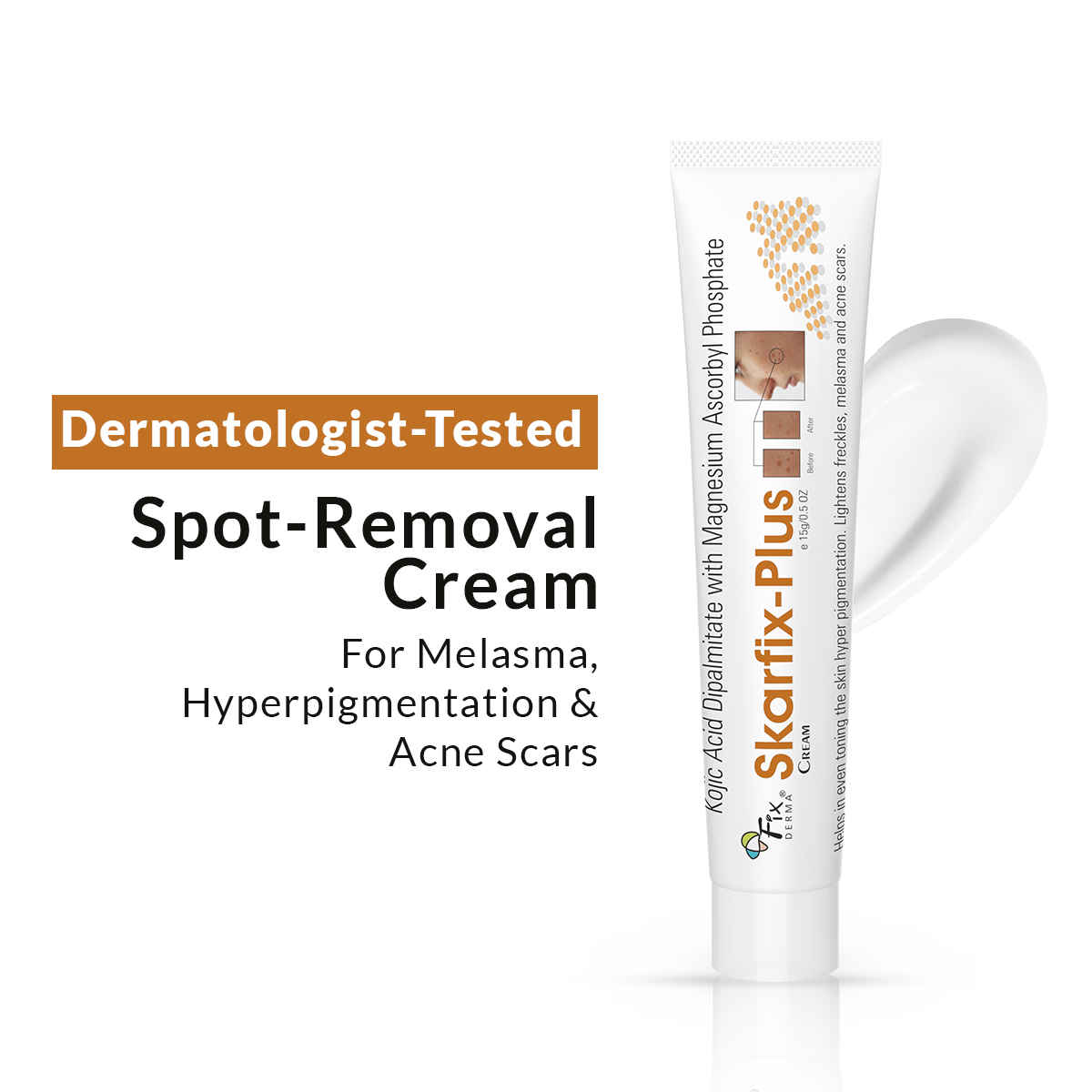
Fixderma SKARFIX Plus Cream Kojic Acid Dipalmitate with Magnesium Ascorbyl Phosphate 15 gm

Fixderma SKARFIX Plus Cream Kojic Acid Dipalmitate with Magnesium Ascorbyl Phosphate 15 gm
Fixderma
fixderma-skarfix-plus-cream-kojic-acid-dipalmitate-with-magnesium-ascorbyl-phosphate-15-gm
Moisturize
10084949262629
Morning or Evening?
How often will you use this product?
Notes


Highlights
WHAT IS IT?
Cream for hyperpigmentation treatment, multiple active ingredients
FEATURES
Reduces hyperpigmentation, melasma, acne scars; lightens freckles; provides UV protection; inhibits tyrosinase to block melanin formation; contains Kojic Acid (2%), Arbutin, Vitamin C for enhanced absorption and antioxidant protection
BEST FOR
normal
CHECKS
No parabens, no sulfates, no silicones, no alcohol
Who Is It For?
General Adult Use No Specific Gender MentionedWhat Does It Help With?
Hyperpigmentation Melasma Post-inflammatory Hyperpigmentation Acne Scars Freckles Dark SpotsBudget
Affordable (under $30)How To Use
Which routine should it be used in?
Instructions:
Key Information


What Fixderma Says
Product Description:
Skarfix Plus cream is the best treatment for hyperpigmentation. A powerful cream to effectively diminish the appearance of Melasma, PIE, PIH and hyperpigmentation. It reduces hyper pigmentation, melasma, acne scars, lighten freckles & provides UV protection. Skarfix Plus cream's mechanism is based on the inhibition of tyrosinase, a basic enzyme in the melanin formation process. Skarfix Plus cream is made with Kojic Acid with the therapeutic percentage i.e. 2% which is considered as the safest option in treating melasma. It reduces the activity of melanocyte tyrosinase thereby treating melasma, UV-induced hyperpigmentation and other post-inflammatory hyperpigmentation. Arbutin is a natural demelanizing agent ideal for stubborn dark spots that do not respond to other skin lightening agents. Arbutin dramatically reduces dark spots and blemishes for brighter, even-looking skin. Melasma is a difficult skin issue to treat. Generally, a single ingredient is not capable to show significant results. Skarfix Plus is a blend of multiple anti hyperpigmentation actives which work synergistically to give desired results. Kojic acid along with arbutin are the most acclaimed actives which helps to even out the darkened skin. Vitamin C helps to increase the absorption of these actives and can help scavenge and counteract skin-damaging free radicals caused by exposure to things such as UV damage and pollution.
About the Brand:
Ingredients Overview
Ingredients List
kojic-acid-dipalmitate, magnesium-ascorbyl-phosphate, arbutin, vitamin-c, tyrosinase-inhibitors, antioxidants
Key Ingredients
kojic-acid-dipalmitate, magnesium-ascorbyl-phosphate, arbutin, vitamin-c
Ingredients Details
Arbutin
Common Name(s): Arbutin,cosmetic active,functional ingredient
CAS Number: N/a
DESCRIPTION
What It Does: Delivers characteristic cosmetic function — skin conditioning, protection, preservation, or active biological benefit — at recommended use concentration.
Why It's Used: Selected for its functional contribution and formulation compatibility — supported by cosmetic science literature and regulatory safety assessment.
How It Works: Works through the mechanism of its molecular class — physicochemical interaction with the formulation or biological interaction with skin proteins, lipids, or receptors as documented in peer-reviewed literature.
Typically Found In: Skin care formulations
TECHNICAL DETAILS
Primary Category: Active ingredient – cosmetic active
Secondary Functions: Skin conditioning
Application Areas:

Facial Skincare

Body Care
Hair Care
Beard Care
Color Cosmetics (Makeup)
Dietary/Oral Supplements
Typical Concentration Range: 0.1%–10%
SOURCING & ETHICS
Vegan Status: Conditional
Halal Status: Yes
Source Notes: Commercially produced for cosmetic use. verify vegan/halal status with supplier.
SKIN COMPATIBILITY
Irritancy Rating: 1/5 – very low
Comedogenicity Rating: 0/5 – non-comedogenic
Sensitivity Concerns: Well-tolerated by most skin types.
Safe for Sensitive Skin: Yes
SAFETY & COMPATIBILITY
Safety Profile: Good safety profile at recommended concentrations. ewg score: 1–2.
Works Well With: Standard skincare actives
Avoid Combining With: No known significant incompatibilities
SCIENTIFIC NOTE
Arbutin delivers documented functional benefit with an established safety profile within the cosmetic regulatory framework (cosing eu, cir usa).
Last Verified: Cosing database,arbutin technical literature
Primary Sources: 2026-03-12
