

Fixderma Cosmetic Laboratories
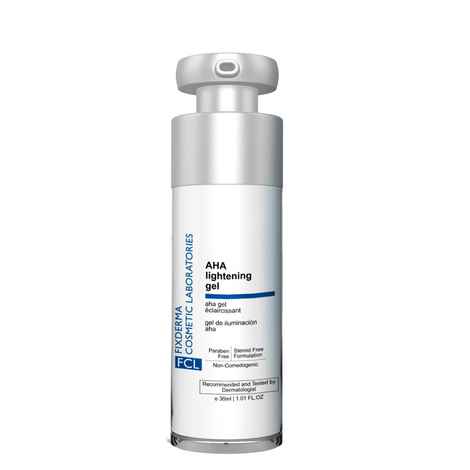
Fixderma Cosmetic Laboratories Aha Lightening Gel For Hyperpigmentation And Healthy Cell Renewal While Exfoliating Away Dry And Dead Complexion-Dulling Cells 30 ml

Fixderma Cosmetic Laboratories Aha Lightening Gel For Hyperpigmentation And Healthy Cell Renewal While Exfoliating Away Dry And Dead Complexion-Dulling Cells 30 ml
Fixderma Cosmetic Laboratories
fixderma-cosmetic-laboratories-aha-lightening-gel-for-hyperpigmentation-and-healthy-cell-renewal-while-exfoliating-away-dry-and-dead-complexion-dulling-cells-30-ml
Serum
10085498487077
Morning or Evening?
How often will you use this product?
Notes


Highlights
WHAT IS IT?
AHA Lightening Gel serum with multiple skin lightening ingredients, not specified how many
FEATURES
Non-comedogenic, treats dark spots, melasma, tanned skin, suitable for acne prone skin, reduces inflammation, contains Alpha arbutin for skin brightening, helps balance complexion and reduce sun tanning, comes in an airless container for product preservation
BEST FOR
sensitive
CHECKS
Who Is It For?
What Does It Help With?
Hyperpigmentation Melasma Dark Spots Age Spots Marks Scars Sun Tanning Uneven Skin Texture Inflammation Acne-prone SkinBudget
Mid-range ($30-$75)How To Use
Which routine should it be used in?
Instructions:
Key Information


What Fixderma Cosmetic Laboratories Says
Product Description:
FCL AHA Lightening Gel is a scientific noncomedogenic formulation which is used to treat dark spots melasma tanned skin. It is a nonsteroidal formulation which is absolutely safe for long term use. Most common forms of hyperpigmentation which is hard to treat are melasma post acne marks solar lentigines. FCL AHA Lightening Gel comes with the goodness of most premium skin lightening agents which safely reduce the melanin formation and expose a radiant glowing skin. It covers all the aspects of hyperpigmentation. It is suitable for acne prone skin and reduces inflammation. It has Alpha arbutin a skinbrightening ingredient that works by reducing melanin production. Targeting hyperpigmentation age spots dark spots marks and scars by inhibiting melanin it helps to balance confused complexions and even out the skin&aposs texture. This serum also has an ultralight formula that easily absorbs into the skin as is also proven to reduce the degree of sun tanning to a great extent after UV exposure resulting in clear radiant skin. This comes in an airless container so that even the last drop is unexposed to air. The best thing about this product is that the results are permanent and not reversible.
About the Brand:
Ingredients Overview
Ingredients List
Key Ingredients
Alpha arbutin
Ingredients Details
Alpha Arbutin
Common Name(s): Alpha arbutin
DESCRIPTION
What It Does: Delivers targeted skin-conditioning or bioactive benefits through a specific mechanism of action suited to the formulation's intended purpose.
Why It's Used: Specialty actives address specific skin concerns through targeted molecular mechanisms, providing efficacy beyond what base formulation ingredients alone can achieve.
How It Works: The bioactive compound interacts with specific molecular targets in skin cells or the extracellular matrix — enzymes, receptors, structural proteins, or signaling molecules — triggering beneficial biological responses.
Typically Found In: Serums,treatments,moisturizers,specialty products
TECHNICAL DETAILS
Primary Category: Specialty actives
Secondary Functions: Skin-conditioning,anti-aging
Application Areas:

Facial Skincare

Body Care
Hair Care
Beard Care
Color Cosmetics (Makeup)
Dietary/Oral Supplements
Typical Concentration Range: 0.01–5%
SOURCING & ETHICS
Vegan Status: Yes
Halal Status: Yes
Source Notes: Specialty active ingredient; check individual sourcing for vegan status.
SKIN COMPATIBILITY
Irritancy Rating: 1899-12-31 00:00:00 -0800
Sensitivity Concerns: Low sensitization potential at recommended use concentrations.
Safe for Sensitive Skin: Yes
SAFETY & COMPATIBILITY
Safety Profile: Well-characterized cosmetic ingredient with established safety profile. generally non-irritating at typical use concentrations. suitable for leave-on and rinse-off cosmetics.
Works Well With: Niacinamide,hyaluronic acid,vitamin c,peptides
Avoid Combining With: Incompatible with oxidizing agents; check ph stability
SCIENTIFIC NOTE
Specialty actives typically work through enzyme inhibition (e.g., tyrosinase inhibition for brightening, mmp inhibition for anti-aging), receptor activation (e.g., retinoid receptors, ppar-γ for barrier genes), or transcription factor modulation (e.g., nrf2 for antioxidant gene upregulation). structure-activity relationships determine potency and selectivity.
Last Verified: Cosing eu database; pcpc cosmetic ingredient safety reviews; ingredient-specific safety and efficacy literature
Primary Sources: 2025-01-15
