

FAB OILS
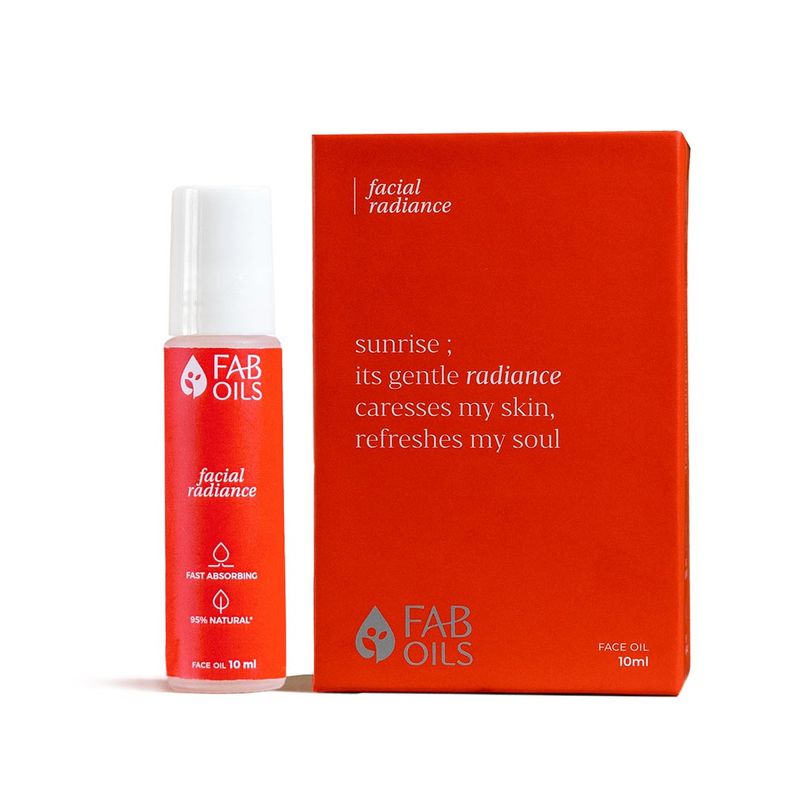
FAB OILS Facial Radiance Face Oil

FAB OILS Facial Radiance Face Oil
FAB OILS
fab-oils-facial-radiance-face-oil
Face Oil
10085466669349
Morning or Evening?
How often will you use this product?
Notes


Highlights
WHAT IS IT?
Face Oil with 10 main ingredients
FEATURES
Lightweight Hydration, Improved Skin Glow, Reduced Pigmentation, Licorice extract brightens skin, Pomegranate acts on hyperpigmentation, acne and signs of ageing, Gently floral fragrance with fruity citrus, 10-sec ultra fast absorption, 95% natural, clinically proven efficacy
BEST FOR
dry, combination
CHECKS
No sticky after-feel
Who Is It For?
Adults All GendersWhat Does It Help With?
Signs Of Ageing Pigmentation Acne Dullness Moisture And Glow ImprovementBudget
Affordable (under $30)How To Use
Which routine should it be used in?
Instructions:
Key Information


What FAB OILS Says
Product Description:
A gentle layer, sits lightly upon your skin & coaxes that inner glow to come out & slay! This radiance-boosting face oil is formulated to give your dry, combination skin the moisture & glow it needs; minus the sticky after-feel. It'll help fight off signs of ageing and pigmentation with its clinically tested, 95% natural oil formulation. Lightweight, and fast-absorbing - this active-charged new-age oil will leave your skin feeling fab & ready-to-glow! Features: Lightweight Hydration, Improved Skin Glow, Reduced Pigmentation; Licorice extract which brightens the skin, Pomegranate which acts on hyperpigmentation, acne and signs of ageing. Gently Floral fragrance with a hint of Fruity Citrus; Dry, Combination Skin especially those with Dullness / Pigmentation; 10-Sec Ultra Fast Absorption, 95% Natural, Clinically Proven Efficacy
About the Brand:
Ingredients Overview
Ingredients List
Isopropyl-Myristate, Caprylic-Capric-Triglyceride, Fractionated-Coconut-Oil, Helianthus-Annuus-Sunflower-Seed-Oil, Sesamum-Indicum-Sesame-Seed-Oil, Punica-Granatum-Pomegranate-Peel-Extract, Brassica-Campestris-Rapeseed-Seed-Oil, Glycyrrhiza-Glabra-Licorice-Root-Extract, Polyglyceryl-3-Diisostearate, Althaea-Officinalis-Marshmellow-Root-Extract, Oryza-Sativa-Rice-Bran-Extract, Perfume, Natural-Mixed-Tocopherol, Tinogard-Tt
Key Ingredients
Licorice extract, Pomegranate extract
Ingredients Details
Licorice Extract
Common Name(s): Licorice triterpenoid,glycyrrhetinic acid active,anti-inflammatory brightening
CAS Number: N/a
DESCRIPTION
What It Does: Reduces skin inflammation and redness through 11β-hsd inhibition (cortisol-amplifying mechanism), inhibits tyrosinase and melanogenesis for brightening, and provides antioxidant protection from the triterpenoid phenol system.
Why It's Used: One of few botanicals with documented cortisone-amplifying anti-inflammatory mechanism — 11β-hsd inhibition elevates local cortisol concentration in skin tissue, providing a pharmaceutical-level anti-inflammatory effect without direct corticosteroid application.
How It Works: Glycyrrhetinic acid inhibits 11β-hydroxysteroid dehydrogenase (11β-hsd) — the enzyme that converts active cortisol to inactive cortisone in peripheral tissues. inhibition elevates local skin cortisol, amplifying the glucocorticoid anti-inflammatory response. simultaneously, glabridin (a flavonoid in licorice) inhibits tyrosinase for brightening.
Typically Found In: Anti-inflammatory,soothing,brightening
TECHNICAL DETAILS
Primary Category: Active ingredient – antioxidant
Secondary Functions: Free radical scavenging,anti-aging
Application Areas:

Facial Skincare
Body Care

Hair Care
Beard Care
Color Cosmetics (Makeup)
Dietary/Oral Supplements
Typical Concentration Range: 0.01%–2%
SOURCING & ETHICS
Vegan Status: Yes
Halal Status: Yes
Source Notes: Plant-derived extract or synthetic.
SKIN COMPATIBILITY
Irritancy Rating: 1/5 – very low
Comedogenicity Rating: 0/5 – non-comedogenic
Sensitivity Concerns: Non-irritating; well-tolerated.
Safe for Sensitive Skin: Yes
SAFETY & COMPATIBILITY
Safety Profile: Excellent safety profile. ewg score: 1.
Works Well With: Vitamin c,vitamin e,ferulic acid,spf,other antioxidants
Avoid Combining With: No significant incompatibilities
SCIENTIFIC NOTE
11β-hsd inhibition by glycyrrhetinic acid was first documented in the context of licorice consumption causing pseudoaldosteronism — the same enzyme inhibition applied topically provides localised cortisol amplification for cosmetic anti-inflammatory activity without systemic effects.
Last Verified: Cosing database,glycyrrhetinic acid 11β-hsd anti-inflammatory review
Primary Sources: 2026-03-12
Pomegranate Extract
Common Name(s): Pomegranate extract,punica extract,pomegranate polyphenol
CAS Number: 84929-27-1
DESCRIPTION
What It Does: Provides punicalagin-based exceptional antioxidant activity with anti-inflammatory and skin regeneration benefits.
Why It's Used: Highest-orac common fruit extract – punicalagins provide unmatched antioxidant activity alongside oestrogenic urolithins for anti-aging and barrier support.
How It Works: Punicalagins a and b (2x the antioxidant power of red wine) provide orac value ~10,000 μmol te/g. metabolized to urolithins by skin microbiome – urolithin a activates mitophagy for cellular anti-aging. ellagic acid inhibits tyrosinase for brightening. mild estrogenic activity via urolithin phytoestrogens.
Typically Found In: Premium antioxidant products,brightening formulas,anti-aging serums
TECHNICAL DETAILS
Primary Category: Active ingredient – antioxidant
Secondary Functions: Punicalagin orac,urolithin mitophagy
Application Areas:
Facial Skincare
Body Care
Hair Care
Beard Care
Color Cosmetics (Makeup)
Dietary/Oral Supplements
Typical Concentration Range: 0.1%–5%
SOURCING & ETHICS
Vegan Status: Yes – from punica granatum fruit
Halal Status: Yes
Source Notes: Plant-derived extract or synthetic.
SKIN COMPATIBILITY
Irritancy Rating: 1/5 – very low
Comedogenicity Rating: 0/5 – non-comedogenic
Sensitivity Concerns: Non-irritating; well-tolerated.
Safe for Sensitive Skin: Yes
SAFETY & COMPATIBILITY
Safety Profile: Excellent safety profile. ewg score: 1.
Works Well With: Vitamin c,vitamin e,ferulic acid,spf,other antioxidants
Avoid Combining With: No significant incompatibilities
SCIENTIFIC NOTE
Pomegranate punicalagin's conversion to urolithin a by skin microbiome represents a remarkable prebiotic-probiotic relationship: the skin's resident bacteria metabolize the polyphenol precursor to create the bioactive urolithin that activates mitophagy (cellular mitochondrial quality control). this microbiome-dependent bioactivation means the same punicalagin extract has different anti-aging potency across individuals depending on their microbiome composition.
Last Verified: Cosing database,seeram et al. pomegranate punicalagin review
Primary Sources: 2026-03-12
