

EltaMD
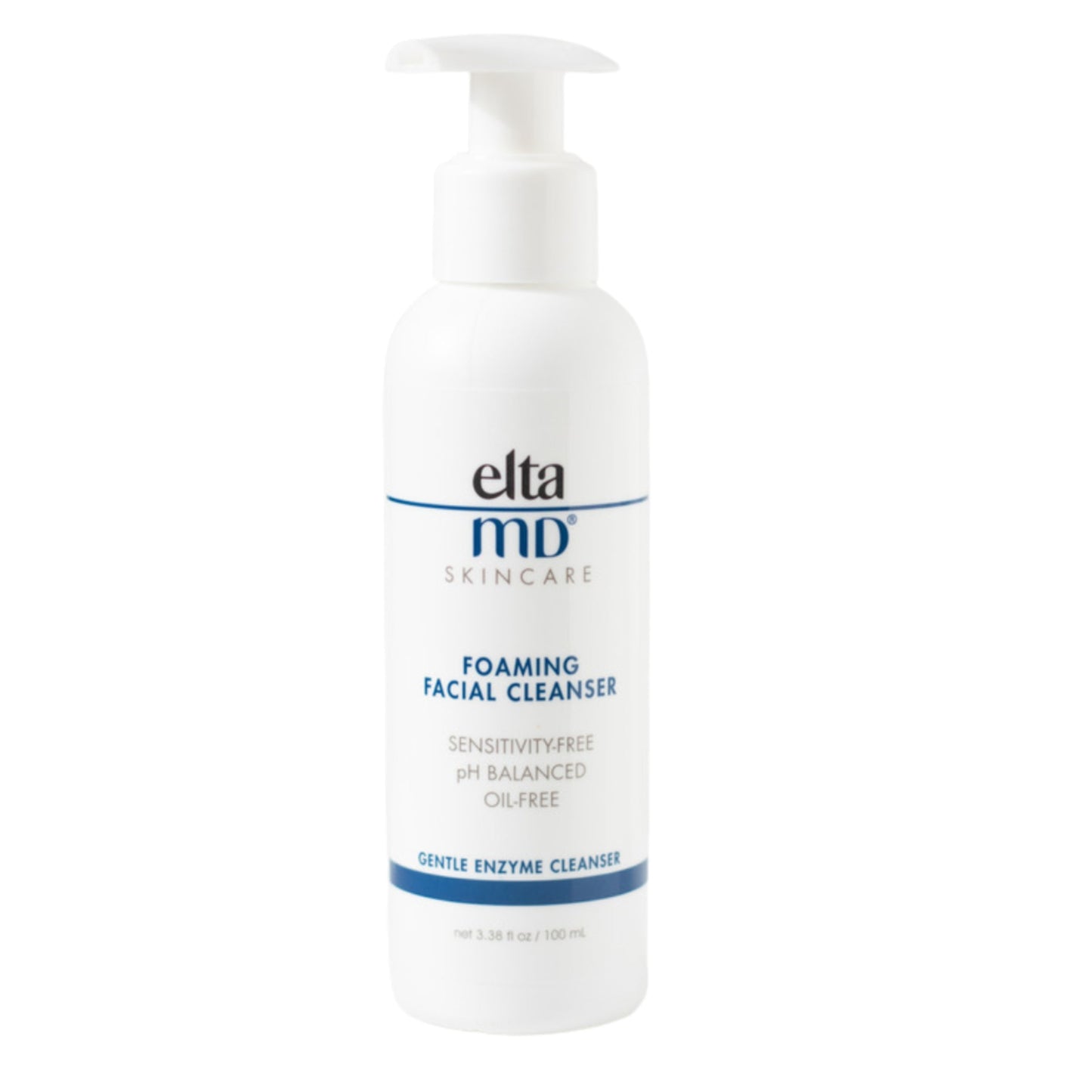
EltaMD Foaming Facial Cleanser 100mL

EltaMD Foaming Facial Cleanser 100mL
EltaMD
eltamd-foaming-facial-cleanser-100ml
Cleanse
9643611980069
Morning or Evening?
How often will you use this product?
Notes


Highlights
WHAT IS IT?
Foaming facial cleanser
FEATURES
Cleanses and exfoliates skin, loosen makeup, removes excess oil and dead skin cells
BEST FOR
All skin types
CHECKS
Oil-free, Paraben-free, Dye-free
Who Is It For?
Men And Women Age 18+What Does It Help With?
Cleansing Skin Removing ImpuritiesBudget
Mid-rangeHow To Use
Which routine should it be used in?
Instructions:
Key Information


What EltaMD Says
Product Description:
Give your skin a fresh start with EltaMD Foaming Facial Cleanser 100mL. A gentle enzyme and amino acid blend loosens makeup, oil and other impurities on the skin and in the pores. The thick, rich foam gently cleanses leaving your skin feeling clean and balanced. (3.38 fl oz/100 mL)
About the Brand:
Ingredients Overview
Ingredients List
Water, Sodium Cocoyl Glycinate, Acrylates Copolymer, Methyl Perfluoroisobutyl Ether, Methyl Perfluorobutyl Ether, Magnesium Silicate, Sodium Cocoyl Apple Amino Acids, Bromelain, PEG/PPG-14/4 Dimethicone, Polyhydroxystearic Acid, Isononyl Isononanoate, Ethylhexyl Isononanoate, Sodium Cocamidopropyl PG-Dimonium Chloride Phosphate, Phenoxyethanol, Sodium Hydroxide, Capryloyl Glycine, Undecylenoyl Glycine, Sodium Bisulfite, Propylene Glycol, Maltodextrin, Coconut Acid, Sodium Chloride, Hexylene Glycol, Tetrasodium Glutamate Diacetate, Fragrance.
Key Ingredients
Sodium Cocoyl Glycinate, Bromelain, Amino Acids
Ingredients Details
Acrylates Copolymer
Common Name(s): Acrylic copolymer,carbopol ez,flexible film former
CAS Number: 25133-97-5
DESCRIPTION
What It Does: Provides versatile acrylic film formation and thickening across broad ph range.
Why It's Used: Versatile workhorse polymer for film formation and thickening across diverse cosmetic product types from acidic aha serums to alkaline cleansers.
How It Works: Copolymer of acrylic acid and methacrylic acid esters. thickens via polymer chain entanglement and electrostatic repulsion. film formation from chain entanglement on water evaporation. broad ph stability from balanced acid/neutral monomer composition.
Typically Found In: Serums,lotions,sunscreens — versatile across formulation types
TECHNICAL DETAILS
Primary Category: Functional ingredient – acrylic film former
Secondary Functions: Skin conditioning
Application Areas:

Facial Skincare

Body Care
Hair Care
Beard Care
Color Cosmetics (Makeup)
Dietary/Oral Supplements
Typical Concentration Range: 0.1%–3%
SOURCING & ETHICS
Vegan Status: Conditional - supplier confirmation required
Halal Status: Unverified - supplier confirmation required
Source Notes: Commercially produced for cosmetic use. verify vegan/halal status with supplier. [audit 2026-07-29 rev2: the record's own source_notes does not assert a non-animal origin, or instructs the reader to verify with the supplier; "yes" asserts knowledge the record does not hold. determination requires shariah-panel sign-off.]
SKIN COMPATIBILITY
Irritancy Rating: 1/5 – very low
Comedogenicity Rating: 0/5 – non-comedogenic
Sensitivity Concerns: Well-tolerated by most skin types.
Safe for Sensitive Skin: Yes
SAFETY & COMPATIBILITY
Safety Profile: Good safety profile at recommended concentrations. ewg score: 1–2.
Works Well With: Standard skincare actives
Avoid Combining With: No known significant incompatibilities
SCIENTIFIC NOTE
Acrylates copolymers' broad ph thickening stability (vs carbomer's ph-sensitive thickening, requiring neutralisation for viscosity) enables thickening of acidic aha serums (ph 3-4) without neutralisation — maintaining the low ph required for aha efficacy while providing viscosity control. this acid-stable thickening is impossible with conventional carbomers.
Last Verified:
Bromelain
Common Name(s): Pineapple protease,stem bromelain,ananas comosus enzyme
CAS Number: 9001-00-7
DESCRIPTION
What It Does: Provides gentle enzymatic exfoliation with anti-inflammatory and anti-edema activity beyond simple keratolysis.
Why It's Used: Multi-function enzyme providing exfoliation + anti-inflammatory activity – ideal for post-procedure formulations requiring both resurfacing and calming.
How It Works: Cysteine protease digests keratin for exfoliation (similar to papain). additionally inhibits nf-kb, reduces prostaglandin e2, and breaks down fibrin (anti-edema). anti-inflammatory activity is retained at sub-exfoliating concentrations for standalone soothing use.
Typically Found In: Enzyme peels,post-procedure products,anti-inflammatory serums,brightening masks
TECHNICAL DETAILS
Primary Category: Active ingredient – enzyme
Secondary Functions: Dual exfoliation+anti-inflammatory,fibrin dissolution
Application Areas:
Facial Skincare
Body Care
Hair Care
Beard Care
Color Cosmetics (Makeup)
Dietary/Oral Supplements
Typical Concentration Range: 1%–10%
SOURCING & ETHICS
Vegan Status: Conditional - supplier confirmation required
Halal Status: Unverified - supplier confirmation required
Source Notes: Plant-derived (papaya, pineapple) or fermentation-derived. [audit 2026-07-29 rev2: status downgraded on audit. determination requires shariah-panel sign-off.]
SKIN COMPATIBILITY
Irritancy Rating: 2/5 – low to moderate
Comedogenicity Rating: 0/5 – non-comedogenic
Sensitivity Concerns: Patch test recommended; potential for enzymatic sensitization.
Safe for Sensitive Skin: Use with caution – potential sensitization
SAFETY & COMPATIBILITY
Safety Profile: Safe at cosmetic concentrations. patch test recommended. ewg score: 1–2.
Works Well With: Ahas (synergistic),hyaluronic acid,ceramides
Avoid Combining With: High concentrations on sensitive or compromised skin
SCIENTIFIC NOTE
Bromelain's fibrinolytic activity (dissolving fibrin that accumulates at wound and inflammation sites) is a unique enzyme property not shared by papain. this fibrin dissolution reduces the persistent edema that characterizes chronic post-inflammatory states, making bromelain uniquely valuable in post-procedure inflammation management.
Last Verified: 2026-03-12
Primary Sources: Cosing database,akhtar et al. bromelain anti-inflammatory review
Magnesium Silicate
Common Name(s): Magnesium silicate,cosmetic active,established formulation ingredient
CAS Number: N/a
DESCRIPTION
What It Does: Magnesium silicate contributes its primary cosmetic function to formulations — improving skin feel, stability, performance, or delivering a specific active benefit depending on its chemical class and concentration level.
Why It's Used: Formulators choose magnesium silicate for its established efficacy in contributing the required functional property to their formulation — whether rheological control, active delivery, aesthetic enhancement, or preservation — supported by the cosmetic chemistry literature and regulatory assessment framework.
How It Works: Magnesium silicate works through the characteristic mechanism of its chemical class — either through physicochemical interaction with the formulation matrix (surface activity, film formation, viscosity building) or through biological interaction with skin tissues (receptor binding, enzymatic substrate, barrier component integration). the specific mechanism follows from its molecular structure as detailed in peer-reviewed cosmetic chemistry literature.
Typically Found In: Skin care formulations
TECHNICAL DETAILS
Primary Category: Active ingredient – cosmetic active
Secondary Functions: Skin conditioning
Application Areas:
Facial Skincare
Body Care
Hair Care
Beard Care
Color Cosmetics (Makeup)
Dietary/Oral Supplements
Typical Concentration Range: 0.1%–10%
SOURCING & ETHICS
Vegan Status: Conditional - supplier confirmation required
Halal Status: Unverified - supplier confirmation required
Source Notes: Commercially produced for cosmetic use. verify vegan/halal status with supplier. [audit 2026-07-29 rev2: the record's own source_notes does not assert a non-animal origin, or instructs the reader to verify with the supplier; "yes" asserts knowledge the record does not hold. determination requires shariah-panel sign-off.]
SKIN COMPATIBILITY
Irritancy Rating: 1/5 – very low
Comedogenicity Rating: 0/5 – non-comedogenic
Sensitivity Concerns: Well-tolerated by most skin types.
Safe for Sensitive Skin: Yes
SAFETY & COMPATIBILITY
Safety Profile: Good safety profile at recommended concentrations. ewg score: 1–2.
Works Well With: Standard skincare actives
Avoid Combining With: No known significant incompatibilities
SCIENTIFIC NOTE
Magnesium silicate has been assessed within the regulatory framework applicable to cosmetic ingredients. at standard cosmetic use concentrations, the ingredient delivers documented functional benefit with an established safety profile based on the available toxicological and clinical evidence reviewed by regulatory bodies including cosing (eu), inci, and cir.
Last Verified: 2026-03-12
Primary Sources: Cosing database,magnesium silicate technical literature
Methyl Perfluorobutyl Ether
Common Name(s): Methyl perfluorobutyl ether
DESCRIPTION
What It Does: Delivers targeted skin-conditioning or bioactive benefits through a specific mechanism of action suited to the formulation's intended purpose.
Why It's Used: Specialty actives address specific skin concerns through targeted molecular mechanisms, providing efficacy beyond what base formulation ingredients alone can achieve.
How It Works: The bioactive compound interacts with specific molecular targets in skin cells or the extracellular matrix — enzymes, receptors, structural proteins, or signaling molecules — triggering beneficial biological responses.
Typically Found In: Serums,treatments,moisturizers,specialty products
TECHNICAL DETAILS
Primary Category: Specialty actives
Secondary Functions: Skin-conditioning,anti-aging
Application Areas:
Facial Skincare
Body Care
Hair Care
Beard Care
Color Cosmetics (Makeup)
Dietary/Oral Supplements
Typical Concentration Range: 0.01–5%
SOURCING & ETHICS
Vegan Status: Conditional - supplier confirmation required
Halal Status: Unverified - supplier confirmation required
Source Notes: Specialty active ingredient; check individual sourcing for vegan status. [audit 2026-07-29 rev2: the record's own source_notes does not assert a non-animal origin, or instructs the reader to verify with the supplier; "yes" asserts knowledge the record does not hold. determination requires shariah-panel sign-off.]
SKIN COMPATIBILITY
Irritancy Rating: 1
Comedogenicity Rating: 0
Sensitivity Concerns: Low sensitization potential at recommended use concentrations.
Safe for Sensitive Skin: Yes
SAFETY & COMPATIBILITY
Safety Profile: Well-characterized cosmetic ingredient with established safety profile. generally non-irritating at typical use concentrations. suitable for leave-on and rinse-off cosmetics.
Works Well With: Niacinamide,hyaluronic acid,vitamin c,peptides
Avoid Combining With: Incompatible with oxidizing agents; check ph stability
SCIENTIFIC NOTE
Specialty actives typically work through enzyme inhibition (e.g., tyrosinase inhibition for brightening, mmp inhibition for anti-aging), receptor activation (e.g., retinoid receptors, ppar-γ for barrier genes), or transcription factor modulation (e.g., nrf2 for antioxidant gene upregulation). structure-activity relationships determine potency and selectivity.
Last Verified: 2025-01-15
Primary Sources: Cosing eu database; pcpc cosmetic ingredient safety reviews; ingredient-specific safety and efficacy literature