

Elizabeth Arden
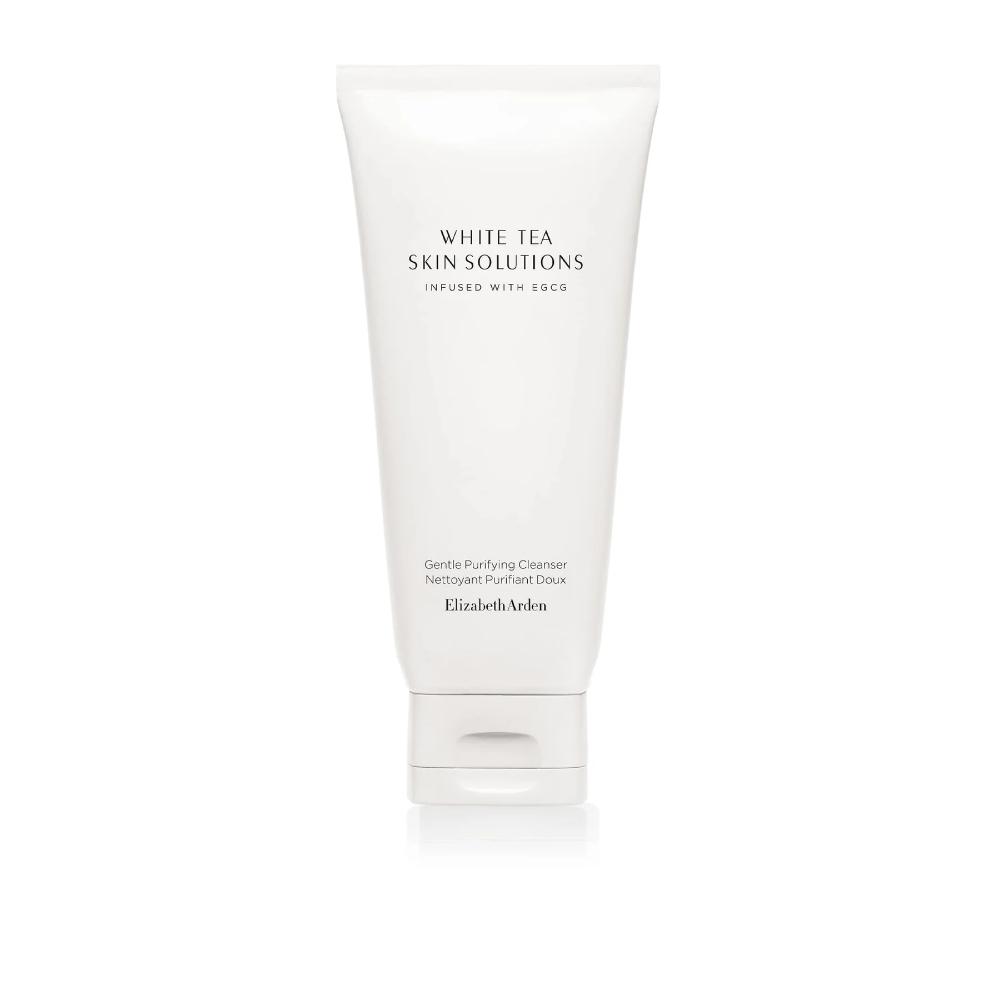
Elizabeth Arden White Tea Skin Solutions Gentle Purifying Cleanser

Elizabeth Arden White Tea Skin Solutions Gentle Purifying Cleanser
Elizabeth Arden
elizabeth-arden-white-tea-skin-solutions-gentle-purifying-cleanser
Cleanse
10084778213669
Morning or Evening?
How often will you use this product?
Notes


Highlights
WHAT IS IT?
Gentle Purifying Cleanser 151G
FEATURES
BEST FOR
CHECKS
Who Is It For?
What Does It Help With?
Budget
Premium ($76-$150)How To Use
Which routine should it be used in?
Instructions:
Key Information

About the Brand:
Ingredients Overview
Ingredients List
Aqua/Water/Eau Glycerin, Cocamidopropyl Betaine, Potassium Cocoyl Glycinate, Sodium Cocoamphoacetate, PEG-7 Glyceryl Cocoate, Coco-Glucoside, Acrylates Copolymer, Arginine Cocoate, Citric Acid, Butylene Glycol, Camellia Sinensis Leaf Extract, Caprylyl Glycol, Epigallocatechin Gallatyl Glucoside, Helianthus Annuus (Sunflower) Seed Oil, Myrtus Communis Leaf Extract, PEG-120 Methyl Glucose Dioleate, Polyquaternium-7, Rosmarinus Officinalis (Rosemary) Leaf Extract, Sodium Hydroxide, Styrene/Acrylates Copolymer, Parfum (Fragrance), Citronellol, Geraniol, Benzoic Acid, Phenoxyethanol. B02042
Key Ingredients
Ingredients Details
Acrylates Copolymer
Common Name(s): Acrylic copolymer,carbopol ez,flexible film former
CAS Number: 25133-97-5
DESCRIPTION
What It Does: Provides versatile acrylic film formation and thickening across broad ph range.
Why It's Used: Versatile workhorse polymer for film formation and thickening across diverse cosmetic product types from acidic aha serums to alkaline cleansers.
How It Works: Copolymer of acrylic acid and methacrylic acid esters. thickens via polymer chain entanglement and electrostatic repulsion. film formation from chain entanglement on water evaporation. broad ph stability from balanced acid/neutral monomer composition.
Typically Found In: Serums,lotions,sunscreens — versatile across formulation types
TECHNICAL DETAILS
Primary Category: Functional ingredient – acrylic film former
Secondary Functions: Skin conditioning
Application Areas:

Facial Skincare

Body Care
Hair Care
Beard Care
Color Cosmetics (Makeup)
Dietary/Oral Supplements
Typical Concentration Range: 0.1%–3%
SOURCING & ETHICS
Vegan Status: Yes – synthetic
Halal Status: Yes
Source Notes: Commercially produced for cosmetic use. verify vegan/halal status with supplier.
SKIN COMPATIBILITY
Irritancy Rating: 1/5 – very low
Comedogenicity Rating: 0/5 – non-comedogenic
Sensitivity Concerns: Well-tolerated by most skin types.
Safe for Sensitive Skin: Yes
SAFETY & COMPATIBILITY
Safety Profile: Good safety profile at recommended concentrations. ewg score: 1–2.
Works Well With: Standard skincare actives
Avoid Combining With: No known significant incompatibilities
SCIENTIFIC NOTE
Acrylates copolymers' broad ph thickening stability (vs carbomer's ph-sensitive thickening, requiring neutralisation for viscosity) enables thickening of acidic aha serums (ph 3-4) without neutralisation — maintaining the low ph required for aha efficacy while providing viscosity control. this acid-stable thickening is impossible with conventional carbomers.
Last Verified: Cosing database,cir safety assessment
Primary Sources: 2026-03-12
Arginine Cocoate
Common Name(s): Arginine cocoate,arginine cocoate,arginine-based signal peptide or amino acid active,anti-aging bioactive
CAS Number: N/a
DESCRIPTION
What It Does: Stimulates collagen synthesis, inhibits mmp-mediated matrix degradation, or provides amino acid-specific skin metabolic support — delivering measurable anti-aging benefit at ppm concentrations.
Why It's Used: Precision sequence-receptor pharmacology enables mechanism-based anti-aging claims — defined amino acid sequence targeting specific receptors with quantifiable binding kinetics.
How It Works: Peptide receptor binding → kinase cascade → col1a1/col3a1 upregulation + mmp-1/mmp-3 downregulation. spps synthesis provides >98% sequence purity for reproducible receptor binding.
Typically Found In: Anti-aging serums,collagen products
TECHNICAL DETAILS
Primary Category: Active ingredient – peptide
Secondary Functions: Collagen synthesis,anti-aging
Application Areas:
Facial Skincare
Body Care
Hair Care
Beard Care
Color Cosmetics (Makeup)
Dietary/Oral Supplements
Typical Concentration Range: 1–5000 ppm
SOURCING & ETHICS
Vegan Status: Yes
Halal Status: Yes
Source Notes: Synthetically produced via solid-phase peptide synthesis (spps).
SKIN COMPATIBILITY
Irritancy Rating: 1/5 – very low
Comedogenicity Rating: 0/5 – non-comedogenic
Sensitivity Concerns: Non-irritating at recommended concentrations.
Safe for Sensitive Skin: Yes
SAFETY & COMPATIBILITY
Safety Profile: Excellent safety profile. ewg score: 1.
Works Well With: Retinoids,niacinamide,vitamin c,hyaluronic acid
Avoid Combining With: Strong acids below ph 3.5; oxidising agents
SCIENTIFIC NOTE
Conjugated peptides provide dual mechanism: the peptide sequence provides receptor-mediated collagen synthesis stimulation while the aromatic/vitamin conjugate adds independent antioxidant or metabolic cofactor activity.
Last Verified: Cosing database,arginine cocoate signal peptide anti-aging review
Primary Sources: 2026-03-22
Benzoic Acid
Common Name(s): Cosmetic preservative,microbial growth inhibitor,product stability agent
CAS Number: N/a
DESCRIPTION
What It Does: Prevents microbial contamination that would otherwise render water-containing cosmetics unsafe — inhibiting bacterial, fungal, and yeast growth through membrane disruption, enzyme inhibition, or metabolic interference at permitted regulatory concentrations.
Why It's Used: Preservatives are safety-critical — un-preserved water-containing cosmetics can develop dangerous microbial contamination (pseudomonas aeruginosa eye infections, s. aureus skin infections) within days. preservation is a regulatory requirement, not an optional enhancement.
How It Works: Mechanism varies by class: organic acids (benzoic, dehydroacetic) disrupt intracellular ph in bacteria and fungi by proton flux across membranes; parabens inhibit membrane-associated enzyme function; chlorhexidine disrupts bacterial and fungal membrane integrity through divalent ion chelation of membrane phospholipids.
Typically Found In: All aqueous formulations
TECHNICAL DETAILS
Primary Category: Active ingredient – cosmetic active
Secondary Functions: Skin conditioning
Application Areas:
Facial Skincare
Body Care
Hair Care
Beard Care
Color Cosmetics (Makeup)
Dietary/Oral Supplements
Typical Concentration Range: Check annex v eu limits
SOURCING & ETHICS
Vegan Status: Yes
Halal Status: Yes
Source Notes: Commercially produced for cosmetic use. verify vegan/halal status with supplier.
SKIN COMPATIBILITY
Irritancy Rating: 1/5 – very low
Comedogenicity Rating: 0/5 – non-comedogenic
Sensitivity Concerns: Well-tolerated by most skin types.
Safe for Sensitive Skin: Yes
SAFETY & COMPATIBILITY
Safety Profile: Good safety profile at recommended concentrations. ewg score: 1–2.
Works Well With: Standard skincare actives
Avoid Combining With: No known significant incompatibilities
SCIENTIFIC NOTE
Eu regulation 1223/2009 annex v lists all permitted preservatives with maximum concentrations — preservatives not listed are prohibited. formulators must verify both permitted status and maximum concentration for each market before finalising preservation systems.
Last Verified: Eu regulation 1223/2009 annex v,cosmetic preservative regulatory review
Primary Sources: 2026-03-12
Butylene Glycol
Common Name(s): 1,3-butanediol,bg,1,3-butylene glycol
CAS Number: 107-88-0
DESCRIPTION
What It Does: Provides humectant hydration and active ingredient solubilization with excellent skin feel.
Why It's Used: Preferred glycol humectant in premium and k-beauty formulations for superior skin feel vs propylene glycol with equivalent functionality.
How It Works: Two hydroxyl groups at 1,3-positions provide water binding and solvent activity. better tolerated than propylene glycol with minimal sensitization risk. 4-carbon backbone provides slightly greater hydrophobic character enabling dissolution of less polar actives vs pg.
Typically Found In: Toners,essences,serums,k-beauty formulas
TECHNICAL DETAILS
Primary Category: Functional ingredient – glycol humectant
Secondary Functions: Tewl reduction,skin plumping
Application Areas:
Facial Skincare
Body Care
Hair Care
Beard Care
Color Cosmetics (Makeup)
Dietary/Oral Supplements
Typical Concentration Range: 1%–10%
SOURCING & ETHICS
Vegan Status: Yes – synthetic
Halal Status: Yes
Source Notes: Synthetic or naturally derived. excellent aqueous solubility.
SKIN COMPATIBILITY
Irritancy Rating: 1/5 – very low
Comedogenicity Rating: 0/5 – non-comedogenic
Sensitivity Concerns: Non-irritating; suitable for all skin types.
Safe for Sensitive Skin: Yes
SAFETY & COMPATIBILITY
Safety Profile: Excellent safety profile. ewg score: 1.
Works Well With: Ceramides,emollients,occlusives,glycerin,hyaluronic acid
Avoid Combining With: No significant incompatibilities
SCIENTIFIC NOTE
K-beauty's preference for butylene glycol over propylene glycol is driven by two factors: bg's superior skin feel (less tacky than pg's higher viscosity) and its lower sensitization potential (1,3-bg has better spatial distribution of hydroxyl groups that reduces protein interaction vs pg's 1,2-position oh groups).
Last Verified: Cosing database,cir safety assessment
Primary Sources: 2026-03-12
