

Elizabeth Arden
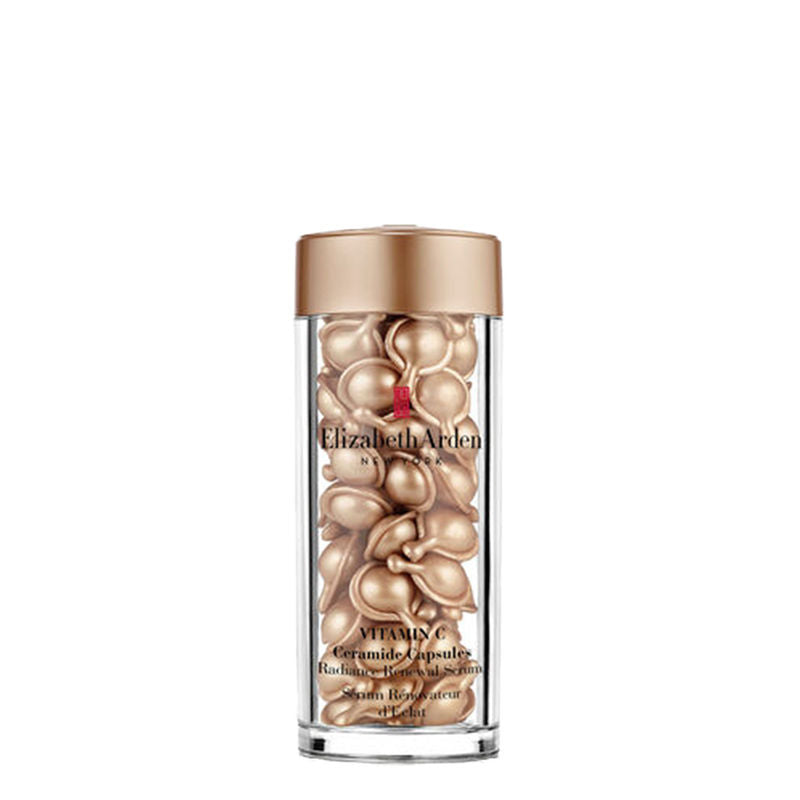
Elizabeth Arden Vitamin C Ceramide Capsules Radiance Renewal Serum

Elizabeth Arden Vitamin C Ceramide Capsules Radiance Renewal Serum
Elizabeth Arden
elizabeth-arden-vitamin-c-ceramide-capsules-radiance-renewal-serum
Serum
10085022269733
Morning or Evening?
How often will you use this product?
Notes


Highlights
WHAT IS IT?
Vitamin C face serum with ceramide capsule delivery format, 13 ingredients listed
FEATURES
Brightens skin, improves radiance, supports collagen and elastin matrix, minimizes dark spots and discoloration, improves uneven skin tone, protects against environmental aging signs
BEST FOR
normal
CHECKS
Who Is It For?
All Genders All Adult AgesWhat Does It Help With?
Dullness Uneven Skin Tone Dark Spots Aging SignsBudget
Professional (over $150)How To Use
Which routine should it be used in?
Instructions:
Key Information

What Elizabeth Arden Says
Product Description:
Anti-aging Vitamin C face serum is formulated with brightening technology that works to diminish dullness, even skin tone and reveal a healthy, luminous glow. Brightens skin and improves radiance. Supports skin’s natural collagen and elastin matrix. Minimizes the look of dark spots and discoloration. Helps improve the look of uneven skin tone. Protects against environmental aggressors that contribute to aging signs.
About the Brand:
Ingredients Overview
Ingredients List
Dicaprylyl-Carbonate,Coco-Caprylate/Caprate,Dimer-Dilinoleyl-Dimer-Dilinoleate,Tetrahexyldecyl-Ascorbate,Tocopheryl-Acetate,C12-15-Alkyl-Benzoate,Caprylic/Capric-Triglyceride,Ceramide-NP,Ceramide-NS,Diethylhexyl-Syringylidenemalonate,Glyceryl-Dioleate,Helianthus-Annuus-(Sunflower)-Seed-Oil,Olea-Europaea-(Olive)-Fruit-Oil,Persea-Gratissima-(Avocado)-Oil,Phytosphingosine,Phytosterols,Propylene-Glycol-Dicaprylate/Dicaprate,Sclareolide,Tocopherol,Triolein,Phenoxyethanol
Key Ingredients
Tetrahexyldecyl-Ascorbate,Ceramide-NP,Ceramide-NS,Tocopheryl-Acetate
Ingredients Details
Coco-caprylate/caprate
Common Name(s): Coco-caprylate/caprate
DESCRIPTION
What It Does: Smooths and softens skin by filling intercorneocyte spaces, reducing friction, and providing a pleasant aesthetic skin feel in formulations.
Why It's Used: Synthetic esters provide tailored aesthetic properties — spreadability, skin feel, volatility, refractive index — that natural oils alone cannot consistently deliver.
How It Works: The ester molecule fills microscopic surface irregularities between corneocytes, reducing coefficient of friction, reflecting light uniformly, and providing a lubrication layer that protects the skin surface.
Typically Found In: Moisturizers,sunscreens,color cosmetics,body lotions,lip products
TECHNICAL DETAILS
Primary Category: Synthetic emollients
Secondary Functions: Emollient
Application Areas:

Facial Skincare

Body Care
Hair Care
Beard Care
Color Cosmetics (Makeup)
Dietary/Oral Supplements
Typical Concentration Range: 1–20%
SOURCING & ETHICS
Vegan Status: Yes
Halal Status: Yes
Source Notes: Synthetically produced ester emollient; no animal components.
SKIN COMPATIBILITY
Irritancy Rating: 1
Comedogenicity Rating: 1
Sensitivity Concerns: Low sensitization potential at recommended use concentrations.
Safe for Sensitive Skin: Yes
SAFETY & COMPATIBILITY
Safety Profile: Well-characterized cosmetic ingredient with established safety profile. generally non-irritating at typical use concentrations. suitable for leave-on and rinse-off cosmetics.
Works Well With: Silicones,uv filters,other emollients
Avoid Combining With: Strongly alkaline conditions (risk of saponification of ester-type emollients)
SCIENTIFIC NOTE
The spreading coefficient of an emollient is governed by its surface tension, viscosity, and polarity. esters with branched alkyl chains (e.g., isopropyl, isostearyl) spread rapidly and leave a non-tacky film; linear long-chain esters provide more substantive moisturization. hlb value determines the preferred formulation system (w/o vs o/w emulsions).
Last Verified: Cosing eu database; pcpc cosmetic ingredient safety reviews; ingredient-specific safety and efficacy literature
Primary Sources: 2025-01-15
Phenoxyethanol
Common Name(s): 2-phenoxyethanol,rose ether,ethylene glycol monophenyl ether
CAS Number: 122-99-6
DESCRIPTION
What It Does: Prevents microbial contamination and spoilage in cosmetic formulations.
Why It's Used: The benchmark cosmetic preservative – eu-permitted up to 1%, effective against virtually all cosmetically relevant microorganisms, and excellent tolerability.
How It Works: Phenol ring provides broad antimicrobial activity via disruption of bacterial and fungal cell membranes and inhibition of enzymatic activity. effective against gram-positive and gram-negative bacteria, yeasts (candida), and molds (aspergillus). activity ph range: 3-9.
Typically Found In: All cosmetic formulations as primary preservative
TECHNICAL DETAILS
Primary Category: Functional ingredient – broad-spectrum preservative
Secondary Functions: Skin conditioning
Application Areas:
Facial Skincare
Body Care
Hair Care
Beard Care
Color Cosmetics (Makeup)
Dietary/Oral Supplements
Typical Concentration Range: 0.1%–1% (eu max 1%)
SOURCING & ETHICS
Vegan Status: Yes – synthetic
Halal Status: Yes
Source Notes: Commercially produced for cosmetic use. verify vegan/halal status with supplier.
SKIN COMPATIBILITY
Irritancy Rating: 1/5 – very low
Comedogenicity Rating: 0/5 – non-comedogenic
Sensitivity Concerns: Well-tolerated by most skin types.
Safe for Sensitive Skin: Yes
SAFETY & COMPATIBILITY
Safety Profile: Eu cosmetics regulation max 1%. sccs assessed as safe at ≤1%. avoid use around eyes in baby products per some country regulations. ewg score: 4.
Works Well With: Standard skincare actives
Avoid Combining With: No known significant incompatibilities
SCIENTIFIC NOTE
Phenoxyethanol's widespread adoption as the primary cosmetic preservative followed the phaseout of parabens from many formulations in the 2000s-2010s. despite having a comparable or better safety profile to parabens, it is often cited in 'free-from' formulations – a consumer perception issue rather than a scientific safety concern.
Last Verified: Cosing database,sccs opinion on phenoxyethanol,cir safety assessment
Primary Sources: 2026-03-12
Phytosphingosine
Common Name(s): 4-hydroxysphinganine,tetrahydroxysphinganine
CAS Number: 554-62-1
DESCRIPTION
What It Does: Provides antimicrobial activity against p. acnes and s. aureus while supporting ceramide synthesis and reducing inflammation.
Why It's Used: Used in acne and sensitive skin formulations for combined antimicrobial, anti-inflammatory, and barrier repair activity from a single plant-derived sphingoid base.
How It Works: Trihydroxy structure provides stronger antimicrobial activity vs sphingosine. substrate for ceramide synthase to form phytoceramides. reduces pro-inflammatory cytokine production in keratinocytes.
Typically Found In: Anti-acne products,sensitive skin treatments,barrier repair formulations
TECHNICAL DETAILS
Primary Category: Active ingredient – plant sphingoid base
Secondary Functions: Anti-acne,ceramide synthesis,anti-inflammatory
Application Areas:
Facial Skincare
Body Care
Hair Care
Beard Care
Color Cosmetics (Makeup)
Dietary/Oral Supplements
Typical Concentration Range: 0.01%–0.5%
SOURCING & ETHICS
Vegan Status: Yes – plant/yeast-derived
Halal Status: Yes
Source Notes: Derived from yeast (pichia) fermentation or plant sphingolipid hydrolysis. fully plant-derived.
SKIN COMPATIBILITY
Irritancy Rating: 1/5 – very low
Comedogenicity Rating: 0/5 – non-comedogenic
Sensitivity Concerns: Endogenous molecule; excellent tolerability.
Safe for Sensitive Skin: Yes
SAFETY & COMPATIBILITY
Safety Profile: Exceptional safety profile. natural skin component. ewg score: 1.
Works Well With: Other ceramides,cholesterol,free fatty acids,hyaluronic acid,niacinamide
Avoid Combining With: No significant incompatibilities
SCIENTIFIC NOTE
Phytosphingosine's additional 4-hydroxy group (vs sphingosine) significantly enhances antimicrobial activity while maintaining ceramide precursor function. clinically demonstrated to reduce p. acnes counts and inflammatory lesions in acne studies.
Last Verified: Cosing database,lintner phytosphingosine review,kawano et al. ceramide precursor study
Primary Sources: 2026-03-12
Phytosterols
Common Name(s): Plant sterols,beta-sitosterol complex,phytosterol mix
CAS Number: 83-46-5
DESCRIPTION
What It Does: Provides plant sterol barrier lipid analogue with anti-inflammatory and 5-alpha-reductase inhibiting activity.
Why It's Used: Comprehensive plant sterol complex providing barrier repair, anti-inflammatory, and anti-androgenic activity in a natural plant-derived mixture mimicking cholesterol's skin functions.
How It Works: Beta-sitosterol integrates into stratum corneum lipid bilayers as cholesterol structural analogue for barrier repair. inhibits 5-alpha-reductase type i and ii for dht reduction. anti-inflammatory via nf-kb inhibition. campesterol and stigmasterol provide complementary barrier and anti-inflammatory activities.
Typically Found In: Barrier repair creams,anti-acne products,anti-aging formulas
TECHNICAL DETAILS
Primary Category: Active ingredient – plant sterol complex
Secondary Functions: Barrier sealing,softening
Application Areas:
Facial Skincare
Body Care
Hair Care
Beard Care
Color Cosmetics (Makeup)
Dietary/Oral Supplements
Typical Concentration Range: 0.1%–3%
SOURCING & ETHICS
Vegan Status: Yes – from vegetable oils (soy, tall oil, avocado)
Halal Status: Yes
Source Notes: Plant-derived, synthetic or animal-derived. verify source.
SKIN COMPATIBILITY
Irritancy Rating: 1/5 – very low
Comedogenicity Rating: 1/5 – low; formulation-dependent
Sensitivity Concerns: Non-irritating.
Safe for Sensitive Skin: Yes
SAFETY & COMPATIBILITY
Safety Profile: Excellent safety profile. ewg score: 1.
Works Well With: Humectants,ceramides,actives as carrier
Avoid Combining With: No significant incompatibilities
SCIENTIFIC NOTE
Phytosterols' multiple concurrent mechanisms (barrier repair + 5-ar inhibition + anti-inflammation) from a single ingredient class provides comprehensive acne-relevant benefits from natural plant cell membrane components. beta-sitosterol's structural identity to cholesterol (one ethyl group difference at c-24) allows barrier integration while the different c-24 substitution subtly alters enzyme binding, providing 5-ar inhibition not seen with mammalian cholesterol.
Last Verified: Cosing database,bouic phytosterol review
Primary Sources: 2026-03-12
