

NANNETTE de GASPÉ
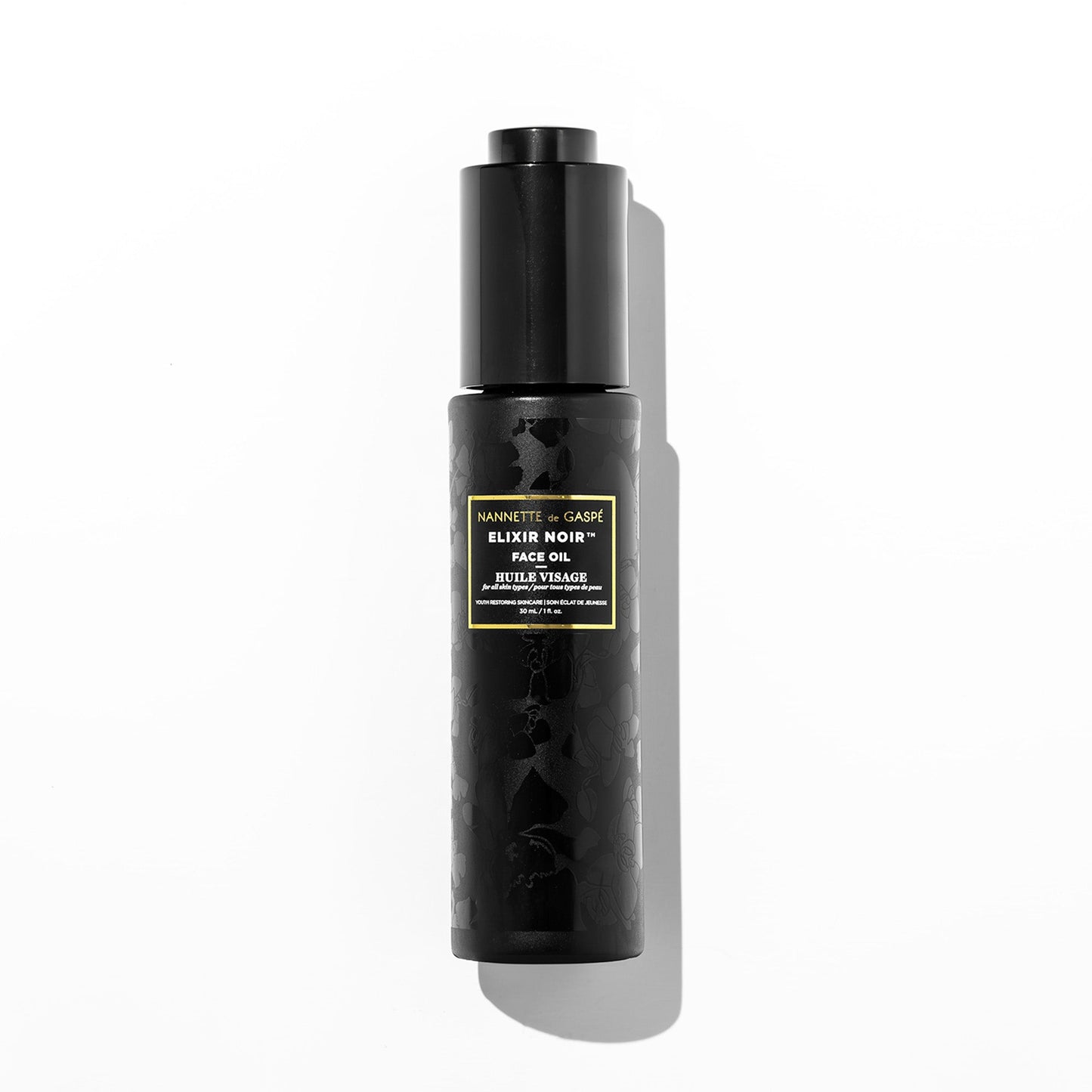
Elixir Noir Face Oil

Elixir Noir Face Oil
NANNETTE de GASPÉ
elixir-noir-face-oil
Face Oil
9706851991845
Morning or Evening?
How often will you use this product?
Notes


Highlights
WHAT IS IT?
Face oil
FEATURES
Ultra-nourishing, lightweight formulation, penetrates deeply
BEST FOR
, appears suitable for all skin types
CHECKS
Clean beauty, free of harmful chemicals, low-quality fragrances, dyes
Who Is It For?
Adults (inferred) Both Women And MenWhat Does It Help With?
Skin Firmness Texture Fine Lines And WrinklesBudget
PremiumHow To Use
Which routine should it be used in?
Instructions:
Key Information


What NANNETTE de GASPÉ Says
Product Description:
Elixir Noir Face™ Oil's ultra-nourishing and lightweight formulation penetrates deeply and effortlessly to improve skin firmness, texture and the appearance of fine lines and wrinkles leaving skin feeling remarkably supple and soft and with an incredible glow.
About the Brand:
Ingredients Overview
Ingredients List
Squalane, Water/Aqua/Eau, Glycerin, Propanediol, Eclipta Prostrata Extract, Sodium Chloride, Melia Azadirachta (Neem) Flower Extract, Fragrance (Parfum), Pentylene Glycol, Melia Azadirachta (Neem) Leaf Extract, Coccinia Indica Fruit Extract, Cannabis Sativa Seed Oil, Cucurbita Pepo (Pumpkin) Seed Oil, Oenothera Biennis (Evening Primrose) Oil, Papaver Somniferum Seed Oil, Punica Granatum Seed Oil, Ribes Nigrum (Black Currant) Seed Oil, Rosa Moschata Seed Oil, Rubus Occidentalis (Black Raspberry) Seed Oil, Saccharomyces/Xylinum Black Tea Ferment, Evodia Rutaecarpa Fruit Extract, Phenethyl Alcohol, Corallina Officinalis Extract, Carnosine, Trisodium Ethylenediamine Disuccinate, Moringa Oleifera Seed Oil, Potassium Sorbate, Citric Acid, Sodium Benzoate, Avena Sativa (Oat) Kernel Extract, Helianthus Annuus (Sunflower) Seed Extract, Heptapeptide-7, Lecithin, Oryza Sativa (Rice) Bran Extract, Rosmarinus Officinalis (Rosemary) Leaf Extract, Tocopherol, Xanthan Gum, Solanum Melongena (Eggplant) Fruit Extract, Aloe Barbadensis Flower Extract, Nigella Sativa Seed Extract, Simmondsia Chinensis (Jojoba) Seed Oil, Hydrolyzed Pearl, Curcuma Longa (Turmeric) Root Extract, Ocimum Basilicum (Basil) Flower/Leaf Extract, Ocimum Sanctum Leaf Extract, Acetyl Hexapeptide-1, Dextran, Cycnoches Cooperi (Orchid) Extract, Sorbic Acid, Benzyl Salicylate, Citral, Citronellol, Geraniol, Hexyl Cinnamal, Hydroxycitronellal, Limonene, Linalool
Key Ingredients
Tetrapeptide Matrix, Indian Gentian shrub, Jojoba, Grapeseed, Olive, Sunflower oils, Kakadu Plum
Ingredients Details
Eclipta Prostrata Extract
Common Name(s): Eclipta prostrata extract,botanical extract,phytochemical active
CAS Number: N/a
DESCRIPTION
What It Does: Provides antioxidant protection from reactive oxygen species, reduces inflammatory cytokine production in skin, and conditions skin through the plant's phytochemical complex.
Why It's Used: Natural origin narrative, traditional use heritage, and multi-functional phytochemical profile supporting concurrent skin care claims from one ingredient.
How It Works: Polyphenols, terpenoids, and alkaloids scavenge ros via h• donation, inhibit nf-kb or cox-2 inflammatory pathways, and interact with skin surface proteins for conditioning.
Typically Found In: Botanical skin care,natural products
TECHNICAL DETAILS
Primary Category: Active ingredient – antioxidant
Secondary Functions: Free radical scavenging,anti-aging
Application Areas:

Facial Skincare
Body Care

Hair Care
Beard Care
Color Cosmetics (Makeup)
Dietary/Oral Supplements
Typical Concentration Range: 0.1%–10%
SOURCING & ETHICS
Vegan Status: Conditional
Halal Status: Yes
Source Notes: Plant-derived extract or synthetic.
SKIN COMPATIBILITY
Irritancy Rating: 1/5 – very low
Comedogenicity Rating: 0/5 – non-comedogenic
Sensitivity Concerns: Non-irritating; well-tolerated.
Safe for Sensitive Skin: Yes
SAFETY & COMPATIBILITY
Safety Profile: Excellent safety profile. ewg score: 1.
Works Well With: Vitamin c,vitamin e,ferulic acid,spf,other antioxidants
Avoid Combining With: No significant incompatibilities
SCIENTIFIC NOTE
Plant secondary metabolites evolved as photoprotectants and antimicrobials — mechanisms directly applicable to cosmetic antioxidant and anti-inflammatory activity in human skin.
Last Verified: Cosing database,eclipta prostrata extract botanical review
Primary Sources: 2026-03-12
Fragrance Parfum
Common Name(s): Fragrance parfum
DESCRIPTION
What It Does: Delivers targeted skin-conditioning or bioactive benefits through a specific mechanism of action suited to the formulation's intended purpose.
Why It's Used: Specialty actives address specific skin concerns through targeted molecular mechanisms, providing efficacy beyond what base formulation ingredients alone can achieve.
How It Works: The bioactive compound interacts with specific molecular targets in skin cells or the extracellular matrix — enzymes, receptors, structural proteins, or signaling molecules — triggering beneficial biological responses.
Typically Found In: Serums,treatments,moisturizers,specialty products
TECHNICAL DETAILS
Primary Category: Specialty actives
Secondary Functions: Skin-conditioning,anti-aging
Application Areas:
Facial Skincare
Body Care
Hair Care
Beard Care
Color Cosmetics (Makeup)
Dietary/Oral Supplements
Typical Concentration Range: 0.01–5%
SOURCING & ETHICS
Vegan Status: Yes
Halal Status: Yes
Source Notes: Specialty active ingredient; check individual sourcing for vegan status.
SKIN COMPATIBILITY
Irritancy Rating: 1899-12-31 00:00:00 -0800
Sensitivity Concerns: Fragrance sensitization possible; contains allergens that may require labeling under eu regulations.
Safe for Sensitive Skin: Yes
SAFETY & COMPATIBILITY
Safety Profile: Well-characterized cosmetic ingredient with established safety profile. generally non-irritating at typical use concentrations. suitable for leave-on and rinse-off cosmetics.
Works Well With: Niacinamide,hyaluronic acid,vitamin c,peptides
Avoid Combining With: Incompatible with oxidizing agents; check ph stability
SCIENTIFIC NOTE
Specialty actives typically work through enzyme inhibition (e.g., tyrosinase inhibition for brightening, mmp inhibition for anti-aging), receptor activation (e.g., retinoid receptors, ppar-γ for barrier genes), or transcription factor modulation (e.g., nrf2 for antioxidant gene upregulation). structure-activity relationships determine potency and selectivity.
Last Verified: Cosing eu database; pcpc cosmetic ingredient safety reviews; ingredient-specific safety and efficacy literature
Primary Sources: 2025-01-15
Glycerin
Common Name(s): Glycerol,glycerine,1,2,3-propanetriol
CAS Number: 56-81-5
DESCRIPTION
What It Does: Glycerin pulls water from the environment and deeper skin layers into the outer skin layer (epidermis), boosting moisture levels and keeping skin soft, smooth, and plump.
Why It's Used: It is used in virtually every moisturizer, serum, and cleanser because it is highly effective at hydrating skin, is well-tolerated by all skin types, and enhances the texture and spreadability of formulations.
How It Works: As a humectant, glycerin forms hydrogen bonds with water molecules, trapping them in the skin. it also reinforces the skin barrier by integrating into lipid structures between skin cells.
Typically Found In: Moisturizers,serums,cleansers,toners,sheet masks,sunscreens,body lotions,shampoos,conditioners
TECHNICAL DETAILS
Primary Category: Humectant
Secondary Functions: Skin barrier support,emollient,solvent
Application Areas:
Facial Skincare
Body Care
Hair Care
Beard Care
Color Cosmetics (Makeup)
Dietary/Oral Supplements
Typical Concentration Range: 1%–30% (typical: 3–10%)
SOURCING & ETHICS
Vegan Status: Yes – plant-derived (coconut, soy, palm) or synthetic
Halal Status: Yes – when plant-derived or synthetic; verify source with supplier
Source Notes: Derived from plant oils via hydrolysis or saponification; synthetic versions also available. palm-derived glycerin carries sustainability concerns.
SKIN COMPATIBILITY
Irritancy Rating: 1/5 – very low; non-irritating at all standard concentrations
Comedogenicity Rating: 0/5 – non-comedogenic
Sensitivity Concerns: Extremely rare allergic reactions; generally safe for all skin types including sensitive and baby skin
Safe for Sensitive Skin: Yes
SAFETY & COMPATIBILITY
Safety Profile: Widely recognized as safe. ewg hazard score: 1. no significant concerns for irritation, sensitization, or toxicity at typical concentrations (up to 50%).
Works Well With: Hyaluronic acid,ceramides,niacinamide,panthenol,urea,peptides,retinol,ahas/bhas
Avoid Combining With: No known incompatibilities at standard concentrations
SCIENTIFIC NOTE
Glycerin is an endogenous skin component found naturally in the stratum corneum. aquaporin-3 channels in keratinocytes facilitate glycerin transport, making it integral to natural skin hydration pathways.
Last Verified: Cosing database,cir safety assessment,ewg skin deep,inci decoder
Primary Sources: 2026-03-12
Pentylene Glycol
Common Name(s): 1,2-pentanediol,pentanediol,hydrolite-5
CAS Number: 5765-44-6
DESCRIPTION
What It Does: Provides humectant moisture retention with antimicrobial preservative-boosting activity.
Why It's Used: The balanced multifunctional diol — pentylene glycol provides the ideal balance of humectancy and antimicrobial activity for clean beauty preservation systems with excellent sensory compatibility.
How It Works: C5 diol: longer chain than propylene glycol providing better antimicrobial activity but shorter than 1,2-hexanediol (slightly lower membrane activity). two oh groups provide humectant water binding. solvent for fragrances and some actives. synergistic with phenoxyethanol reducing required phenoxyethanol concentration.
Typically Found In: Clean beauty products,natural preservation systems,moisturisers
TECHNICAL DETAILS
Primary Category: Functional ingredient – multifunctional pentanediol
Secondary Functions: Tewl reduction,skin plumping
Application Areas:
Facial Skincare
Body Care
Hair Care
Beard Care
Color Cosmetics (Makeup)
Dietary/Oral Supplements
Typical Concentration Range: 0.5%–3%
SOURCING & ETHICS
Vegan Status: Yes – synthetic
Halal Status: Yes
Source Notes: Synthetic or naturally derived. excellent aqueous solubility.
SKIN COMPATIBILITY
Irritancy Rating: 1/5 – very low
Comedogenicity Rating: 0/5 – non-comedogenic
Sensitivity Concerns: Non-irritating; suitable for all skin types.
Safe for Sensitive Skin: Yes
SAFETY & COMPATIBILITY
Safety Profile: Excellent safety profile. ewg score: 1.
Works Well With: Ceramides,emollients,occlusives,glycerin,hyaluronic acid
Avoid Combining With: No significant incompatibilities
SCIENTIFIC NOTE
Pentylene glycol's position in clean beauty preservation is due to a regulatory quirk: 1,2-pentanediol is not classified as a preservative in eu cosmetics regulations (unlike phenoxyethanol which requires preservative listing), so it can provide antimicrobial activity while not requiring the 'contains preservative' designation — enabling cleaner labels in natural-positioned formulations.
Last Verified: Cosing database,dsm hydrolite-5 technical data,cir safety assessment
Primary Sources: 2026-03-12
