

The INKEY List USA
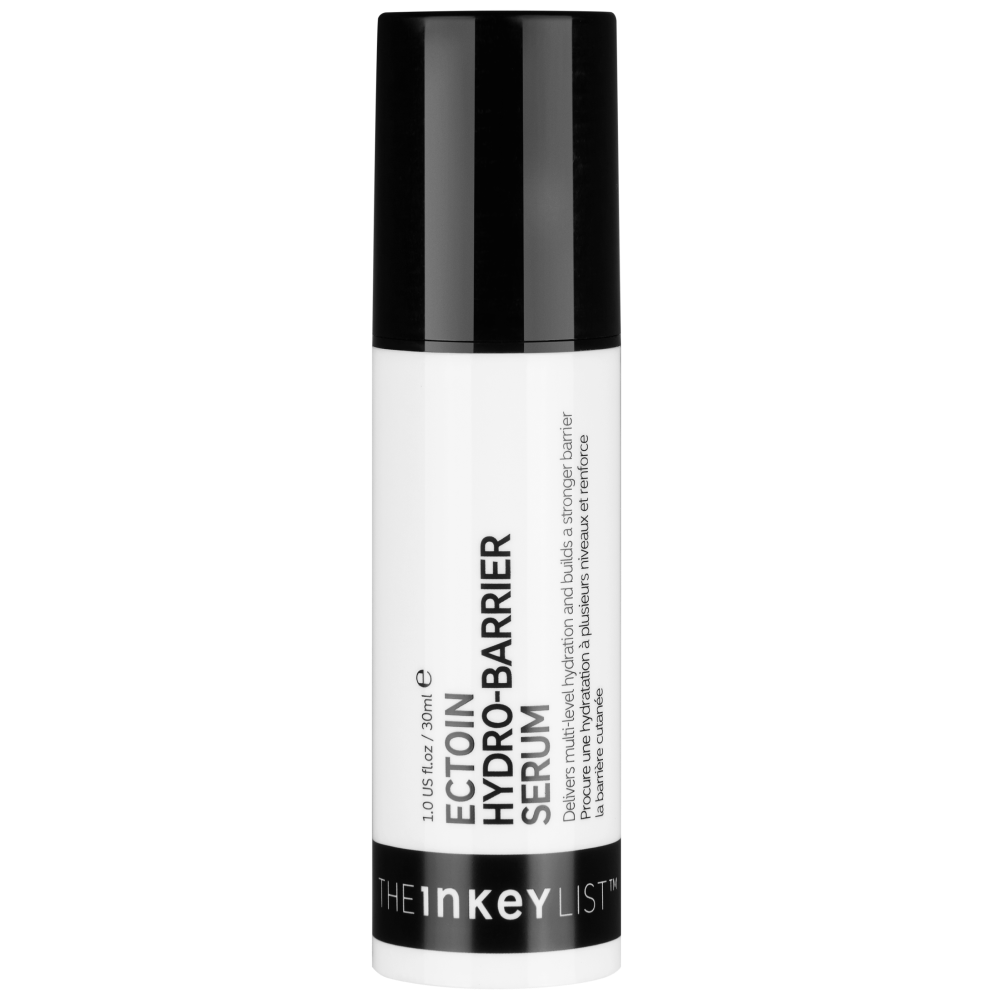
Ectoin Hydro-Barrier Serum

Ectoin Hydro-Barrier Serum
The INKEY List USA
ectoin-hydro-barrier-serum
Serum
9784789500197
Morning or Evening?
How often will you use this product?
Notes


Highlights
WHAT IS IT?
Hydrating barrier serum with 2% Ectoin
FEATURES
Restores skin bounce in 3 days, strengthens barrier in 15 minutes, delivers hydration up to 10 surface layers deep
BEST FOR
combination
CHECKS
Non-tacky formula
Who Is It For?
All Ages All GendersWhat Does It Help With?
Dryness Flakiness Dullness Redness Slackness Damaged Skin BarrierBudget
Affordable (under $30)How To Use
Which routine should it be used in?
Instructions:
Key Information


What The INKEY List USA Says
Product Description:
A daily hydrating serum clinically proven to restore skin bounce in 3 days and deeply hydrate and strengthen the skin's barrier in 15 minutes. Features 2% Ectoin and Multi-Molecular Hyaluronic Acid for deep hydration up to 10 surface layers.
About the Brand:
Ingredients Overview
Ingredients List
Aqua (Water / Eau), Propanediol, Caprylic/Capric Triglyceride, Coconut Alkanes, Ectoin, Hydrolyzed Sodium Hyaluronate, Sodium Hyaluronate, Maltodextrin, Phenoxyethanol, Sodium Stearoyl Glutamate, Panthenol, Cetearyl Alcohol, Sclerotium Gum, Xanthan Gum, Glyceryl Stearate, Jojoba Esters, Coco-Caprylate/Caprate, Ethylhexylglycerin, Sodium Citrate, Helianthus Annuus (Sunflower) Seed Wax, Citric Acid, Polyglyceryl-10 Stearate, Avena Sativa (Oat) Kernel Extract, Glycerin, Leuconostoc/Radish Root Ferment Filtrate, Triethyl Citrate, Pentylene Glycol, Polyglyceryl-6 Behenate, Sodium Hyaluronate Crosspolymer, Ceramide NP, Hyaluronic Acid, Ceramide AP, Cholesterol, Phytosphingosine, Behenic Acid, Sodium Levulinate, Polyglycerin-3, Potassium Sorbate, Sodium Cetearyl Sulfate, Ceramide EOP.
Key Ingredients
Ectoin, Multi-Molecular Hyaluronic Acid
Ingredients Details
Caprylic/capric Triglyceride
Common Name(s): Mct oil,fractionated coconut oil,c8/c10 triglyceride
CAS Number: 73398-61-5
DESCRIPTION
What It Does: Lightweight, stable emollient that solubilizes oil-soluble actives for excellent delivery without greasy feel.
Why It's Used: Universal lightweight emollient base and solubilizer for oil-soluble actives in serums and low-viscosity formulations where mineral oil or petrolatum would be too heavy.
How It Works: Medium-chain length provides ideal balance of spreading coefficient, penetration rate, and barrier-sealing properties. excellent solubilizer for vitamin e, retinoids, and other lipophilic actives.
Typically Found In: Serums,facial oils,sunscreens,anti-aging products,hair products
TECHNICAL DETAILS
Primary Category: Active ingredient – medium-chain triglyceride emollient
Secondary Functions: Active solubilizer,spreading agent
Application Areas:

Facial Skincare
Body Care
Hair Care

Beard Care
Color Cosmetics (Makeup)
Dietary/Oral Supplements
Typical Concentration Range: 1%–50%
SOURCING & ETHICS
Vegan Status: Conditional - feedstock declaration required
Halal Status: Unverified - feedstock declaration required (plant, animal and petrochemical routes all exist)
Source Notes: Fractionated by hydrolysis and re-esterification of coconut oil. only c8 and c10 fatty acids retained. [audit 2026-07-29 rev2: origin-dependent: the same inci exists in plant, animal and petrochemical versions and the name does not discriminate. determination requires shariah-panel sign-off.]
SKIN COMPATIBILITY
Irritancy Rating: 1/5 – very low
Comedogenicity Rating: 1/5 – very low; medium-chain length generally non-comedogenic
Sensitivity Concerns: Non-irritating.
Safe for Sensitive Skin: Yes
SAFETY & COMPATIBILITY
Safety Profile: Excellent safety profile. ewg score: 1.
Works Well With: Humectants,ceramides,actives as carrier
Avoid Combining With: No significant incompatibilities
SCIENTIFIC NOTE
Mct oil's medium-chain length (c8/c10) provides superior oxidative stability vs longer polyunsaturated chains and better skin aesthetics (lighter, less greasy) vs longer chain emollients (c16/c18). excellent solubilizer for retinoic acid, tocopheryl esters, and other lipophilic actives.
Last Verified: 2026-03-12
Primary Sources: Cosing database,cir safety assessment,ewg skin deep
Cetearyl Alcohol
Common Name(s): Cetostearyl alcohol,c16-18 fatty alcohol
CAS Number: 8005-44-5
DESCRIPTION
What It Does: Provides fatty alcohol emulsification and thickening for stable, well-textured emulsions.
Why It's Used: The most widely used fatty alcohol in cosmetics – provides emulsification, thickening, and emolliency simultaneously from a single ingredient with excellent safety profile.
How It Works: Forms bilayer lamellar structures in water with emulsifiers creating a viscous structured network that thickens and stabilizes emulsions. fatty alcohol emolliency provides direct skin conditioning. bilayer formation reduces inter-droplet coalescence in emulsions.
Typically Found In: Creams,lotions,conditioners – virtually all emulsion products
TECHNICAL DETAILS
Primary Category: Functional ingredient – fatty alcohol emulsifier/thickener
Secondary Functions: Barrier sealing,softening
Application Areas:
Facial Skincare
Body Care
Hair Care
Beard Care
Color Cosmetics (Makeup)
Dietary/Oral Supplements
Typical Concentration Range: 1%–25%
SOURCING & ETHICS
Vegan Status: Yes - standard ethanol routes are non-animal; confirm denaturant origin
Halal Status: Conditional - ethanol production route and residual concentration; jurisdiction-dependent, refer to certifier stance
Source Notes: Plant-derived, synthetic or animal-derived. verify source. [audit 2026-07-29 rev2: ethanol pathway; determination depends on route, on whether the plant also produces beverage alcohol, and on residual concentration. determination requires shariah-panel sign-off.]
SKIN COMPATIBILITY
Irritancy Rating: 1/5 – very low
Comedogenicity Rating: 1/5 – low; formulation-dependent
Sensitivity Concerns: Non-irritating.
Safe for Sensitive Skin: Yes
SAFETY & COMPATIBILITY
Safety Profile: Excellent safety profile. ewg score: 1.
Works Well With: Humectants,ceramides,actives as carrier
Avoid Combining With: No significant incompatibilities
SCIENTIFIC NOTE
Cetearyl alcohol's ability to form lamellar liquid crystal structures ('krafft phases') with water and co-emulsifiers provides not only emulsion stability but also enhanced skin penetration via the lamellar skin barrier pathway. these crystalline structures can act as a reservoir for active ingredients, slowly releasing them as the lamellar structure melts on skin contact.
Last Verified: 2026-03-12
Primary Sources: Cosing database,cir safety assessment
Coconut Alkanes
Common Name(s): Coconut alkanes,cosmetic active,functional ingredient
CAS Number: N/a
DESCRIPTION
What It Does: Delivers characteristic cosmetic function at recommended use concentration.
Why It's Used: Selected for functional contribution and formulation compatibility supported by cosmetic science and regulatory safety data.
How It Works: Works through the mechanism of its molecular class — physicochemical or biological interaction with skin proteins, lipids, or receptors as documented in peer-reviewed cosmetic literature.
Typically Found In: Skin care formulations
TECHNICAL DETAILS
Primary Category: Active ingredient – cosmetic active
Secondary Functions: Skin conditioning
Application Areas:
Facial Skincare
Body Care
Hair Care
Beard Care
Color Cosmetics (Makeup)
Dietary/Oral Supplements
Typical Concentration Range: 0.1%–10%
SOURCING & ETHICS
Vegan Status: Conditional - supplier confirmation required
Halal Status: Unverified - supplier confirmation required
Source Notes: Commercially produced for cosmetic use. verify vegan/halal status with supplier. [audit 2026-07-29 rev2: the record's own source_notes does not assert a non-animal origin, or instructs the reader to verify with the supplier; "yes" asserts knowledge the record does not hold. determination requires shariah-panel sign-off.]
SKIN COMPATIBILITY
Irritancy Rating: 1/5 – very low
Comedogenicity Rating: 0/5 – non-comedogenic
Sensitivity Concerns: Well-tolerated by most skin types.
Safe for Sensitive Skin: Yes
SAFETY & COMPATIBILITY
Safety Profile: Good safety profile at recommended concentrations. ewg score: 1–2.
Works Well With: Standard skincare actives
Avoid Combining With: No known significant incompatibilities
SCIENTIFIC NOTE
Coconut alkanes has an established safety and efficacy profile within the cosmetic regulatory framework at standard use concentrations.
Last Verified: 2026-03-12
Primary Sources: Cosing database,coconut alkanes technical literature
Ectoin
Common Name(s): Ectoin,extremophile stress protector,anti-aging humectant
CAS Number: N/a
DESCRIPTION
What It Does: Hydrates by forming a water-shell around skin biomolecules, stabilises cellular membranes against heat/uv stress, and reduces inflammatory cytokine release in stressed skin.
Why It's Used: Provides dual humectancy plus cellular protection — unique among humectants for its documented ability to stabilise skin proteins and membranes against uv and environmental stress, not just attract water.
How It Works: Ectoin's tetrahydropyrimidine ring forms an ordered hydration shell around proteins, lipid bilayers, and dna through kosmotropic water structuring. this preferential hydration excludes denaturants and uv-stress mediators from biomolecule surfaces while simultaneously providing humectant moisture binding.
Typically Found In: Sensitive skin,uv protection actives,anti-inflammatory
TECHNICAL DETAILS
Primary Category: Functional ingredient – humectant
Secondary Functions: Tewl reduction,skin plumping
Application Areas:
Facial Skincare
Body Care
Hair Care
Beard Care
Color Cosmetics (Makeup)
Dietary/Oral Supplements
Typical Concentration Range: 0.1%–2%
SOURCING & ETHICS
Vegan Status: Conditional - supplier confirmation required
Halal Status: Unverified - supplier confirmation required
Source Notes: Synthetic or naturally derived. excellent aqueous solubility. [audit 2026-07-29 rev2: status downgraded on audit. determination requires shariah-panel sign-off.]
SKIN COMPATIBILITY
Irritancy Rating: 1/5 – very low
Comedogenicity Rating: 0/5 – non-comedogenic
Sensitivity Concerns: Non-irritating; suitable for all skin types.
Safe for Sensitive Skin: Yes
SAFETY & COMPATIBILITY
Safety Profile: Excellent safety profile. ewg score: 1.
Works Well With: Ceramides,emollients,occlusives,glycerin,hyaluronic acid
Avoid Combining With: No significant incompatibilities
SCIENTIFIC NOTE
Extremophile bacteria accumulate ectoin at up to 15% intracellular concentration to survive 100°c temperatures and extreme salinity — the same biomolecule protection mechanism applies to human skin cells at cosmetic concentrations.
Last Verified: 2026-03-12
Primary Sources: Cosing database,ectoin extremophile anti-stress clinical review