

Nykaa E retail limited
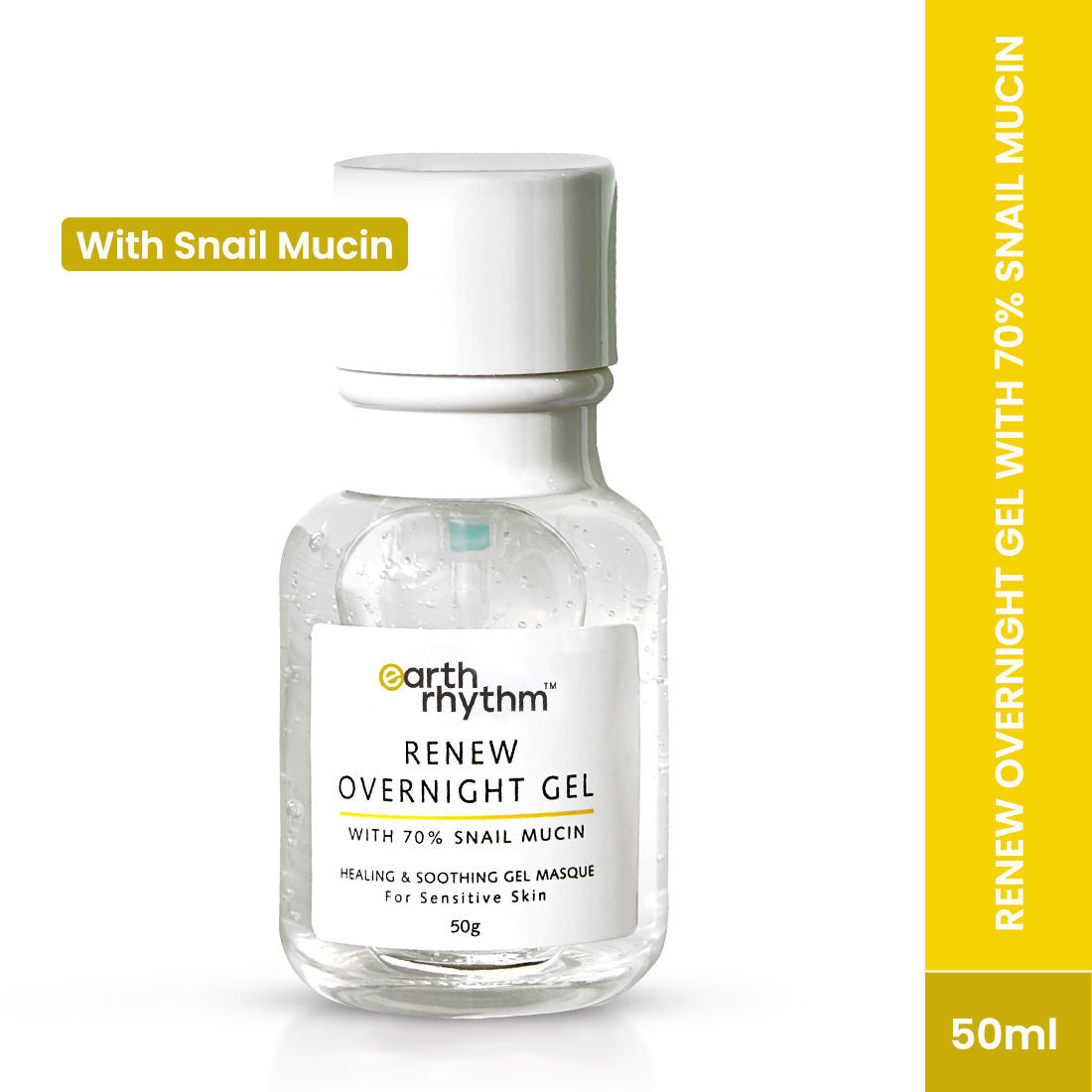
Earth Rhythm Renew Overnight Gel with 70% Snail Mucin, Overnight Acne Care and Reinforces Barrier(50ML)

Earth Rhythm Renew Overnight Gel with 70% Snail Mucin, Overnight Acne Care and Reinforces Barrier(50ML)
Nykaa E retail limited
earth-rhythm-renew-overnight-gel-with-70-snail-mucin-overnight-acne-care-and-reinforces-barrier-50ml
Serum
10084766187813
Morning or Evening?
How often will you use this product?
Notes


Highlights
WHAT IS IT?
Overnight Gel with 70% Snail Mucin
FEATURES
BEST FOR
CHECKS
Who Is It For?
What Does It Help With?
Acne Care Barrier ReinforcementBudget
Affordable (under $30)How To Use
Which routine should it be used in?
Instructions:
Key Information

About the Brand:
Ingredients Overview
Ingredients List
Distilled Water, Snail Filtrate, Aloe Barbadensis Leaf Juice, Sodium Hyaluronate Citrus Limon (Lemon) Fruit Extract, Crosspolymer, Polyacrylate Crosspolymer-6, Acetamidoethoxyethanol, Benzyl Alcohol, Glycerin (and) Sorbic Acid
Key Ingredients
snail-mucin
Ingredients Details
Acetamidoethoxyethanol
Common Name(s): Acetamidoethoxyethanol,acetamidoethoxyethanol,cosmetic functional ingredient,established cosmetic active
CAS Number: N/a
DESCRIPTION
What It Does: Provides the characteristic cosmetic function of its ingredient class through its molecular chemistry at recommended use concentration.
Why It's Used: Acetamidoethoxyethanol is selected for the specific functional properties of its molecular class — the chemical architecture of acetamidoethoxyethanol delivers the required cosmetic performance through documented interactions with skin biology and formulation matrix.
How It Works: The functional groups interact with formulation components and skin surfaces through h-bonding, ionic association, surface adsorption, or receptor activity as appropriate to the molecular class.
Typically Found In: Cosmetic formulations
TECHNICAL DETAILS
Primary Category: Active ingredient – cosmetic active
Secondary Functions: Skin conditioning
Application Areas:

Facial Skincare

Body Care
Hair Care
Beard Care
Color Cosmetics (Makeup)
Dietary/Oral Supplements
Typical Concentration Range: 0.1%–10%
SOURCING & ETHICS
Vegan Status: Conditional - supplier confirmation required
Halal Status: Unverified - supplier confirmation required
Source Notes: Commercially produced for cosmetic use. verify vegan/halal status with supplier. [audit 2026-07-29 rev2: the record's own source_notes does not assert a non-animal origin, or instructs the reader to verify with the supplier; "yes" asserts knowledge the record does not hold. determination requires shariah-panel sign-off.]
SKIN COMPATIBILITY
Irritancy Rating: 1/5 – very low
Comedogenicity Rating: 0/5 – non-comedogenic
Sensitivity Concerns: Well-tolerated by most skin types.
Safe for Sensitive Skin: Yes
SAFETY & COMPATIBILITY
Safety Profile: Good safety profile at recommended concentrations. ewg score: 1–2.
Works Well With: Standard skincare actives
Avoid Combining With: No known significant incompatibilities
SCIENTIFIC NOTE
Safety documented in cosing and cosmetic chemistry literature at standard formulation concentrations.
Last Verified: 2026-03-22
Primary Sources: Cosing database,acetamidoethoxyethanol technical review
Aloe Barbadensis Leaf Juice
Common Name(s): Aloe barbadensis leaf juice,cosmetic active,functional ingredient
CAS Number: N/a
DESCRIPTION
What It Does: Delivers characteristic cosmetic function — skin conditioning, protection, preservation, or active biological benefit — at recommended use concentration.
Why It's Used: Selected for its functional contribution and formulation compatibility — supported by cosmetic science literature and regulatory safety assessment.
How It Works: Works through the mechanism of its molecular class — physicochemical interaction with the formulation or biological interaction with skin proteins, lipids, or receptors as documented in peer-reviewed literature.
Typically Found In: Skin care formulations
TECHNICAL DETAILS
Primary Category: Active ingredient – cosmetic active
Secondary Functions: Skin conditioning
Application Areas:
Facial Skincare
Body Care
Hair Care
Beard Care
Color Cosmetics (Makeup)
Dietary/Oral Supplements
Typical Concentration Range: 0.1%–10%
SOURCING & ETHICS
Vegan Status: Conditional - supplier confirmation required
Halal Status: Unverified - supplier confirmation required
Source Notes: Commercially produced for cosmetic use. verify vegan/halal status with supplier. [audit 2026-07-29 rev2: the record's own source_notes does not assert a non-animal origin, or instructs the reader to verify with the supplier; "yes" asserts knowledge the record does not hold. determination requires shariah-panel sign-off.]
SKIN COMPATIBILITY
Irritancy Rating: 1/5 – very low
Comedogenicity Rating: 0/5 – non-comedogenic
Sensitivity Concerns: Well-tolerated by most skin types.
Safe for Sensitive Skin: Yes
SAFETY & COMPATIBILITY
Safety Profile: Good safety profile at recommended concentrations. ewg score: 1–2.
Works Well With: Standard skincare actives
Avoid Combining With: No known significant incompatibilities
SCIENTIFIC NOTE
Aloe barbadensis leaf juice delivers documented functional benefit with an established safety profile within the cosmetic regulatory framework (cosing eu, cir usa).
Last Verified: 2026-03-12
Primary Sources: Cosing database,aloe barbadensis leaf juice technical literature
Benzyl Alcohol
Common Name(s): Phenylcarbinol,benzenemethanol,alpha-hydroxytoluene
CAS Number: 100-51-6
DESCRIPTION
What It Does: Provides dual fragrance and preservative activity as an aromatic alcohol.
Why It's Used: Multi-function ingredient serving as both fragrance component and preservative – reduces formulation complexity by providing both functions in one ingredient.
How It Works: Phenylcarbinol provides antimicrobial activity via membrane disruption (effective vs gram-positive bacteria and moulds). solvent for fragrances and difficult-to-dissolve actives. mild oxidative conversion to benzaldehyde provides sweet almond-like fragrance.
Typically Found In: Fragrances,preserved cosmetics,solvent systems
TECHNICAL DETAILS
Primary Category: Fragrance component / preservative
Secondary Functions: Skin conditioning
Application Areas:
Facial Skincare
Body Care
Hair Care
Beard Care
Color Cosmetics (Makeup)
Dietary/Oral Supplements
Typical Concentration Range: 0.001%–1% (fragrance); up to 1% as preservative
SOURCING & ETHICS
Vegan Status: Yes - standard ethanol routes are non-animal; confirm denaturant origin
Halal Status: Conditional - ethanol production route and residual concentration; jurisdiction-dependent, refer to certifier stance
Source Notes: Commercially produced for cosmetic use. verify vegan/halal status with supplier. [audit 2026-07-29 rev2: ethanol pathway; determination depends on route, on whether the plant also produces beverage alcohol, and on residual concentration. determination requires shariah-panel sign-off.]
SKIN COMPATIBILITY
Irritancy Rating: 1/5 – very low
Comedogenicity Rating: 0/5 – non-comedogenic
Sensitivity Concerns: Well-tolerated by most skin types.
Safe for Sensitive Skin: Yes
SAFETY & COMPATIBILITY
Safety Profile: Eu cosmetics regulation: declared fragrance allergen. also listed as approved preservative (annex v, max 1%). dual regulatory status (fragrance + preservative) depending on function and concentration.
Works Well With: Standard skincare actives
Avoid Combining With: No known significant incompatibilities
SCIENTIFIC NOTE
Benzyl alcohol's dual regulatory status (fragrance allergen and approved preservative) creates a formulation paradox: it must be listed as a fragrance allergen if present >0.001% (leave-on) regardless of whether it was added for fragrance or preservation. this regulatory dual identity means a preservative added for antimicrobial function triggers the same allergen declaration requirement as a fragrance added for scent.
Last Verified: 2026-03-12
Primary Sources: Cosing database,ifra standards,eu preservative annex v
Polyacrylate Crosspolymer-6
Common Name(s): Polyacrylate crosspolymer-6,cosmetic active,functional ingredient
CAS Number: N/a
DESCRIPTION
What It Does: Delivers characteristic cosmetic function at recommended use concentration.
Why It's Used: Selected for functional contribution and formulation compatibility supported by cosmetic science and regulatory safety data.
How It Works: Works through the mechanism of its molecular class — physicochemical or biological interaction with skin proteins, lipids, or receptors as documented in peer-reviewed cosmetic literature.
Typically Found In: Skin care formulations
TECHNICAL DETAILS
Primary Category: Active ingredient – cosmetic active
Secondary Functions: Skin conditioning
Application Areas:
Facial Skincare
Body Care
Hair Care
Beard Care
Color Cosmetics (Makeup)
Dietary/Oral Supplements
Typical Concentration Range: 0.1%–10%
SOURCING & ETHICS
Vegan Status: Conditional - supplier confirmation required
Halal Status: Unverified - supplier confirmation required
Source Notes: Commercially produced for cosmetic use. verify vegan/halal status with supplier. [audit 2026-07-29 rev2: the record's own source_notes does not assert a non-animal origin, or instructs the reader to verify with the supplier; "yes" asserts knowledge the record does not hold. determination requires shariah-panel sign-off.]
SKIN COMPATIBILITY
Irritancy Rating: 1/5 – very low
Comedogenicity Rating: 0/5 – non-comedogenic
Sensitivity Concerns: Well-tolerated by most skin types.
Safe for Sensitive Skin: Yes
SAFETY & COMPATIBILITY
Safety Profile: Good safety profile at recommended concentrations. ewg score: 1–2.
Works Well With: Standard skincare actives
Avoid Combining With: No known significant incompatibilities
SCIENTIFIC NOTE
Polyacrylate crosspolymer-6 has an established safety and efficacy profile within the cosmetic regulatory framework at standard use concentrations.
Last Verified: 2026-03-12
Primary Sources: Cosing database,polyacrylate crosspolymer-6 technical literature