

Dr. Sheth's
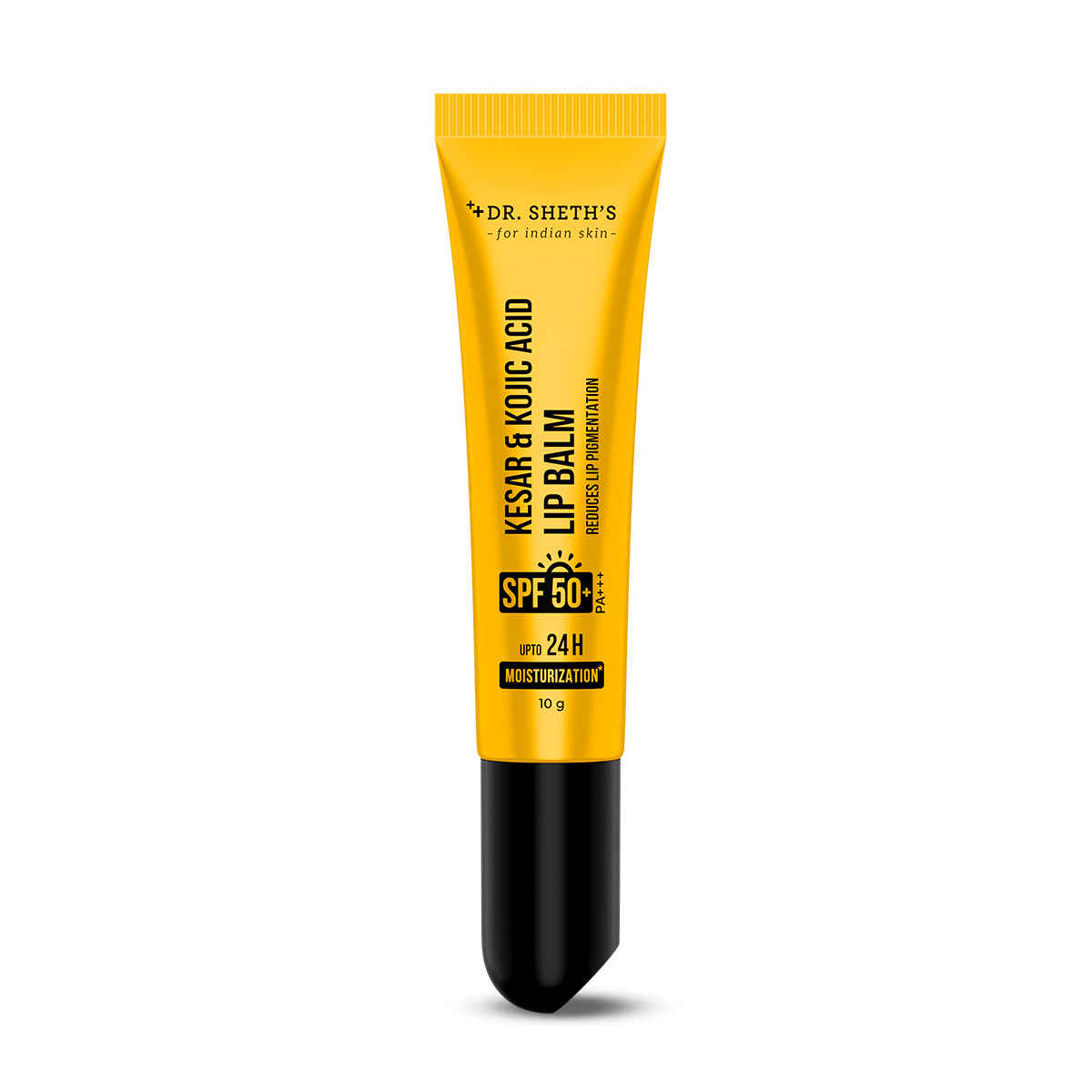
Dr. Sheth's Kesar & Kojic Acid Lip Balm | 24H Moisturization | Fights Lip Pigmentation | Sun Protection with SPF 50+ PA+++ | 10 gm

Dr. Sheth's Kesar & Kojic Acid Lip Balm | 24H Moisturization | Fights Lip Pigmentation | Sun Protection with SPF 50+ PA+++ | 10 gm
Dr. Sheth's
dr-sheths-kesar-kojic-acid-lip-balm-24h-moisturization-fights-lip-pigmentation-sun-protection-with-spf-50-pa-10-gm
Lip care
10084950049061
Morning or Evening?
How often will you use this product?
Notes


Highlights
WHAT IS IT?
Lip Balm with key actives including Kesar and Kojic Acid
FEATURES
24H Moisturization, Fights Lip Pigmentation, Sun Protection SPF 50+ PA+++, Lightweight, Non-greasy, Quick Absorbing
BEST FOR
sensitive
CHECKS
Does not mention containing fragrance, parabens, silicones explicitly; use empty for unknown
Who Is It For?
No Explicit Age Or Gender MentionedWhat Does It Help With?
Lip Hydration Pigmentation Reduction Sun ProtectionBudget
Affordable (under $30)How To Use
Which routine should it be used in?
Instructions:
Key Information


What Dr. Sheth's Says
Product Description:
Say hi to Dr. Sheth's Kesar & Kojic Acid Lip Balm – your new go-to for hydrated, non-pigmented & sun-protected lips! It's packed with SPF 50+ PA+++ to protect your lips from the sun's harmful rays, while targeting pigmentation. This balm acts like a nourishing layer for your lips, keeping them hydrated for up to 24 hours. Ingredients like Kesar, Kojic Acid, Peptides, Squalane, Murumuru Butter work together to brighten, repair, and restore moisture, leaving lips feeling softer. Lightweight, non-greasy, and quick-absorbing, suitable for daily use in a sleek, travel-friendly tube.
About the Brand:
Ingredients Overview
Ingredients List
Hydrogenated polyisobutene, Diisostearyl malate, Petrolatum, Microcrystalline wax,Ethylhexyl Salicylate, Ethylhexyl Triazone, Diethylhexyl Butamido Triazone, Zinc Oxide, C12-15 Alkyl Benzoate, Isostearic Acid, Polyhydroxystearic acid, Butyrospermum parkii butter, Avocado butter, Cocoa butter, Olive oil, Caprylic/capric triglyceride, Bis-behenyl/isostearyl/phytosteryl dimer dilinoleyl dimer dilinoleate, Jojoba oil, Argan oil, Sorbitan Olivate, Castor oil, Ethylene/propylene/styrene copolymer, Candelilla wax Euphorbia cerifera wax, Bees wax, Dextrin palmitate, Squalane, Punica granatum seed oil, Glycerin, Butylene glycol, Kojic acid dipalmitate, Saffron extract, Lauryl Laurate, Silica dimethyl silylate, Tocopheryl Acetate, Olea Europaea Fruit Extract, Olea Europaea Fruit Oil, Olea EuropaeaLeaf Extract, Oligopeptide-1, Butylene/ethylene/styrene copolymer, Caprylyl methicone, Hyaluronic acid, Saffron oil
Key Ingredients
Kesar, Kojic Acid, Peptides, Squalane, Murumuru Butter
Ingredients Details
Argan Oil
Common Name(s): Argan oil,moroccan oil
CAS Number: 223747-87-3
DESCRIPTION
What It Does: Conditions and nourishes skin and hair with exceptional fatty acid, squalene, and tocopherol content.
Why It's Used: Premium multi-nutrient facial and hair oil – its unique phytosterol and squalene composition provides anti-aging benefits beyond simple emolliency.
How It Works: Balanced oleic/linoleic acid ratio provides both emolliency and barrier repair. high squalene content (6-7%) provides antioxidant and sebum-compatible emolliency. tocopherols provide antioxidant stability and skin benefit. phytosterols inhibit 5-alpha-reductase and reduce inflammation.
Typically Found In: Premium facial oils,hair oils,anti-aging products
TECHNICAL DETAILS
Primary Category: Functional ingredient – emollient
Secondary Functions: Squalene content,phytosterol activity,anti-aging
Application Areas:

Facial Skincare
Body Care
Hair Care
Beard Care

Color Cosmetics (Makeup)
Dietary/Oral Supplements
Typical Concentration Range: 1%–100%
SOURCING & ETHICS
Vegan Status: Yes – from argania spinosa kernels
Halal Status: Yes
Source Notes: Cold-pressed from roasted (food) or unroasted (cosmetic) argan kernels. unesco world heritage traditional production. fair trade certified sources available.
SKIN COMPATIBILITY
Irritancy Rating: 1/5 – very low
Comedogenicity Rating: 0/5 – non-comedogenic
Sensitivity Concerns: Non-irritating.
Safe for Sensitive Skin: Yes
SAFETY & COMPATIBILITY
Safety Profile: Excellent safety profile. ewg score: 1.
Works Well With: Humectants,ceramides,actives as carrier
Avoid Combining With: No significant incompatibilities
SCIENTIFIC NOTE
Argan oil's squalene content (6-7%) is among the highest of all plant oils, second only to olive oil. squalene is an endogenous skin lipid that declines with age, making argan oil's high squalene level particularly relevant for anti-aging facial use – replenishing both essential fatty acids and age-depleting skin lipids simultaneously.
Last Verified: 2026-03-12
Primary Sources: Cosing database,boucetta et al. argan oil review,cir safety assessment
Bees Wax
Common Name(s): Bees wax
DESCRIPTION
What It Does: Provides antioxidant protection, soothing anti-inflammatory effects, and skin-conditioning benefits through plant-derived polyphenols and phytochemicals.
Why It's Used: Plant extracts concentrate bioactive phytochemicals evolved for environmental protection — uv, microbial, and oxidative stressors — that translate to skin benefits.
How It Works: Polyphenols (flavonoids, phenolic acids) inhibit nf-κb-mediated inflammatory signaling, scavenge reactive oxygen species through electron donation, and chelate pro-oxidant metal ions to reduce oxidative skin damage.
Typically Found In: Lipsticks,balms,creams,deodorants
TECHNICAL DETAILS
Primary Category: Waxes
Secondary Functions: Emollient,film former
Application Areas:
Facial Skincare
Body Care
Hair Care
Beard Care
Color Cosmetics (Makeup)
Dietary/Oral Supplements
Typical Concentration Range: 1–40%
SOURCING & ETHICS
Vegan Status: Conditional - supplier confirmation required
Halal Status: Unverified - supplier confirmation required
Source Notes: Contains animal-derived components (bees wax...); not suitable for vegan formulations. [audit 2026-07-29 rev2: the record's own source_notes does not assert a non-animal origin, or instructs the reader to verify with the supplier; "yes" asserts knowledge the record does not hold. determination requires shariah-panel sign-off.]
SKIN COMPATIBILITY
Irritancy Rating: 1899-12-31 00:00:00 -0800
Comedogenicity Rating: 1899-12-31 00:00:00 -0800
Sensitivity Concerns: Low sensitization potential at recommended use concentrations.
Safe for Sensitive Skin: Conditional
SAFETY & COMPATIBILITY
Safety Profile: Well-characterized cosmetic ingredient with established safety profile. generally non-irritating at typical use concentrations. suitable for leave-on and rinse-off cosmetics.
Works Well With: Other waxes,emollients,pigments
Avoid Combining With: Strongly alkaline conditions
SCIENTIFIC NOTE
Plant secondary metabolites (flavonoids, terpenes, phenolic acids) are biosynthesized as defense compounds against uv, herbivores, and pathogens. their anti-inflammatory activity typically derives from competitive inhibition of cox-2 and 5-lox enzymes (ic50 1–50 µm), while antioxidant activity involves single electron transfer (set) and hydrogen atom transfer (hat) mechanisms with structure-dependent rate constants.
Last Verified: 2025-01-15
Primary Sources: Cosing eu database; pcpc cosmetic ingredient safety reviews; ingredient-specific safety and efficacy literature
Bis-behenyl/isostearyl/phytosteryl Dimer Dilinoleyl Dimer Dilinoleate
Common Name(s): Bis-behenyl/isostearyl/phytosteryl dimer dilinoleyl dimer dilinoleate
DESCRIPTION
What It Does: Smooths and softens skin by filling intercorneocyte spaces, reducing friction, and providing a pleasant aesthetic skin feel in formulations.
Why It's Used: Synthetic esters provide tailored aesthetic properties — spreadability, skin feel, volatility, refractive index — that natural oils alone cannot consistently deliver.
How It Works: The ester molecule fills microscopic surface irregularities between corneocytes, reducing coefficient of friction, reflecting light uniformly, and providing a lubrication layer that protects the skin surface.
Typically Found In: Moisturizers,sunscreens,color cosmetics,body lotions,lip products
TECHNICAL DETAILS
Primary Category: Synthetic emollients
Secondary Functions: Emollient
Application Areas:
Facial Skincare
Body Care
Hair Care
Beard Care
Color Cosmetics (Makeup)
Dietary/Oral Supplements
Typical Concentration Range: 1–20%
SOURCING & ETHICS
Vegan Status: Yes
Halal Status: Yes
Source Notes: Synthetically produced ester emollient; no animal components.
SKIN COMPATIBILITY
Irritancy Rating: 1
Comedogenicity Rating: 1
Sensitivity Concerns: Low sensitization potential at recommended use concentrations.
Safe for Sensitive Skin: Yes
SAFETY & COMPATIBILITY
Safety Profile: Well-characterized cosmetic ingredient with established safety profile. generally non-irritating at typical use concentrations. suitable for leave-on and rinse-off cosmetics.
Works Well With: Silicones,uv filters,other emollients
Avoid Combining With: Strongly alkaline conditions (risk of saponification of ester-type emollients)
SCIENTIFIC NOTE
The spreading coefficient of an emollient is governed by its surface tension, viscosity, and polarity. esters with branched alkyl chains (e.g., isopropyl, isostearyl) spread rapidly and leave a non-tacky film; linear long-chain esters provide more substantive moisturization. hlb value determines the preferred formulation system (w/o vs o/w emulsions).
Last Verified: 2025-01-15
Primary Sources: Cosing eu database; pcpc cosmetic ingredient safety reviews; ingredient-specific safety and efficacy literature
Butylene/ethylene/styrene Copolymer
Common Name(s): Butylene/ethylene/styrene copolymer
DESCRIPTION
What It Does: Delivers targeted skin-conditioning or bioactive benefits through a specific mechanism of action suited to the formulation's intended purpose.
Why It's Used: Specialty actives address specific skin concerns through targeted molecular mechanisms, providing efficacy beyond what base formulation ingredients alone can achieve.
How It Works: The bioactive compound interacts with specific molecular targets in skin cells or the extracellular matrix — enzymes, receptors, structural proteins, or signaling molecules — triggering beneficial biological responses.
Typically Found In: Serums,treatments,moisturizers,specialty products
TECHNICAL DETAILS
Primary Category: Specialty actives
Secondary Functions: Skin-conditioning,anti-aging
Application Areas:
Facial Skincare
Body Care
Hair Care
Beard Care
Color Cosmetics (Makeup)
Dietary/Oral Supplements
Typical Concentration Range: 0.01–5%
SOURCING & ETHICS
Vegan Status: Conditional - supplier confirmation required
Halal Status: Unverified - supplier confirmation required
Source Notes: Specialty active ingredient; check individual sourcing for vegan status. [audit 2026-07-29 rev2: the record's own source_notes does not assert a non-animal origin, or instructs the reader to verify with the supplier; "yes" asserts knowledge the record does not hold. determination requires shariah-panel sign-off.]
SKIN COMPATIBILITY
Irritancy Rating: 1
Comedogenicity Rating: 0
Sensitivity Concerns: Low sensitization potential at recommended use concentrations.
Safe for Sensitive Skin: Yes
SAFETY & COMPATIBILITY
Safety Profile: Well-characterized cosmetic ingredient with established safety profile. generally non-irritating at typical use concentrations. suitable for leave-on and rinse-off cosmetics.
Works Well With: Niacinamide,hyaluronic acid,vitamin c,peptides
Avoid Combining With: Incompatible with oxidizing agents; check ph stability
SCIENTIFIC NOTE
Specialty actives typically work through enzyme inhibition (e.g., tyrosinase inhibition for brightening, mmp inhibition for anti-aging), receptor activation (e.g., retinoid receptors, ppar-γ for barrier genes), or transcription factor modulation (e.g., nrf2 for antioxidant gene upregulation). structure-activity relationships determine potency and selectivity.
Last Verified: 2025-01-15
Primary Sources: Cosing eu database; pcpc cosmetic ingredient safety reviews; ingredient-specific safety and efficacy literature