

Dr. Sheth's
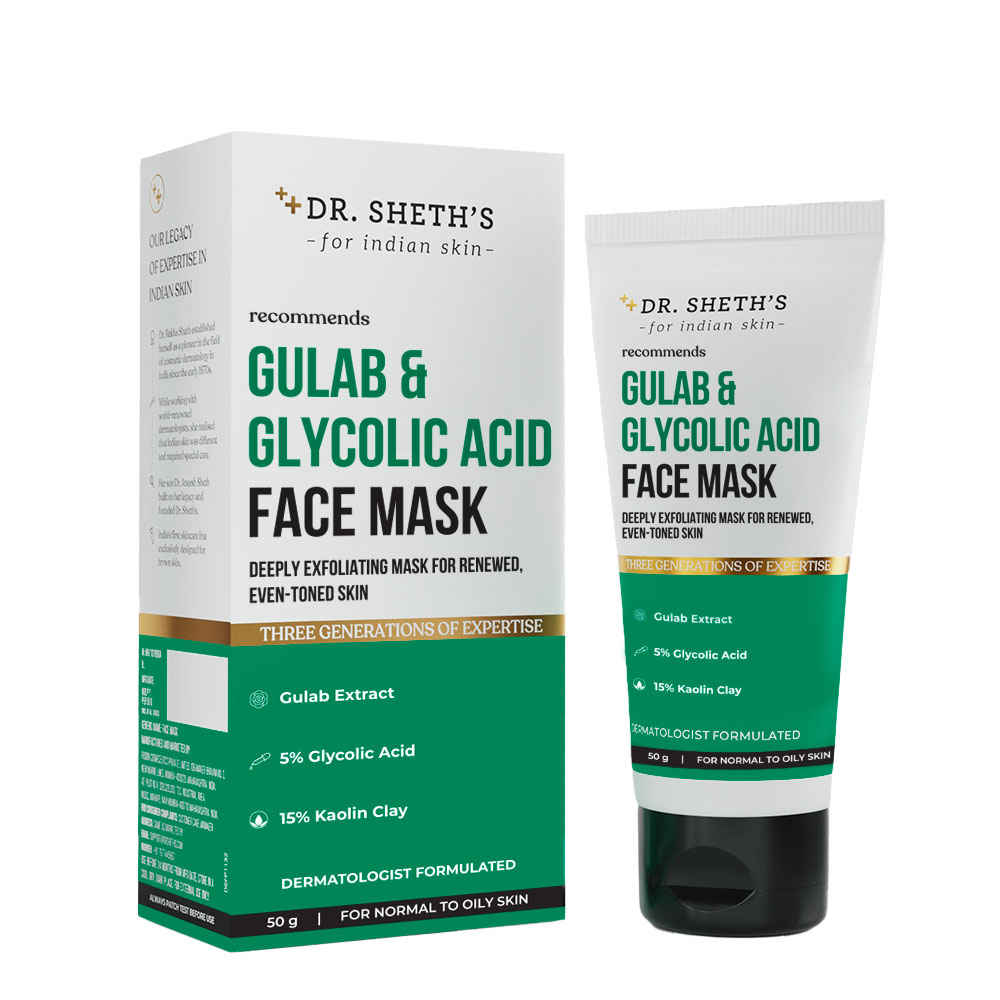
Dr. Sheth's Gulab & Glycolic Acid Face Mask 50 gm

Dr. Sheth's Gulab & Glycolic Acid Face Mask 50 gm
Dr. Sheth's
dr-sheths-gulab-glycolic-acid-face-mask-50-gm
Moisturize
10084848206117
Morning or Evening?
How often will you use this product?
Notes


Highlights
WHAT IS IT?
Face Mask and Moisturizer with exfoliating and hydrating properties
FEATURES
Lightweight exfoliating moisturizer, stimulates cell renewal, nourishes deeper skin layers, glycolic acid for exfoliation and renewal, glycerin and aquaxyl for hydration, soothing gulab extract calms inflammation and replenishes moisture
BEST FOR
sensitive
CHECKS
Does not contain oil
Who Is It For?
Adults UnisexWhat Does It Help With?
Uneven Skin Tone Dullness Dryness Inflammation Hydration RetentionBudget
Mid-range ($30-$75)How To Use
Which routine should it be used in?
Instructions:
Key Information


What Dr. Sheth's Says
Product Description:
Hydrate Renew & Radiate Dr. Sheths Gulab & Glycolic Acid OilFree Moisturizer is a lightweight exfoliating moisturizer that stimulates cell renewal while nourishing the deeper layers of skin. Potent Glycolic Acid molecules penetrate the skin to continually exfoliate thus renewing the skin for an even & revitalized appearance. Boosted with powerful moisturizing ingredients like Glycerin & Aquaxyl it enhances hydration & plumps the skins surface for longlasting moisture retention. Soothing Gulab Extract calms inflammation & replenishes moisture levels thus promoting a smooth hydrated & spotless complexion.
About the Brand:
Ingredients Overview
Ingredients List
Aqua (Water), Kaolin, Glycolic Acid, Cetearyl Alcohol, Glyceryl Stearate, Glycerin, Aloe Barbadensis Extract, Bentonite, Coco-Caprylate/Caprate, Magnesium Aluminum Silicate, PEG-100 Stearate, Phenoxyethanol, Titanium Dioxide, Cocamidopropyl Betaine, Illite, Arachidyl Alcohol, Propylene Glycol Dibenzoate, Xylitylglucoside, Cetearyl Ethylhexanoate, Rose Extract, Xanthan Gum, Xylitol, Behenyl Alcohol, Anhydroxylitol, Stearyl Caprylate, Arachidyl Glucoside, Ethylhexylglycerin, Propanediol, Aluminum Hydroxide, Disodium EDTA, Lauric Acid, Sodium Metabisulfite, Zea Mays (Corn) Starch, Butylene Glycol, Propylene Glycol, Citrus Reticulata (Tangerine) Fruit Extract, Chondrus Crispus Extract, Sodium Benzoate, Glucose Pentaisovalerate, Panax Ginseng Leaf/Root/Stem Extract, Potassium Sorbate, Nelumbo Nucifera Flower Extract, Nymphaea Caerulea Flower Extract and Citric Acid
Key Ingredients
Glycolic Acid,Glycerin,Aquaxyl,Gulab Extract
Ingredients Details
Aloe Barbadensis Extract
Common Name(s): Aloe barbadensis extract,aloe barbadensis extract,botanical extract,phytochemical active
CAS Number: N/a
DESCRIPTION
What It Does: Provides antioxidant protection from polyphenol radical scavenging, anti-inflammatory activity from terpenoid nf-kb/cox pathway inhibition, and skin conditioning from the phytochemical secondary metabolite complex.
Why It's Used: Aloe barbadensis extract is selected for the characteristic secondary metabolite signature of aloe barbadensis — whether polyphenols, terpenoids, alkaloids, or polysaccharides, the phytochemical profile provides antioxidant, anti-inflammatory, or skin conditioning benefits specific to this botanical species.
How It Works: Botanical secondary metabolites: polyphenol catechol h-atom donation for ros scavenging (rate constants 10⁶-10⁹ m⁻¹s⁻¹); terpenoids inhibit iκb kinase blocking nf-κb; flavonoids compete at cox-1/2; alkaloids modulate specific receptors for targeted bioactivity.
Typically Found In: Botanical skin care
TECHNICAL DETAILS
Primary Category: Active ingredient – antioxidant
Secondary Functions: Free radical scavenging,anti-aging
Application Areas:

Facial Skincare
Body Care

Hair Care
Beard Care
Color Cosmetics (Makeup)
Dietary/Oral Supplements
Typical Concentration Range: 0.1%–10%
SOURCING & ETHICS
Vegan Status: Conditional
Halal Status: Conditional
Source Notes: Plant-derived extract or synthetic.
SKIN COMPATIBILITY
Irritancy Rating: 1/5 – very low
Comedogenicity Rating: 0/5 – non-comedogenic
Sensitivity Concerns: Non-irritating; well-tolerated.
Safe for Sensitive Skin: Yes
SAFETY & COMPATIBILITY
Safety Profile: Excellent safety profile. ewg score: 1.
Works Well With: Vitamin c,vitamin e,ferulic acid,spf,other antioxidants
Avoid Combining With: No significant incompatibilities
SCIENTIFIC NOTE
Standardise to marker compounds for consistent bioactivity — field-grown material varies 3-10× in secondary metabolite content.
Last Verified: Cosing database,aloe barbadensis extract botanical extract review
Primary Sources: 2026-03-22
Aluminum Hydroxide
Common Name(s): Aluminum hydroxide,cosmetic active,functional ingredient
CAS Number: N/a
DESCRIPTION
What It Does: Delivers characteristic cosmetic function at recommended use concentration.
Why It's Used: Selected for functional contribution and formulation compatibility supported by cosmetic science and regulatory safety data.
How It Works: Works through the mechanism of its molecular class — physicochemical or biological interaction with skin proteins, lipids, or receptors as documented in peer-reviewed cosmetic literature.
Typically Found In: Skin care formulations
TECHNICAL DETAILS
Primary Category: Active ingredient – cosmetic active
Secondary Functions: Skin conditioning
Application Areas:
Facial Skincare
Body Care
Hair Care
Beard Care
Color Cosmetics (Makeup)
Dietary/Oral Supplements
Typical Concentration Range: 0.1%–10%
SOURCING & ETHICS
Vegan Status: Conditional
Halal Status: Yes
Source Notes: Commercially produced for cosmetic use. verify vegan/halal status with supplier.
SKIN COMPATIBILITY
Irritancy Rating: 1/5 – very low
Comedogenicity Rating: 0/5 – non-comedogenic
Sensitivity Concerns: Well-tolerated by most skin types.
Safe for Sensitive Skin: Yes
SAFETY & COMPATIBILITY
Safety Profile: Good safety profile at recommended concentrations. ewg score: 1–2.
Works Well With: Standard skincare actives
Avoid Combining With: No known significant incompatibilities
SCIENTIFIC NOTE
Aluminum hydroxide has an established safety and efficacy profile within the cosmetic regulatory framework at standard use concentrations.
Last Verified: Cosing database,aluminum hydroxide technical literature
Primary Sources: 2026-03-12
Anhydroxylitol
Common Name(s): Anhydroxylitol,cosmetic active,functional ingredient
CAS Number: N/a
DESCRIPTION
What It Does: Delivers characteristic cosmetic function at recommended use concentration.
Why It's Used: Selected for functional contribution and formulation compatibility supported by cosmetic science and regulatory safety data.
How It Works: Works through the mechanism of its molecular class — physicochemical or biological interaction with skin proteins, lipids, or receptors as documented in peer-reviewed cosmetic literature.
Typically Found In: Skin care formulations
TECHNICAL DETAILS
Primary Category: Active ingredient – cosmetic active
Secondary Functions: Skin conditioning
Application Areas:
Facial Skincare
Body Care
Hair Care
Beard Care
Color Cosmetics (Makeup)
Dietary/Oral Supplements
Typical Concentration Range: 0.1%–10%
SOURCING & ETHICS
Vegan Status: Conditional
Halal Status: Yes
Source Notes: Commercially produced for cosmetic use. verify vegan/halal status with supplier.
SKIN COMPATIBILITY
Irritancy Rating: 1/5 – very low
Comedogenicity Rating: 0/5 – non-comedogenic
Sensitivity Concerns: Well-tolerated by most skin types.
Safe for Sensitive Skin: Yes
SAFETY & COMPATIBILITY
Safety Profile: Good safety profile at recommended concentrations. ewg score: 1–2.
Works Well With: Standard skincare actives
Avoid Combining With: No known significant incompatibilities
SCIENTIFIC NOTE
Anhydroxylitol has an established safety and efficacy profile within the cosmetic regulatory framework at standard use concentrations.
Last Verified: Cosing database,anhydroxylitol technical literature
Primary Sources: 2026-03-12
Arachidyl Alcohol
Common Name(s): Fatty alcohol,co-emulsifier thickener,emollient emulsion stabiliser
CAS Number: N/a
DESCRIPTION
What It Does: Thickens o/w emulsions by forming a lamellar crystal gel network with nonionic emulsifiers, provides co-emulsifier activity at the oil-water interface, and conditions skin from the c16-c18 chain's sc lipid compatibility.
Why It's Used: Fatty alcohols are irreplaceable in conventional o/w cream formulation — the lamellar gel network they form with peg emulsifiers provides the thick, stable cream texture that consumers expect, while delivering emolliency unavailable from wax-only structuring.
How It Works: Cetyl/stearyl alcohol packs into α-gel or β-gel crystal phases with peg surfactants (ceteareth-20, polysorbates) at 60–80°c, forming an ordered lamellar bilayer network on cooling. this network provides zero-shear viscosity (cream texture) and mechanical emulsion stability simultaneously — the fundamental mechanism of classical o/w cream formulation.
Typically Found In: Creams,lotions,o/w emulsions
TECHNICAL DETAILS
Primary Category: Functional ingredient – emollient
Secondary Functions: Barrier sealing,softening
Application Areas:
Facial Skincare
Body Care
Hair Care
Beard Care
Color Cosmetics (Makeup)
Dietary/Oral Supplements
Typical Concentration Range: 1%–15%
SOURCING & ETHICS
Vegan Status: Yes
Halal Status: Yes
Source Notes: Plant-derived, synthetic or animal-derived. verify source.
SKIN COMPATIBILITY
Irritancy Rating: 1/5 – very low
Comedogenicity Rating: 1/5 – low; formulation-dependent
Sensitivity Concerns: Non-irritating.
Safe for Sensitive Skin: Yes
SAFETY & COMPATIBILITY
Safety Profile: Excellent safety profile. ewg score: 1.
Works Well With: Humectants,ceramides,actives as carrier
Avoid Combining With: No significant incompatibilities
SCIENTIFIC NOTE
The fatty alcohol + peg emulsifier ratio is critical: 1:3 (fatty alcohol:peg emulsifier by weight) typically provides optimal lamellar gel network formation and cream texture. deviating from this ratio shifts the phase structure from lamellar gel to micellar, reducing viscosity.
Last Verified: Cosing database,fatty alcohol lamellar gel cream texture review
Primary Sources: 2026-03-12
