

DR. MORITA
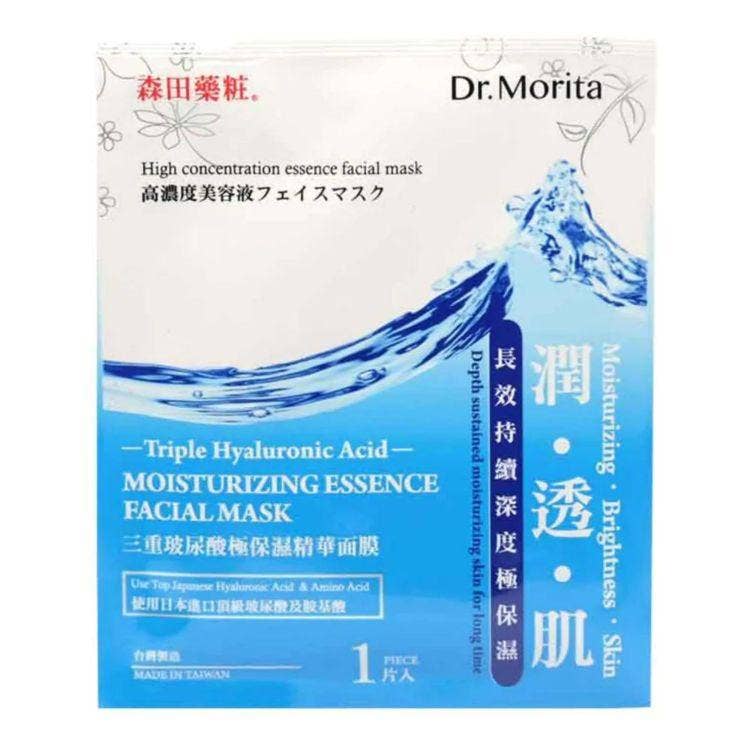
Dr Morita Triple Hyaluronic Acid Moisturizing Essence Facial Mask 1S

Dr Morita Triple Hyaluronic Acid Moisturizing Essence Facial Mask 1S
DR. MORITA
dr-morita-triple-hyaluronic-acid-moisturizing-essence-facial-mask-1s
Face Mask
10084950573349
Morning or Evening?
How often will you use this product?
Notes


Highlights
WHAT IS IT?
Facial Mask with 8 ingredients
FEATURES
Excellent hydrating effects, Keeps skin moisturized & hydrated, Invisible Tencel & Pearl paper materials for perfect fit
BEST FOR
sensitive
CHECKS
Not specified
Who Is It For?
What Does It Help With?
Hydration MoisturizationBudget
Affordable (under $30)How To Use
Which routine should it be used in?
Instructions:
Key Information


What DR. MORITA Says
Product Description:
Excellent hydrating effects keeps our skin moisturized & hydrated
Uses the newly developed invisible Tencel & Pearl paper materials that perfectly fit on your face
About the Brand:
Ingredients Overview
Ingredients List
hydrolized-hyaluronic-acid, undaria-pinnatifida-extract, isoleucine, proline, ulva-lactuca-extract, horse-chestnut-seed-extract, sodium-lactate, arginine
Key Ingredients
hydrolized hyaluronic acid, undaria pinnatifida extract, ulva lactuca extract
Ingredients Details
Arginine
Common Name(s): L-arginine,2-amino-5-guanidinopentanoic acid
CAS Number: 74-79-3
DESCRIPTION
What It Does: Conditions skin, attracts moisture, supports wound healing, and improves microcirculation via no synthesis.
Why It's Used: Multi-functional amino acid for skin hydration, conditioning, and wound healing in peptide and nmf formulations.
How It Works: Guanidinium group binds water (humectant). substrate for nitric oxide synthase (enos) producing nitric oxide that vasodilates capillaries improving skin nutrition. stimulates fibroblast proliferation for wound healing.
Typically Found In: Anti-aging serums,wound healing products,nmf moisturizers,scalp treatments
TECHNICAL DETAILS
Primary Category: Active ingredient – amino acid
Secondary Functions: Wound healing,microcirculation,nmf component
Application Areas:

Facial Skincare

Body Care
Hair Care
Beard Care
Color Cosmetics (Makeup)
Dietary/Oral Supplements
Typical Concentration Range: 0.5%–5%
SOURCING & ETHICS
Vegan Status: Yes – plant-derived or synthetic
Halal Status: Yes
Source Notes: Fermentation-derived or synthetic. natural skin component.
SKIN COMPATIBILITY
Irritancy Rating: 1/5 – very low
Comedogenicity Rating: 0/5 – non-comedogenic
Sensitivity Concerns: Non-irritating; endogenous skin molecule.
Safe for Sensitive Skin: Yes
SAFETY & COMPATIBILITY
Safety Profile: Excellent safety profile. natural skin nmf component. ewg score: 1.
Works Well With: Hyaluronic acid,ceramides,peptides,other amino acids
Avoid Combining With: No significant incompatibilities
SCIENTIFIC NOTE
Arginine is a conditionally essential amino acid in wound healing where local demand exceeds synthesis capacity. topical arginine provides the nos substrate locally for no-mediated vasodilation and immune cell function in healing tissue.
Last Verified: Cosing database,cir safety assessment,witte & barbul arginine wound healing review
Primary Sources: 2026-03-12
Isoleucine
Common Name(s): L-isoleucine,2-amino-3-methylpentanoic acid
CAS Number: 73-32-5
DESCRIPTION
What It Does: Stimulates beta-defensin production in keratinocytes for innate antimicrobial defense while conditioning skin.
Why It's Used: Used in formulations combining skin conditioning with antimicrobial defense through keratinocyte defensin stimulation.
How It Works: Activates tlr2/tlr1 signaling in keratinocytes, upregulating beta-defensin-2 (hbd-2) and other antimicrobial peptides providing innate skin immune defense.
Typically Found In: Sensitive skin products,antimicrobial formulations,acne-prone formulations
TECHNICAL DETAILS
Primary Category: Active ingredient – amino acid
Secondary Functions: Defensin stimulation,innate immunity support
Application Areas:
Facial Skincare
Body Care
Hair Care
Beard Care
Color Cosmetics (Makeup)
Dietary/Oral Supplements
Typical Concentration Range: 0.5%–3%
SOURCING & ETHICS
Vegan Status: Yes – plant-derived or synthetic
Halal Status: Yes
Source Notes: Fermentation-derived or synthetic. natural skin component.
SKIN COMPATIBILITY
Irritancy Rating: 1/5 – very low
Comedogenicity Rating: 0/5 – non-comedogenic
Sensitivity Concerns: Non-irritating; endogenous skin molecule.
Safe for Sensitive Skin: Yes
SAFETY & COMPATIBILITY
Safety Profile: Excellent safety profile. natural skin nmf component. ewg score: 1.
Works Well With: Hyaluronic acid,ceramides,peptides,other amino acids
Avoid Combining With: No significant incompatibilities
SCIENTIFIC NOTE
Isoleucine's stimulation of beta-defensin-2 via tlr1/2 signaling provides a unique antimicrobial mechanism where the amino acid activates the skin's own defensin production rather than directly killing bacteria – a more physiologically elegant approach to antimicrobial protection.
Last Verified: Cosing database,schauber et al. isoleucine defensin study
Primary Sources: 2026-03-12
Proline
Common Name(s): Pyrrolidine-2-carboxylic acid,l-proline
CAS Number: 147-85-3
DESCRIPTION
What It Does: Provides hydroxyproline precursor collagen support and osmoprotective nmf conditioning.
Why It's Used: The collagen imino acid — proline and its hydroxylated form hydroxyproline comprise approximately 25% of all collagen amino acids, making l-proline the essential structural amino acid for topical collagen support.
How It Works: Hydroxylated by prolyl hydroxylase (requires vitamin c) to form hydroxyproline — essential for collagen triple-helix stability. nmf osmoprotective function via pyrrolidine ring water interaction. proline-rich repeats in collagen provide gly-pro-hyp triple-helix structure.
Typically Found In: Collagen-support products,nmf moisturisers,anti-aging formulas
TECHNICAL DETAILS
Primary Category: Active ingredient – collagen amino acid
Secondary Functions: Skin conditioning
Application Areas:
Facial Skincare
Body Care
Hair Care
Beard Care
Color Cosmetics (Makeup)
Dietary/Oral Supplements
Typical Concentration Range: 0.5%–5%
SOURCING & ETHICS
Vegan Status: Yes – fermentation
Halal Status: Yes
Source Notes: Commercially produced for cosmetic use. verify vegan/halal status with supplier.
SKIN COMPATIBILITY
Irritancy Rating: 1/5 – very low
Comedogenicity Rating: 0/5 – non-comedogenic
Sensitivity Concerns: Well-tolerated by most skin types.
Safe for Sensitive Skin: Yes
SAFETY & COMPATIBILITY
Safety Profile: Good safety profile at recommended concentrations. ewg score: 1–2.
Works Well With: Standard skincare actives
Avoid Combining With: No known significant incompatibilities
SCIENTIFIC NOTE
Proline's prolyl hydroxylase conversion to hydroxyproline is completely vitamin c-dependent: the hydroxylase enzyme requires ascorbate as cofactor. this biochemical interdependence explains why vitamin c deficiency (scurvy) produces defective collagen — hydroxyproline cannot form without vitamin c, and without hydroxyproline the collagen triple helix cannot maintain its structure at body temperature, causing tissue fragility.
Last Verified: Cosing database,cir safety assessment
Primary Sources: 2026-03-12
