

DR. MORITA
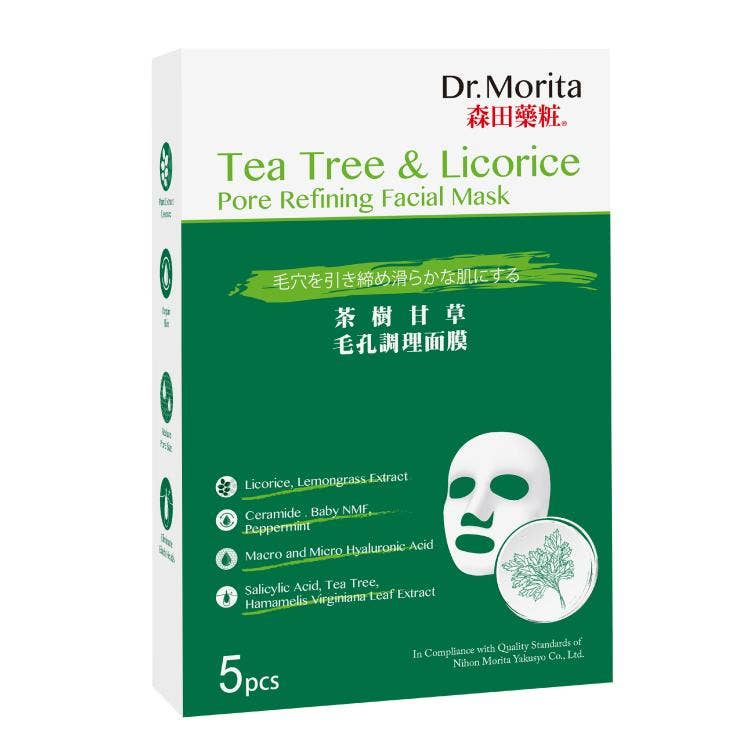
Dr Morita Tea Tree & Licorice Pore Refining Facial Mask 5S

Dr Morita Tea Tree & Licorice Pore Refining Facial Mask 5S
DR. MORITA
dr-morita-tea-tree-licorice-pore-refining-facial-mask-5s
Face Mask
10084788076837
Morning or Evening?
How often will you use this product?
Notes


Highlights
WHAT IS IT?
Facial Mask with 2 main ingredients
FEATURES
Intensive moisture therapy, reduces oil and acne, purifies and minimizes pores, quickly recovers skin
BEST FOR
sensitive
CHECKS
Who Is It For?
What Does It Help With?
Reduces Oil And Acne Pore Refining MoisturizingBudget
Affordable (under $30)How To Use
Which routine should it be used in?
Instructions:
Key Information


What DR. MORITA Says
Product Description:
Delivers intensive moisture therapy to quench even the driest of skin types. Reduces oil and acne, powerfully purifies and minimizes pores. Quickly recovers skin to pure and refreshing state.
About the Brand:
Ingredients Overview
Ingredients List
Water/Aqua, Dipropylene Glycol, Isopentyldiol, Glycosyl Trehalose, Hydrogenated Starch Hydrolysate, Diglycerin, Polyglycerin-3, PEG/PPG/Polybutylene Glycol-8/5/3 Glycerin, PPG-28-Buteth-35, Sodium PCA, Olive Oil PEG-7 Esters, Niacinamide, PEG-40 Hydrogenated Castor Oil, Pentylene Glycol, Phenoxyethanol, Xanthum Gum, Methylparaben, Panthenol, Sodium Hyaluronate, Hydrolyzed Hyaluronic Acid, Dipotassium Glycyrrhizate, Allantoin, Chlorphenesin, Sodium Carbomer, Acrylates/Vinyl Isodecanote Crosspolymer, Centella Asiatica Extract, Pholiota Microspora Polysaccharides, Ceramide NP, Ceramide AP, Ceramide EOP, Serine, Glycine, Alanine, Histidine, Threonine, Proline, Leucine, Valine, Isoleucine, Tyrosine, Phenylalanine, Asparagine, Tryptophan, Magnesium PCA, Sodium Lactate, Copper Tripeptide-1, Urea, Creatine, Glucosamine HCI, Taurine, Aspartic Acid, Glutamic Acid, Glutamine, Citrulline, Cysteine, Methionine, Ornithine, Lysine, Arginine, Glycyrrhiza Glabra (Licorice) Root Extract, Maleleuca Alternifolia (Tea Tree) Leaf Extract, Hamamelis Vriginiana (Witch Hazel) Bark/ Leag/Twig Extract, Cymbopogon Citratus Extract, Squalane, Salicylic Acid, Maleleuca Alternifolia (Tea Tree) Leaf Oil, Menthol, Menthyl Lactate
Key Ingredients
tea tree extract, licorice extract
Ingredients Details
Alanine
Common Name(s): L-alanine,2-aminopropanoic acid
CAS Number: 56-41-7
DESCRIPTION
What It Does: Provides nmf-type humectant moisture retention and skin conditioning.
Why It's Used: Simple, well-tolerated nmf amino acid humectant for skin conditioning formulations.
How It Works: Small methyl side chain contributes to protein hydrophobic core but as free amino acid provides direct humectant activity via amino and carboxyl groups. converted to pyruvate for cellular atp production via gluconeogenesis.
Typically Found In: Nmf moisturizers,skin conditioning products
TECHNICAL DETAILS
Primary Category: Active ingredient – amino acid
Secondary Functions: Nmf component,cellular energy
Application Areas:

Facial Skincare

Body Care
Hair Care
Beard Care
Color Cosmetics (Makeup)
Dietary/Oral Supplements
Typical Concentration Range: 0.5%–5%
SOURCING & ETHICS
Vegan Status: Conditional - feedstock declaration required
Halal Status: Unverified - feedstock declaration required (plant, animal and petrochemical routes all exist)
Source Notes: Fermentation-derived or synthetic. natural skin component. [audit 2026-07-29 rev2: origin-dependent: the same inci exists in plant, animal and petrochemical versions and the name does not discriminate. determination requires shariah-panel sign-off.]
SKIN COMPATIBILITY
Irritancy Rating: 1/5 – very low
Comedogenicity Rating: 0/5 – non-comedogenic
Sensitivity Concerns: Non-irritating; endogenous skin molecule.
Safe for Sensitive Skin: Yes
SAFETY & COMPATIBILITY
Safety Profile: Excellent safety profile. natural skin nmf component. ewg score: 1.
Works Well With: Hyaluronic acid,ceramides,peptides,other amino acids
Avoid Combining With: No significant incompatibilities
SCIENTIFIC NOTE
Free alanine is among the most abundant amino acids in the stratum corneum nmf, where it contributes to the aqueous phase hydration that keeps the stratum corneum flexible and functional.
Last Verified: 2026-03-12
Primary Sources: Cosing database,cir safety assessment
Allantoin
Common Name(s): 5-ureidohydantoin,glyoxyldiureide,aluminum dihydroxy allantoinate
CAS Number: 97-59-6
DESCRIPTION
What It Does: Soothes irritation, accelerates wound healing, promotes skin cell renewal, and provides mild keratolytic exfoliation.
Why It's Used: Gold standard multi-function soothing active – one of the most widely used cosmetic ingredients across all product types for its exceptional tolerability and clinically proven multi-action skin conditioning.
How It Works: Promotes keratinocyte proliferation and fibroblast migration for wound healing. mild keratolytic activity by disrupting corneocyte binding. anti-irritant via direct protein binding and anti-inflammatory cytokine reduction. humectant activity via hydroxyl groups.
Typically Found In: Post-procedure products,sensitive skin formulas,wound care,anti-acne treatments,baby products
TECHNICAL DETAILS
Primary Category: Active ingredient – soothing / anti-inflammatory
Secondary Functions: Wound healing,keratolytic,anti-irritant
Application Areas:
Facial Skincare
Body Care
Hair Care
Beard Care
Color Cosmetics (Makeup)
Dietary/Oral Supplements
Typical Concentration Range: 0.1%–2%
SOURCING & ETHICS
Vegan Status: Conditional - feedstock declaration required
Halal Status: Unverified - feedstock declaration required (plant, animal and petrochemical routes all exist)
Source Notes: Plant-derived extract or synthetic. [audit 2026-07-29 rev2: origin-dependent: the same inci exists in plant, animal and petrochemical versions and the name does not discriminate. determination requires shariah-panel sign-off.]
SKIN COMPATIBILITY
Irritancy Rating: 1/5 – very low
Comedogenicity Rating: 0/5 – non-comedogenic
Sensitivity Concerns: Exceptionally well-tolerated; suitable for all skin types including baby and compromised skin.
Safe for Sensitive Skin: Yes – particularly recommended for sensitive skin
SAFETY & COMPATIBILITY
Safety Profile: Excellent safety profile. ewg score: 1.
Works Well With: Ceramides,panthenol,allantoin,hyaluronic acid,centella asiatica
Avoid Combining With: No significant incompatibilities
SCIENTIFIC NOTE
Allantoin's keratinocyte proliferation stimulation occurs via receptor-mediated signaling (possibly machr activation) rather than non-specific irritation-driven proliferation, making it a true wound-healing stimulant rather than a pro-inflammatory proliferative signal.
Last Verified: 2026-03-12
Primary Sources: Cosing database,cir safety assessment,araújo et al. allantoin review
Asparagine
Common Name(s): L-asparagine,2-amino-3-carbamoylpropanoic acid
CAS Number: 70-47-3
DESCRIPTION
What It Does: Provides skin conditioning and supports n-linked protein glycosylation for ecm structural glycoproteins.
Why It's Used: Used in skin conditioning and ecm-supporting formulations.
How It Works: Primary n-linked glycosylation acceptor (asn-x-ser/thr sequon). glycosylation of collagen, proteoglycans, and fibronectin at asparagine residues critically affects their water retention and structural functions.
Typically Found In: Skin conditioning products,ecm support formulations
TECHNICAL DETAILS
Primary Category: Active ingredient – amino acid
Secondary Functions: Glycoprotein n-glycosylation,ecm support
Application Areas:
Facial Skincare
Body Care
Hair Care
Beard Care
Color Cosmetics (Makeup)
Dietary/Oral Supplements
Typical Concentration Range: 0.5%–3%
SOURCING & ETHICS
Vegan Status: Conditional - supplier confirmation required
Halal Status: Unverified - supplier confirmation required
Source Notes: Fermentation-derived or synthetic. natural skin component. [audit 2026-07-29 rev2: status downgraded on audit. determination requires shariah-panel sign-off.]
SKIN COMPATIBILITY
Irritancy Rating: 1/5 – very low
Comedogenicity Rating: 0/5 – non-comedogenic
Sensitivity Concerns: Non-irritating; endogenous skin molecule.
Safe for Sensitive Skin: Yes
SAFETY & COMPATIBILITY
Safety Profile: Excellent safety profile. natural skin nmf component. ewg score: 1.
Works Well With: Hyaluronic acid,ceramides,peptides,other amino acids
Avoid Combining With: No significant incompatibilities
SCIENTIFIC NOTE
N-linked glycosylation at asparagine residues is essential for proper folding, secretion, and function of nearly all extracellular matrix proteins. age-related changes in glycosylation patterns affect ecm protein function and water binding capacity.
Last Verified: 2026-03-12
Primary Sources: Cosing database,cir safety assessment
Centella Asiatica Extract
Common Name(s): Centella asiatica extract,botanical extract,phytochemical active
CAS Number: N/a
DESCRIPTION
What It Does: Provides antioxidant protection from reactive oxygen species, reduces inflammatory cytokine production in skin, and conditions skin surface through the plant's secondary metabolite complex.
Why It's Used: Chosen for its natural origin narrative, traditional use heritage, and multi-functional phytochemical profile that supports several concurrent skin care claims from one ingredient.
How It Works: Polyphenols, terpenoids, and alkaloids in the extract scavenge ros via hydrogen atom transfer, inhibit nf-kb or cox-2 inflammatory pathways, and interact with skin surface proteins for conditioning.
Typically Found In: Botanical skin care,natural products
TECHNICAL DETAILS
Primary Category: Active ingredient – antioxidant
Secondary Functions: Free radical scavenging,anti-aging
Application Areas:
Facial Skincare
Body Care
Hair Care
Beard Care
Color Cosmetics (Makeup)
Dietary/Oral Supplements
Typical Concentration Range: 0.1%–10%
SOURCING & ETHICS
Vegan Status: Yes
Halal Status: Yes
Source Notes: Plant-derived extract or synthetic.
SKIN COMPATIBILITY
Irritancy Rating: 1/5 – very low
Comedogenicity Rating: 0/5 – non-comedogenic
Sensitivity Concerns: Non-irritating; well-tolerated.
Safe for Sensitive Skin: Yes
SAFETY & COMPATIBILITY
Safety Profile: Excellent safety profile. ewg score: 1.
Works Well With: Vitamin c,vitamin e,ferulic acid,spf,other antioxidants
Avoid Combining With: No significant incompatibilities
SCIENTIFIC NOTE
Plant secondary metabolites evolved as uv photoprotectants and antimicrobial agents — mechanisms that directly translate to cosmetic antioxidant and anti-inflammatory activity in human skin.
Last Verified: 2026-03-12
Primary Sources: Cosing database,centella asiatica extract botanical review