

Nykaa E retail limited
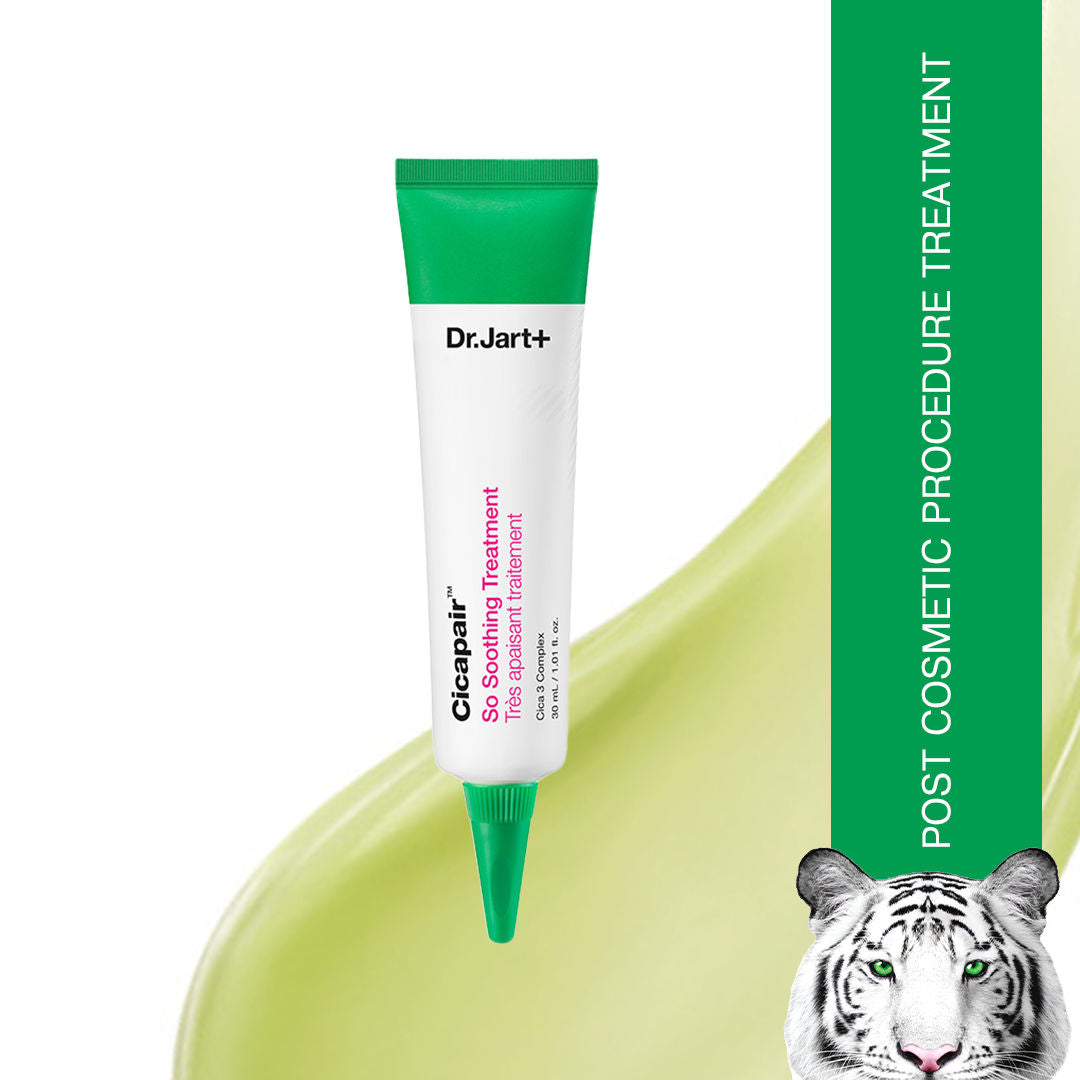
DR.JART+ CICAPAIR SO SOOTHING TREATMENT WITH PEPTIDES & CENTELLA ASIATICA FOR REDUCED VISIBLE REDNESS

DR.JART+ CICAPAIR SO SOOTHING TREATMENT WITH PEPTIDES & CENTELLA ASIATICA FOR REDUCED VISIBLE REDNESS
Nykaa E retail limited
dr-jart-cicapair-so-soothing-treatment-with-peptides-centella-asiatica-for-reduced-visible-redness
Serum
10084726669605
Morning or Evening?
How often will you use this product?
Notes


Highlights
WHAT IS IT?
Soothing treatment serum with Peptides and Centella Asiatica
FEATURES
Reduces visible redness, soothes sensitive skin
BEST FOR
sensitive
CHECKS
Who Is It For?
All Ages All GendersWhat Does It Help With?
Reduces Redness Soothes SkinBudget
Premium ($76-$150)How To Use
Which routine should it be used in?
Instructions:
Key Information

What Nykaa E retail limited Says
Product Description:
A soothing treatment for reduced visible redness with Peptides and Centella Asiatica
About the Brand:
Ingredients Overview
Ingredients List
Water\\Aqua\\Eau, Glycerin, Caprylic/Capric Triglyceride, Ricinus Communis (Castor) Seed Oil, Silica, Cetyl Alcohol, Propanediol, Dicaprylyl Ether, Dipropylene Glycol, Polyglyceryl-3 Methylglucose Distearate, 1, 2-Hexanediol, Pentylene Glycol, Ammonium Acryloyldimethyltaurate/ Vp Copolymer, Glyceryl Stearate, C14-22 Alcohols, Caprylic/ Capric/Myristic/Stearic Triglyceride Stearic Triglyceride, Synthetic Beeswax, Cetearyl Olivate, Sorbitan Olivate, Glyceryl Caprylate, Scutellaria Alpina Flower/Leaf/Stem Extract, Theobroma Cacao (Cocoa) Seed Extract, Centella Asiatica Leaf Extract, Asiaticoside, Madecassic Acid, Asiatic Acid, Caprylyl Glycol, Bacillus Ferment, Acetyl Heptapeptide-4, Copernicia Cerifera (Carnauba) Wax\\Copernicia Cerifera Cera\\Cire De Carnauba, Poly C10-30 Alkyl Acrylate, Xanthan Gum, Citric Acid, Myristic Acid, Dextrin, C12-20 Alkyl Glucoside, Palmitic Acid, Stearic Acid, Arachidic Acid, Oleic Acid, Fragrance (Parfum), Sodium Phytate, Madecassoside, Tocopherol, Blue 1 (CI 42090), Yellow 5 (CI 19140)
Key Ingredients
Peptides, Centella Asiatica
Ingredients Details
1-2-hexanediol
Common Name(s): 1-2-hexanediol,cosmetic active,functional ingredient
CAS Number: N/a
DESCRIPTION
What It Does: Delivers characteristic cosmetic function at recommended use concentration.
Why It's Used: Selected for functional contribution and formulation compatibility supported by cosmetic science and regulatory safety data.
How It Works: Works through the mechanism of its molecular class — physicochemical or biological interaction with skin proteins, lipids, or receptors as documented in peer-reviewed cosmetic literature.
Typically Found In: Skin care formulations
TECHNICAL DETAILS
Primary Category: Active ingredient – cosmetic active
Secondary Functions: Skin conditioning
Application Areas:

Facial Skincare

Body Care
Hair Care
Beard Care
Color Cosmetics (Makeup)
Dietary/Oral Supplements
Typical Concentration Range: 0.1%–10%
SOURCING & ETHICS
Vegan Status: Conditional
Halal Status: Yes
Source Notes: Commercially produced for cosmetic use. verify vegan/halal status with supplier.
SKIN COMPATIBILITY
Irritancy Rating: 1/5 – very low
Comedogenicity Rating: 0/5 – non-comedogenic
Sensitivity Concerns: Well-tolerated by most skin types.
Safe for Sensitive Skin: Yes
SAFETY & COMPATIBILITY
Safety Profile: Good safety profile at recommended concentrations. ewg score: 1–2.
Works Well With: Standard skincare actives
Avoid Combining With: No known significant incompatibilities
SCIENTIFIC NOTE
1-2-hexanediol has an established safety and efficacy profile within the cosmetic regulatory framework at standard use concentrations.
Last Verified: Cosing database,1-2-hexanediol technical literature
Primary Sources: 2026-03-12
Acetyl Heptapeptide-4
Common Name(s): Acetyl heptapeptide-4,acetyl heptapeptide-4,acetyl-stabilised heptapeptide,anti-aging signal peptide
CAS Number: N/a
DESCRIPTION
What It Does: Stimulates fibroblast collagen i, iii, iv synthesis and inhibits mmp-1/mmp-3 collagen degradation — providing clinically measurable wrinkle reduction and skin firmness improvement with regular use.
Why It's Used: Precision peptide pharmacology provides mechanism-based anti-aging efficacy — the defined sequence targeting specific receptors (tgf-beta, egf, integrin) enables quantifiable binding kinetics and reproducible clinical outcomes.
How It Works: Peptide sequence binds cognate receptor activating map kinase or smad cascades → col1a1/col3a1 upregulation and mmp-1/mmp-3 downregulation. spps synthesis provides >98% sequence purity for reproducible receptor binding.
Typically Found In: Anti-aging serums,collagen products
TECHNICAL DETAILS
Primary Category: Active ingredient – peptide
Secondary Functions: Collagen synthesis,anti-aging
Application Areas:
Facial Skincare
Body Care
Hair Care
Beard Care
Color Cosmetics (Makeup)
Dietary/Oral Supplements
Typical Concentration Range: 1–5000 ppm
SOURCING & ETHICS
Vegan Status: Yes
Halal Status: Yes
Source Notes: Synthetically produced via solid-phase peptide synthesis (spps).
SKIN COMPATIBILITY
Irritancy Rating: 1/5 – very low
Comedogenicity Rating: 0/5 – non-comedogenic
Sensitivity Concerns: Non-irritating at recommended concentrations.
Safe for Sensitive Skin: Yes
SAFETY & COMPATIBILITY
Safety Profile: Excellent safety profile. ewg score: 1.
Works Well With: Retinoids,niacinamide,vitamin c,hyaluronic acid
Avoid Combining With: Strong acids below ph 3.5; oxidising agents
SCIENTIFIC NOTE
Peptide sequence purity above 98% is essential for reliable receptor binding — single amino acid substitution can eliminate binding selectivity. spps synthesis and hplc purification are the quality standards for efficacious cosmetic peptides.
Last Verified: Cosing database,acetyl heptapeptide-4 signal peptide review
Primary Sources: 2026-03-22
Arachidic Acid
Common Name(s): Arachidic acid,cosmetic active,functional ingredient
CAS Number: N/a
DESCRIPTION
What It Does: Delivers characteristic cosmetic function at recommended use concentration.
Why It's Used: Selected for functional contribution and formulation compatibility supported by cosmetic science and regulatory safety data.
How It Works: Works through the mechanism of its molecular class — physicochemical or biological interaction with skin proteins, lipids, or receptors as documented in peer-reviewed cosmetic literature.
Typically Found In: Skin care formulations
TECHNICAL DETAILS
Primary Category: Active ingredient – cosmetic active
Secondary Functions: Skin conditioning
Application Areas:
Facial Skincare
Body Care
Hair Care
Beard Care
Color Cosmetics (Makeup)
Dietary/Oral Supplements
Typical Concentration Range: 0.1%–10%
SOURCING & ETHICS
Vegan Status: Conditional
Halal Status: Yes
Source Notes: Commercially produced for cosmetic use. verify vegan/halal status with supplier.
SKIN COMPATIBILITY
Irritancy Rating: 1/5 – very low
Comedogenicity Rating: 0/5 – non-comedogenic
Sensitivity Concerns: Well-tolerated by most skin types.
Safe for Sensitive Skin: Yes
SAFETY & COMPATIBILITY
Safety Profile: Good safety profile at recommended concentrations. ewg score: 1–2.
Works Well With: Standard skincare actives
Avoid Combining With: No known significant incompatibilities
SCIENTIFIC NOTE
Arachidic acid has an established safety and efficacy profile within the cosmetic regulatory framework at standard use concentrations.
Last Verified: Cosing database,arachidic acid technical literature
Primary Sources: 2026-03-12
Asiatic Acid
Common Name(s): Brahmic acid,centella active
CAS Number: 464-92-6
DESCRIPTION
What It Does: Stimulates normal wound healing collagen synthesis while preventing excessive fibrosis and hypertrophic scar formation.
Why It's Used: Unique anti-fibrotic wound healing ingredient – stimulates collagen i and iii while reducing excessive tgf-β-driven fibrosis, making it ideal for preventing hypertrophic scars.
How It Works: Stimulates col1a1/col3a1 transcription in normal fibroblasts while inhibiting tgf-β-induced myofibroblast differentiation that drives hypertrophic scar formation. also inhibits nf-kb for anti-inflammatory activity.
Typically Found In: Scar prevention products,post-procedure recovery,wound healing
TECHNICAL DETAILS
Primary Category: Active ingredient – soothing / anti-inflammatory
Secondary Functions: Anti-fibrotic,scar prevention,collagen regulation
Application Areas:
Facial Skincare
Body Care
Hair Care
Beard Care
Color Cosmetics (Makeup)
Dietary/Oral Supplements
Typical Concentration Range: 0.01%–1%
SOURCING & ETHICS
Vegan Status: Yes – from centella asiatica
Halal Status: Yes
Source Notes: Plant-derived extract or synthetic.
SKIN COMPATIBILITY
Irritancy Rating: 1/5 – very low
Comedogenicity Rating: 0/5 – non-comedogenic
Sensitivity Concerns: Non-irritating; ideal for reactive and sensitive skin.
Safe for Sensitive Skin: Yes – particularly recommended for sensitive skin
SAFETY & COMPATIBILITY
Safety Profile: Excellent safety profile. ewg score: 1.
Works Well With: Ceramides,panthenol,allantoin,hyaluronic acid,centella asiatica
Avoid Combining With: No significant incompatibilities
SCIENTIFIC NOTE
The paradox of asiatic acid is its ability to both stimulate collagen synthesis (anti-aging) and prevent fibrosis (anti-scarring) from the same compound. this selective effect occurs because asiatic acid stimulates normal fibroblast collagen synthesis while specifically inhibiting tgf-β1-driven myofibroblast transformation – the cell type responsible for excessive scar tissue.
Last Verified: Cosing database,maquart et al. asiatic acid study
Primary Sources: 2026-03-12
