

Origins
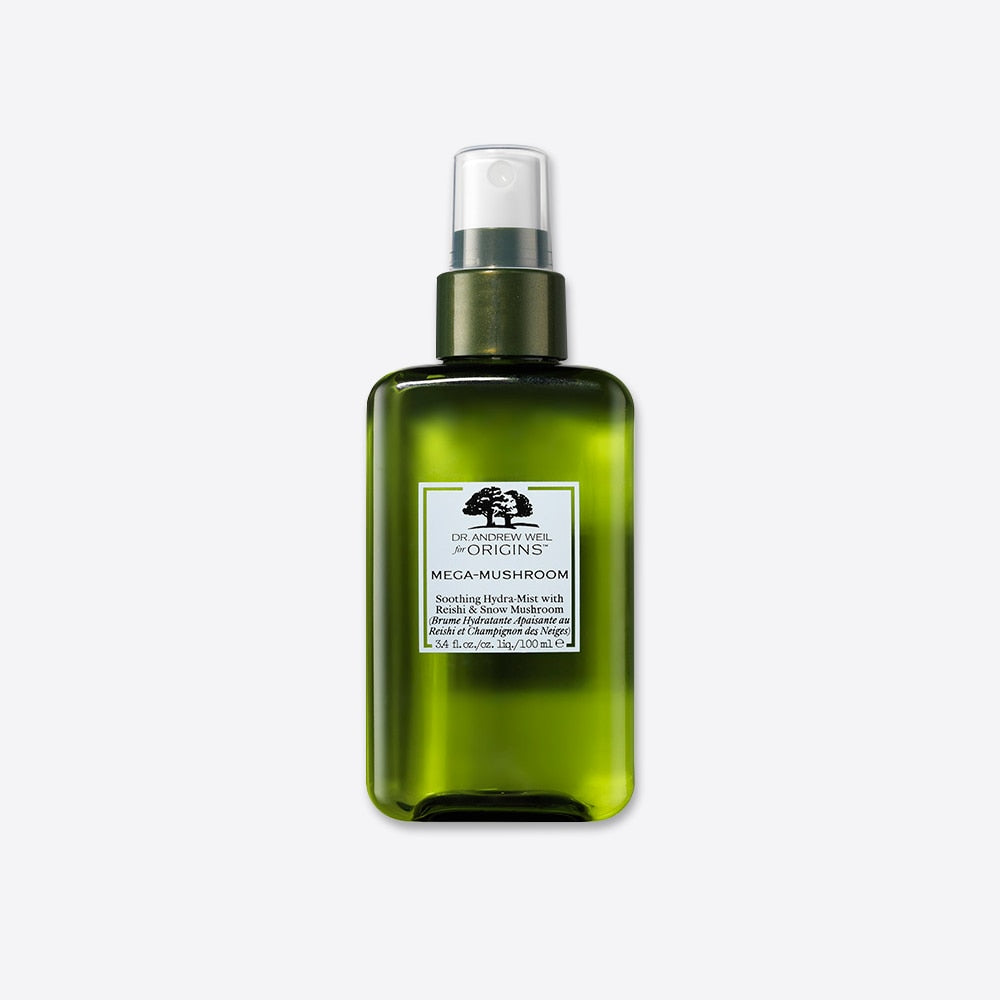
Dr. Andrew Weil for Origins_x0099_ Mega-Mushroom Soothing Hydra-Mist with Reishi and Snow Mushroom

Dr. Andrew Weil for Origins_x0099_ Mega-Mushroom Soothing Hydra-Mist with Reishi and Snow Mushroom
Origins
dr-andrew-weil-for-origins-mega-mushroom-soothing-hydra-mist-with-reishi-and-snow-mushroom
Tone
9818393248037
Morning or Evening?
How often will you use this product?
Notes


Highlights
WHAT IS IT?
Hydrating face mist with mushroom extracts
FEATURES
Ultra-fine droplets absorb on contact, delivers dewy healthy-looking glow, instant hydration boost
BEST FOR
Sensitive, Normal, Dry, Oily, Combination
CHECKS
Free of parabens, phthalates, formaldehyde, SLS, mineral oil, petrolatum, paraffin, DEA, polyethylene beads
Who Is It For?
All Ages All GendersWhat Does It Help With?
Hydration Soothing Redness Relief Luminosity PlumpnessBudget
Mid-range ($30-$75)How To Use
Which routine should it be used in?
Instructions:
Key Information


What Origins Says
Product Description:
This powerhouse face mist—made with ultra-hydrating Snow Mushroom—is a must-dew refresher course for plumper, more luminous skin with just a spritz. Soothe and refresh skin anytime, anywhere with this ultra-nourishing hydrating face mist. Clinically proven to increase moisture by +90% with the power of Snow Mushroom and anti-irritant Reishi Mushroom.
About the Brand:
Ingredients Overview
Ingredients List
Water\Aqua\Eau, Glycerin, Hypnea Musciformis (Algae) Extract, Citrus Nobilis (Mandarin Orange) Peel Oil*, Boswellia Carterii Oil*, Lavandula Angustifolia (Lavender) Oil*, Pogostemon Cablin (Patchouli) Oil*, Citrus Aurantium Dulcis (Orange) Oil*, Pelargonium Graveolens (Geranium) Flower Oil*, Limonene, Citronellol, Linalool, Ganoderma Lucidum (Mushroom) Extract, Gelidiella Acerosa Extract, Fuscoporia Obliqua Sclerotium Extract, Tremella Fuciformis Sporocarp Extract, Lactobacillus Ferment, Glycine, Sodium Hyaluronate, Tremella Fuciformis Polysaccharide, Saccharomyces Ferment Filtrate, Caffeine, Trehalose, Betaine, Butylene Glycol, Decyl Glucoside, Caprylyl Glycol, Citric Acid, Polysorbate 20, Sorbic Acid, Potassium Sorbate, Phenoxyethanol *Essential Oil
Key Ingredients
Snow Mushroom, Reishi Mushroom, Plant-Derived Hyaluronic Acid
Ingredients Details
Boswellia Carterii Oil
Common Name(s): Boswellia carterii oil
DESCRIPTION
What It Does: Nourishes and softens skin through its balanced fatty acid profile, while antioxidant compounds protect against oxidative skin damage.
Why It's Used: Plant oils provide physiologically compatible lipid structures that integrate into the skin barrier and deliver fat-soluble antioxidants directly to skin cells.
How It Works: Fatty acids integrate into stratum corneum lipid lamellae, reinforcing the lipid barrier. antioxidants (tocopherols, carotenoids, polyphenols) neutralize ros through electron donation or singlet oxygen quenching.
Typically Found In: Face oils,serums,moisturizers,hair treatments,body oils
TECHNICAL DETAILS
Primary Category: Plant oils
Secondary Functions: Emollient,antioxidant
Application Areas:

Facial Skincare
Body Care
Hair Care

Beard Care
Color Cosmetics (Makeup)
Dietary/Oral Supplements
Typical Concentration Range: 0.5–30%
SOURCING & ETHICS
Vegan Status: Yes
Halal Status: Yes
Source Notes: Cold-pressed or solvent-extracted plant oil; no animal components.
SKIN COMPATIBILITY
Irritancy Rating: 1
Comedogenicity Rating: 2
Sensitivity Concerns: Low sensitization potential at recommended use concentrations.
Safe for Sensitive Skin: Yes
SAFETY & COMPATIBILITY
Safety Profile: Well-characterized cosmetic ingredient with established safety profile. generally non-irritating at typical use concentrations. suitable for leave-on and rinse-off cosmetics.
Works Well With: Vitamin e,ceramides,other plant oils,squalane
Avoid Combining With: Strong oxidizers (accelerate rancidity)
SCIENTIFIC NOTE
Vegetable oils are triglyceride matrices where the fatty acid composition determines skin compatibility, barrier function, and comedogenicity. oleic acid-rich oils (>60%) soften barrier lipids and enhance penetration; linoleic acid-rich oils reinforce ceramide-poor stratum corneum; saturated fatty acid-rich oils provide occlusion without skin penetration.
Last Verified: 2025-01-15
Primary Sources: Cosing eu database; pcpc cosmetic ingredient safety reviews; aocs plant oil composition databases; fatty acid pharmacology reviews
Citrus Aurantium Dulcis Oil
Common Name(s): Citrus aurantium dulcis oil
DESCRIPTION
What It Does: Nourishes and softens skin through its balanced fatty acid profile, while antioxidant compounds protect against oxidative skin damage.
Why It's Used: Plant oils provide physiologically compatible lipid structures that integrate into the skin barrier and deliver fat-soluble antioxidants directly to skin cells.
How It Works: Fatty acids integrate into stratum corneum lipid lamellae, reinforcing the lipid barrier. antioxidants (tocopherols, carotenoids, polyphenols) neutralize ros through electron donation or singlet oxygen quenching.
Typically Found In: Face oils,serums,moisturizers,hair treatments,body oils
TECHNICAL DETAILS
Primary Category: Plant oils
Secondary Functions: Emollient,antioxidant
Application Areas:
Facial Skincare
Body Care
Hair Care
Beard Care
Color Cosmetics (Makeup)
Dietary/Oral Supplements
Typical Concentration Range: 0.5–30%
SOURCING & ETHICS
Vegan Status: Yes
Halal Status: Yes
Source Notes: Cold-pressed or solvent-extracted plant oil; no animal components.
SKIN COMPATIBILITY
Irritancy Rating: 1
Comedogenicity Rating: 2
Sensitivity Concerns: Low sensitization potential at recommended use concentrations.
Safe for Sensitive Skin: Yes
SAFETY & COMPATIBILITY
Safety Profile: Well-characterized cosmetic ingredient with established safety profile. generally non-irritating at typical use concentrations. suitable for leave-on and rinse-off cosmetics.
Works Well With: Vitamin e,ceramides,other plant oils,squalane
Avoid Combining With: Strong oxidizers (accelerate rancidity)
SCIENTIFIC NOTE
Vegetable oils are triglyceride matrices where the fatty acid composition determines skin compatibility, barrier function, and comedogenicity. oleic acid-rich oils (>60%) soften barrier lipids and enhance penetration; linoleic acid-rich oils reinforce ceramide-poor stratum corneum; saturated fatty acid-rich oils provide occlusion without skin penetration.
Last Verified: 2025-01-15
Primary Sources: Cosing eu database; pcpc cosmetic ingredient safety reviews; aocs plant oil composition databases; fatty acid pharmacology reviews
Citrus Nobilis Peel Oil
Common Name(s): Citrus nobilis peel oil,citrus nobilis peel oil,essential oil,concentrated volatile plant extract
CAS Number: N/a
DESCRIPTION
What It Does: Provides aromatic fragrance from volatile terpenoid constituents alongside bioactive skin activity — the same mono and sesquiterpene compounds providing both olfactory benefit and pharmacological activity at cosmetic use concentrations.
Why It's Used: Essential oils provide authentic aromatherapy narrative with genuine bioactive chemistry — concentrated terpenoid profiles delivering documented biological activity alongside fragrance function.
How It Works: Steam distillation concentrates volatile secondary metabolites. antimicrobial activity from terpenoid membrane disruption (phenols: thymol, carvacrol; monoterpene alcohols: terpinen-4-ol, linalool). anti-inflammatory from sesquiterpene nf-kb inhibition. antioxidant from phenylpropanoid radical donation. eu allergen monitoring required for individual components.
Typically Found In: Aromatherapy,natural fragrance,bioactive care
TECHNICAL DETAILS
Primary Category: Active ingredient – antioxidant
Secondary Functions: Free radical scavenging,anti-aging
Application Areas:
Facial Skincare
Body Care
Hair Care
Beard Care
Color Cosmetics (Makeup)
Dietary/Oral Supplements
Typical Concentration Range: 0.01%–2%
SOURCING & ETHICS
Vegan Status: Yes
Halal Status: Yes
Source Notes: Plant-derived extract or synthetic.
SKIN COMPATIBILITY
Irritancy Rating: 1/5 – very low
Comedogenicity Rating: 0/5 – non-comedogenic
Sensitivity Concerns: Non-irritating; well-tolerated.
Safe for Sensitive Skin: Yes
SAFETY & COMPATIBILITY
Safety Profile: Excellent safety profile. ewg score: 1.
Works Well With: Vitamin c,vitamin e,ferulic acid,spf,other antioxidants
Avoid Combining With: No significant incompatibilities
SCIENTIFIC NOTE
Ifra sets category-specific maximum use levels for each essential oil based on qra of sensitising terpenoid components. auto-oxidation of terpene constituents increases sensitisation risk in aged/improperly stored oils — antioxidant stabilisation and freshness dating recommended.
Last Verified: 2026-03-22
Primary Sources: Cosing database,ifra standards,citrus nobilis peel oil essential oil review
Glycerin
Common Name(s): Glycerol,glycerine,1,2,3-propanetriol
CAS Number: 56-81-5
DESCRIPTION
What It Does: Glycerin pulls water from the environment and deeper skin layers into the outer skin layer (epidermis), boosting moisture levels and keeping skin soft, smooth, and plump.
Why It's Used: It is used in virtually every moisturizer, serum, and cleanser because it is highly effective at hydrating skin, is well-tolerated by all skin types, and enhances the texture and spreadability of formulations.
How It Works: As a humectant, glycerin forms hydrogen bonds with water molecules, trapping them in the skin. it also reinforces the skin barrier by integrating into lipid structures between skin cells.
Typically Found In: Moisturizers,serums,cleansers,toners,sheet masks,sunscreens,body lotions,shampoos,conditioners
TECHNICAL DETAILS
Primary Category: Humectant
Secondary Functions: Skin barrier support,emollient,solvent
Application Areas:
Facial Skincare
Body Care
Hair Care
Beard Care
Color Cosmetics (Makeup)
Dietary/Oral Supplements
Typical Concentration Range: 1%–30% (typical: 3–10%)
SOURCING & ETHICS
Vegan Status: Conditional - feedstock declaration required
Halal Status: Unverified - feedstock declaration required (plant, animal and petrochemical routes all exist)
Source Notes: Derived from plant oils via hydrolysis or saponification; synthetic versions also available. palm-derived glycerin carries sustainability concerns. [audit 2026-07-29 rev2: origin-dependent: the same inci exists in plant, animal and petrochemical versions and the name does not discriminate. determination requires shariah-panel sign-off.]
SKIN COMPATIBILITY
Irritancy Rating: 1/5 – very low; non-irritating at all standard concentrations
Comedogenicity Rating: 0/5 – non-comedogenic
Sensitivity Concerns: Extremely rare allergic reactions; generally safe for all skin types including sensitive and baby skin
Safe for Sensitive Skin: Yes
SAFETY & COMPATIBILITY
Safety Profile: Widely recognized as safe. ewg hazard score: 1. no significant concerns for irritation, sensitization, or toxicity at typical concentrations (up to 50%).
Works Well With: Hyaluronic acid,ceramides,niacinamide,panthenol,urea,peptides,retinol,ahas/bhas
Avoid Combining With: No known incompatibilities at standard concentrations
SCIENTIFIC NOTE
Glycerin is an endogenous skin component found naturally in the stratum corneum. aquaporin-3 channels in keratinocytes facilitate glycerin transport, making it integral to natural skin hydration pathways.
Last Verified: 2026-03-12
Primary Sources: Cosing database,cir safety assessment,ewg skin deep,inci decoder