

Natura Bissé
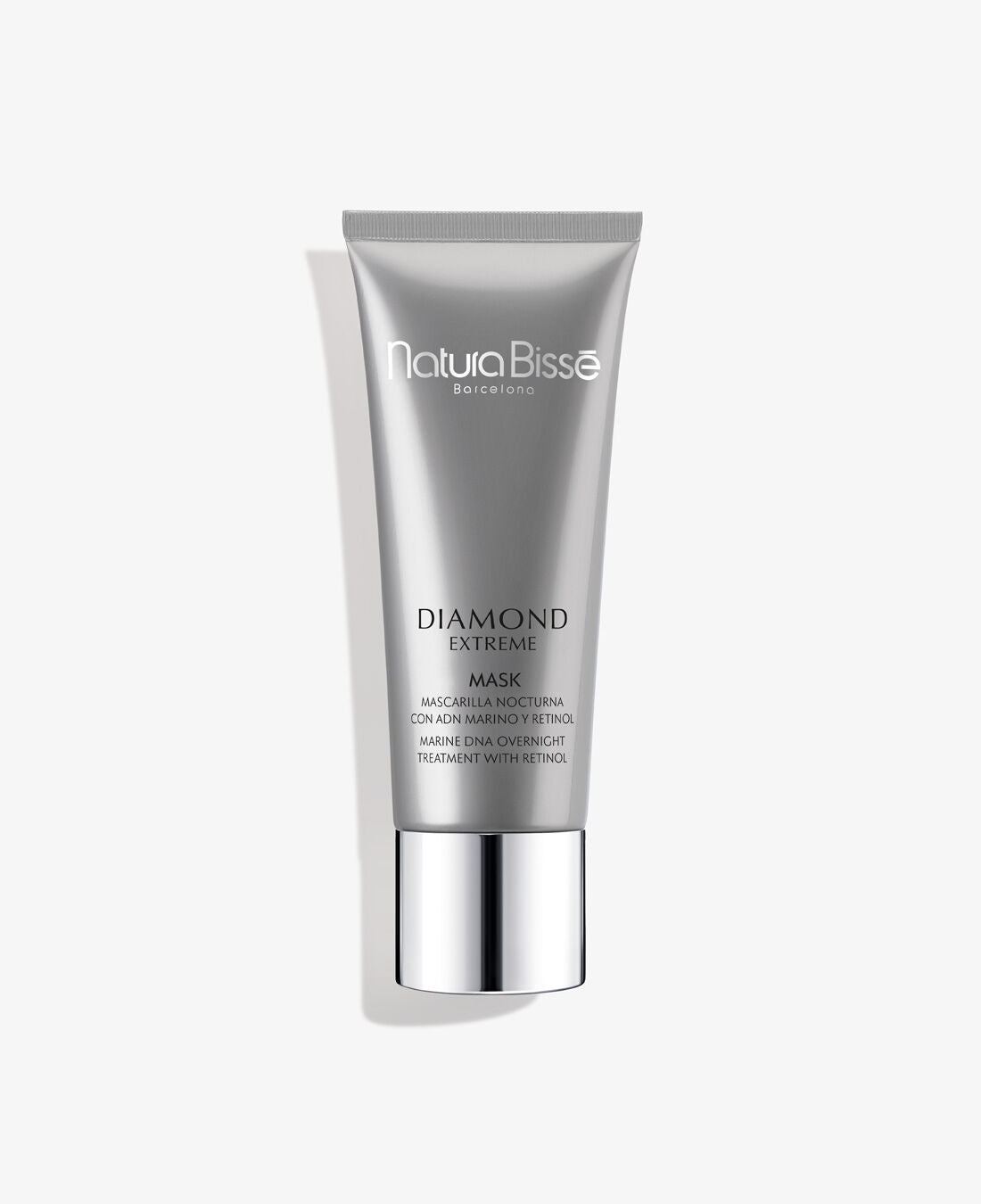
DIAMOND EXTREME MASK

DIAMOND EXTREME MASK
Natura Bissé
diamond-extreme-mask
Face Mask
9643572625701
Morning or Evening?
How often will you use this product?
Notes


Highlights
WHAT IS IT?
Overnight treatment mask
FEATURES
Rejuvenating, helps fade wrinkles and lines, moisturizes and firms skin
BEST FOR
Acne-Prone Skin, Combination Skin, Dry Skin, Mature Skin, Normal Skin, Oily Skin, Sensitive Skin
CHECKS
Does not contain gluten, alcohol, or oil
Who Is It For?
Not Specified Default To Above 18 And Both Women And MenWhat Does It Help With?
Wrinkles Lines Skin Firmness HydrationBudget
PremiumHow To Use
Which routine should it be used in?
Instructions:
Key Information


What Natura Bissé Says
Product Description:
This rejuvenating mask with retinol works throughout the night to help fade wrinkles and lines, moisturize and firm your skin. Wake up to radiant skin!
About the Brand:
Ingredients Overview
Ingredients List
Water (Aqua), Pentylene Glycol, Methyl Gluceth-10, Niacinamide, Pentaerythrityl Tetracaprylate/Tetracaprate, Betaine, Sodium DNA, Sodium Hyaluronate, Leontopodium Alpinum Flower/Leaf Extract, Sodium Carboxymethyl Beta-Glucan, Retinol, Glycerin, Allantoin, Sodium Acetylated Hyaluronate, Saccharomyces Cerevisiae Extract, Sodium Hyaluronate Crosspolymer, Hydrolyzed Sodium Hyaluronate, Caprylyl Glycol, Cyclopentasiloxane, Acrylates/C10-30 Alkyl Acrylate Crosspolymer, Dimethicone, C12-20 Acid PEG-8 Ester, Polyacrylamide, Sodium Hydroxide, Dimethicone Crosspolymer, C13-14 Isoparaffin, Disodium EDTA, Octadecyl Di-t-Butyl-4-hydroxyhydrocinnamate, Laureth-7, Cetyl Phosphate, Silica, Hydroxypropyl Cyclodextrin, Hexanediol, Ethylhexylglycerin, Citric Acid, Phenoxyethanol, Fragrance (Parfum), Linalool, Coumarin, Amyl Cinnamal, Limonene, Mica, Titanium Dioxide (CI 77891)
Key Ingredients
Retinol, Marine DNA Concentrate, Niacinamide, Hyaluronic acid, Edelweiss flower extract
Ingredients Details
Betaine
Common Name(s): Trimethylglycine,tmg,natural betaine
CAS Number: 107-43-7
DESCRIPTION
What It Does: Provides osmoprotective humectant conditioning with anti-irritant and mild foam-boosting activity.
Why It's Used: Natural-origin multifunctional osmolyte from sugar beet providing hydration, anti-irritancy, and conditioning in virtually every cosmetic category.
How It Works: Quaternary ammonium betaine provides zwitterionic character for water binding via ionic hydration. osmoprotective function at 100–500mm as compatible solute protecting cells from osmotic stress. reduces surfactant irritation by competing with sls for protein binding sites. mild foam enhancement.
Typically Found In: Virtually all categories — moisturisers, shampoos, cleansers
TECHNICAL DETAILS
Primary Category: Functional ingredient – humectant
Secondary Functions: Tewl reduction,skin plumping
Application Areas:

Facial Skincare
Body Care
Hair Care

Beard Care
Color Cosmetics (Makeup)
Dietary/Oral Supplements
Typical Concentration Range: 0.5%–10%
SOURCING & ETHICS
Vegan Status: Conditional - feedstock declaration required
Halal Status: Unverified - feedstock declaration required (plant, animal and petrochemical routes all exist)
Source Notes: Synthetic or naturally derived. excellent aqueous solubility. [audit 2026-07-29 rev2: origin-dependent: the same inci exists in plant, animal and petrochemical versions and the name does not discriminate. determination requires shariah-panel sign-off.]
SKIN COMPATIBILITY
Irritancy Rating: 1/5 – very low
Comedogenicity Rating: 0/5 – non-comedogenic
Sensitivity Concerns: Non-irritating; suitable for all skin types.
Safe for Sensitive Skin: Yes
SAFETY & COMPATIBILITY
Safety Profile: Excellent safety profile. ewg score: 1.
Works Well With: Ceramides,emollients,occlusives,glycerin,hyaluronic acid
Avoid Combining With: No significant incompatibilities
SCIENTIFIC NOTE
Betaine's anti-irritant mechanism for surfactant systems involves competitive protein protection: betaine at high concentrations preferentially interacts with skin proteins, occupying binding sites that would otherwise be occupied by surfactant molecules causing protein denaturation. this competition reduces available protein binding for irritating surfactants, explaining betaine's well-documented ability to reduce sls irritation when co-formulated.
Last Verified: 2026-03-12
Primary Sources: Cosing database,craig betaine osmoprotective review,cir safety assessment
Leontopodium Alpinum Flower/leaf Extract
Common Name(s): Leontopodium alpinum flower/leaf extract
DESCRIPTION
What It Does: Provides antioxidant protection, soothing anti-inflammatory effects, and skin-conditioning benefits through plant-derived polyphenols and phytochemicals.
Why It's Used: Plant extracts concentrate bioactive phytochemicals evolved for environmental protection — uv, microbial, and oxidative stressors — that translate to skin benefits.
How It Works: Polyphenols (flavonoids, phenolic acids) inhibit nf-κb-mediated inflammatory signaling, scavenge reactive oxygen species through electron donation, and chelate pro-oxidant metal ions to reduce oxidative skin damage.
Typically Found In: Serums,toners,moisturizers,masks,essences
TECHNICAL DETAILS
Primary Category: Botanical extracts
Secondary Functions: Antioxidant,anti-inflammatory
Application Areas:
Facial Skincare
Body Care
Hair Care
Beard Care
Color Cosmetics (Makeup)
Dietary/Oral Supplements
Typical Concentration Range: 0.1–10%
SOURCING & ETHICS
Vegan Status: Yes
Halal Status: Yes
Source Notes: Plant-derived extract; no animal components.
SKIN COMPATIBILITY
Irritancy Rating: 1
Comedogenicity Rating: 0
Sensitivity Concerns: Low sensitization potential at recommended use concentrations.
Safe for Sensitive Skin: Yes
SAFETY & COMPATIBILITY
Safety Profile: Well-characterized cosmetic ingredient with established safety profile. generally non-irritating at typical use concentrations. suitable for leave-on and rinse-off cosmetics.
Works Well With: Niacinamide,hyaluronic acid,vitamin c,ceramides
Avoid Combining With: Strong oxidizing agents
SCIENTIFIC NOTE
Plant secondary metabolites (flavonoids, terpenes, phenolic acids) are biosynthesized as defense compounds against uv, herbivores, and pathogens. their anti-inflammatory activity typically derives from competitive inhibition of cox-2 and 5-lox enzymes (ic50 1–50 µm), while antioxidant activity involves single electron transfer (set) and hydrogen atom transfer (hat) mechanisms with structure-dependent rate constants.
Last Verified: 2025-01-15
Primary Sources: Cosing eu database; pcpc cosmetic ingredient safety reviews; phytochemical and ethnobotanical literature
Methyl Gluceth-10
Common Name(s): Methyl gluceth-10,methyl gluceth-10,polyol or sugar derivative,humectant emollient active
CAS Number: N/a
DESCRIPTION
What It Does: Provides emollient conditioning and moisture retention from the polyol ether or sugar ester chemistry — the multiple hydroxyl groups contributing water-binding humectancy and the ester/ether chains contributing sc-compatible emolliency.
Why It's Used: Sugar-derived polyol esters combine natural origin (glucose/sucrose backbone) with synthetic-level emollient performance — the ether or ester modification controlling polarity and spreading for targeted skin feel.
How It Works: Polyol backbone oh groups provide h-bonding water retention. ether linkage (methyl gluceth) or ester linkage (sucrose ester) provides lipophilic sc integration. the combination: hygroscopic surface humectancy + lipophilic sc integration providing both immediate and sustained moisture.
Typically Found In: All formulations,natural skin care
TECHNICAL DETAILS
Primary Category: Active ingredient – humectant
Secondary Functions: Moisture retention,hydration
Application Areas:
Facial Skincare
Body Care
Hair Care
Beard Care
Color Cosmetics (Makeup)
Dietary/Oral Supplements
Typical Concentration Range: 0.1%–10%
SOURCING & ETHICS
Vegan Status: Conditional - supplier confirmation required
Halal Status: Yes
Source Notes: Plant-derived or fermentation-produced. [audit 2026-07-29 rev2: status downgraded on audit. determination requires shariah-panel sign-off.]
SKIN COMPATIBILITY
Irritancy Rating: 1/5 – very low
Comedogenicity Rating: 0/5 – non-comedogenic
Sensitivity Concerns: Non-irritating; suitable for sensitive skin.
Safe for Sensitive Skin: Yes
SAFETY & COMPATIBILITY
Safety Profile: Excellent safety profile. ewg score: 1.
Works Well With: Ceramides,emollients,occlusives,barrier actives
Avoid Combining With: No significant incompatibilities
SCIENTIFIC NOTE
Sugar-derived ingredients provide exceptional safety profiles from the food-grade starting material heritage — gras status of many sugar feedstocks extends beneficial safety documentation to the cosmetic derivative.
Last Verified: 2026-03-22
Primary Sources: Cosing database,methyl gluceth-10 polyol sugar derivative review
Niacinamide
Common Name(s): Vitamin b3,nicotinamide,pyridine-3-carboxamide
CAS Number: 98-92-0
DESCRIPTION
What It Does: Niacinamide strengthens the skin barrier, reduces visible pore size, regulates sebum production, fades dark spots, and improves skin texture and tone.
Why It's Used: It is used because it addresses multiple skin concerns at once without irritation, making it suitable for all skin types. it is stable in formulations and pairs well with most other actives.
How It Works: Niacinamide inhibits the transfer of melanosomes (pigment packets) to skin cells, reducing hyperpigmentation. it also stimulates ceramide synthesis to strengthen the skin barrier and reduces inflammation by modulating cytokine activity.
Typically Found In: Serums,moisturizers,toners,cleansers,eye creams,sunscreens,primers
TECHNICAL DETAILS
Primary Category: Active ingredient – vitamin
Secondary Functions: Barrier repair,brightening,anti-inflammatory
Application Areas:
Facial Skincare
Body Care
Hair Care
Beard Care
Color Cosmetics (Makeup)
Dietary/Oral Supplements
Typical Concentration Range: 2%–10% (typical: 5%; higher concentrations may cause flushing in some individuals)
SOURCING & ETHICS
Vegan Status: Yes – synthetically produced
Halal Status: Yes – synthetic origin
Source Notes: Commercially produced via synthesis from nicotinic acid or 3-cyanopyridine. no animal-derived sources used in cosmetic-grade niacinamide.
SKIN COMPATIBILITY
Irritancy Rating: 1/5 – very low; concentrations above 10% may cause temporary flushing in sensitive individuals
Comedogenicity Rating: 0/5 – non-comedogenic
Sensitivity Concerns: At concentrations >10%, some users experience niacin flush (transient redness/tingling). generally very well-tolerated.
Safe for Sensitive Skin: Yes – one of the best-tolerated actives for sensitive skin
SAFETY & COMPATIBILITY
Safety Profile: Extensively studied and considered very safe. ewg hazard score: 1. no significant systemic toxicity concerns at topical concentrations.
Works Well With: Retinol,peptides,ahas/bhas,hyaluronic acid,ceramides,zinc,vitamin c,spf
Avoid Combining With: High concentrations of vitamin c (ascorbic acid) may theoretically convert to niacin – use at different times if using pure l-ascorbic acid above 15%
SCIENTIFIC NOTE
Niacinamide is a precursor to nad+ and nadp+, coenzymes vital to cellular energy metabolism. its benefits for dna repair and mitochondrial function make it a key ingredient in anti-aging strategies.
Last Verified: 2026-03-12
Primary Sources: Cosing database,cir safety assessment,ewg skin deep,pubmed clinical studies