

Nykaa E retail limited
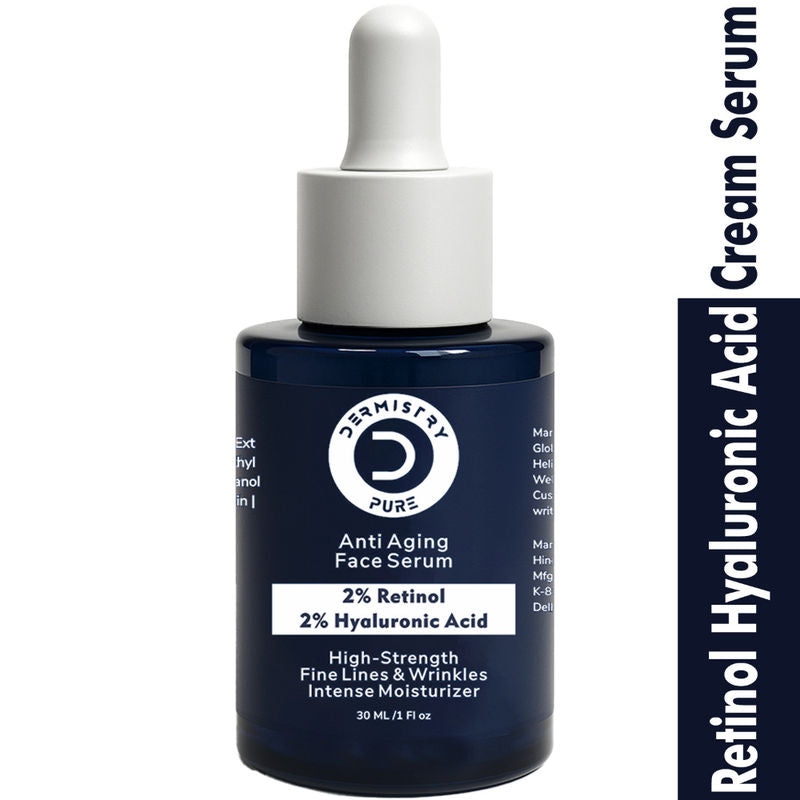
DERMISTRY 2% Retinol Hyaluronic Anti Aging Night Face Cream Serum for Ageing Dark Circles & Wrinkles

DERMISTRY 2% Retinol Hyaluronic Anti Aging Night Face Cream Serum for Ageing Dark Circles & Wrinkles
Nykaa E retail limited
dermistry-2-retinol-hyaluronic-anti-aging-night-face-cream-serum-for-ageing-dark-circles-wrinkles
Serum
10084816224549
Morning or Evening?
How often will you use this product?
Notes


Highlights
WHAT IS IT?
Anti aging serum containing two main actives: 2% Retinol, 2% Hyaluronic Acid
FEATURES
Provides intense hydration and moisture, infused with pure 2% retinol and 2% hyaluronic acid, high-strength formula targeting fine lines and wrinkles, boosts collagen and elastin production for plumper skin, suitable for all skin types including sensitive and dry skin, free from parabens, harmful silicones, sulfates, mineral oils, petroleum, artificial preservatives, and synthetic fragrances/perfume
BEST FOR
sensitive
CHECKS
Parabens, Silicones, Cyclopentasiloxane (bad silicone), Sulfates, Mineral oils, SLS, Petroleum, Artificial preservatives, Synthetic fragrances/perfume
Who Is It For?
All Ages All GendersWhat Does It Help With?
Fine Lines Wrinkles Ageing Dry Skin Sensitive Skin Dark CirclesBudget
Affordable (under $30)How To Use
Which routine should it be used in?
Instructions:
Key Information


What Nykaa E retail limited Says
Product Description:
Dermistry 2% Retinol & 2% Hyaluronic Acid Serum is a high-strength formula. That helps turn back the clock on aging and give your skin a youthful vibrancy with this gentle, safe, and effective formula. This serum with retinol is a next-gen retinol derivative that offers far better results. It is best suited for all skin types, even sensitive and dry skin. Once in this middle layer of skin, retinol helps neutralize free radicals. This helps boost the production of elastin and collagen, which creates a "plumping" effect that can reduce the appearance of fine lines and wrinkles.
About the Brand:
Ingredients Overview
Ingredients List
Aqua,Aloe-Vera-Ext,Hyaluronic-Acid,Retinol,Olivem-1000,Fragrance,Allantoin
Key Ingredients
Retinol,Hyaluronic Acid
Ingredients Details
Allantoin
Common Name(s): 5-ureidohydantoin,glyoxyldiureide,aluminum dihydroxy allantoinate
CAS Number: 97-59-6
DESCRIPTION
What It Does: Soothes irritation, accelerates wound healing, promotes skin cell renewal, and provides mild keratolytic exfoliation.
Why It's Used: Gold standard multi-function soothing active – one of the most widely used cosmetic ingredients across all product types for its exceptional tolerability and clinically proven multi-action skin conditioning.
How It Works: Promotes keratinocyte proliferation and fibroblast migration for wound healing. mild keratolytic activity by disrupting corneocyte binding. anti-irritant via direct protein binding and anti-inflammatory cytokine reduction. humectant activity via hydroxyl groups.
Typically Found In: Post-procedure products,sensitive skin formulas,wound care,anti-acne treatments,baby products
TECHNICAL DETAILS
Primary Category: Active ingredient – soothing / anti-inflammatory
Secondary Functions: Wound healing,keratolytic,anti-irritant
Application Areas:

Facial Skincare
Body Care

Hair Care
Beard Care
Color Cosmetics (Makeup)
Dietary/Oral Supplements
Typical Concentration Range: 0.1%–2%
SOURCING & ETHICS
Vegan Status: Yes – synthetic or comfrey-derived
Halal Status: Yes
Source Notes: Plant-derived extract or synthetic.
SKIN COMPATIBILITY
Irritancy Rating: 1/5 – very low
Comedogenicity Rating: 0/5 – non-comedogenic
Sensitivity Concerns: Exceptionally well-tolerated; suitable for all skin types including baby and compromised skin.
Safe for Sensitive Skin: Yes – particularly recommended for sensitive skin
SAFETY & COMPATIBILITY
Safety Profile: Excellent safety profile. ewg score: 1.
Works Well With: Ceramides,panthenol,allantoin,hyaluronic acid,centella asiatica
Avoid Combining With: No significant incompatibilities
SCIENTIFIC NOTE
Allantoin's keratinocyte proliferation stimulation occurs via receptor-mediated signaling (possibly machr activation) rather than non-specific irritation-driven proliferation, making it a true wound-healing stimulant rather than a pro-inflammatory proliferative signal.
Last Verified: Cosing database,cir safety assessment,araújo et al. allantoin review
Primary Sources: 2026-03-12
Fragrance
Common Name(s): Fragrance ingredient,eu allergen or aromatic component,olfactory/flavour
CAS Number: N/a
DESCRIPTION
What It Does: Provides the complete fragrance profile contributing to product sensory experience and consumer appeal.
Why It's Used: Fragrance is a major consumer purchase driver — up to 70% of consumers make purchasing decisions partially based on product scent.
How It Works: Fragrance blends interact with olfactory receptors providing the sensory profile — complex mixtures activate multiple receptor types for rich, multidimensional scent experiences.
Typically Found In: All fragrance products
TECHNICAL DETAILS
Primary Category: Active ingredient – cosmetic active
Secondary Functions: Skin conditioning
Application Areas:
Facial Skincare
Body Care
Hair Care
Beard Care
Color Cosmetics (Makeup)
Dietary/Oral Supplements
Typical Concentration Range: Standard use levels
SOURCING & ETHICS
Vegan Status: Conditional
Halal Status: Yes
Source Notes: Commercially produced for cosmetic use. verify vegan/halal status with supplier.
SKIN COMPATIBILITY
Irritancy Rating: 1/5 – very low
Comedogenicity Rating: 0/5 – non-comedogenic
Sensitivity Concerns: Well-tolerated by most skin types.
Safe for Sensitive Skin: Yes
SAFETY & COMPATIBILITY
Safety Profile: Good safety profile at recommended concentrations. ewg score: 1–2.
Works Well With: Standard skincare actives
Avoid Combining With: No known significant incompatibilities
SCIENTIFIC NOTE
Ifra guidelines set usage limits for fragrance ingredients based on skin sensitisation and phototoxicity assessment for each application category.
Last Verified: Eu regulation 1223/2009 annex iii,ifra standards,fragrance allergen declaration requirements
Primary Sources: 2026-03-12
Retinol
Common Name(s): Vitamin a,all-trans retinol,(all-e)-3,7-dimethyl-9-(2,6,6-trimethyl-1-cyclohexen-1-yl)-2,4,6,8-nonatetraen-1-ol
CAS Number: 68-26-8
DESCRIPTION
What It Does: Retinol accelerates skin cell turnover, stimulates collagen production, reduces fine lines and wrinkles, fades hyperpigmentation, and helps normalize pore size.
Why It's Used: It is the most evidence-backed anti-aging ingredient available without a prescription. it provides comprehensive skin renewal benefits that no other single cosmetic ingredient can match.
How It Works: Retinol is converted in the skin to retinoic acid, which binds to retinoid receptors in cell nuclei. this activates gene expression changes that accelerate cell turnover, boost collagen synthesis, and inhibit matrix metalloproteinases (collagen-degrading enzymes).
Typically Found In: Night creams,serums,eye creams,targeted treatment products,anti-aging formulations
TECHNICAL DETAILS
Primary Category: Active ingredient – vitamin a derivative
Secondary Functions: Exfoliating,anti-acne,brightening
Application Areas:
Facial Skincare
Body Care
Hair Care
Beard Care
Color Cosmetics (Makeup)
Dietary/Oral Supplements
Typical Concentration Range: 0.025%–1% (otc); start at low concentrations and build up slowly
SOURCING & ETHICS
Vegan Status: Conditional – can be animal-derived (fish liver, egg yolk) or synthetic; verify source
Halal Status: Conditional – verify source; synthetic retinol is halal
Source Notes: Cosmetic retinol is predominantly synthetically manufactured. some natural sources include fish liver oils. synthetic is preferred for purity and sustainability.
SKIN COMPATIBILITY
Irritancy Rating: 3/5 – moderate; can cause dryness, peeling, redness, especially during adjustment period (retinization)
Comedogenicity Rating: 0/5 – non-comedogenic; actually helps clear pores
Sensitivity Concerns: Retinization period: 2–6 weeks of potential dryness, flaking, and sensitivity. photosensitizing – must use spf when using retinol. avoid during pregnancy.
Safe for Sensitive Skin: Use with caution – start at 0.025%, buffer with moisturizer, use every 2–3 nights initially
SAFETY & COMPATIBILITY
Safety Profile: Safe for general use at otc concentrations. not recommended during pregnancy. avoid with waxing. use spf daily. ewg hazard score: varies by concentration.
Works Well With: Niacinamide (soothes irritation),peptides,ceramides,hyaluronic acid,spf (mandatory)
Avoid Combining With: Benzoyl peroxide (may inactivate retinol),ahas/bhas (when new to retinol – overexfoliation risk),vitamin c (use at different times)
SCIENTIFIC NOTE
Retinol is approximately 20 times less potent than prescription tretinoin (retinoic acid) but significantly better tolerated. the conversion rate of retinol to retinoic acid in skin is the rate-limiting step in its efficacy.
Last Verified: Cosing database,cir safety assessment,journal of investigative dermatology,kligman et al. studies
Primary Sources: 2026-03-12
